The balance of centre of mass, weight, suspension, tyres and aerodynamics that decides how a car responds to the steering wheel, and where that balance has failed.
Handling decides how predictably a car responds to steering, braking and road irregularities. It depends on the balance of weight, centre of mass, suspension, tyres and aerodynamics, and engineers measure it through cornering, braking and stability.
Automobile handling describes how a wheeled vehicle responds to the driver's inputs and how it moves along a road, particularly in cornering, acceleration, braking and steady-state stability. Together with braking, it forms the core of a car's active safety. Engineers balance it against ride comfort, interior space and cost, and that balance shapes most production cars.
What is automobile handling?
Automobile handling is the way a wheeled vehicle responds to a driver's inputs and moves along a track or road. It is judged most often in cornering, acceleration and braking, along with directional stability in steady conditions. The maximum lateral acceleration a car can sustain, together with braking, is regarded as its road holding ability.
A car's handling is the sum of its weight, springs, tyres and shape, and when one of them is wrong the steering wheel tells you first.
How does the centre of mass shape handling?
The height of the centre of mass decides how much weight shifts from side to side and from front to back in a turn or under braking. A high centre of mass produces more body lean and load transfer, while a low one is a principal advantage of sports cars. Its position along the wheelbase decides whether the car tends to understeer or oversteer.
When the tyres push the car around a turn, the car's momentum shifts load toward the outside wheels. That load transfer appears as body lean, and in extreme cases the car may roll over. Total weight transfer in steady cornering depends on the height of the centre of gravity compared with the axle track, so a tall car on a narrow track is more prone to rolling.
Rollover occurs when weight transfer reaches half the vehicle's loaded weight. Drivers and engineers can reduce the risk by lowering the rate of turn, although that costs road holding.
Why does weight distribution decide understeer or oversteer?
In steady cornering, a front-heavy car tends to understeer and a rear-heavy car tends to oversteer, all other things being equal. A 50/50 split understeers on corner entry, so racing cars run a rearward bias, typically between 40/60 and 35/65. That bias gives the front tyres an advantage in overcoming the car's yaw inertia.
The reason lies in the moment of corner entry. The front tyres generate part of the sideways force that pulls the car into the turn and also start it rotating. The rear tyres generate force in the opposite sense, trying to rotate the car out of the turn. Less weight on the rear means the front has the better of that contest.
What does angular inertia do to a car?
Angular inertia is a car's resistance to rotating about an axis, and it governs how quickly the car changes direction. Roll inertia slows the settling of the body after a turn, yaw inertia slows swerving and turning, and pitch inertia affects how well the suspension keeps tyre loads steady on uneven surfaces.
For a uniform mass distribution, roll angular inertia can be approximated as the mass multiplied by the sum of the squares of height and width, divided by 12. Greater width counteracts the effect of a lower centre of gravity but hurts handling by increasing that inertia.
Yaw inertia keeps a car pointing in the same direction, and it makes the car slower to swerve or to enter a tight curve. Mass near the ends of a car adds to that inertia, which is why lighter bumpers and fenders, or none at all, help. If most of the weight sits in the middle, the car is easier to spin and responds more quickly to a turn of the steering wheel.
How do suspension and tyres affect grip?
Suspension sets how a car's body and wheels react to bumps and turns. Spring rate, damping, camber, camber change with wheel travel and roll centre height all affect handling. Linear springs give predictable behaviour in hard cornering and braking, while variable-rate springs suit comfort cars and off-road racers.
Variable-rate springs start soft and stiffen as they compress, which soaks up small bumps and then prevents excessive compression and dangerous body roll. The TR3B's severe handling problem came from running out of suspension travel, and any car that bottoms out or tops out can behave in the same way.
Softer rubber, higher-hysteresis rubber and stiffer cord configurations generally improve road holding. Large diameter wheels handle poor surfaces better than lower, wider wheels, and tread depth strongly affects aquaplaning. Raising tyre pressure reduces slip angle, but it shrinks the contact area, which is harmful in ordinary conditions.
What is unsprung weight and why does it matter?
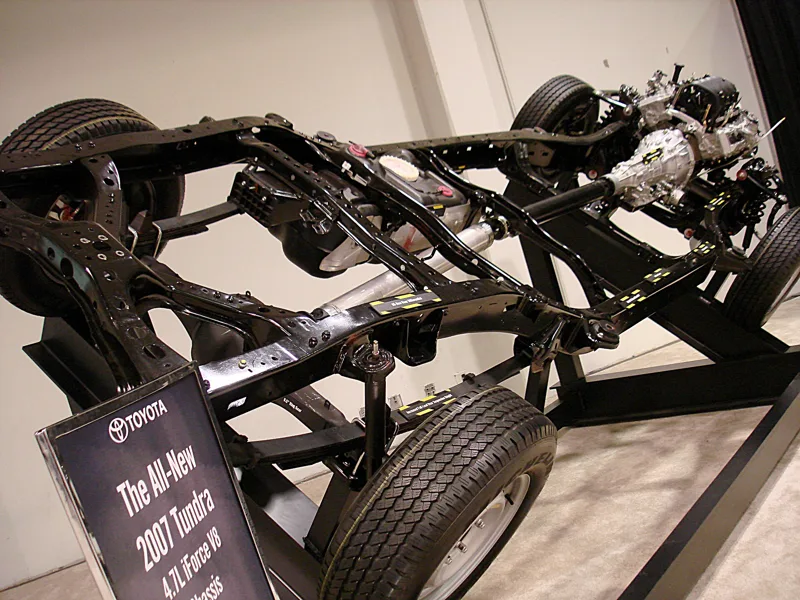
Unsprung weight is the mass of the wheels, tyres, brakes and any part of the suspension that moves with the wheels rather than with the body. When a wheel meets a bump, its inertia can carry it off the road, which costs traction and control. High unsprung weight therefore reduces road holding and makes the car change direction unpredictably on rough surfaces.
Improvements include a sprung differential in place of a live axle, and inboard brakes. The De Dion tube behaves much like a live axle but mounts the differential to the body, which reduces unsprung weight. The Citroen 2CV used inertial dampers on its rear wheel hubs to damp wheel bounce, because only the brakes on the driving wheels can easily be inboard.
What role do aerodynamics and power play?
Aerodynamic forces rise with the square of airspeed, so aerodynamics matter more as speed increases. Downforce, or negative lift, presses the tyres into the road and improves grip. It is prominent on racing cars and used on most passenger cars to some degree, if only to counter the positive lift a body would otherwise produce.
A car naturally understeers on entry to low-speed corners, because its high angular velocity makes it harder for the front tyres to overcome the moment of inertia. It tends to oversteer on entry to high-speed corners. Designers counter this by lowering the front roll centre and adding rearward bias to the downforce.
The circle of forces model explains why driven or braking wheels slip sideways. Rubber's grip limits the combined sideways and along-track force, so more power or brake force leaves less grip for steering. Sports cars are usually rear-wheel drive because power-induced oversteer is useful to a skilled driver in tight curves, and left-foot braking can produce something similar in a front-drive car.
How do steering and stability control contribute?
Steering converts the driver's effort into tyre angles, and precision matters most on ice or packed snow, where grip runs out at a smaller slip angle than on dry roads. Rack and pinion steering is generally considered the best type for control effectiveness.
The steering ratio sets how many turns of the wheel produce a turn of the road wheels. Play and friction in the linkage reduce feel, a common problem in older and worn cars. Steering effort rises with the car's weight, roughly as the 1.5 power of weight for constant tyre pressure, which is why power steering is useful for parking.
Electronic stability control detects loss of steering control and brakes individual wheels, so braking the outer front wheel counters oversteer while braking the inner rear wheel counters understeer. Its intervention can clash with some sporting techniques, such as power-induced oversteer, so from a sporting point of view it is preferable to be able to disable it.
Which handling failings do drivers meet most often?
The most common failings are understeer, where the front wheels drift wide, and oversteer, where the rear slides out. Bump steer, body roll, excessive load transfer and slow response also reduce predictability. A car is usually best set up with a small amount of understeer, which responds predictably and keeps the rear wheels at smaller slip angles than the front.
| Failing | What the driver sees | Typical cause |
|---|---|---|
| Understeer | Front wheels drift towards the outside of the turn | Front-heavy weight or excess front grip |
| Oversteer | Rear wheels slip towards the outside of the turn | Rear-heavy weight or excess rear grip |
| Bump steer | Wheel angle changes over road irregularities | Suspension motion, steering linkage and worn parts |
| Body roll | The car leans, delaying the driver's judgement | High centre of mass and load transfer |
| Slow response | Side acceleration starts late and stops late | Body roll, high slip angle and yaw and roll inertia |
How do drivers and conditions change handling?
Handling belongs to the car, but drivers vary in how well they use it. Familiarity helps a driver exploit a car's handling under adverse conditions, while poor support in the seat can make a driver move around as the car accelerates, corners or brakes.
Weather affects handling by changing the traction a surface offers, and different tyres suit different conditions. Tyre rubber depends on ambient and road temperatures, so in climates with those swings a separate summer and winter set is usually a good idea.
Which cars became known for unusual handling?
Several models earned reputations for handling that caught drivers out. The early Porsche 911 suffered treacherous lift-off oversteer, the Triumph TR2 and TR3 began to oversteer suddenly when the inside rear wheel lifted, and the Chevrolet Corvair had poor roll stability from its swing axle. The Mercedes-Benz A-Class, a tall car, showed excessive body roll and rolled over in the Swedish moose test.
The Corvair was criticised in Ralph Nader's book Unsafe at Any Speed, and the redesign for 1965 corrected its problems, but sales never recovered. The early Volkswagen Beetle was sensitive to crosswinds because of the light front end of its rear-engined layout, and its swing axle suspension gave poor roll stability.
The large rear-engined Tatra 87, nicknamed the Czech secret weapon, killed so many officers during the Second World War that the army forbade them from driving it.
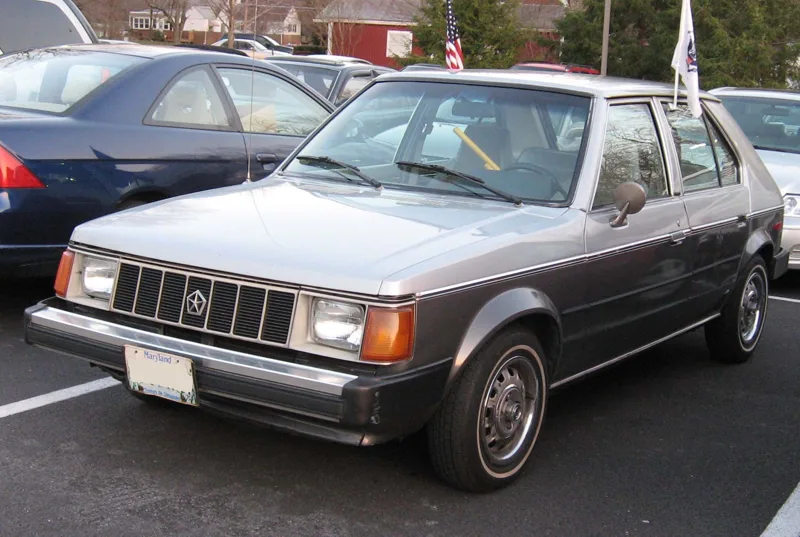
Consumer Reports found the Dodge Omni and Plymouth Horizon unacceptable in early testing because of an uncontrollable side-to-side yaw under certain steering inputs. Chrysler denied the behaviour, but production was changed to a lighter steering wheel and a steering damper. The Suzuki Samurai was reported to tip onto two wheels in one test, and Suzuki sued, claiming the test was rigged. After eight years in court, the parties settled without damages or a retraction.
Ford Explorer rollovers were linked to a high centre of gravity and a tyre fault, and the companies blamed each other. A later investigation of real-world accident data found those SUVs no more likely to roll over than other SUVs when a tread separation had occurred.
What compromises do manufacturers make?
Ride quality and handling have always been a compromise, and technology has only slowly allowed both in the same vehicle. Production cars are often set to understeer, because it is safer for inexperienced drivers. Inboard brakes improve handling and comfort but take up space and are harder to cool.
Live axle rear suspension, the design familiar from the Ford Model T, is still widely used in sport utility vehicles and trucks for durability and cost. It is better for drag racing, but it has grip problems on bumpy corners and at high speed on bumpy straights. The Ford Mustang used a live axle in model years before 2015.