How a kei-class Jimny from 1970 became the Samurai, sold in the United States from 1985 to 1995, with a famous rollover dispute and a 2007 altitude record.
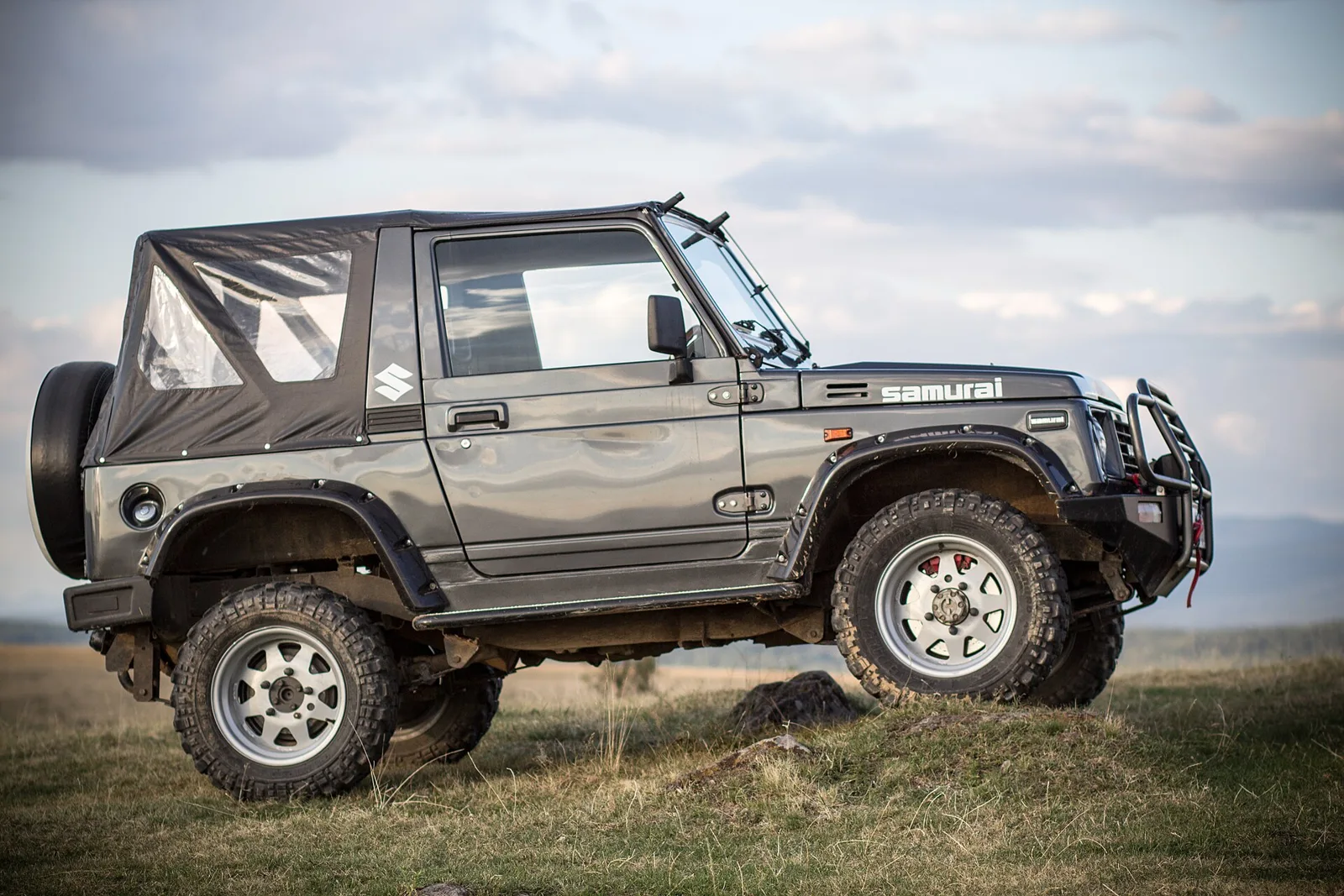
The Suzuki Samurai was the North American name for the SJ413, a 1.3-litre member of Suzuki's Jimny off-road family. Sold in the United States from 1985 for the 1986 model year, it was built on a ladder frame with part-time four-wheel drive and left the market after 1995.
The Suzuki Samurai was an updated version of the SJ413, the second-generation member of the Jimny family of four-wheel drive mini off-roaders. It was the first Suzuki officially sold in the United States, where it arrived in 1985 for the 1986 model year. It became a cult favourite among serious off-road drivers, and it left the US market after 1995.
Where did the Suzuki Samurai come from?
The Samurai was an updated SJ413, the Jimny 1300 variant of the second-generation family. Its name was used for the wider edition of the SJ413, which arrived in North America in 1985 and became the Samurai for the 1986 model year. It went on sale in the United States at US$6,200 and was the first Suzuki officially marketed there.
The family's roots lie in the late 1960s, when Suzuki bought a Steyr-Puch Haflinger to study an off-road vehicle in the kei class. A better opportunity came in 1968, when Suzuki bought the bankrupt Japanese automaker Hope Motor Company. Hope had introduced a small off-road vehicle called the HopeStar ON360, but it had never entered series production, and only about 45 were made.
Hope sold the design to Suzuki in 1968 after Mitsubishi declined to take over production. The ON360 was a basic two-seater with no doors, but its sturdy four-wheel drive system let it go off-road. Suzuki then rebodied it and fitted its own engine, which gave the family its start.
Small, light and built for mud, the Samurai won a loyal American following before a famous rollover argument shaped its exit.
How did the Jimny begin as a kei car?
The first Suzuki-branded four-wheel drive, the LJ10, arrived in April 1970 with a 359 cc two-stroke engine. Because it stayed under 360 cc and carried its spare tyre inside, it qualified as a kei car with tax privileges. It was the first four-wheel drive kei car to enter series production.
The original Jimny was an unexpected hit. Nearly 5,000 units sold in Japan in its first year, which immediately outsold the Mitsubishi Jeep, the leading off-road vehicle at the time. Over 6,000 were sold in 1971, and production moved from hand assembly to a dedicated line.
The LJ20 followed in May 1972 with a water-cooled engine, and the LJ50 arrived in 1975 with a larger two-stroke three-cylinder. The LJ80 then brought a four-stroke engine, and the second generation of the Jimny, the SJ410 and SJ413, followed in the early 1980s.
What did the Samurai's chassis and drivetrain look like?
The Samurai used a separate ladder frame, solid-beam axles front and rear, recirculating ball steering and part-time four-wheel drive with a dual-range transfer case. Rear-wheel drive was always engaged, and the front could be selected by hand. The body was not a structural carrying part.
There was no centre differential, so the Samurai could only be used in four-wheel drive on slippery surfaces such as snow, ice, mud, loose gravel and sand. Wet asphalt and hard-packed gravel were not slippery enough, and steering in four-wheel drive on those surfaces could be difficult.
The dual-range transfer case gave a high and a low range. Low range halved the overall gearing, so the car moved at about half the speed with double the torque at the wheels. That made it useful for hard going and towing off the road, but low range could not be used for on-road towing.
The first two Jimny generations used leaf springs at all four wheels, and the Samurai's underpinnings reflected that. Dependent suspension was a common design for all-terrain vehicles up to the 1990s and was well suited to off-road durability.
What engines did the Samurai use?
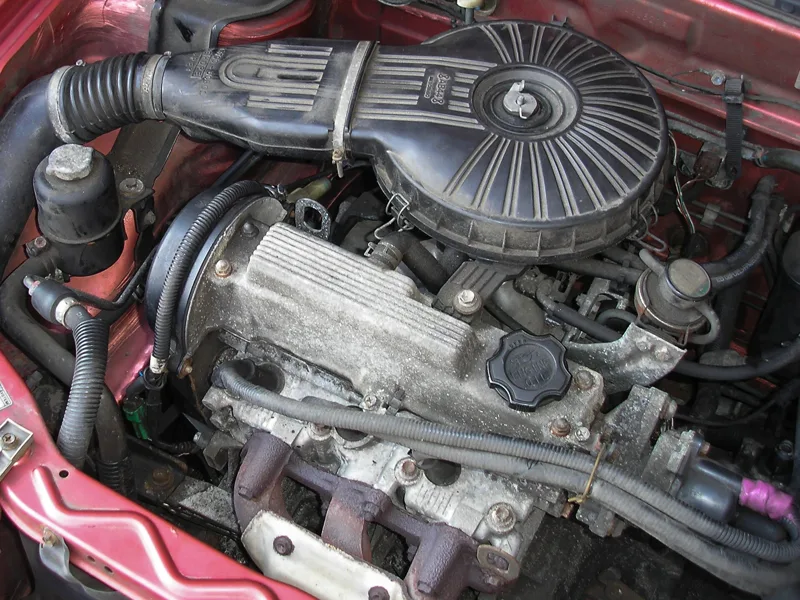
The Samurai used the 1.3-litre G13A four-cylinder from the Jimny 1300, which gave 63 hp (47 kW; 64 PS) in its original US form. A 1991 update brought a new 1.3-litre engine with throttle-body fuel injection rated at 66 hp (49 kW; 67 PS).
Engines varied by market. Buyers in some markets could choose the 1.0-litre engine of the SJ410 instead of the 1.3-litre, but the 1.3-litre was the main choice for North America. A cheaper 2WD version was added to the range between 1991 and 1993.
| Model | Years | Engine | Power | Notes |
|---|---|---|---|---|
| Samurai (SJ413) | 1985 to 1995 | 1.3-litre G13A four-cylinder | 63 hp (47 kW; 64 PS) | US launch for the 1986 model year |
| Samurai, 1991 update | 1991 onward | 1.3-litre, throttle-body injection | 66 hp (49 kW; 67 PS) | Rear seats removed from 1994 |
| Santana diesel | About 1998 | 1.9-litre XUD9 turbodiesel | 63 PS (46 kW; 62 hp) | Spanish-built; top speed 130 km/h (81 mph) |
| Santana diesel | 2001 onward | 1.9-litre F8Q naturally aspirated diesel | 64 PS (47 kW; 63 hp) | Spanish-built |
| Maruti Gypsy King | India | 1.3-litre G13BB, sixteen-valve | 80 PS (59 kW; 79 hp) | Samurai-based Indian model |
How did the Samurai sell in the United States?
The Samurai was priced at US$6,200 when it arrived, and 47,000 sold in its first year. It was available as a convertible or a hard top, and it came with rear seats until 1994. It was offered only as a short-wheelbase model in the United States.
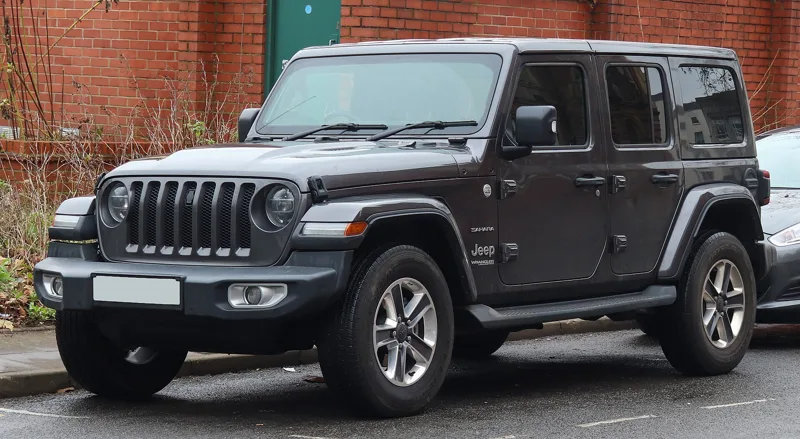
The Samurai became intensely popular with serious four-wheel drive owners. Its off-road performance and reliability compared well with other 4WDs of the time, and it outsold the Jeep Wrangler (YJ) by two to one in 1987. Its lightness made it a nimble off-roader that was less prone to sinking in soft ground.
The 1988.5 model was retuned for better on-road use. It had softer suspension, a larger anti-roll bar to reduce body roll, a lower fifth gear of .865:1 instead of .795:1, and improved dashboard and seats. Those changes made the car more comfortable on the highway.
From 1994 and 1995 the rear seat was removed, rear shoulder belts became mandatory, and the partial roll cage lacked the mounting points that the rules required. Low sales and stricter safety legislation then led to the withdrawal of the Samurai from Canada and the United States after 1995.
Why did a Consumer Reports review lead to a lawsuit?
A 1988 Consumer Reports review called the Samurai unsafe and prone to rollovers. Suzuki of North America sued the publisher, Consumers Union, for libel in 1996, and the case ended in an inconclusive settlement that left both sides disagreeing.
Consumers Union agreed that it had never intended to imply the Samurai easily rolled over in routine driving. Both parties then made a joint statement that they disagreed over the validity of the tests, while each stood by its own findings.
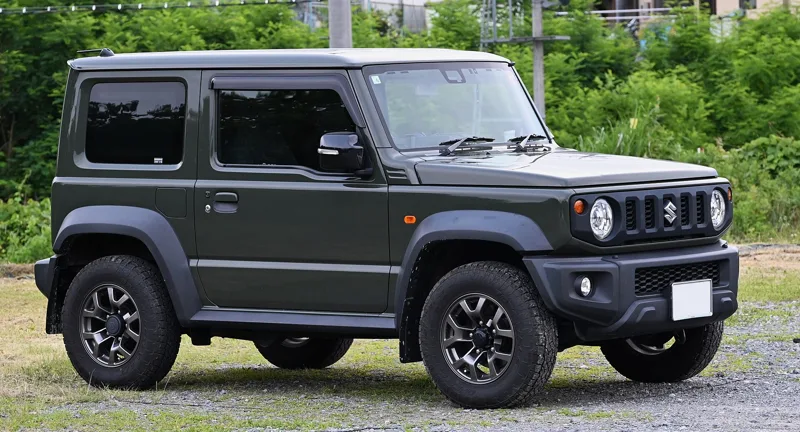
The widened SJ413 was the answer to the rollover concern in engineering terms. Suzuki gave it a track widened by 90 mm (3.5 in) around 1988 to add stability, and this wider edition took the Samurai name.
Where else was the Samurai built?
The SJ was built in Spain by Santana Motor from March 1985, in Indonesia by Suzuki Indomobil from late 1982, and in India by Maruti as the Gypsy. In Pakistan it was assembled as the Potohar, and in Colombia it was sold as the Chevrolet Samurai. In Thailand the SJ413 was branded the Caribian. It began as a three-door long-wheelbase truck with a fibreglass canopy, nicknamed the fish tank, and in 1992 it became an extended cab pickup.
Santana built the SJs with more than 60% native parts, which let them be sold as domestic vehicles in Europe and avoided limits on imports of Japanese-built cars. The Santana cars had softer springs for a better on-road ride, colour-coordinated interiors and cloth seats.
From March 1990 the Santana cars received the chassis developments that turned the SJs into the Samurai, sold as the Samurai 1000 or 1300. Diesel editions followed around 1998 and again in 2001, and Spanish production ended in late 2003 or early 2004.
In Indonesia the SJ410 was marketed as the Super Jimny, and a 2WD version called the Katana arrived in September 1986. Maruti's Gypsy King used the sixteen-valve 1.3-litre G13BB with 80 PS (59 kW; 79 hp), and Indian production of the Gypsy continued until late 2018.
Did the Samurai set a record?
Yes. On 21 April 2007 a Chilean team drove a modified Samurai up Ojos del Salado to 6,688 m (21,942 ft), a record for the highest altitude reached by a four-wheeled vehicle. The previous record of 6,646 m (21,804 ft) had been set by a Jeep.
The car benefited from wheel, tyre and suspension changes, and it had a supercharged G16A four-cylinder engine. It was the team's third attempt, after weather trouble on the first and an engine fire on the second. Guinness World Records certified the record in July 2007. The previous record holder's team, led by Matthias Jeschke in a Jeep Wrangler, had left a sign joking that the spot was reserved for Jeeps. The Chilean team found the sign blown down by strong winds and took it home as a souvenir.
How did the Jimny evolve after the Samurai?
The third-generation Jimny was unveiled at the 1997 Tokyo Motor Show and went on sale in 1998. It kept a ladder chassis and a dual-ratio transfer case, which many competing compact 4WDs lacked. In Japan the Sierra name returned in January 2002, when the 1.3-litre Jimnys were sold as the Jimny Sierra.
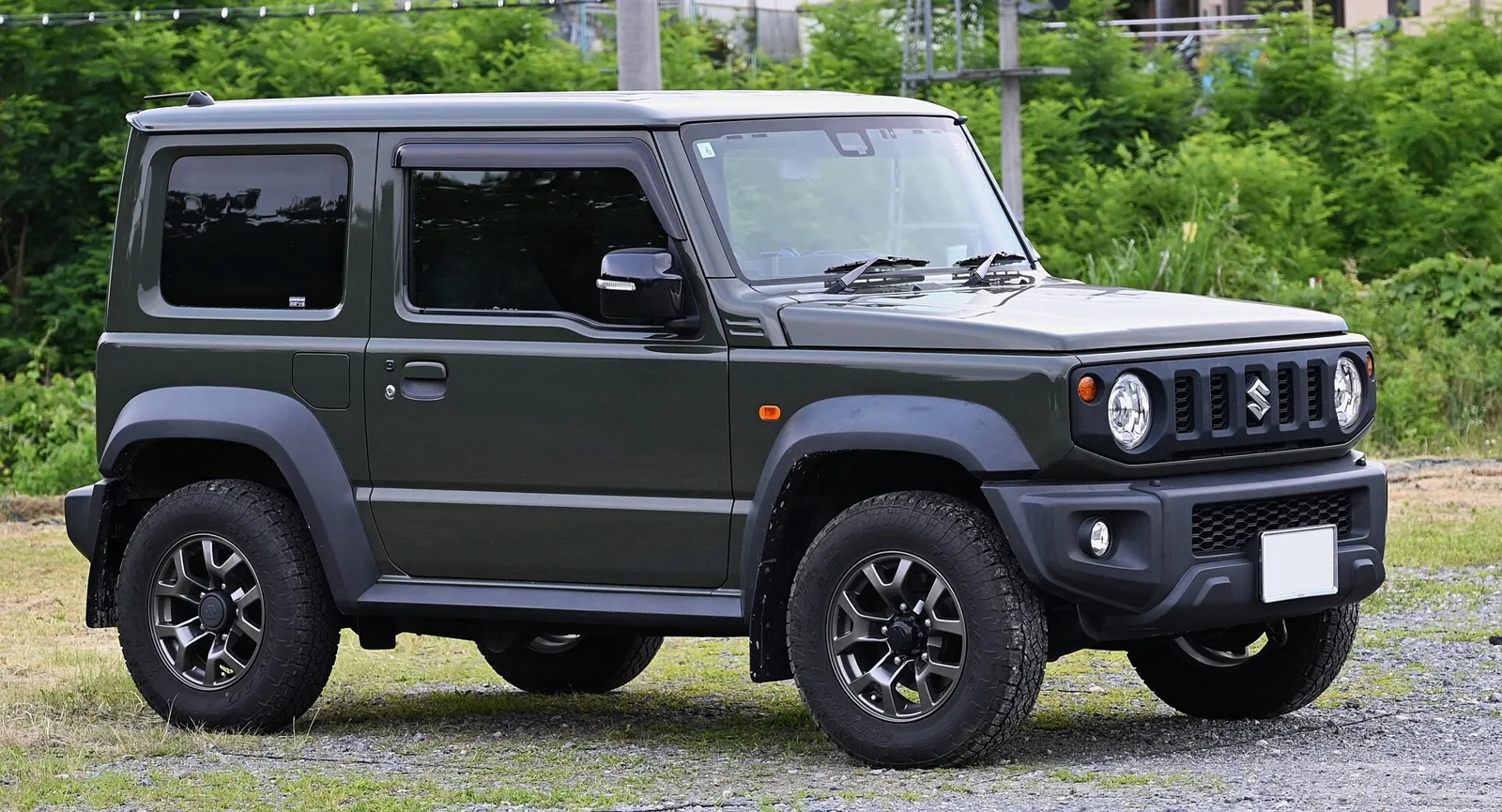
Suzuki launched the fourth generation in late 2018, with a 1.5-litre engine in export versions and a five-door body from 2023. By September 2018 the family had sold 2.85 million units in 194 countries, according to the company.
The fourth generation was launched in Japan on 5 July 2018, with production starting at Suzuki's Kosai plant on 29 May 2018. Its styling recalled the earlier LJ and SJ models. The wide Jimny Sierra used the 1.5-litre K15B four-cylinder, which produced 75 kW (102 PS) at 6,000 rpm and 138 Nm (102 lb ft) at 4,400 rpm.
A five-door long-wheelbase version followed in 2023, based on the Sierra. The earlier family was never a single-purpose model, and the fourth generation kept the ladder frame and part-time four-wheel drive that defined the Samurai era.