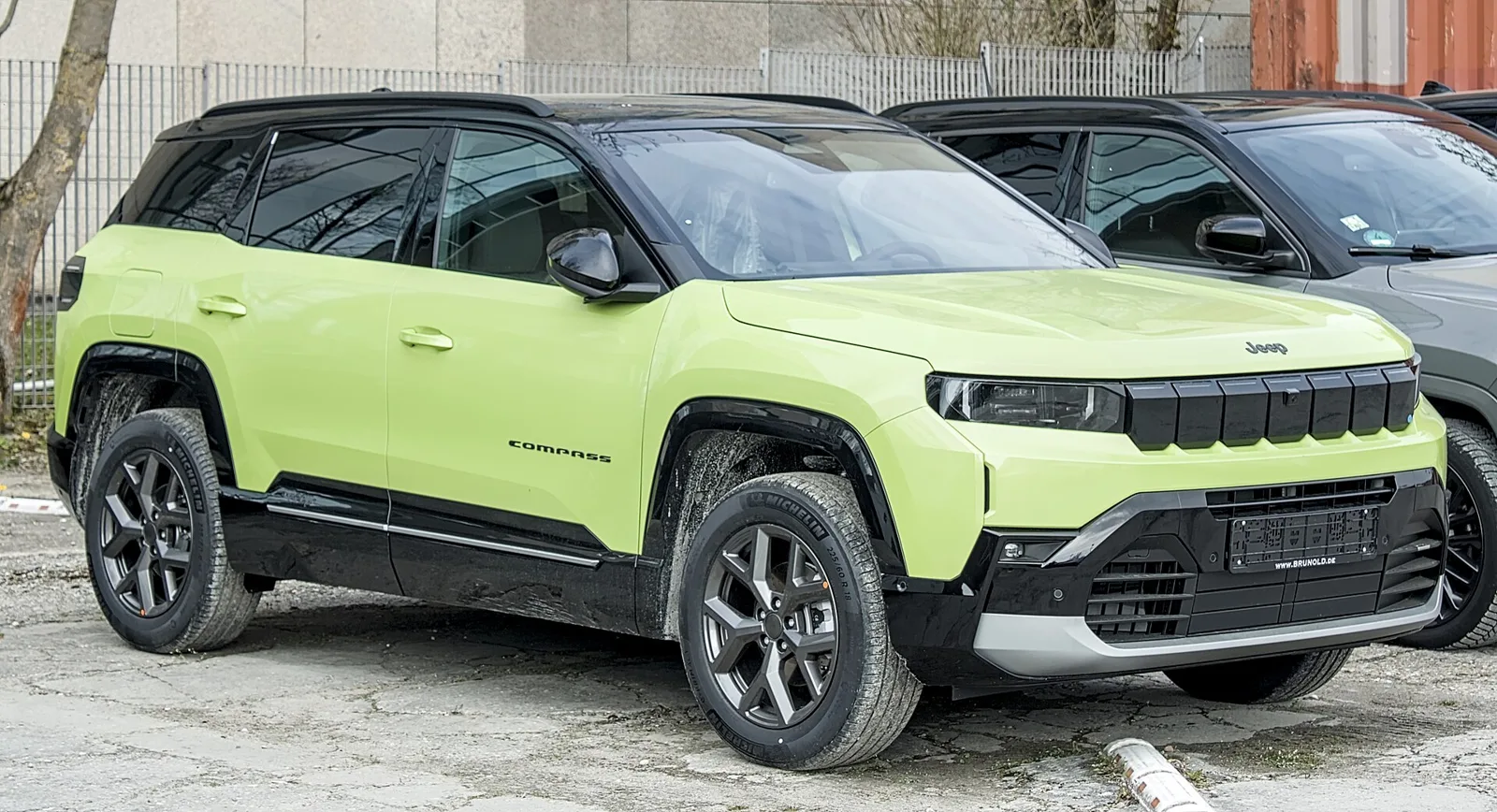
The 1940 Army contest, the Willys MB that defined the World War II jeep, the civilian CJ line, the Wrangler and today's SUV-only range.
Jeep is an American automobile brand owned by Stellantis, whose name comes from the light four-wheel-drive vehicle that Willys and Ford built for the US Army in World War II. Today the brand sells only SUVs, led by the Wrangler, which still uses solid axles.
Jeep, an American car brand, is now part of Stellantis. Its name is tied to the light four-wheel-drive vehicle of World War II, which became the template for later military and civilian off-roaders. Today the brand sells only sport utility vehicles, from crossovers to the Wrangler, and its heritage still sits at the centre of its identity.
How did the Jeep idea begin?
In 1940 the US Army asked 135 companies to build a working four-wheel-drive reconnaissance car, but only two answered. American Bantam and Willys-Overland took up the challenge, and the Army gave them a deadline of 49 days to produce a working prototype.
Bantam had only a small staff, so its chief engineer brought in the freelance designer Karl Probst. Probst drafted the full plans for the Bantam Reconnaissance Car in just two days, and the hand-built prototype reached Camp Holabird on 23 September 1940 for Army trials.
A 1940 Army contest produced a light 4x4 that became the template for every SUV that followed.
Which companies built the wartime Jeep?
After the Army handed the Bantam design to Willys and Ford, both firms built their own versions of it, starting with prototypes. Spicer supplied the four-wheel drivetrain components to all three makers, so the three vehicles shared a common mechanical core.
Willys-Overland's chief engineer, Delmar Roos, adapted the design to use the company's heavy but powerful Go Devil engine, and Willys won the first production contract. Its version became the standard Jeep, designated MB, while Ford built the GPW to Willys' design under licence.
How much did the wartime Jeep cost to make?
The first Willys contract was priced at US$648.74 per vehicle, while Ford's unit price came to US$782.59. Later the permitted weight rose from 1,275 lb (578 kg) to 2,450 lb (1,110 kg), counting oil and water. Prices climbed as the war continued.
Costs rose as the war went on, but the volume was enormous. Willys and Ford together built about 640,000 Jeeps, roughly 18% of the wheeled military vehicles the United States produced during the war.
How widely was the wartime Jeep used?
The Jeep served in every branch of the US military, and an average of 145 went to each Army infantry regiment. Its tasks ranged from cable laying and sawmilling to firefighting, field ambulances and even railway work. The vehicle proved useful in almost every role.
Nearly 30% of all Jeep production went to Great Britain and the Soviet Red Army, which carried the vehicle's reputation across the Allied world. Its layout later became the model for many light military vehicles.
Where does the name Jeep come from?
The word was used as US Army slang for new recruits before 1940, and for new or untested vehicles. Several explanations for the name have been offered, but none has been fully verified, so the origin is still debated. Debate over the origin continues.
A 1942 military slang dictionary defined a jeep as a four-wheel drive vehicle of half to one-and-a-half-ton capacity. That definition helped fix the word to the light 4x4 once the vehicle reached the public.
How did the Jeep name become a trademark?
Willys applied to register the Jeep name in February 1943, and the application met years of opposition from rivals. The company was the only maker that kept building Jeep vehicles after the war, which helped its case when the trademark was registered in June 1950.
Willys also considered the name AGRIJEEP, which it secured as a trademark during the war. The civilian models of 1945 were marketed instead as the Universal Jeep, a name that reflected a wider range of uses.
How did the civilian Jeep line begin?
The civilian line started in 1945 with the CJ-2A, the first Jeep sold commercially to the public. Its flat fenders matched the wartime original, and the CJ family set the template for later off-roaders. Its name and layout linked it directly to the wartime design.
The CJ line grew through the CJ-3A, the CJ-3B of 1953 and the CJ-5 of 1954, and in 1976 the CJ-7 took over from the CJ-6 in North America. Toledo, Ohio, has been the brand's headquarters since 1945.
What was the Willys Station Wagon and Jeepster?
The Willys Jeep Station Wagon was built from 1946 to 1965 and became one of the company's most successful postwar models. It sold more than 300,000 wagons in the United States, and its growth matched the move of American families to the suburbs.
The Jeepster arrived in the immediate postwar years on the rear-wheel-drive chassis of the Station Wagon, sharing many of its parts. Its variants included the VJ Jeepster and later the Commando, which kept the Jeepster name alive into the 1970s.
What makes the Wrangler different?
The Wrangler is one of the few four-wheel-drive vehicles still fitted with solid front and rear axles. Its rear differential is a Dana 44 and its front a Dana 30, and the upgraded Rubicon adds electronically activated locking differentials and 4.10 gears.
Solid axles are simpler to lift with aftermarket suspension, which lets owners raise the body and fit larger tyres. Many commentators compare the Wrangler's place in the brand to the 911's place at Porsche.
How did the Jeep line expand after the war?
The SJ Wagoneer was produced from 1962 to 1983, and it is considered the start of the luxury SUV segment. Jeep introduced the XJ Cherokee in 1984 as its first unibody SUV, and the model ran until 2001. Both were significant steps for the range.
The Wrangler YJ followed from 1987 to 1995, and it replaced the CJ line as the brand's core off-roader. These models show how the brand moved from military-derived designs to a broader family of road-going vehicles. Those models helped the brand reach a wider audience.
How did American Motors and Renault shape Jeep?
American Motors bought Kaiser's Jeep operations in 1970 for US$70 million. In 1971 the company spun off its commercial, postal and military vehicle lines into AM General, the firm that later developed the Humvee. That split gave the military business its own identity.
Renault began investing in American Motors in 1979, and Renault began selling Jeeps through its European dealers. The arrangement lasted until the company was sold on to Chrysler in 1987. Renault's involvement brought the brand's vehicles into new dealer networks.
Who owned Jeep over the years?
Kaiser acquired Willys in 1953 for US$60 million, and Kaiser renamed the company Kaiser-Jeep in 1963. American Motors took over in 1970, and it was Chrysler that bought American Motors in 1987 and kept Jeep as its only surviving product line.
Ownership then passed through DaimlerChrysler and Fiat Chrysler, which took over in 2014, before the brand became part of Stellantis, which owns it today. Each change reflected the wider consolidation of the car industry.
What Jeep models are sold today?
The current range consists solely of sport utility vehicles, including crossovers and off-road SUVs. Each model serves a different buyer, from off-road enthusiasts to families. The Wrangler and the Gladiator pickup sit alongside the Compass, Cherokee, Grand Cherokee and the Wagoneer S and Grand Wagoneer.
The planned North American line-up includes the Recon and the Scrambler as well, which shows how firmly the brand has committed to the SUV format.
How did Jeep's military work continue after the war?
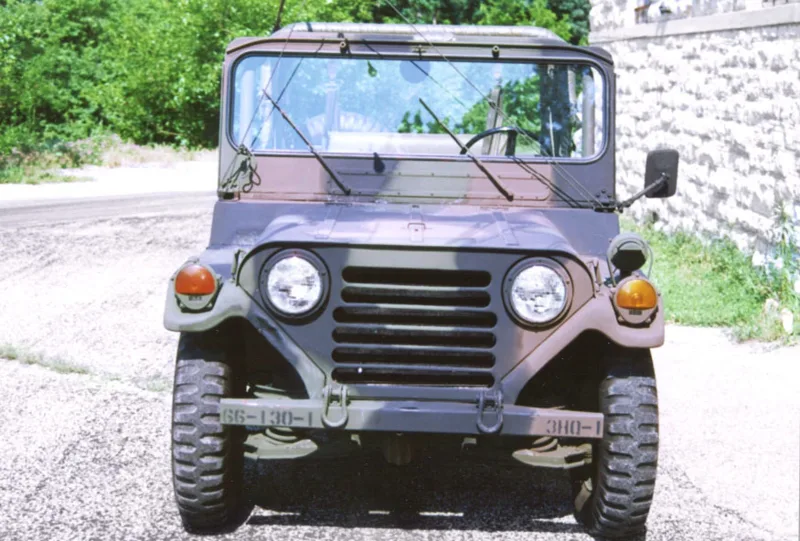
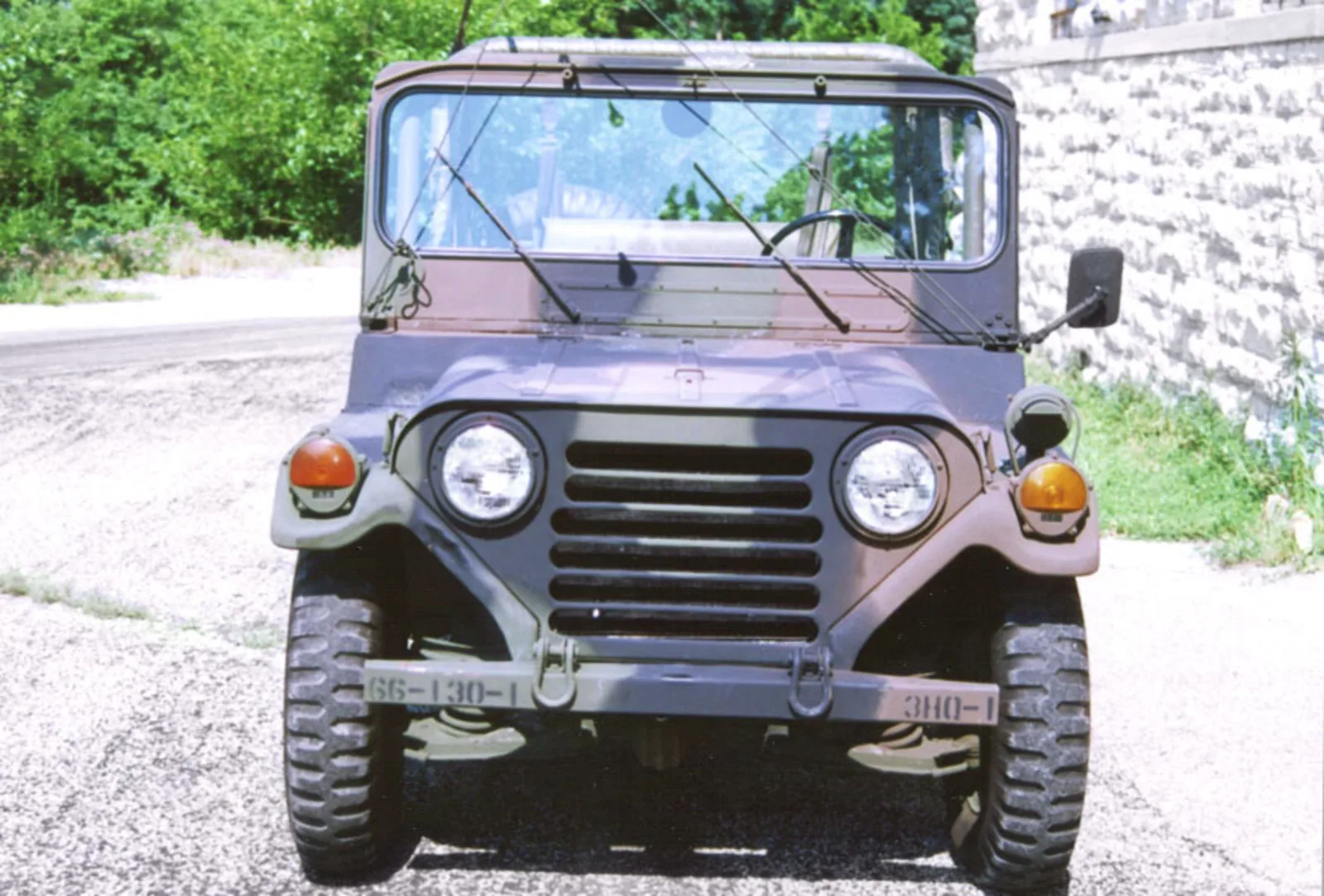
Jeep's military work did not end with the war. The M715 was a 1.25-short-ton army truck from 1965, and it was a militarised version of the civilian line that carried the brand's name into new roles. Its design reflected the company's long experience with military trucks.
Some postwar prototypes also explored new environments. The CJ-V35/U could operate underwater after a snorkel was fitted to its engine, a feature developed for landing and fording operations.
Where has Jeep been built outside the United States?
Jeeps have been assembled around the world, and Mahindra has built them under licence in India for decades. Overseas plants carried the design far beyond North America. Argentina built Jeeps under IKA from 1956, and Canada built them under Kaiser Jeep from 1959 to 1969.
Mitsubishi built more than 30 Jeep models in Japan between 1953 and 1998, while VAM made Jeeps in Mexico from 1946 to 1987. Beijing Jeep began its joint venture in China on 15 January 1984.
What is a Jeepney?
The Jeepney is a unique taxi or bus created in the Philippines from military-surplus MB and GPW Jeeps. Builders lengthened and widened the rear tub to carry more passengers, and the Jeepney became one of the country's most recognisable symbols.
Most Jeepneys today are built from scratch by local manufacturers using different powertrains. The original surplus vehicles remain part of the story, which is why the name still carries weight there.
How has Jeep used sport to sell cars?
Jeep signed a shirt sponsorship with Juventus in April 2012, worth 35 million euros. In August 2014 it agreed a sponsorship with the Greek club AEK Athens, which extended the brand's football presence into Europe. Both deals were significant for the brand's visibility.
These deals show how the brand has used sport and lifestyle marketing to reach buyers beyond traditional car showrooms. Sponsorship of this kind reaches fans who might never visit a showroom.
How big is Jeep as a business?
Global SUV volume reached 1.4 million in 2016, compared with 500,000 in 2008. Two-thirds of those sales were in North America, and the brand had over 2400 US dealerships. That growth followed a long period of expansion. The figures reflect a sharp rise in demand over the period.
Analysts have estimated that a spun-off Jeep would be worth between US$22 billion and US$33.5 billion, a figure that shows how central the brand has become to its owner. The scale of those sales shows why the brand matters to Stellantis.
Jeep milestones at a glance
The table below lists the main figures covered in this article. Each row names one item, so the values should not be read as applying to every model in the range.
| Item | Detail |
|---|---|
| Army contest | 135 companies asked, 49-day deadline |
| Wartime Willys contract | US$648.74 per vehicle |
| Wartime Ford unit price | US$782.59 |
| Wartime output | About 640,000 Jeeps |
| First civilian model | CJ-2A, 1945 |
| Wrangler launch | 1986, still in production |
| Kaiser purchase | US$60 million, 1953 |
| American Motors purchase | US$70 million, 1970 |
| Global SUV sales, 2016 | 1.4 million |
| Estimated spin-off value | US$22 billion to US$33.5 billion |
Frequently asked questions
Who first built the Jeep prototype?
The Bantam Reconnaissance Car was the first Jeep prototype, designed by Karl Probst for American Bantam. Willys and Ford later built their own versions to the same basic design.
Why is the grille so distinctive?
The pressed-metal nine-slot grille was a Ford design feature, and it became part of the standardised wartime design. Willys later used seven slots, which helped the brand define its own look.
Is the Jeep still a pickup truck maker?
The Gladiator is the only pickup in the present line-up, which otherwise focuses on SUVs. Earlier generations included pickups and small vans, but those lines have since been dropped.
How many Bantam vehicles were built during the war?
Bantam built about 2,700 BRC-40 vehicles during the war, before spending the rest of the conflict building heavy-duty trailers for the Army. Its original design was the starting point for the wider Jeep family.
_IMG_5727.jpg)