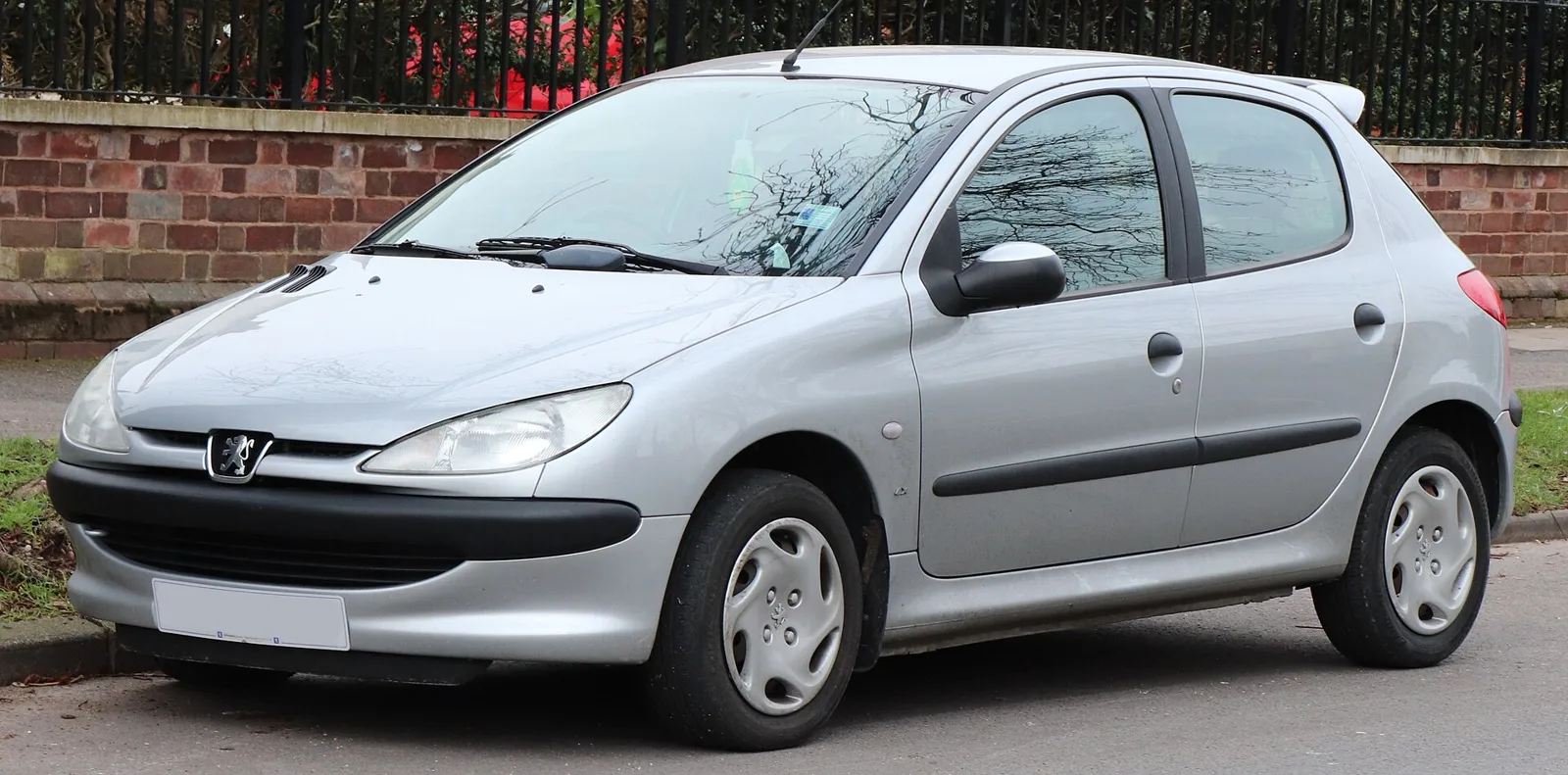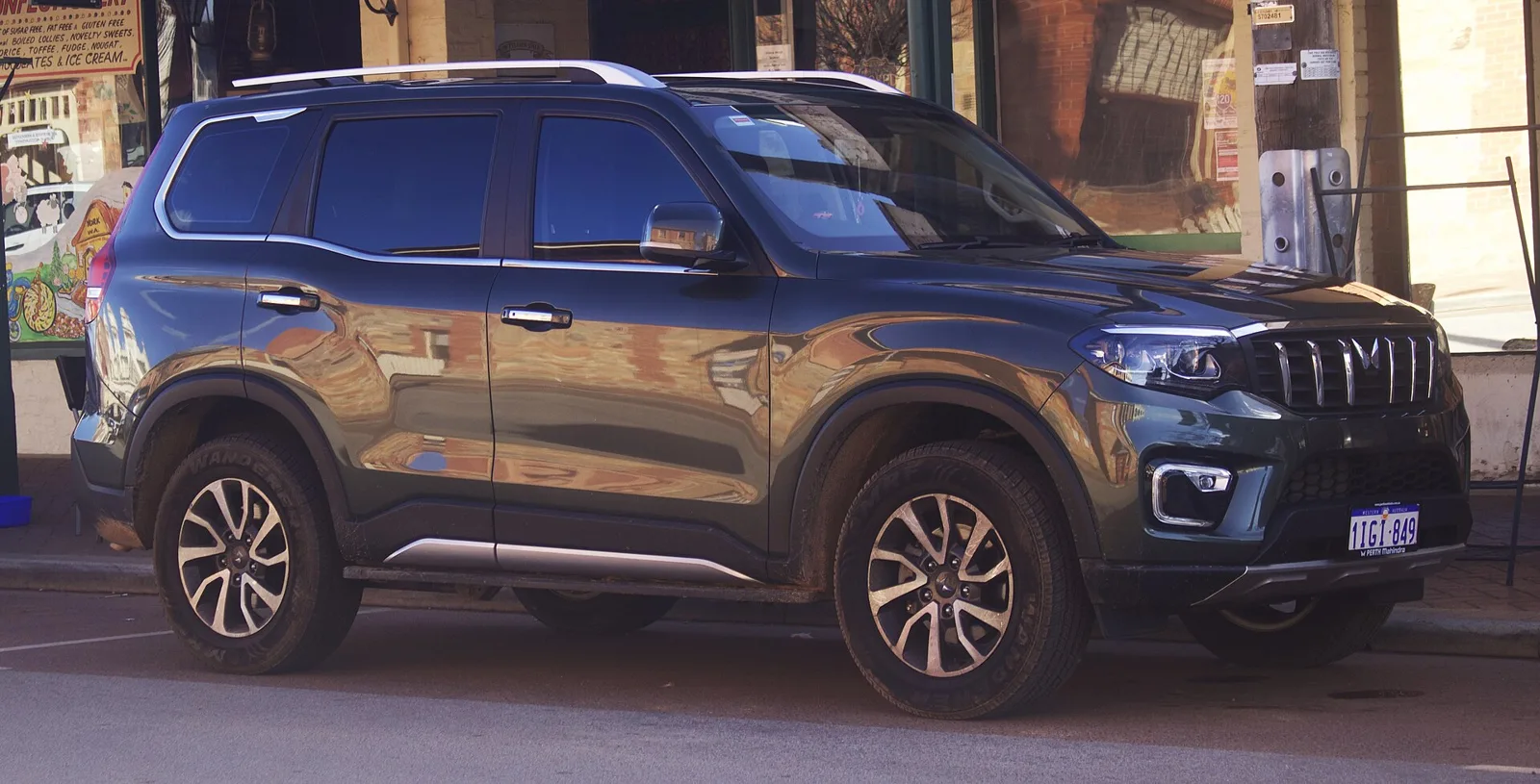
An Indian group that began as a steel trader, built Jeeps under licence, became a leading tractor maker and now leads India's SUV market.
Mahindra is an Indian automaker and farm equipment group that started as a steel trader in Ludhiana in 1945. It built Jeeps under licence, became a leading tractor maker and now sells SUVs such as the Scorpio, XUV700 and Thar across India.
Mahindra is an Indian automaker headquartered in Mumbai and part of the Mahindra Group. It ranks among India's largest SUV producers, and its tractor arm is the biggest tractor maker anywhere by unit output. This history traces the marque from a 1945 steel trading start through its Jeep heritage, its acquisitions and its modern SUV range.
How did Mahindra begin in 1945?
The company opened for business on 2 October 1945 as a steel trader in Ludhiana, trading as Mahindra and Mohammed. The brothers Kailash Chandra and Jagdish Chandra Mahindra launched it alongside Malik Ghulam Muhammad, a partner who left for the newly formed Pakistan in 1948.
With the old partnership gone, the brothers were left with stationery and a company stamp that still read M and M. Rather than reprint everything, they simply changed the business name to Mahindra and Mahindra, and the name has stayed ever since. Anand Mahindra, the group's present chairman, is a grandson of Jagdish Chandra Mahindra.
The business was small and family-led at the start, which is why its early decisions were so personal and closely tied to the founders.
From a steel trader's stationery stamp to a global tractor business, Mahindra has grown by buying, licensing and building.
Why was the Jeep so important to the company?
The founders spotted a chance to build larger multi-utility vehicles. They began assembling Willys Jeeps under licence in India, and the firm soon became the country's best-known Jeep maker. Light commercial vehicles and farm tractors were added to the lineup later.
American Motors Corporation acquired the Jeep brand in 1970, and Mahindra carried on building Jeeps under a licence from AMC. When Chrysler took over AMC in 1987, the Indian company kept producing Jeeps under the new owner's arrangement.
The company assembled the Jeep CJ3 from 1954, and it moved into light commercial vehicles in 1965. Those early decades built the manufacturing discipline that supported the larger programmes that came afterwards.
How did tractors become the group's biggest business?
Tractor production for India began in the early 1960s, and the farm division grew into the largest tractor operation on earth. Annual sales have passed 200,000 units, and more than 2.1 million tractors have left its plants since the business started.
The farm business is supported by more than 1,000 dealers, which serve about 1.45 million customers. Its machines reach 40 countries, and production runs from four Indian plants, with further sites in China, the United States and Australia.
Quality awards followed the growth. In 2003 the farm equipment sector received the Deming Application Prize, and in 2007 it was honoured with the Japan Quality Medal for total quality management across its operations.
Tractors matter to rural buyers, and the company's dealer network gave it a service reach that many rivals lacked. That reach helped the farm business keep its volume through economic swings.
Dealers and service staff are central to tractor sales, because farmers depend on quick repairs during the working season.
Which acquisitions shaped the group?
Mahindra's first large overseas purchase came in 1984, when it took over Balkania, a Greek vehicle maker that had been building some Mahindra models under licence. The deal showed an early appetite for buying existing manufacturing rather than building from scratch.
Buying existing plants and brands gave the group market access quickly, a strategy it repeated across tractors, motorcycles and design.
In 1999 the group bought Gujarat Tractors from the state government. In 2007 it acquired Punjab Tractor Limited, which made it the largest tractor manufacturer in the world at that point, and the acquired business was folded into the group as the Swaraj division in 2009.
New industries followed. Kinetic Motors came into the fold in 2008, giving the group a foothold in two-wheelers. In 2010 the group acquired 55 percent of REVA, the electric car maker, and by 2016 it held the whole business.
The Jeep licences gave the firm a long education in building rugged utility vehicles, and that expertise shows in the off-road character of its later SUVs.
How big is the group's defence and military business?
Military vehicles have been built and assembled by the company since 1947, when it began importing the Willys Jeep that had been used widely in the Second World War. Its armoured line includes the Mahindra Armoured light specialist vehicle, the Straton armoured personnel carrier and earlier models that have since been discontinued.
Defence work runs alongside the car and farm divisions. It draws on the same sheet metal and vehicle engineering as the civilian products, which gives the group a practical link between military and commercial programmes. The defence side has roots in those early import years and remains a distinct line of business.
What did the SsangYong and Peugeot deals bring?
In 2011 Mahindra secured a majority interest in SsangYong Motor of South Korea and made it a subsidiary. The relationship soured once funding dried up, and SsangYong entered receivership in December 2020. A KG Group consortium later took control, which ended the Indian group's involvement.
In 2014 Mahindra took a 51 percent controlling stake in Peugeot Motocycles and lifted it to full ownership in 2019. The purchase added a motorcycle business to the group, complementing the Kinetic two-wheeler operation.
The group has also been measured by outside bodies. The Reputation Institute ranked it among the top ten Indian companies in 2008, and a Bluebytes study named it India's second most reputed car company in 2012.
The international footprint is wide. Mahindra Europe is based in Italy, Mahindra Automotive North America operates in the United States, and the group also runs businesses in South Africa and Australia.
Expansion into car assembly abroad began with Egypt. Mahindra started CKD operations there in 2008 with the Scorpio, and assembly in Brazil followed that venture.
How did Pininfarina come under Indian ownership?
The group and its sister company Tech Mahindra agreed in December 2015 to purchase a 76.06 percent holding in the Italian design house Pininfarina, for 168 million euros. The transaction placed one of the most celebrated coachbuilding and design names under Indian control.
The Pininfarina link gave the group a design presence in Italy and a route to European styling expertise. Mahindra's own range of XUV models and the Scorpio N show how that design culture has been folded into the group's products.
Which joint ventures were formed and ended?
A joint venture with Renault began in 2005 and produced the Logan from April 2007. The partnership came to an end in April 2010, when Mahindra bought out Renault's share, although Renault kept supplying engines and transmissions for Mahindra vehicles.
An earlier partnership with Ford produced Ford cars in India, including the Escort at the Nashik factory. Ford lifted its stake to 72 percent in 2003 and renamed the business. In October 2019 Mahindra returned to the arrangement with a controlling 51 percent stake, but it ended the tie-up in January 2021 as pandemic pressures bit.
How has the company approached North America?
Mahindra intended to sell diesel SUVs and pickups in North America from late 2010 through an independent distributor. Contractual disputes and product changes delayed the launch, and in June 2012 American dealers filed a mass tort lawsuit against the company.
A car factory in Detroit, Michigan, opened on 20 November 2017 under the company's American subsidiary. It employs 250 staff, and it was the first auto plant to open in that city for a quarter of a century. Its first vehicle, the Roxor, rolled out in March 2018.
Which SUVs define the modern range?
The company builds more than 20 car models in India, including the Scorpio and Bolero. The Xylo, introduced in January 2009, found over 15,000 buyers in its first half-year, which showed the appetite for practical seven-seat vehicles.
Each new platform was designed to support several vehicles rather than one, which spread development costs and made it easier to launch new models quickly.
The XUV500 arrived in September 2011, built on a new SUV platform designed to underpin further models. The TUV300 followed in 2015 with a design inspired by a battle tank, and the KUV100 came in January 2016 as a compact monocoque.
The XUV300 reached showrooms in February 2019 and earned a five-star adult safety rating in an independent crash test. The second-generation Thar was launched in October 2020, the XUV700 in 2021, and the Scorpio N on 27 June 2022.
Why do Mahindra model names end in O?
Most of the company's commercial and passenger vehicles finish with the letter O, as in Scorpio, Verito and XUV700. Former president Pawan Goenka explained that the habit began after the Bolero and Scorpio succeeded, and the team came to regard the O as a lucky letter.
What is the company's energy and industrial business?
Mahindra moved into the energy sector in 2002 to meet rising demand for electricity in India. Its Powerol engines and diesel generator sets have sold in very large numbers, and the business later launched its first CNG and natural gas gensets.
The Powerol operation won the Deming Prize in 2014, a recognition of its manufacturing standards. The energy business draws on the same engine and manufacturing know-how as the automotive side, which helps the group spread its engineering costs.
Who leads Mahindra Automotive today?
Anish Shah is the chief executive and managing director of Mahindra Automotive. The group is chaired by Anand Mahindra, and the automotive business competes in India with Maruti Suzuki and Tata Motors.
Fortune India placed the company 18th in its 2025 ranking of top Indian companies, a measure of its scale in the domestic market. The brand has also collected awards for trust, governance and corporate responsibility over the years.
What are the key figures for Mahindra?
| Specification | Detail |
|---|---|
| Founded | 2 October 1945, in Ludhiana |
| Headquarters | Mumbai |
| Jeep CJ3 assembly | From 1954 |
| Tractor sales | Above 200,000 a year |
| Tractor countries | 40 |
| Pininfarina stake | 76.06 percent, 168 million euros |
| SsangYong majority | 2011 |
| Ford collaboration ended | January 2021 |
| Detroit plant | Opened 20 November 2017 |
| XUV300 launch | February 2019 |