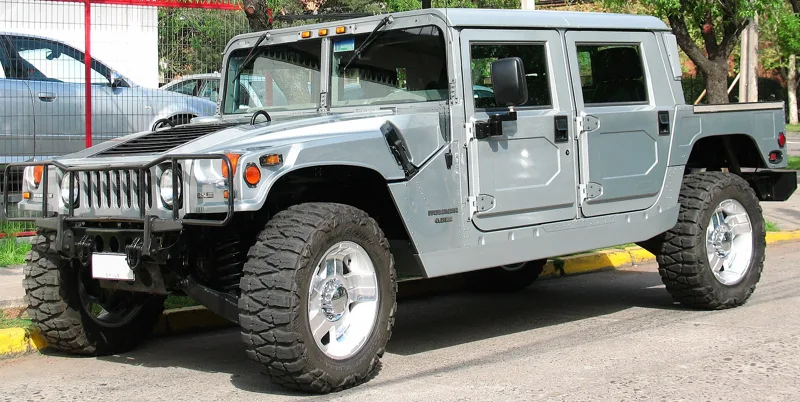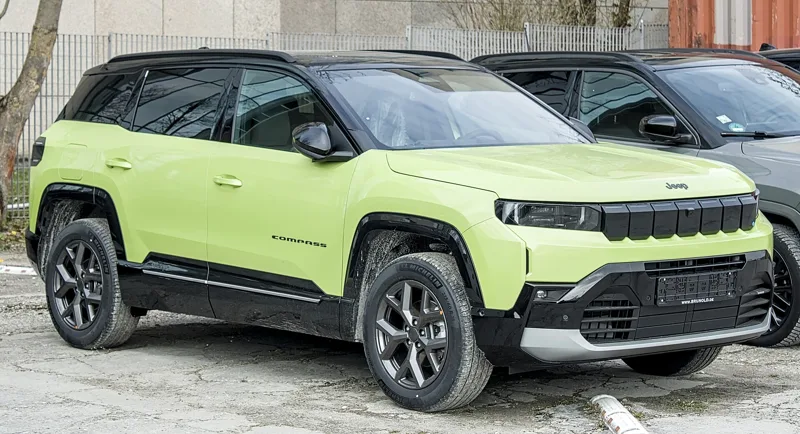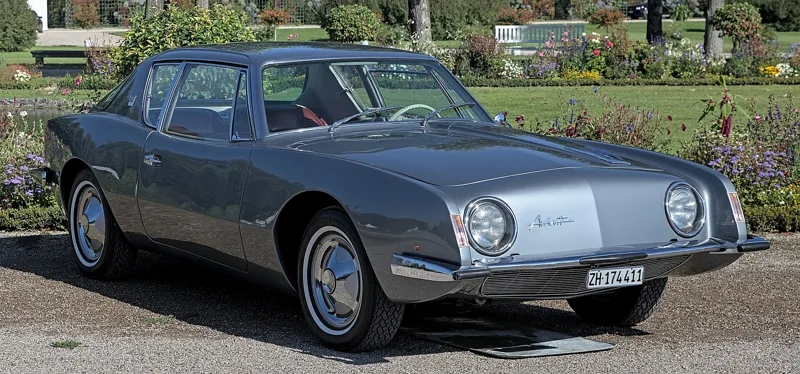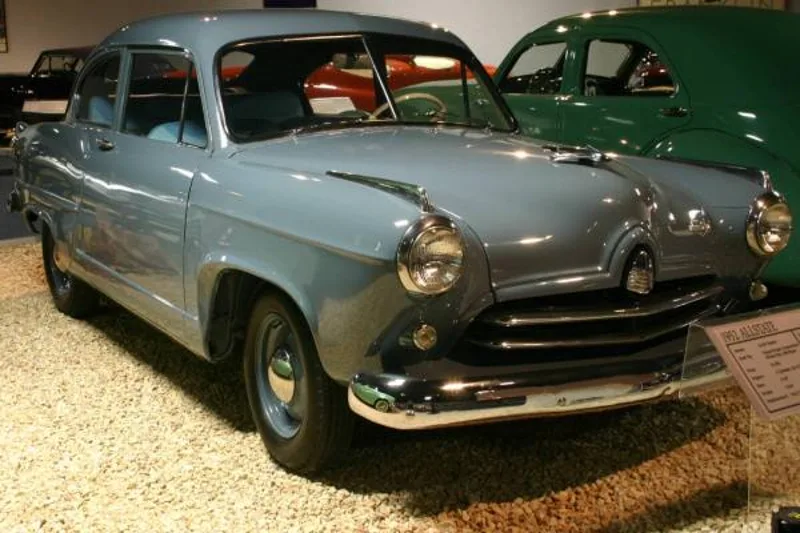
How John Willys built a major US carmaker, nearly lost it in the 1920s and 1930s, then made the wartime Jeep that gave the name its lasting fame.
A 1908 purchase by John North Willys led to the Willys-Overland company, whose wartime MB jeep built its lasting reputation. The name later became a Brazilian car brand, and its trademark changed hands again in 2014, when Carrozzeria Viotti acquired it.
Willys was the name used by Willys-Overland Motors, an American carmaker founded by John North Willys. Its wartime Jeep gave the company a lasting place in automotive history, and the name later led a second life in Brazil. Today the Willys name survives mainly as a trim name and a trademark owned by others.
Who founded Willys-Overland and how did it grow?
John North Willys bought the Overland Automotive Division of Standard Wheel Company in 1908 and renamed the business Willys-Overland Motor Company in 1912. From 1912 to 1918 it was the second-largest car producer in the United States, behind only Ford Motor Company.
Willys grew by acquisition. In 1913 it took a licence to build Charles Yale Knight's sleeve-valve engine for its Willys-Knight cars. In the mid-1920s it acquired the F. B. Stearns Company of Cleveland and continued the Stearns-Knight luxury car. Willys had also bought Electric Auto-Lite in 1914.
In 1917 Willys formed the Willys Corporation as a holding company. Its purchases included the Russell Motor Car Company of Toronto in 1916, the Curtiss Aeroplane and Motor Company in Buffalo, New Process Gear by 1917, and in 1919 the Duesenberg Motors plant in Elizabeth, New Jersey.
From an Overland rival and a Chrysler rescue to the wartime jeep, a Brazilian sports car and a revived name.
How did the Willys Corporation fall into crisis?
A new Willys Six was planned for production at the Elizabeth plant, but the slump of 1920-21 pushed the Willys Corporation to the brink. Bankers called in Walter P. Chrysler to fix matters, and the Willys Six, seen as an engineering failure, was the first model dropped.
Chrysler brought in three engineers, Owen Skelton, Carl Breer and Fred Zeder, who began work on a new car known as the Chrysler Six. To raise cash, many of the corporation's assets went on the auction block. William C. Durant bought the Elizabeth plant and the Chrysler Six prototype, and the prototype was reworked into the 1923 Flint.
Chrysler and the three engineers went to Maxwell-Chalmers, and the car they developed there, the Chrysler Six, appeared in January 1924. The Maxwell firm itself was renamed the Chrysler Corporation in 1925.
What happened to the Willys car brands in the 1930s?
Willys-Overland introduced the Whippet small car in 1926, but the Depression brought losses across the brand line. Stearns-Knight was liquidated in 1929, Whippet production ended in 1931, and Willys-Knight production ended in 1933. The Whippet's models were replaced by the Willys Six and Eight.
A Whippet-based pickup, the Willys-Six C-113, was not a sales success, with only 198 built. International Harvester took the design in 1933 and offered it as the International D-1 with its own 213 cubic inch engine.
In 1932 Ward M. Canaday, who had handled the company's advertising from 1916, became chairman and guided it through receivership. Willys planned two new models, the four-cylinder Willys 77 and the six-cylinder Willys 99, but only the 77 went into production. The company sold its Canadian subsidiary, reorganised, and in 1936 became Willys-Overland Motors.
How did the 1937 and 1939 Willys cars change?
The four-cylinder model was redesigned in 1937 with a semistreamlined body, a slanted windshield, headlamps set into the fenders and a one-piece rounded hood hinged at the rear. For 1939 the Model 39 added Lockheed hydraulic brakes, a 102 inch wheelbase and a 134 CID engine whose power rose from 48 to 61 hp.
Sales of the Model 39 were branded Overland or Willys-Overland, not simply Willys. The Commerce, California factory at 6201 Randolph Street dated from 1929, and during the Second World War it built aircraft assemblies for Lockheed Hudson bombers. After the war it built the first CJ2A and the Willys Aero, and it closed in 1954.
How did Willys win the Army jeep contract?
Willys-Overland was one of two bidders when the US Army sought an automaker to rapidly produce a lightweight reconnaissance car based on an American Bantam design. Joseph W. Frazer, who had joined Willys from Chrysler in 1938 as chief executive, saw that the four-cylinder engine would need improvement.
That engine work fell to Delmar 'Barney' Roos, an ex-Studebaker chief engineer. The target was 15 horsepower at 4,400 r.p.m. running for 150 hours without failure, while the starting engine gave 48 horsepower at 3,400 r.p.m. but could run only two to four hours. Roos took two years to perfect it, using closer tolerances, tougher alloys, aluminium pistons and a flywheel whose weight was reduced from fifty-seven to thirty-one pounds.
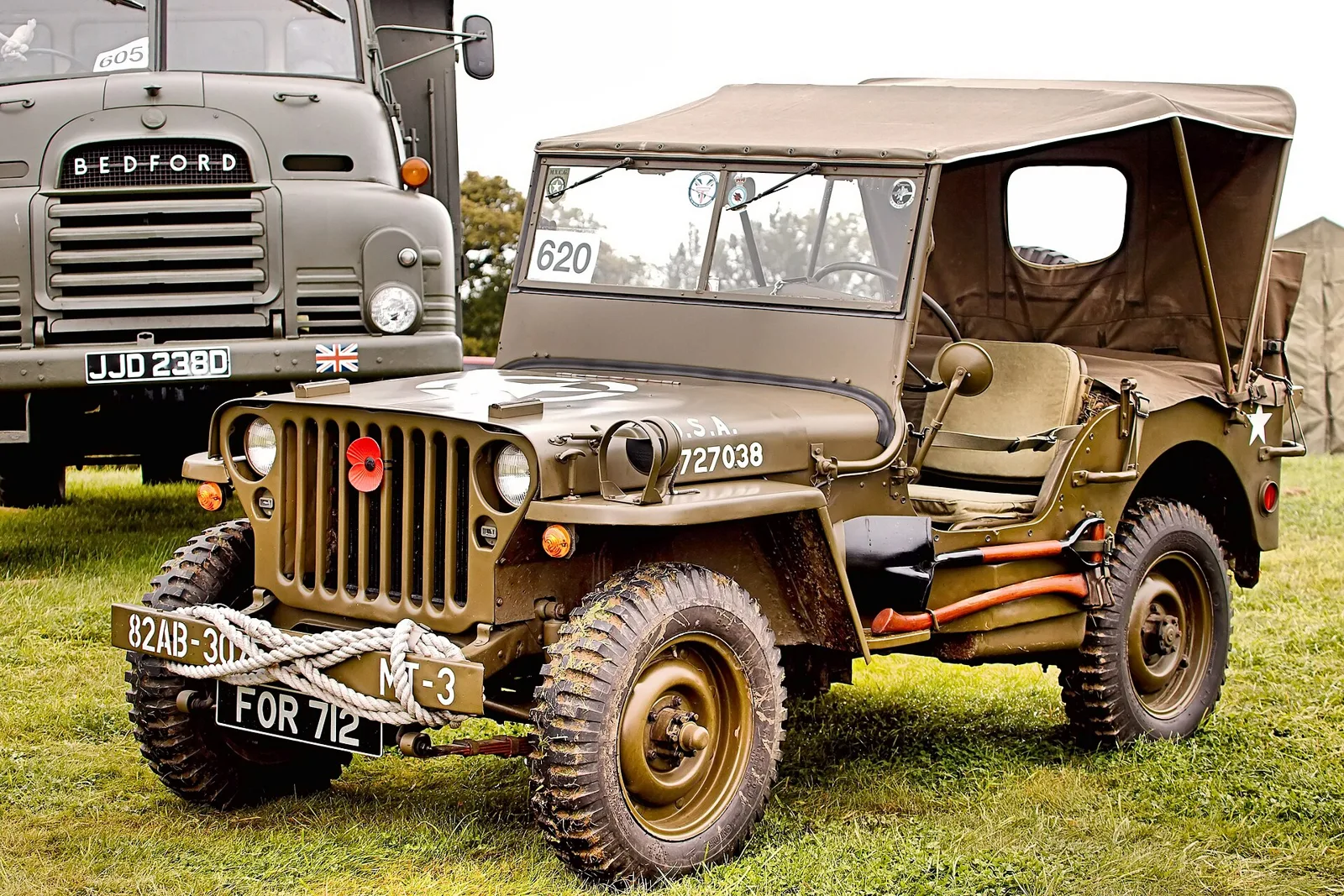
American Bantam was the sole maker of serial production jeeps delivered to the Army in 1940. Ford, Bantam and Willys all made jeeps in 1941, and Willys MB production began in November 1941. Willys-Overland ranked 48th among US corporations by the value of its Second World War military production contracts.
Where does the word Jeep come from?
The word Jeep first appeared in a January 1941 newspaper article about the US Army's midget cars, which named Bantam as the maker. Its origin is disputed. Some believe it came from the abbreviation GP, but Ford did not begin making jeeps until February 1941, after Bantam's vehicles were already in the press.
Other possible sources include Eugene the Jeep, a character in the Popeye comic strip with supernatural powers, and a small tractor called the Jeep, supplied to the Army by Minneapolis-Moline in 1937. Whatever its source, the name stuck. Willys filed a trademark application on 13 February 1943, and after several denials and appeals the trademark was awarded to the company on 13 June 1950.
How many military Jeeps were built in the war?
By the end of the Second World War 647,870 military Jeeps had been built, of which Willys made 362,841, Ford 280,448 and American Bantam 2,675. Willys also built 1,292 airframes for the JB-2 Loon.
The Willys MB was the largest share of wartime production, making Willys the biggest single maker of the vehicle.
What did Willys sell after the war?
After the war Willys did not resume its passenger car models and concentrated on Jeeps and Jeep-based vehicles. Its first postwar product was the CJ-2A, an MB stripped of its military features and fitted with a tailgate. It was among the first civilian vehicles to come from the factory with four-wheel drive.
Willys first tried to sell the CJ-2A as an alternative to the farm tractor, under the name Agri-Jeep. That plan failed because the vehicle was too light to provide adequate draft. Farmers, ranchers and hunters still bought it for unimproved roads and trails.
In 1946 the Jeep Utility Wagon arrived on the same engine and transmission, and a Jeep Utility Truck with four-wheel drive followed in 1947. In 1948 the wagon was offered with four-wheel drive, a step that is often cited as the ancestor of all sport utility vehicles.
Willys also planned a return to passenger cars in 1947 with the 6-70 sedan, powered by a six-cylinder engine producing 70 hp. It was billed as America's first stock car with independent suspension at all four wheels, yet it never reached production. In 1948 an Army contract produced the Jungle Burden Carrier, which evolved into the M274 Utility half-ton vehicle.
Why did Willys return to the car market in 1952?
In 1952 Willys re-entered the car market with the Aero, a compact car first offered as a two-door sedan with six-cylinder engines. Its cars were sold under names such as Lark, Wing, Falcon, Ace and Eagle, and the bodies came from Murray Body Corporation. The CJ-3B Jeep also went into production that year and had sold over 155,000 by 1968.
In 1953 Kaiser Motors bought Willys-Overland and renamed it the Willys Motor Company. Kaiser car production moved from Willow Run, Michigan, to the Willys plant at Toledo, Ohio. Jeep production stayed steady, but sales of the Willys and Kaiser cars continued to fall.
Why did Willys build cars in Brazil?
Willys-Overland established Brazilian operations in 1953, just before the Kaiser takeover, and the Aero entered production there in 1960. The operation was an attempt to offset a shrinking market and losses at home, and Brazil's automotive group approved Willys for the Aero, the Willys MB Jeep, a Rural Jeep and the French Renault Dauphine.
Willys went to some lengths to appear Brazilian, selling a large part of the company to Brazilian stockholders to head off a possible nationalist backlash and to qualify for government incentives. Unlike the Argentine Kaiser operations, it built a modern plant from the ground up.
Willys was among the first companies in the Brazilian passenger car market, and its sales spiked in 1954 when it became the number-one selling car. By 1959 it held 52% of Brazilian passenger car production. From 1960 to 1966, its last full year as an independent, mostly Brazilian-owned company, it held a share of around 30%.
What did Willys make in Brazil during the 1960s?
In 1962 Willys started building the French Alpine A108 as the Willys Interlagos, the first Brazilian-made sports car. It was produced until 1966. The Dauphine, a tail-engined small car from Kaiser's Renault connection, was built in Brazil from 1959 to 1968.
The Interlagos was the car in which many Brazilian racers learned their trade, including Emerson Fittipaldi. In 1964 Willys showed a larger sports car called the Capeta, powered by the 2.6-litre six-cylinder Aero engine.
Renault and Willys-Overland do Brasil teamed up in 1965 on a front-wheel drive project, code-named Project M, meant to replace the aging Dauphine. The car became the Ford Corcel, and the line continued until 1997 as the Ford Pampa. Early Corcels carried Willys lettering in the glass.
What happened to the Willys name in America?
In 1963 the American business had changed its name to Kaiser-Jeep Corporation, and the Willys name disappeared there. Ford's 1967 controlling interest in Kaiser passed Willys-Overland do Brasil to Ford. The Aero-based Itamaraty carried on into the early 1970s, while the Rural and pickup were built as the Ford F-75 until 1983.
Kaiser-Jeep was sold to American Motors Corporation in 1970 when Kaiser Industries left the automobile business. AMC used engines it developed for its other cars in Jeep models. Renault bought a major stake in AMC in 1979 and produced the CJ series until 1986, and Chrysler bought AMC in 1987.
The Jeep marque later passed to DaimlerChrysler, then Fiat and Stellantis, and it builds its vehicles at a new Toledo Complex. DaimlerChrysler revived the Overland name as a trim on the 2002 Jeep Grand Cherokee, recreating a nameplate from the early twentieth century.
Who owns the Willys name today?
In 2014 the Willys trademark was acquired by the Italian coachbuilder Carrozzeria Viotti. Viotti and Fabbrica Italiana Maggiora showed the Willys AW 380 Berlineta at the 2014 Bologna Motor Show, a concept inspired by the Brazilian Interlagos, with a plan to build it in limited numbers.
Stellantis later reintroduced the Willys name as a trim line for the Jeep Gladiator pickup in the early 2020s. The name is therefore back in use, but as a trim on a Jeep, not as a standalone carmaker.
What did Willys cars do in racing?
The 1933 to 1936 Willys coupes and pickups were popular gassers, and the 1933 Willys 77 is the best known. The 1937 to 1942 cars were also favourites of hot rodders and gasser teams. Ollie Olsen's Wil-A-Meaner 1940 coupe, driven by Bob 'Rapid' Dwyer, won the 1961 NHRA Nationals A/G title.
The popularity of these cars is something of a puzzle. The 1933 Willys 77 sold 12,800 units, 13,234 in 1934 and 10,644 in 1935, so it was neither cheap nor plentiful, yet hot rodders took to it in large numbers.
What are the key Willys figures?
| Item | Figure |
|---|---|
| Willys 77 sales, 1933 | 12,800 units |
| Military Jeeps, Second World War | 647,870 total; 362,841 by Willys |
| Willys MB production start | November 1941 |
| Jeep trademark | Filed 13 February 1943; awarded 13 June 1950 |
| Willys Wagon, 1946 to 1965 | 300,000 produced |
| CJ-3B, 1952 onward | Over 155,000 sold by 1968 |
| CJ-5, 1954 to 1983 | 600,000 produced |
| Dauphine, Brazil | 23,887 produced, 1959 to 1965 |
| Aero-Willys, Brazil | 99,621 produced, 1960 to 1971 |
| Brazilian passenger car share | 52% in 1959; around 30% from 1960 to 1966 |
How is Willys remembered?
Willys is remembered above all for the Jeep, which the company helped name and build for military and civilian users. The MB and the CJ series carried the name through war and peace, and the Jeep marque still carries the lineage today.
The Brazilian years produced the Aero, the Dauphine and the Interlagos. The Willys-Knight registry still records surviving vehicles of the older marque.