Fred and August Duesenberg, Indianapolis 500 victories, the Model J and the Cord years that ended with dissolution in 1937.
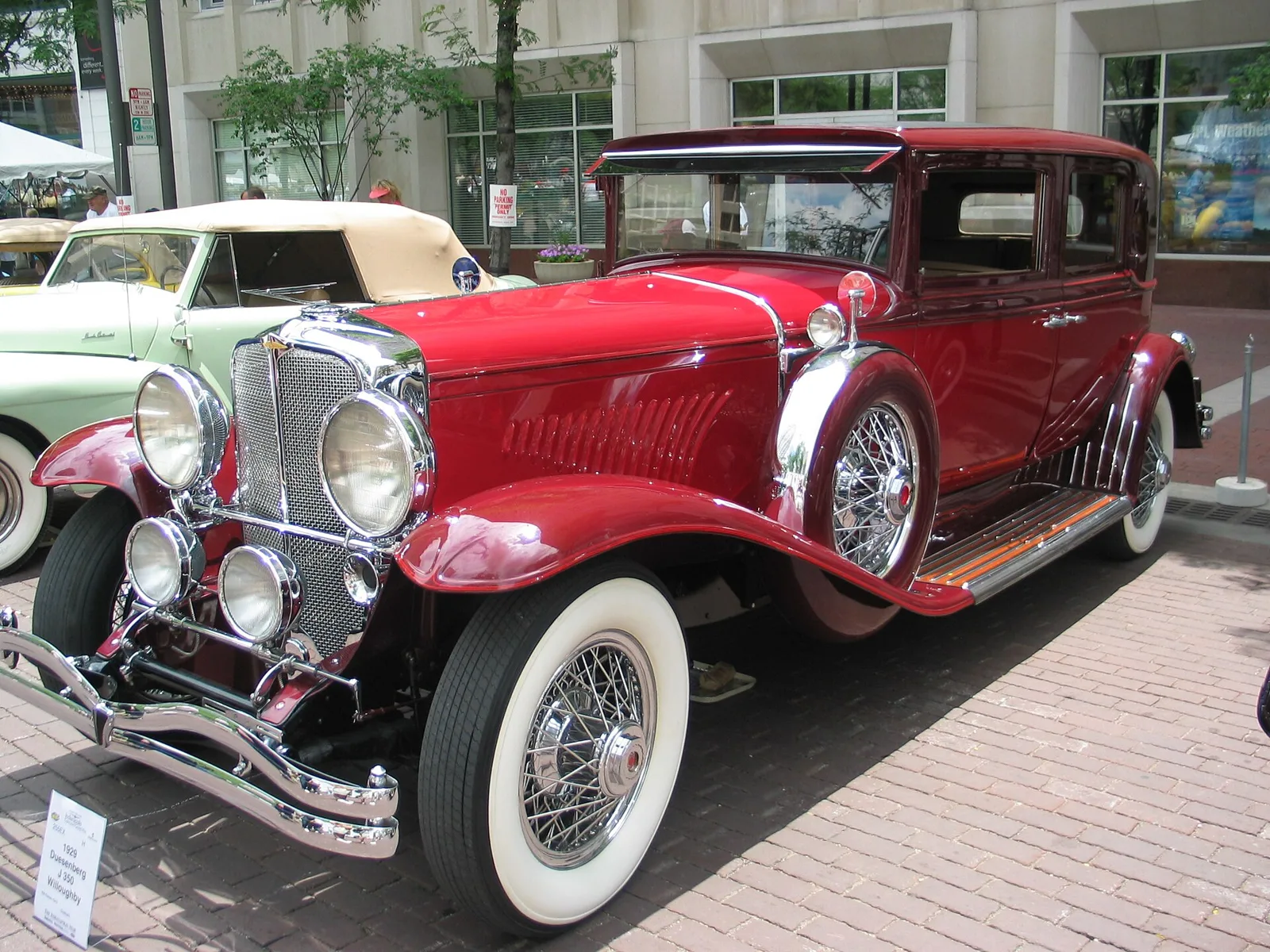
Duesenberg was an American luxury and racing marque founded in Indianapolis in 1920 by Fred and August Duesenberg. Its Model J, launched in 1929 with a 265 horsepower straight-eight, became its defining car before the company was dissolved in 1937.
Duesenberg was an American racing and luxury car maker founded in Indianapolis, Indiana, in 1920 by the brothers Fred and August Duesenberg. The marque is credited with bringing the straight-eight engine and four-wheel hydraulic brakes into wide use. At its height it was regarded as the top of American luxury motoring, and its story runs from Indianapolis 500 victories to dissolution in 1937 and a long series of revivals.
Who founded Duesenberg and where?
Fred and August Duesenberg founded the company in Indianapolis, Indiana, in 1920. The brothers had been designing engines from the early 1900s, Fred having taken up bicycle racing, and they built a first vehicle in 1905 before setting up several companies in Iowa, Minnesota and Indiana.
In 1906 they formed the Mason Motor Car Company in Des Moines, Iowa, with money from the lawyer Edward R. Mason. The Maytag family's F. L. and Elmer Maytag later acquired a majority stake, and the firm traded as the Maytag-Mason Automobile Company until the Maytags sold out in 1912.
Next the brothers set up the Duesenberg Motors Company in Saint Paul, Minnesota, in 1913. The Saint Paul factories were sold in 1919, and the operation moved to Indianapolis the following year.
A straight-eight Indianapolis winner whose Model J set the benchmark for American luxury before the 1937 end.
Did Duesenberg win at Indianapolis?
Yes. Duesenberg cars won the Indianapolis 500 in 1922, 1924, 1925 and 1927, and in 1922 eight of the top ten finishers were Duesenbergs. The marque also gave America its first Grand Prix win, when a Duesenberg driven by Jimmy Murphy took the 1921 French Grand Prix.
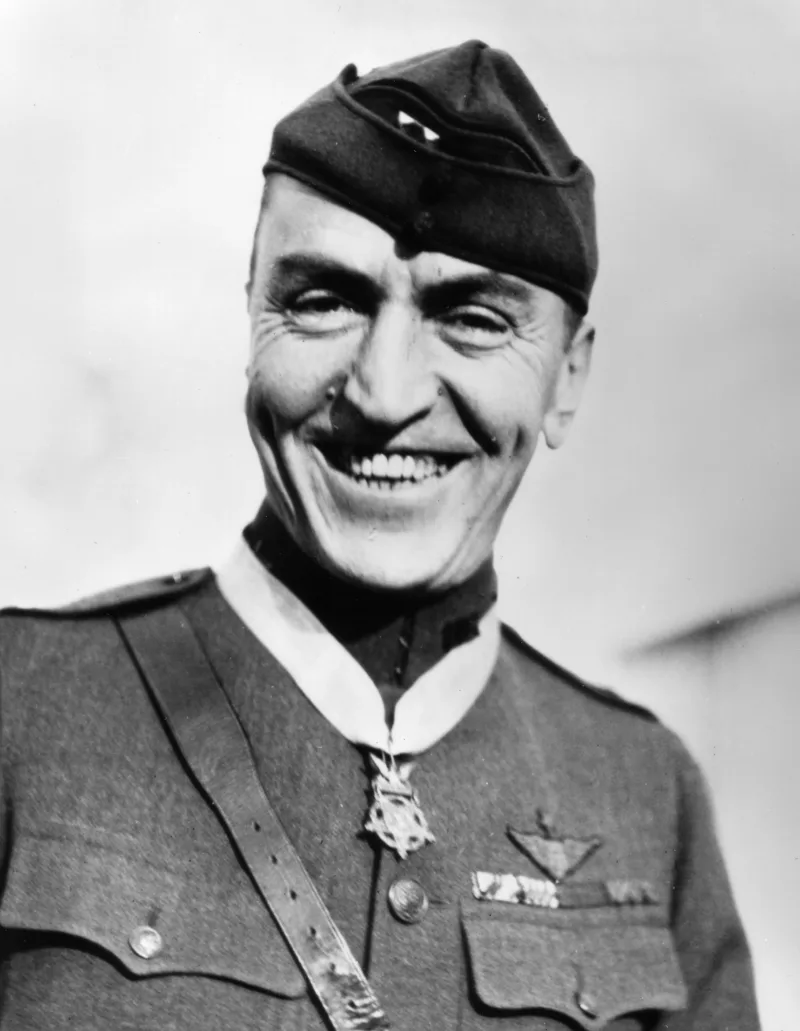
The company had been racing at Indianapolis well before those wins. In 1914 Eddie Rickenbacker piloted the first Duesenberg-designed racer in the event and finished tenth, and Tommy Milton took the 1919 Elgin Trophy at the wheel of a Duesenberg.
What happened during the First World War and afterwards?
During the war the brothers made aircraft engines at a site in Elizabeth, New Jersey. Their racing work carried on alongside that effort, and by 1919 they had sold the Saint Paul factories and moved toward Indianapolis.
The brothers took on engineering roles once they had signed over the naming rights and engine patents to the promoters Newton E. Van Zandt and Luther M. Rankin. The company's racing side kept developing cars while the passenger line was being set up.
What was the Duesenberg Model A?
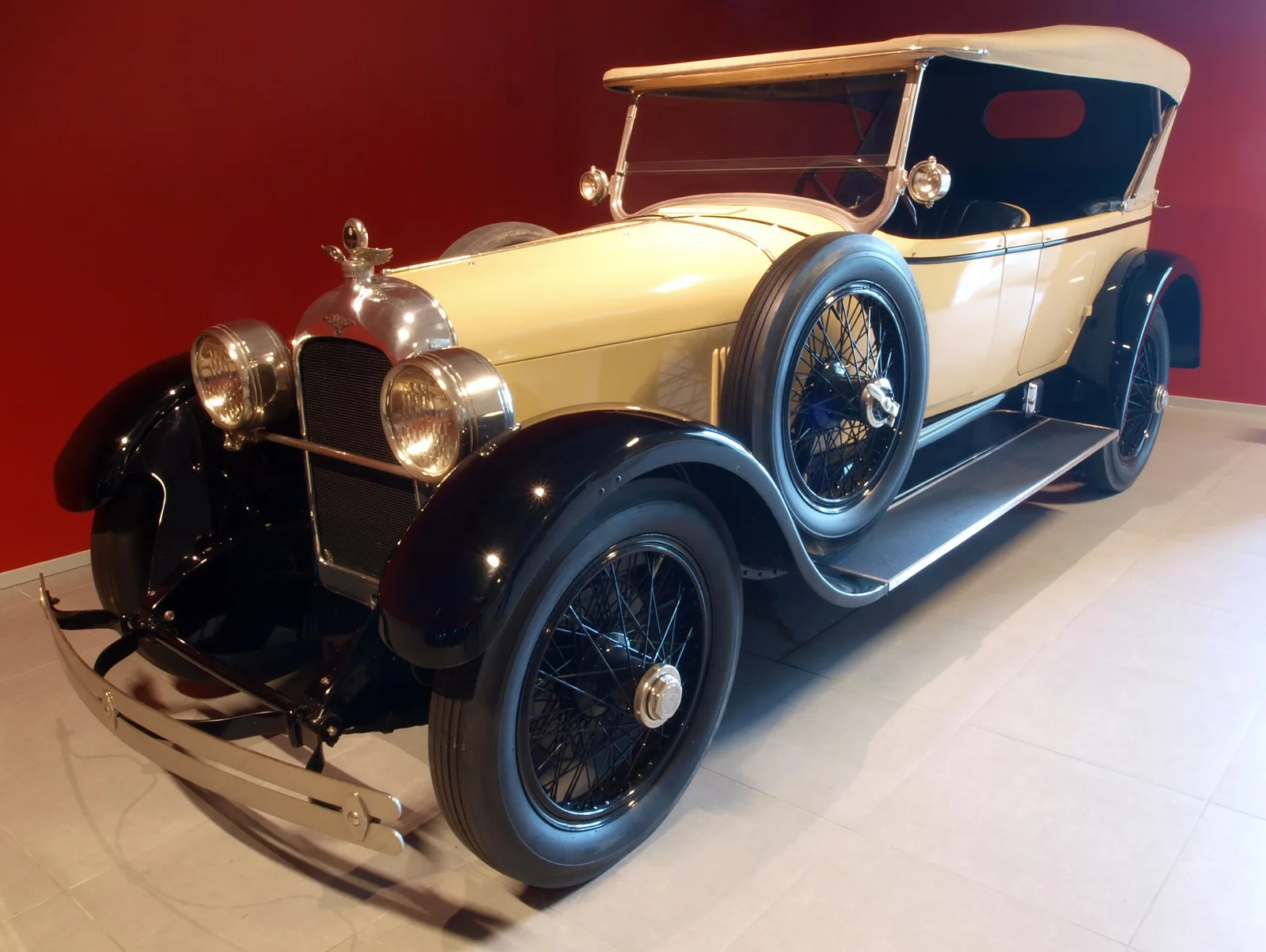
The Model A was Duesenberg's first car, powered by a 260 cubic inch (4.3-litre) straight-eight producing 88 horsepower (66 kW). It was built in volume with that engine layout, and it was the first passenger car offered with hydraulic brakes on all four wheels.
The first Model A was commissioned by Samuel Northrup Castle, a Hawaiian businessman and politician. Its engine was the largest of any consumer vehicle at the time, and the car also used an overhead camshaft and four-valve cylinder heads.
Production proved difficult. Deliveries to dealers did not start until December 1921, and the company could not reach its quota of 100 vehicles per month because the Indianapolis plant struggled to build one car a day. No more than 150 Model As were made in 1922, and only 650 were sold over six years.
How did Errett Lobban Cord change Duesenberg?
Errett Lobban Cord, a transportation executive, bought Duesenberg in 1926 after the company had gone into receivership in 1924. He led development of the Model J, and August Duesenberg moved mostly to the racing side, designing every race car built from 1926 until the company ended.
Within two years of the takeover, Cord had the company build a new model intended to outclass every other American car. The result was the Model J, which went on sale in 1929 and became the marque's defining product.
What was the Duesenberg Model J?
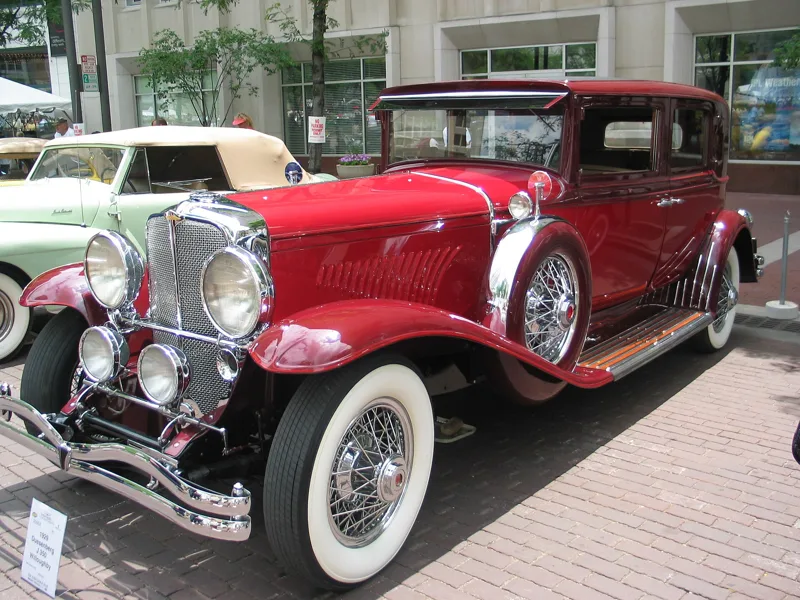
The Model J was the marque's best-known car, launched in 1929 with a 265 horsepower (198 kW) straight-eight. Its 7-litre (420 cu in) engine was built by Lycoming, another Cord company, and prices sat between $14,000 and $20,000 in that period.
The engine drew on the racing units the company had built through the 1920s, and it used dual overhead camshafts with four valves per cylinder. The Model J reached a top speed of 116 mph (187 km/h), and 88 mph (142 km/h) in second gear, which made it the most powerful car of its era.
Production was slower than planned. Prototype work began in 1927, and deliveries started in 1929, just before the Depression set in. Roughly 300 cars were finished by 1930, below the planned 500.
Historian Randy Ema credited the Model J with starting the horsepower race that pushed engine layouts from twelve to sixteen cylinders, although he added that those later engines lacked the Model J's power.
How were Model J bodies designed?
Duesenberg's chief body designer, Gordon Buehrig, designed around half of the Model J bodies, and coachbuilders around the world produced the rest, including Gurney Nutting, Murphy and Derham. Chassis came in long and short wheelbases, with the long version at 153.54 in (3.90 m) and the short at about 141.73 in (3.60 m).
Special sizes were also built. The SSJ used a wheelbase shortened to 125 in (3.18 m), and a few cars were stretched to 160 in (4.1 m) or more. Since the cabins were fitted to each chassis by the coachbuilder, the cars were highly individual.
How fast was the supercharged SJ?
The supercharged Model J, known as the SJ, was introduced in 1932 and reported to reach 104 mph (167 km/h) in second gear. In third gear it was said to reach a top speed of 135 to 140 mph (217 to 225 km/h), and only 36 units were built.
Reported acceleration figures were striking for the period. Zero to 60 mph (97 km/h) took around eight seconds, and 0 to 100 mph (0 to 161 km/h) took 17 seconds, despite an unsynchronised transmission. The SJ had a wheelbase of 142.5 in (362 cm), and a special version of it, the Mormon Meteor, broke several land speed records.
Who bought Duesenbergs after the 1929 crash?
After the 1929 stock market crash, the Model J's buyers shifted from New York investors to Hollywood stars. Two altered J cars, dubbed SSJs, were built in 1935 for the film actors Gary Cooper and Clark Gable.
The one-off SJ Twenty Grand was built in 1933 for the Century of Progress World's Fair, to show Duesenberg's automotive progress. The SSJ reportedly produced 400 hp (298 kW) and could reach 60 mph (97 km/h) in under 8 seconds.
Cooper's car went for $22 million in 2018, which made it the most expensive American car sold at auction at that time. By 2002, about 378 of the 481 Model Js of all types were still in existence.
Why did Duesenberg end in 1937?
Duesenberg was sold by Cord and dissolved in 1937. Accounts describe it as the only automotive company to go bankrupt in the Great Depression without a government rescue. They credit New Deal politics, which avoided the image of helping the richest, even though Duesenberg was then the largest employer in Indianapolis.
The last Duesenberg from the original company was completed in 1940. It was commissioned by the German artist Rudolf Bauer and finished by August Duesenberg after the company had shut down.
Were there any Duesenberg revivals?
Yes, several, though none restored the original company. August tried to restart it in 1947, and his son Fritz, with the car designer Virgil Exner, built a single concept car in 1966 before that attempt failed. A later effort came in 1970, when Bernard Miller bought the Duesenberg Corporation.
Miller's company produced the SSJ from templates taken from the original 1935 SSJ La Grande body, with an aluminium body over an ash frame. Plans called for more than 300 SSJs, but only 8 were completed between 1970 and 1974.
What was the Duesenberg II?
In 1978 Elite Heritage Motors acquired the Duesenberg trademark and began building the handmade Duesenberg II in Elroy, Wisconsin, under the Duesenberg Motors Company name. The cars kept the styling of the 1920s and 1930s but added stereo systems, air conditioning and an automatic transmission.
Each car was measured against an original example, and more than 5,000 manhours of craftsmanship went into each one. A new Duesenberg II Royalton had a base price of $125,000 in 1981. The range included the Torpedo sedan and phaeton, and the Murphy roadster.
The factory produced 67 cars in total before closing in 2001.
What was the 1996 Torpedo Coupe?
The 1996 Torpedo Coupe was a project of Minnesota-based Duesenberg Custom Coach, designed by Jeff Teague. It was to use an axial twelve-cylinder engine called the Cylindrical Energy Module, and it was planned as the first production car with Bose electromagnetic suspension. The project never reached production.
The Cylindrical Energy Module was adapted from a firefighting pump design by the car designer Eddie Paul. It would rotate on an axis, draw in fuel and lubricate itself, and could run on petrol or diesel. A Mercedes V12 was the fallback if the new unit proved too costly, and the plan targeted 25 to 50 units a year.
What is the Duesenberg legacy today?
Duesenberg is remembered for its straight-eight engines, its Indianapolis victories and the Model J. At its height the marque was seen as the peak of American luxury and engineering, and many surviving examples are now highly valued at auction.
Historian Donald Davidson called the Duesenberg the 'most prestigious passenger car' in American history and likened it to an American Rolls-Royce. Film stars, royalty and rich individuals were among its buyers.
The Franklin Mint began producing collectible scale models of the Duesenberg Coupe Simone in 1998. That car was a fictitious custom-made luxury car said to have been built in the late 1930s.
Key dates in the Duesenberg story
| Year | Event |
|---|---|
| 1906 | Mason Motor Car Company formed in Des Moines, Iowa |
| 1913 | Duesenberg Motors Company set up in Saint Paul, Minnesota |
| 1920 | Duesenberg Automobile & Motors Company founded in Indianapolis |
| 1921 | Jimmy Murphy wins the French Grand Prix in a Duesenberg |
| 1922 | First of four Indianapolis 500 wins; no more than 150 Model As built |
| 1926 | Errett Lobban Cord buys the company |
| 1929 | First Model J cars delivered |
| 1932 | Supercharged SJ introduced; 36 units built |
| 1937 | Company sold by Cord and dissolved |
| 1978 | Elite Heritage Motors acquires the trademark |
| 2001 | Duesenberg II factory closes after 67 cars |