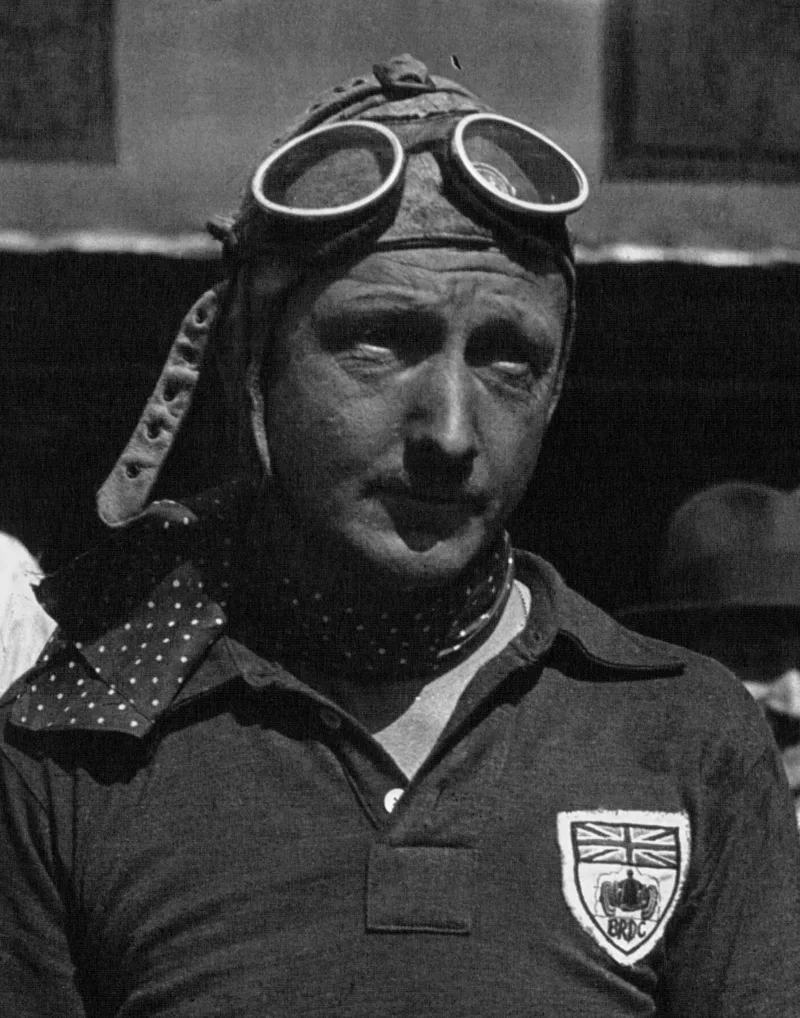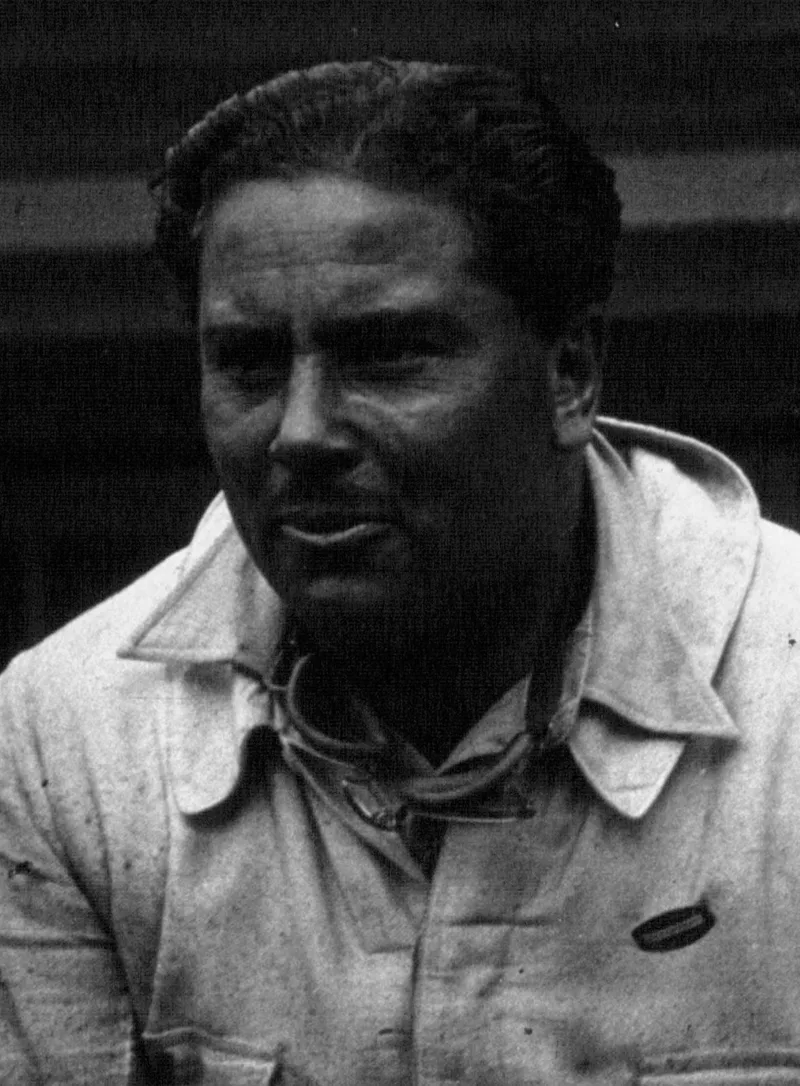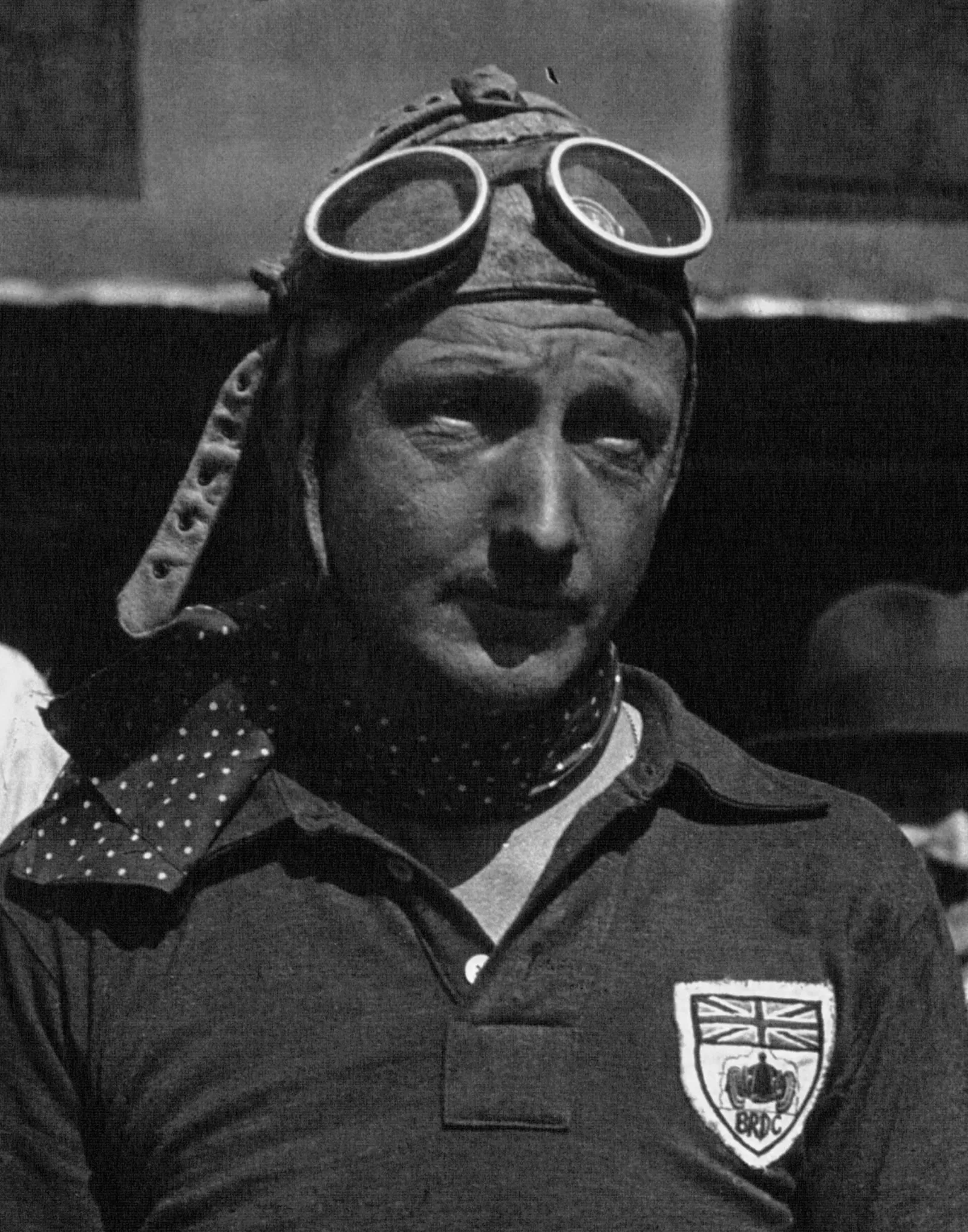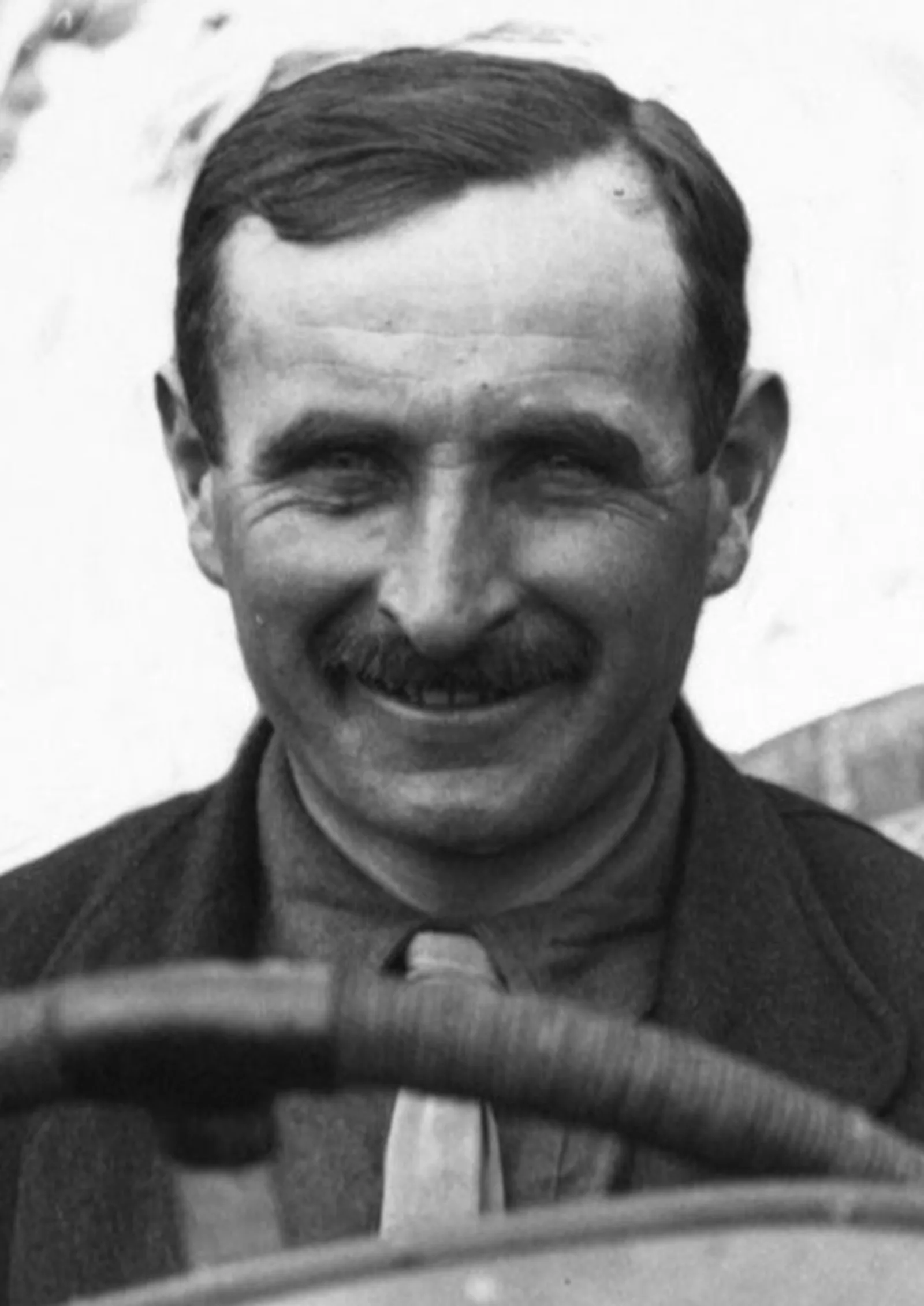
A French riding mechanic turned racer who won the 1922 Tourist Trophy for Sunbeam, flew early aircraft and later drove for Bentley at Le Mans.
Chassagne, a French racer who also flew and served as an early submariner, competed from 1906 to 1930. He won the 1922 Tourist Trophy for Sunbeam and later drove for Bentley at Le Mans, finishing fifth overall in 1928.
Julien Jean Chassagne was a French racing driver, aviator and early submariner, active in motor racing from 1906 to 1930. He won the 1922 Tourist Trophy in a Sunbeam, finished second at the 1925 Le Mans Grand Prix d'Endurance, and later drove for Bentley, with whom he is associated as one of the Bentley Boys.
Who was Jean Chassagne?
Chassagne was a Frenchman who began as a riding mechanic, became a works driver of note, and kept flying and engineering work going alongside his racing. His career covered Darracq, Clement-Bayard, Hispano-Suiza, Sunbeam, Ballot, Bugatti, Talbot-Darracq, Aries and Bentley machinery.
He was not born into wealth. Friends and colleagues knew him as a meticulous, resilient and calm figure, and they called him 'Chass'.
From riding mechanic in 1906 to Tourist Trophy winner in 1922, Chassagne moved between cars, aircraft and submarines.
Where did Chassagne grow up?
Born on 26 July 1881, Chassagne grew up in La Croisille-sur-Briance in the Haute-Vienne region, and later in Burgundy, on a limited income. When he was still a boy, his father, who trained horses, died in a riding fall.
He studied first at L'Ecole Professionnelle in St Leonard de Noblat, then at L'Ecole des Arts et Metiers, a school that prepared him well for motorised racing.
What did Chassagne do in the French Navy?
In November 1900, aged 19, Chassagne joined the French Navy and trained as a mechanic. By 1903 he had become a Torpedo Boat Mechanic and was ranked first in his class. He then volunteered for two years on the cruiser Montcalm, based at Saigon, which took him to America, Africa, China and Japan.
By 1905 he had volunteered as a submariner and spent ten months on three different boats. The Espadon, a Sirene-class submarine of 157 tons with a crew of 13, was the first. He then served on the Gymnote, the world's first all-electric submarine, and finally on the Gustave Zede, the second submarine the French Navy introduced.
How did Chassagne start in motor racing?
Chassagne's first major race was the first French Grand Prix de l'ACF, held at Le Mans on 26 and 27 June 1906. He rode as riding mechanic for his longtime friend Rene Hanriot, who drove a Darracq, and the car retired with engine trouble.
He stayed in that role for two years, riding with Hanriot, Hautvost and Demogeot. In 1908 he travelled to the United States for the American Grand Prize at Savannah, where he rode as mechanic to Hautvost in a Clement-Bayard.
How did aviation fit into his career?
While racing, Chassagne also worked at Clement-Bayard's Senat workshops, which handled airships and race-car engines. There he helped develop, assemble and test the experimental Demoiselles Santos-Dumont monoplanes, and later the first Hanriot monoplanes at Reims. In August 1910 he received pilot licence certificate no. 160.
He took part in the Baie de Seine estuary crossing and won the Liege altitude and speed prizes. After a crash at Deauville, from an engine problem, he was still able to fly. He became Chief Pilot at the Hanriot Flying School, and in 1911 he was appointed Director of the Algeciras Flying School in Spain, where he trained Spanish officers.
In 1912 he returned to Clement-Bayard, testing new aero engines on long-distance flights such as Paris to Reims and Issy to Reims. That year he crossed paths with Louis Coatalen, moved onto the Sunbeam racing side and stopped flying.
How did Chassagne come to drive for Sunbeam?
Louis Coatalen had joined Sunbeam as chief engineer in 1909, and in 1912 he brought in Chassagne as part of a winning racing team. On 25 and 26 June 1912, at Dieppe, Victor Rigal drove a Sunbeam 4cyl 3L with Chassagne as riding mechanic, winning the Coupe de l'Auto outright and finishing third in the Grand Prix against much larger cars.
By 1913 he had become a works driver for Sunbeam. At Amiens in the French Grand Prix he was the leading Sunbeam and finished third overall. Later that year, at Boulogne, a rear axle failure ended his run in the Coupe de l'Auto on the seventh lap, while he was lying third.
What records did Chassagne set at Brooklands?
On 2 October 1913 Chassagne, taking turns in two-hour stints with Dario Resta and K. Lee Guinness, set a series of long-distance World Records at Brooklands in a Sunbeam Grand Prix car with a single-seater body. Days later he won a race in the Sunbeam Toodles V against Percy E. Lambert's Talbot, and with that car he recorded the quickest Brooklands race lap up to then.
Chassagne kept breaking records for Sunbeam into 1914. In March that year he took Class H records at Brooklands with Toodles V, reaching 120.73 mph over the mile.
How did the 1914 Indianapolis and French Grand Prix races go?
At the 1914 Indianapolis 500 Chassagne, with riding mechanic A P Mitchell, drove the Sunbeam G.P. known as Spotty. He was timed at 88.310 mph in qualifying, but a burst tyre on the twentieth lap ended the run in a crash.
At the French Grand Prix at Lyons on 4 July 1914 he set the fastest lap in a newly designed 4cyl 4.5L Sunbeam, but a big-end failure forced him out on the thirteenth lap.
What did Chassagne do during the First World War?
When war broke out he enlisted in the Artillery Corps, although he had asked to join the Flying Corps. In 1915 the British Admiralty asked him to help Sunbeam advise on, develop and test aero engines.
How did the postwar Ballot years begin?
After the Armistice of 11 November 1918, the first postwar Indianapolis 500 was held in 1919. Chassagne had been entered with Dario Resta for a Sunbeam, but that car was withdrawn. The newly formed Ballot Racing Team then signed him to drive one of its 4.9 L straight eight cars designed by Ernest Henry.
His accident on the 63rd lap, caused by a steering problem, was the most serious of his career. He was thrown some 150 yards (140 m) from the car and was largely unhurt. He stayed with Ballot, and by 1921 he had become the team's top driver.
What happened in the 1920 Indianapolis 500?
The 1920 race reduced the capacity limit, and Ballot scaled its design down to 3 litres. Chassagne qualified at 95.450 mph and ran among the leaders for much of the race, but a damaged steering arm pushed him back to seventh, earning $1,900.
Back at Brooklands with the larger 4.9 L Ballot and Robert Laly as riding mechanic, he set the fastest BARC lap of the year at 112.17 mph and finished second in three handicap races. At the Gaillon Hillclimb he recorded 22.6 seconds at 99 mph (159 km/h).
How did Chassagne do in the 1921 races?
In 1921 he rode a private Peugeot at Indianapolis, but he lost his bonnet and was forced to retire. At the French Grand Prix held at Le Mans, he raced a 3-litre Ballot in a close duel with Jimmy Murphy's Duesenberg, and he led on lap 17 before a punctured petrol tank forced him out.
His best result of the year came at the Italian Grand Prix at Brescia, where he finished second in a Ballot 8cyl 3L. He was also third fastest at the Gaillon Hillclimb. In November 1921 he married Emma, who later travelled with him to some races.
How did Chassagne win the 1922 Tourist Trophy?
At 41 years old, Chassagne achieved his greatest victory at the Isle of Man Tourist Trophy on 22 June 1922, driving Sunbeam III with Robert Laly. The race took 5:24:50 hours over 302 miles (8 laps), at an average of 55.76 mph.
Sunbeam III was a modified 1921 Sunbeam Grand Prix straight eight of 3 litres. The race was the last motorcar Tourist Trophy held on the island, and the weather that day was dreadful. Chassagne, usually a measured and meticulous driver, was unsettled by the conditions, but he later called it one of the great victories of his career.
What else did Sunbeam attempt in 1922?
The year began with a win at Brooklands' Easter Meeting in the aero-engined Sunbeam 350 hp, which later broke several speed marks, among them the first car to hold a World Speed Record above 150 mph. Chassagne also helped develop Ernest Henry's new 2-litre Grand Prix Sunbeam engine, which had been designed for the change in formula.
At the 1922 French Grand Prix at Strasbourg a Sunbeam 4cyl 2L retired on the fifth lap with a broken inlet valve. Later that year, at the Coppa Florio in Sicily, Chassagne finished fourth after a stone holed his oil tank, which he repaired with locally bought olive oil.
How did Chassagne's endurance racing develop?
Chassagne's move towards endurance racing was gradual. In 1923 he took a sabbatical, and the single entry on record was a class win at the Circuit des Routes Pavees in a Citroen B Type. In 1924 he helped prepare and tune the Bugatti Type 35 before its inaugural French Grand Prix at Lyons, where he changed 15 deflated tyres and still finished seventh, the highest placed Bugatti.
The 1925 running was the third of the Le Mans Grand Prix d'Endurance. Chassagne shared a Sunbeam Super Sport with Sammy Davis, and the pair finished second overall, first in class, covering 1343 miles at an average of 55.9 mph. The 3-litre car was reportedly designed to beat Bentley in endurance racing.
Other 1925 results included the quickest time at Gometz le Chatel and second quickest at Gaillon, but he ran dry of fuel on the final lap of the Touring Car Grand Prix at Montlhery. In 1926 he had a serious accident at Avus while lying third. Later he raced Aries Surbaissee cars at Le Mans, retiring on lap 65 in 1926.
In 1927 he won his class and finished second overall at the Spa 24 Hours. At Le Mans later that year he was comfortably in the lead for 17 hours before a seized camshaft drive forced him to retire on lap 122.
Why did Chassagne join Bentley?
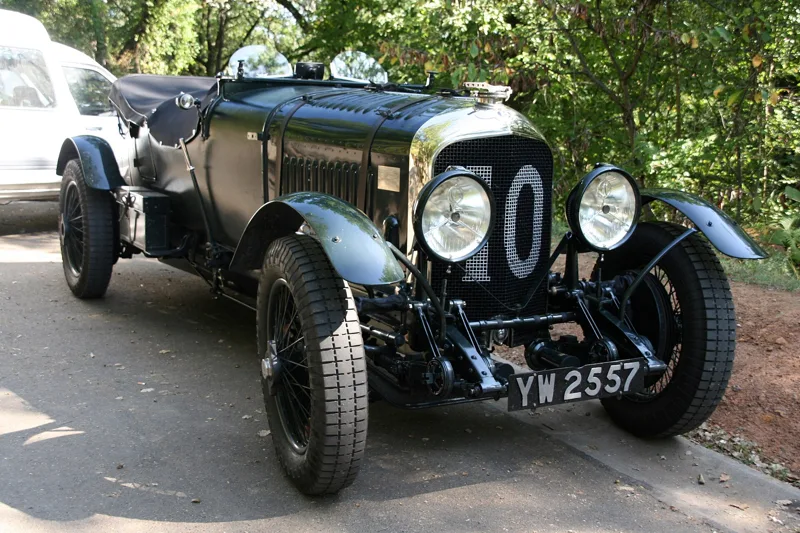
Chassagne joined the Bentley Boys at the age of 47, when Bentley's reputation in endurance racing was unrivalled. His first Le Mans with Bentley, in 1928, was shared with Henry Tim Birkin in a 4.5L car, and the pair finished fifth overall and fifth in class.
The race is remembered for a repair. When Birkin's car lost a rim at Arnage, the car had no jack, so Chassagne collected two jacks and ran about three miles back to the stranded Bentley. He changed the wheel and drove on, and W. O. Bentley later presented him with a silver trophy for the feat.
What did the 1929 and 1930 seasons bring?
In 1929 Chassagne shared a Bentley with Francis Clement at Le Mans, finishing third in class and fourth overall, while the Bentley team held the first four places for much of the race. Back in a Ballot at the French Grand Prix at Le Mans, he retired on the eighth lap with a mechanical problem.
In 1930 he drove a Blower Bentley, a supercharged car built for Birkin under the sponsorship of Dorothy Paget. At the Brooklands Double Twelve his chassis broke, and at Le Mans he set the quickest lap at 89.69 mph before a broken valve ended his race on lap 138. He also drove for the team at the Irish Grand Prix in Phoenix Park, where a lubrication problem ended his run, and that was his last recorded race.
What happened after Chassagne retired?
He decided to step back, and by the close of 1930, at 49, he had stopped racing. In 1931 he worked for Castrol Oils, serving the aircraft industry as a representative, and he also ran the Bentley Motors Sales and Servicing Department at Neuilly.
The Legion d'honneur made him a Chevalier in 1935, recognising his motor sport career. When German forces occupied France in 1939 he left his Paris home and went back to La Croisille-sur-Briance, his birthplace, and he died on 13 April 1947, aged 65.
How has Chassagne been honoured?
After his death he was commemorated in several places. Crewe has Chassagne Square, recognising his association with Bentley racing, Limoges has the Rue de Chassagne, and the Chassagne Stadium in La Croisille-sur-Briance keeps his memory alive.
What were his key results?
| Year | Event | Result |
|---|---|---|
| 1906 | First French Grand Prix at Le Mans, riding mechanic | Retired with engine trouble |
| 1912 | Coupe de l'Auto at Dieppe, riding mechanic to Victor Rigal | Sunbeam first in Coupe de l'Auto; Grand Prix third |
| 1913 | French Grand Prix at Amiens, Sunbeam Works driver | Third overall, first Sunbeam |
| 1914 | Indianapolis 500 with Sunbeam Spotty | Qualified at 88.310 mph; crashed on lap 20 |
| 1920 | Indianapolis 500 with Ballot | Seventh, winning $1,900 |
| 1921 | Italian Grand Prix at Brescia with Ballot | Second |
| 1922 | Isle of Man Tourist Trophy with Sunbeam III | First, 5:24:50 hours |
| 1925 | Le Mans Grand Prix d'Endurance with Sunbeam | Second overall, first in class |
| 1927 | Spa 24 Hours with Aries | Second overall, first in class |
| 1928 | Le Mans with Bentley and Birkin | Fifth overall, fifth in class |
| 1929 | Le Mans with Bentley and Clement | Fourth overall, third in class |
| 1930 | Le Mans with Blower Bentley and Birkin | Retired on lap 138 |
What is Chassagne's legacy?
Chassagne is remembered as a driver who combined technical skill with long, hard races. His work with Sunbeam, Ballot and Bentley placed him among the leading men of the period, and his recovery of the stranded Bentley at Le Mans in 1928 remains the best-known episode of his career.
He also stands out for combining several careers. Mechanic, submariner, pilot, engineer and racer, he moved between these fields throughout his life, and his name survives in Crewe, Limoges and his home village.