A 1907 banked concrete track in Surrey that set speed and distance records, hosted Grand Prix racing and later built warplanes and airliners.
Brooklands was a 2.767-mile banked motor racing circuit and aerodrome near Weybridge in Surrey, opened in 1907. It was the first track of its kind, and the same site later became one of Britain's largest aircraft factories. Racing ended in 1939, and part of the site now houses a museum.
Opened in June 1907 on land near Weybridge in Surrey, Brooklands began life as a banked track for car racing. The same land later became a major aircraft factory, and part of it is now the Brooklands Museum. Its history spans speed records, Grand Prix racing, two world wars and a long run of aviation firsts.
Where did Brooklands come from?
Hugh Fortescue Locke King conceived the circuit on his own estate. Britain's Motor Car Act 1903 had set a 20 mph (32 km/h) limit on public roads, which made sustained high-speed testing very difficult for manufacturers. The track was designed by Colonel Capel Lofft Holden and opened on 17 June 1907.
Construction began in 1906 and the finished track was 100 ft (30 m) wide. Parts of the banking stood nearly 30 feet (9.1 m) high, a shape driven by the demands of speed and spectator visibility. At the time nearly 50% of the world's new cars were produced in France, which gave British makers good reason to worry about their own young motor industry.
The oval measured 2.767 mi (4.453 km), and a Finishing Straight cut across it to bring the total to 3.369 mi (5.422 km). Of that total, 1.250 mi (2.012 km) was banked. Crowds of up to 287,000 could attend in its heyday.
A banked concrete track that became a speed-record venue, a wartime factory and a museum.
How was the circuit laid out?
The main circuit was a banked oval of 2.767 mi (4.453 km), with a bisecting Finishing Straight that lifted the total length to 3.369 mi (5.422 km). Of this, 1.250 mi (2.012 km) was banked. A separate Mountain Circuit of 1.168 mi (1.880 km) was added in 1930 using movable barriers.
| Feature | Detail |
|---|---|
| Opened | 17 June 1907 |
| Track width | 100 ft (30 m) |
| Main oval | 2.767 mi (4.453 km) |
| Total with Finishing Straight | 3.369 mi (5.422 km) |
| Banked length | 1.250 mi (2.012 km) |
| Mountain Circuit | 1.168 mi (1.880 km), created 1930 |
| Banking height | Nearly 30 ft (9.1 m) in places |
| Peak attendance | Up to 287,000 spectators |
| Last race | August 1939 |
The surface was uncoated concrete. Tarmacadam was awkward to lay on steep banking and asphalt was expensive, so the builders chose concrete instead. Over the years the surface settled unevenly, and the ride became bumpy.
A dotted black line, the Fifty Foot Line, ran along the centre of the track. In theory, a driver keeping to it could take the banked corners without touching the steering wheel. The opening day on 17 June 1907 began with a luncheon for most of Britain's motor manufacturers, followed by a procession of 43 cars, one of them driven by Charles Rolls.
What records were set at Brooklands?
Brooklands held the world's first 24-hour motor event in June 1907, eleven days after the track opened. Selwyn Edge drove for the full duration and covered 1,581.74 mi (2,545.56 km), an average of 65.91 mph (106.07 km/h). That distance stood for 17 years.
Edge ran three specially converted Napier cars, and the drivers of the other two took shifts. More than 300 red railway lamps lit the course overnight, and flares marked the upper edge of the banking. His car, numbered 804, had its bodywork removed and a special fuel tank fitted.
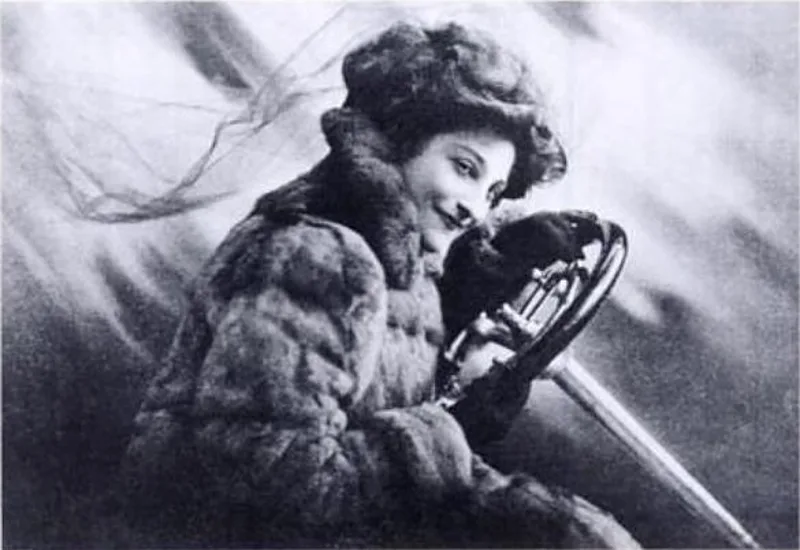
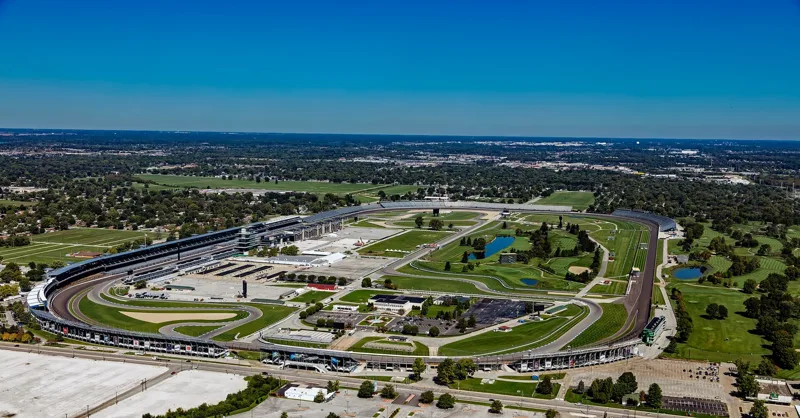
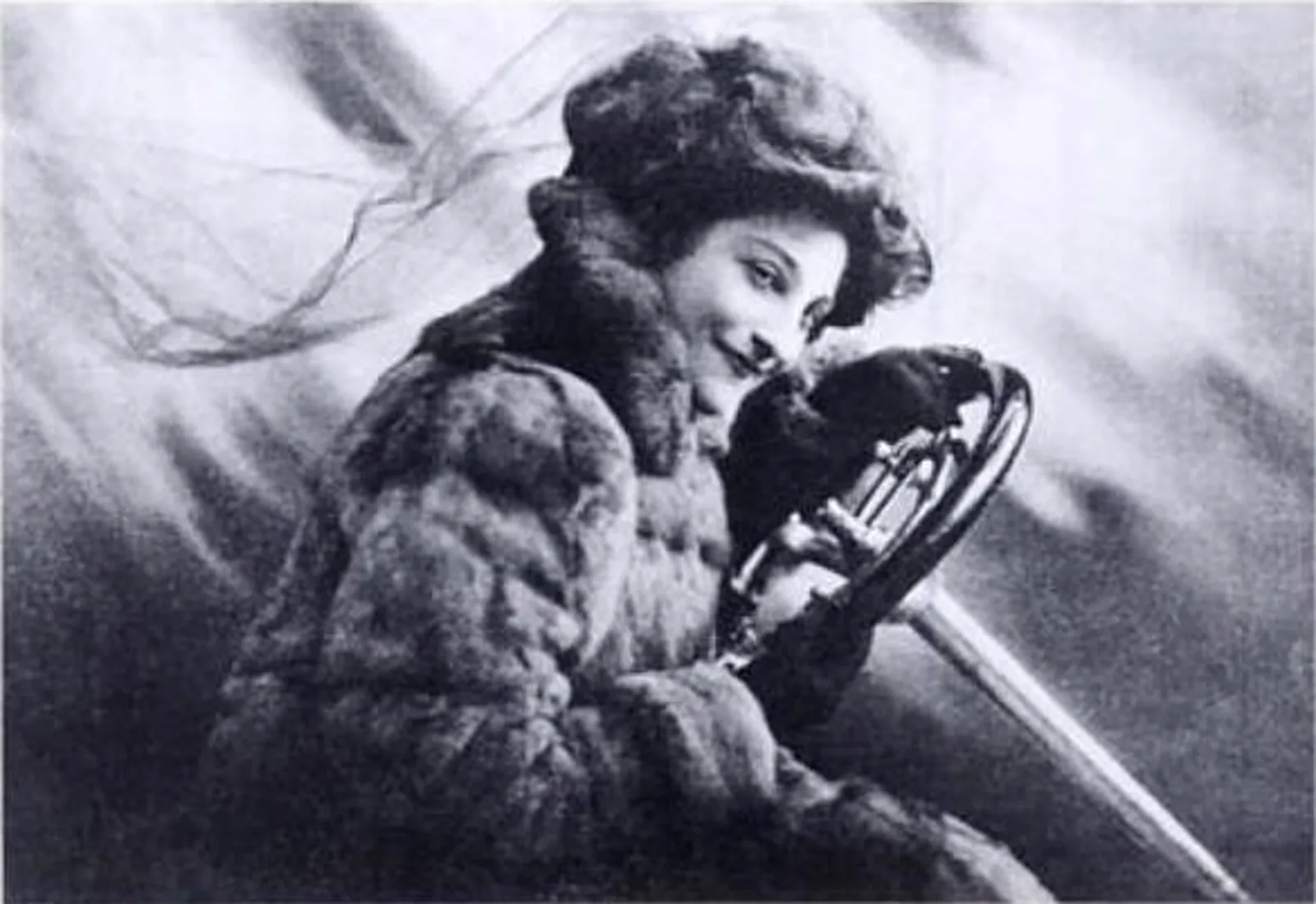
Edge comfortably beat the earlier distance benchmark of 1,096.187 mi (1,764.142 km), which had been set at Indianapolis in 1905. Women were kept out of racing for several years, and Dorothy Levitt, S. F. Edge's leading driver, was refused entry despite her 1903 credentials.
Speed records followed. In 1912 George E. Stanley covered over 60 miles in an hour on a 350 cc Singer motorcycle. In February 1913 Percy E. Lambert covered 103 miles, 1470 yards (167.1 km) in 60 minutes in a 4.5 litre Talbot. Ivy Cummings, aged 11 or 12, is thought to have been the youngest person to drive a lap at the track when she started her father's car in 1913.
Violette Cordery and her younger sister Evelyn drove an Invicta for 30,000 miles in July and August 1929, averaging 61.57 mph. The run took less than 30,000 minutes and earned Cordery a second Dewar Trophy from the Royal Automobile Club.
Did Brooklands host Grand Prix racing?
Yes. Grand Prix racing was established at Brooklands in 1926, and the first British Grand Prix there was won by Louis Wagner and Robert Senechal, sharing a Delage 155B. A second British Grand Prix followed in 1927, and both events led to improved facilities at the track.
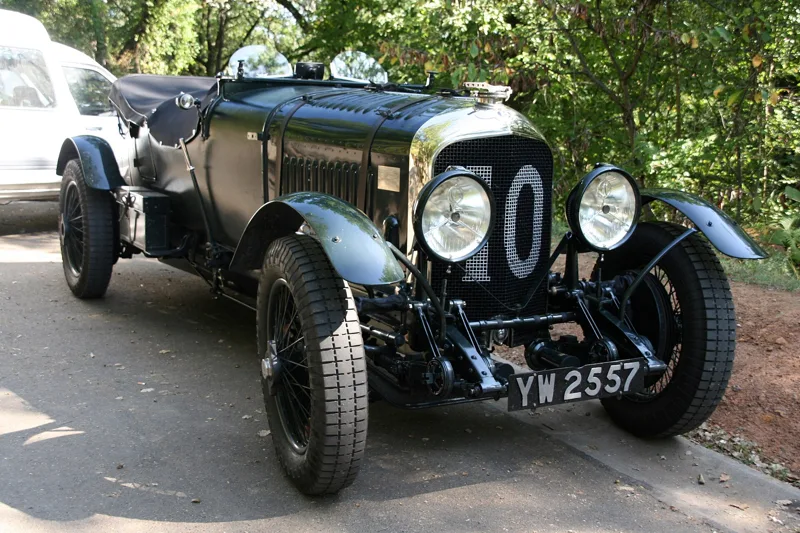
Motor racing had resumed in 1920 after extensive track repairs. In 1930 the Daily Herald offered a trophy for the fastest driver at Brooklands. Kaye Don, driving the 4 litre Sunbeam Tigress, won the first award at 137.58 mph (221.41 km/h), while Birkin competed in a Bentley Blower tourer.
Birkin took the trophy in 1932 in his red Monoposto Bentley Blower No. 1, at 137.96 mph (222.03 km/h). That track record stood for two years before John Cobb took his 24 litre Napier-Railton round at 143.44 mph (230.84 km/h), the all-time lap record at the circuit.
The Junior Car Club ran the British 1000 Miles Race in two parts on 3 and 4 June 1932. Mrs E. Wisdom and Miss Joan Richmond won it in a Riley Brooklands 9. In the late 1930s the National Cyclists' Union staged massed-start cycle races on the track, and the 1939 Will Hay film Ask a Policeman was shot there.
Racing ended when war broke out in 1939, and the last race was held in August of that year. The site then turned to wartime aircraft production, and enemy bombs damaged the track.
When did aviation arrive at Brooklands?
Aviation arrived in 1908, when Alliott Verdon-Roe carried out taxiing and towed flight trials of a British full-size powered aircraft on the site. The first official powered flight followed on 29 October 1909, when Louis Paulhan flew a Farman biplane before a crowd of 20,000 people.
Paulhan reached some 720 ft (220 m) and set a British endurance record of 2 hr 49 min 20 s. In 1910 Hilda Hewlett and Gustave Blondeau opened Britain's first flying school at Brooklands, and the Bristol Aeroplane Company and Roe followed with their own schools that year.
Vickers opened a flying school on 20 January 1912, with R. Harold Barnwell among its early instructors. The school taught 77 pupils, including Hugh Dowding, before it closed in August 1914. Thomas Sopwith opened his own school in February 1912, and that June he set up the Sopwith Aviation Company, whose factories were at Kingston upon Thames.
During the First World War the War Office requisitioned the site and racing stopped. Vickers Aviation set up a factory in 1915, and that same year the world's first voice-to-ground wireless message was transmitted over Brooklands. By 1918 Brooklands was Britain's largest aircraft manufacturing centre.
Brooklands Aviation was formed in March 1931 to operate the aerodrome. Its Art Deco Aero Clubhouse, designed by Graham Dawbarn, opened in May 1932. The company won a War Department contract for RAF pilot training, and No. 6 Elementary Flying Training School at Sywell opened on 10 June 1935 with 20 Tiger Moths. The Hawker Hurricane made its first flight at Brooklands on 6 November 1935, before serving as a fighter in the Battle of Britain.
What happened to the site in the Second World War?
The site returned to military production, building Vickers Wellingtons, Vickers Warwicks and Hawker Hurricanes. On 4 September 1940 the Vickers factory was bombed, killing nearly 90 aircraft workers and injuring at least 419. The Hawker factory was hit two days later, with no loss of life.
The works were heavily camouflaged, and trees were planted on sections of the concrete track to hide them. Enemy bombs damaged the track itself, and temporary dispersal hangars covered other parts of the site. A new access road was cut from Oyster Lane to the Hawker factory.
On 21 September 1940 Lt John MacMillan Stevenson Patton of the Royal Canadian Engineers, with five others, moved an unexploded German bomb away from the Hawker factory and rolled it into a crater, where it later exploded harmlessly. He was awarded the George Cross for the risk he took.
After the bombing, the Vickers-Armstrongs design department, including Rex Pierson and Barnes Wallis, moved to a secret location at Burhill Golf Course near Hersham. The experimental department, led by George Edwards, went to temporary premises at Foxwarren in Cobham. Their work helped develop the Upkeep bouncing bomb, which No. 617 Squadron used against Germany's Ruhr Valley reservoirs on 16-17 May 1943.
How did the site change after 1945?
After the war the circuit was in poor condition, and Vickers-Armstrongs bought the site in 1946 as an aircraft factory. The works went on to build airliners including the Viscount and VC10, and by 1960 the site was the headquarters of the British Aircraft Corporation.
Brooklands Aviation was reactivated in 1947 and from 6 August 1948 flew DH.89 aircraft for British European Airways to the south of England and the Channel Islands. Those services ended in 1950, and the company stopped all airline work in 1954.
In 1951 a new hard runway required part of the Byfleet Banking to be removed, so that Valiant bombers could be flown out to Wisley Airfield. Wisley offered a longer runway than Brooklands and stayed in use as a flight test centre until 1972.
The factory reached its peak size in the early 1960s. A 60,378 sq ft (5,609 m2) VC10 flight shed was ready in 1962, and a 98,989 sq ft (9,196 m2) shed followed by 1964. The larger shed was nicknamed The Cathedral. The factory also built the BAC TSR.2 and One-Eleven, along with major Concorde assemblies.
Cancellations and weak orders then took their toll. The Labour government cancelled the TSR-2 in 1965, and the factory contracted in the early 1970s. British Aerospace took over in 1977, and closure was announced on 29 July 1986, taking final effect on Christmas Day 1989.
What is the Brooklands Museum today?
The Brooklands Museum Trust was formed in 1987 to record, research and preserve the site's aviation and motoring heritage. It occupies a 30-acre heritage area in the north-east corner of the old circuit, beside the Paddock and Finishing Straight, and it has organised numerous aviation and motoring events since the mid-1980s.
The museum began after a 1977 exhibition at Elmbridge Museum in Weybridge. Its collection includes a Vickers Wellington recovered from Loch Ness in 1985, a Vickers Vanguard, a Viscount 800 and a Standard VC10 donated by the Sultan's Royal Flight. Concorde G-BBDG, the UK's first production Concorde, is also on show.
The museum also runs a Formula 1 simulator that recreates the pre-war track in detail. Its 40% scale Concorde model, G-CONC, stood at Heathrow as a gate guardian until 2007 and was relocated to the museum entrance on 29 September 2012.
Preservation orders from 1975 covered the 1907 BARC Clubhouse, the 1911 Flight Ticket Office, the 1932 Aero Clubhouse and surviving sections of the track. A Brooklands Heritage Partnership was formed in 2010, and a Conservation Management Plan completed in 2017 set standards for maintaining and repairing the remaining track.
Mercedes-Benz World opened on 29 October 2006 on the central area of the old site, which had been sold to DaimlerChrysler UK Retail in early 2004. It includes vehicle test tracks, an off-road circuit and part of the original Campbell Circuit.
Is the circuit still used for racing?
No. Racing ended in August 1939, and the banked circuit is no longer driveable. Surviving sections are protected, the 2017 revival project restored the northern Finishing Straight, and the central section of the Byfleet Banking was cleared of leaves, moss and weeds in February 2020.
A revival project was announced in February 2015 and used a Heritage Lottery Fund grant of 4.68 million pounds within a project costing 8.5 million pounds. It moved and restored the Grade II listed 1940 Bellman Hangar, added a new two-storey Flight Shed with archives and a workshop, and was officially opened to the public by Prince Michael of Kent on 13 November 2017.
Brooklands in film, games and books
Brooklands has appeared on screen and in print. A 1990 episode of Agatha Christie's Poirot, The Disappearance of Mr Davenheim, was filmed at Brooklands, and The Bill used the banking as a road location. Downton Abbey scenes set at the track were filmed at Goodwood Circuit instead. J. G. Ballard's 2006 novel Kingdom Come is also set there.
The 1999 game Spirit of Speed 1937 recreated the circuit in detail. In November 2009 James May rebuilt the track in Scalextric for the BBC2 programme James May's Toy Stories, broadcast on 17 November 2009. A team of 350 volunteers built a replica 2.95 miles (4.75 km) long, navigating ponds and roads, and the build was recognised by Guinness World Records as the longest Scalextric track.