The Edwardian driver who raced cars and motorboats, set records on land and water, taught royal women to drive and wrote the handbook The Woman and the Car.
Dorothy Levitt, born Elizabeth Levi on 5 January 1882, was a British racing driver and journalist, known as the first British woman racing driver. She set the world's first water speed record in 1903 and a women's land speed record of 90.88 mph in 1906.
Dorothy Levitt is remembered as a pioneer of women's motoring in Britain. In the early 1900s she raced cars and motorboats, set records on land and water, taught royal women to drive and wrote the handbook The Woman and the Car.
Who was Dorothy Levitt and how did she start out?
Her birth name was Elizabeth Levi, and she came into the world in Hackney in January 1882. Her father, Jacob Levi, was a prosperous jeweller and commission agent, and the family's Sephardi Jewish background shaped their household. Her father's trade and the family's standing gave her a comfortable start.
Before motoring she was an experienced horse rider. She later said that staying astride a galloping horse over jumps was easier than keeping a seat in a car at speed.
In 1902 she took a secretarial post at the Napier and Son works in Lambeth. Selwyn Edge, who raced Napier cars, soon promoted her to be his personal assistant.
Edge recognised her spirit, arranged her training in Paris and supplied her cars, and it is presumed that the two were also involved for a time.
The Fastest Girl on Earth, a water speed pioneer and the author of a handbook that told women they could drive their own cars.
How did Levitt learn to drive and start teaching?
Levitt had to learn to drive, and a Napier salesman, Leslie Callingham, was told to teach her on his day off. Callingham disliked the task, but she proved a fast learner. Her quick progress surprised those around her. It was a striking start to a driving career.
Edge also set up a six-month apprenticeship in Paris, where she learned how cars were built and driven. On her return she taught women to drive, reportedly including Queen Alexandra and the Royal Princesses.
How did Levitt's first race in 1903 go?
Levitt's first race came in April 1903, and she became the first English woman to compete in a motor race. She finished without a prize, yet she resolved to get better, and Edge's Gladiator agency gave her the marque for her first year.
In May she drove a 16 hp Gladiator in the 400-mile Glasgow to London non-stop run. She lost only six points out of a possible 1,000 after stopping to deal with a tyre problem.
She did not start the Sun-Rise Hill Climb on 25 July, and she rode as Edge's official passenger instead.
At the Southport Speed Trials she won the category for cars costing GBP 400 to GBP 550, racing a four-seater Gladiator, and she covered the flying kilometre in one minute forty-five seconds. Society was astonished that a woman working as a secretary was competing in a sport seen as male.
How did Levitt's image and dress set her apart?
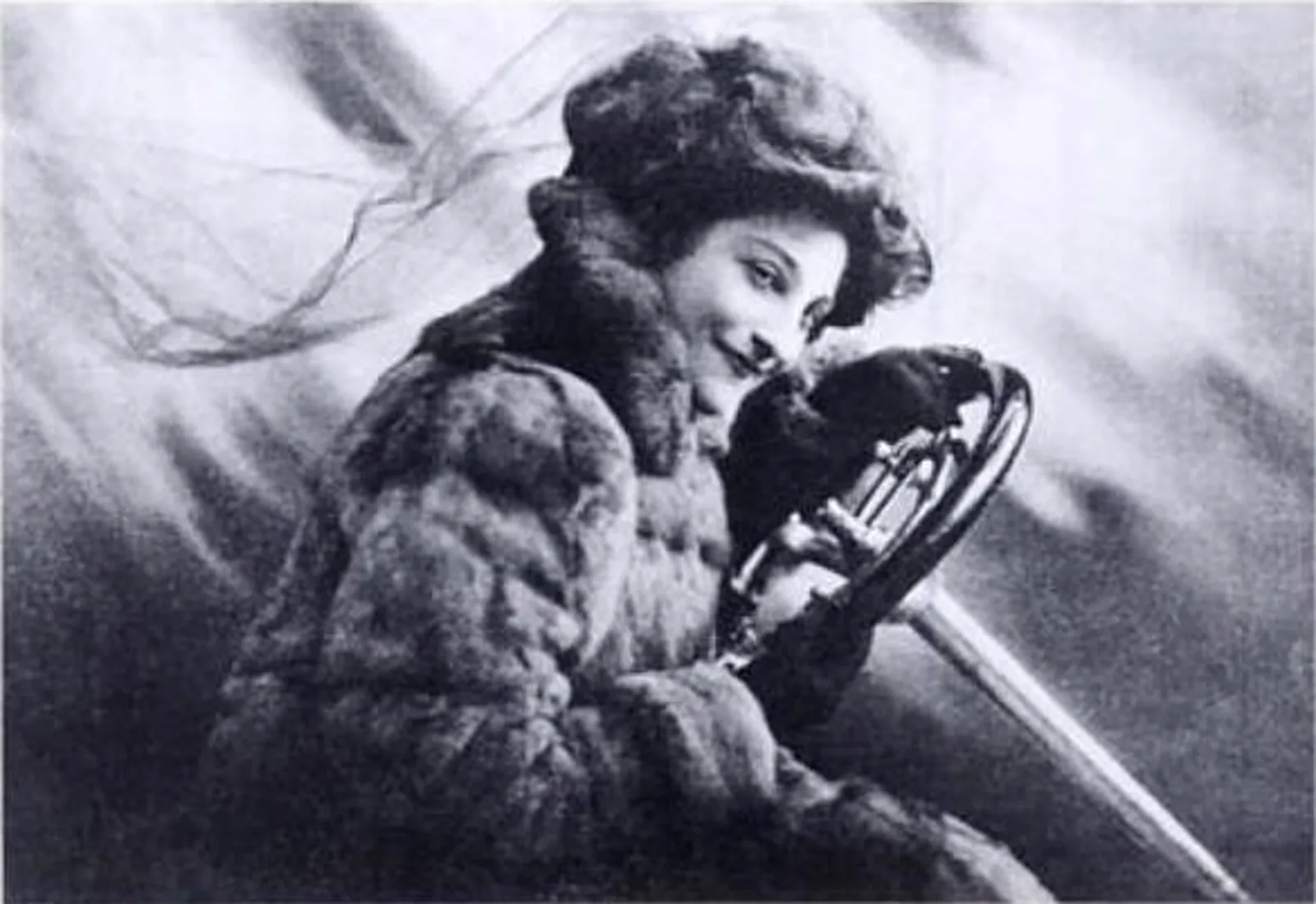
Levitt dressed in feminine outfits with a co-ordinating hat and veil, and she wore a lightweight coat that became known as a dust coat. Male drivers of the period often wore masks and heavy leather clothing. That look was unusual for a racing driver of her time.
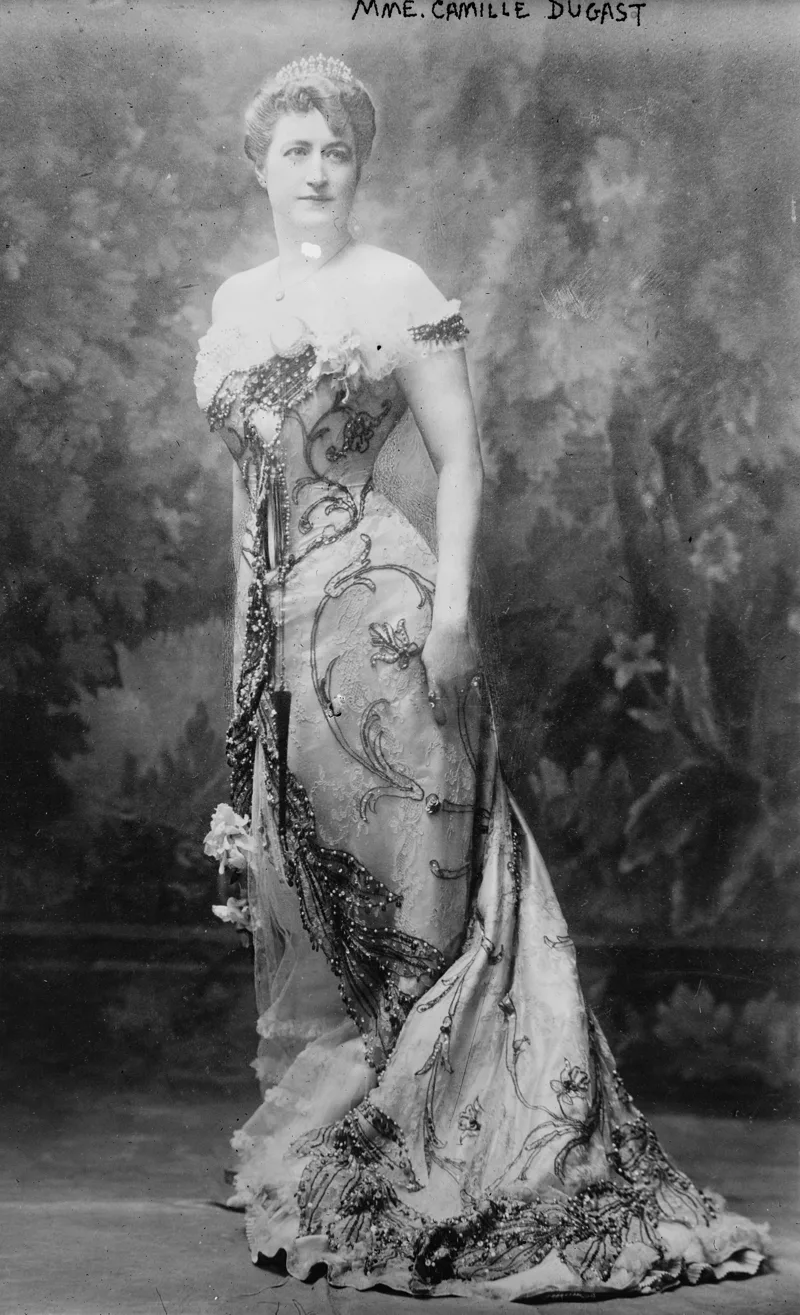
Camille du Gast, who raced in the 1903 Paris to Madrid road race, was almost fully masked and was assumed to be a man until her voice gave her away. Levitt, by contrast, raced in less gruelling events and dressed far more flatteringly.
Her book and her newspaper column in The Graphic presented her as an independent bachelor girl, living with friends in London's West End and waited on by two servants.
Was Levitt ever in trouble with the police?
A scorcher in the slang of the day was a motorist who loved breaking the speed limit, and Levitt was one, which drew police attention. On 6 November 1903 she was summonsed for speeding in Hyde Park. The summons was heard at Marlborough Street, and she did not appear in person.
She reportedly drove at a terrific pace, and when stopped she made a remark about running down officers. The case was reported in the press at the time. She did not appear in person, and the magistrate fined her GBP 5 with 2s costs. The other six motorists that day were fined GBP 2 plus costs.
Later that month Levitt and Hena Frankton sought damages from a GPO van driver whose vehicle had struck their car. They each received GBP 35, and the case later came to be seen as an early English legal win for the driver of a self-propelled vehicle.
How did Levitt become a record holder on land and water?
Her water mark, 19.3 mph (31.1 km/h), came in a Napier speedboat in 1903 and was the first ever set. Her best land figure came at Blackpool in 1906, when she recorded 90.88 mph (146.26 km/h) over a flying kilometre. Both figures came within a few years of her first races.
In July 1903 she took the first British International Harmsworth Trophy for motorboats, beating the French entry Trefle-A-Quatre. The race was held at Cork Harbour in Ireland.
Edge owned and entered the boat, so the trophy carries his name. Campbell Muir, the third crew member, may also have taken the controls.
On 8 August 1903 she drove the Napier motorboat to victory at Cowes, and King Edward VII congratulated her on her skill when she was summoned to the royal yacht.
Later that summer she won the Gaston Menier Cup at Trouville, for a prize of $1,750. In October she won the Championship of the Seas there, and the French government bought the boat for GBP 1,000.
What records did Levitt set in 1905 and 1906?
In February 1905 she set a record for the longest drive by a lady driver, a round trip to Liverpool made in two days. In 1906 she set a women's world speed record at Blackpool, reaching 90.88 mph (146.26 km/h) across a flying kilometre.
On 29 March 1905 she left the De Dion showroom in London at 07:00 and passed Coventry at 11:36, after 94 miles (151 km). The 205-mile (330 km) leg into Liverpool took a little over eleven hours.
She drove back the following day, and the round trip covered 411 miles.
In May 1905 she earned a certificate for a non-stop run at the Scottish Trials. In July an 80 hp Napier took her to 79.75 mph at the Brighton Speed Trials, a result that became her first ladies' world speed mark.
She took her class at Brighton, plus the Sweepstakes and the Autocar Challenge Trophy, and she beat many professional drivers in the process.
Her 1906 peak came at Blackpool, where she bettered her own women's mark with a 100 hp Napier K5 development. The Blackpool Automobile Club gave her a cup, and S. F. Edge Limited gave another.
Her diary recorded a near escape when the bonnet came loose at speed. In June 1906 she also set the ladies' record at the Shelsey Walsh Hill Climb, finishing sixth overall in a 50 hp Napier, 12 seconds faster than the male winner.
How did Levitt's continental racing go in 1907 and 1908?
Brooklands refused her entry in 1907 despite Edge's backing, and it kept turning women away until 1908. Her success on the Continent was built on those same Napier entries. She turned to Europe instead, where she collected a gold medal at the Herkomer Trophy in Germany, finishing fourth of 172 competitors.
In May 1907 she was second in the Appearance Competition at Bexhill-on-Sea, driving an 8 hp De Dion. In June she took the gold medal at the Herkomer Trophy, a 1,818 kilometre event, and was the first woman among all the entries.
Her diary noted a sixty horse-power six-cylinder Napier in a field of 42 cars with much bigger engines. In October she won her class at the Gaillon Hillclimb in France in a 40 hp Napier, by 20 seconds.
In 1908 Brooklands began to admit lady competitors. In June a 45 hp Napier earned her a silver plaque at the Prinz Heinrich Trophy, and in July her 60 hp Napier was second fastest of more than 50 competitors at Aston Clinton.
Did Levitt try to fly and write about motoring?
In 1909 she tried to earn a pilot's licence at a flying school run by Hubert Latham in France. Her interest in flying sat alongside her motoring career. No record shows that she qualified, but she was enrolled with the Aero Club of the United Kingdom that January.
A French flying school gave her Farman training in 1910, per the Oxford Dictionary of National Biography, and the Daily Chronicle interviewed her about flying that March.
She championed women's right to drive, and her 1909 book grew out of a newspaper column she wrote for The Graphic. She also lectured widely to encourage women to take up motoring.
She pushed back against the idea that women could not understand engines, insisting that an engine could be mastered by anyone willing to learn.
In 1912 she had a byline on a column in the Yorkshire Evening Post, which offered common-sense hints for amateur motorists.
How did Levitt's life end in 1922?
After a meteoric rise her public profile vanished, and nothing reliable records her life after 1910. She was found dead at her home at 50 Upper Baker Street in Marylebone on 17 May 1922. Probate was granted on 27 September 1922.
The death certificate recorded her as Dorothy Elizabeth Levi, unmarried. The inquest returned a verdict of misadventure, and probate valued her estate at GBP 224 2s 5d, which passed to her sister Elsie.
A plaque marks her birthplace on Colvestone Crescent, and a newer one replaced an earlier plaque that had been stolen. Her grave lies in Brighton, in the Jewish cemetery, recorded under her true name.
Legacy in motoring and the press
The historian Sean O'Connell placed Levitt among the most famous of the early female motorists, at a time when male prejudice against women at the wheel was common. Her own book, edited by C. Byng-Hall, described her in its preface as close to the opposite of a towering motoring champion.
Levitt herself argued that the true thrill came from driving your own machine. That view sat at the heart of her writing for women, and it is why her handbook is still quoted as a pioneering text on women's motoring.
Career highlights at a glance
| Year | Event | Result | Highlight |
|---|---|---|---|
| 1903 | Southport Speed Trials | Class win | Gladiator, cars priced GBP 400 to GBP 550 |
| 1903 | International Harmsworth Trophy | Winner | World's first water speed record, 19.3 mph (31.1 km/h) |
| 1905 | London to Liverpool and back | Record | Longest drive by a lady driver |
| 1905 | Brighton Speed Trials | Ladies' world speed mark | 79.75 mph in an 80 hp Napier |
| 1906 | Blackpool Speed Trial | Women's world speed record | 90.88 mph (146.26 km/h) over a flying kilometre |
| 1906 | Shelsey Walsh Hill Climb | Ladies' record | 92.4 seconds in a 50 hp Napier |
| 1907 | Herkomer Trophy | Gold medal | Fourth of 172 competitors |
| 1908 | Prinz Heinrich Trophy | Silver plaque | Drove a 45 hp Napier |
| 1922 | Death | Found dead | Upper Baker Street, Marylebone, 17 May 1922 |