From the Carrera Panamericana to a 1953 Sebring victory, a racer who turned his war and racing experience into crash barriers and driver capsules that protect people on the road.
John Fitch, born in Indianapolis in 1917, was an American driver and inventor who competed in European and American sports car racing. He won the 1953 Sebring 12 Hours with Phil Walters and raced for the Mercedes-Benz team in 1955. His safety inventions, including the Fitch barrier, are credited with saving many lives.
John Fitch was an American racing driver and inventor who went on to become one of the most important figures in road and track safety. Born in Indianapolis, he raced in Europe and America in the years after the Second World War, won the 1953 Sebring 12 Hours and drove for the Mercedes-Benz team. His later barrier and capsule designs are credited with saving a great many lives.
How did John Fitch's early life and war service shape him?
Born in Indianapolis in 1917, Fitch grew up with an automobile connection: his stepfather was a senior figure at Stutz, which exposed him to cars early on. After civil engineering studies at Lehigh University, he went to Europe in 1939 and watched the last car race at Brooklands before hostilities. He then volunteered for the US Army Air Corps in 1941.
His first passion was flying rather than motor sport. When the war broke out he was touring England, and he offered himself as a pilot. Postings then sent him to North Africa, and there he flew the A-20 Havoc before returning to England.
By 1944 he flew P-51 Mustangs with the Fourth Fighter Group, escorting bombers, and he downed a German Me 262 jet. Shortly before the conflict ended he was brought down while strafing a train, and he remained a prisoner until the end.
Fitch's wartime record earned him a Presidential Citation, Air Medals and a Purple Heart.
A Sebring winner who turned his war, racing and Le Mans experience into barriers and capsules that protect drivers and road users.
How did Fitch get into racing after the war?
Fitch opened an MG dealership after returning to the United States, and he raced an MG-TC at circuits including Bridgehampton, Thompson and Watkins Glen. His speed caught the eye of Briggs Cunningham, a wealthy enthusiast who encouraged him to race in Argentina in 1951.
In 1950 he built a Fiat 1100 with a Ford Flathead engine, which he later modified into the Fitch Model B. That same year he took a Jaguar XK120 into the six-hour endurance event at Sebring.
In 1951 he won the Gran Premio de Eva Duarte Peron Sport in an Allard-Cadillac J2. Juan Peron made him a member of the Justicialist Party, while Eva Peron handed him the trophy along with a kiss.
Cunningham's money let Fitch race a C-2R at the 1951 24 Hours of Le Mans. He won at road courses such as Elkhart Lake and Watkins Glen, and he became the inaugural SCCA national sports car title holder.
What was his Mercedes-Benz connection?
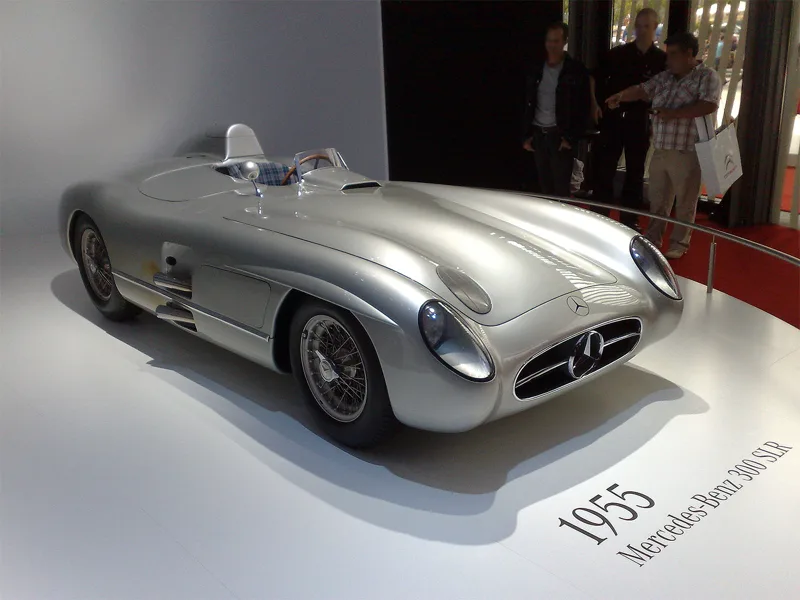
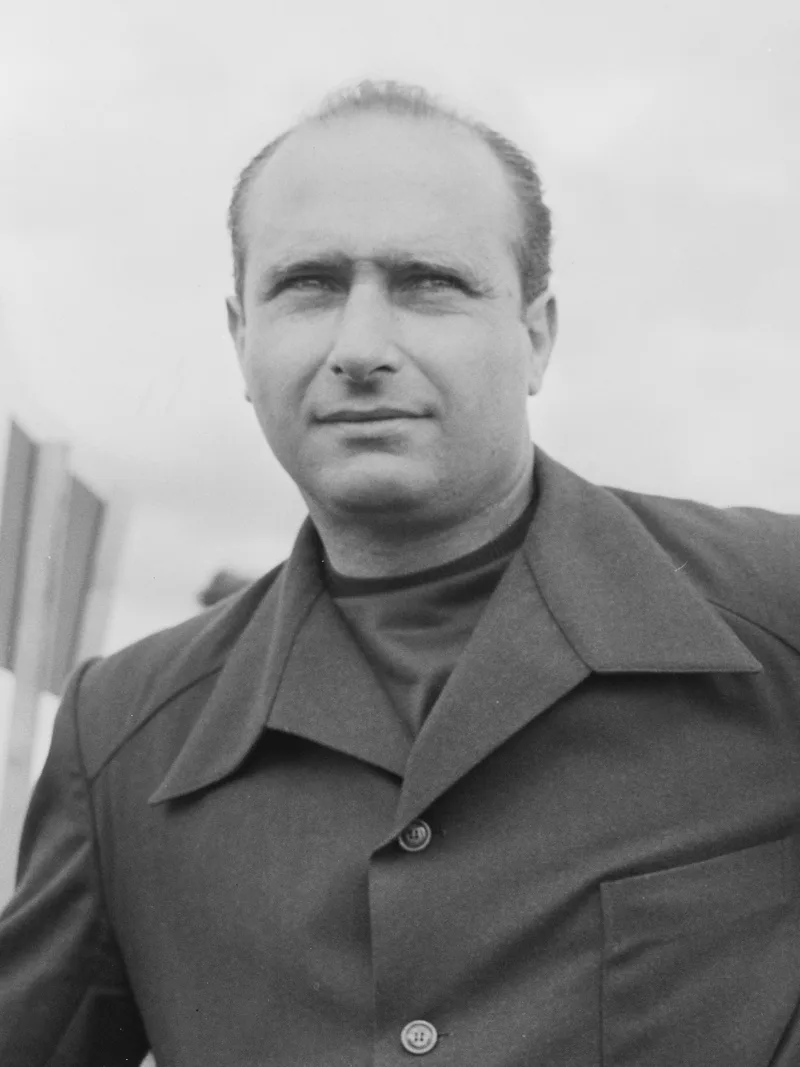
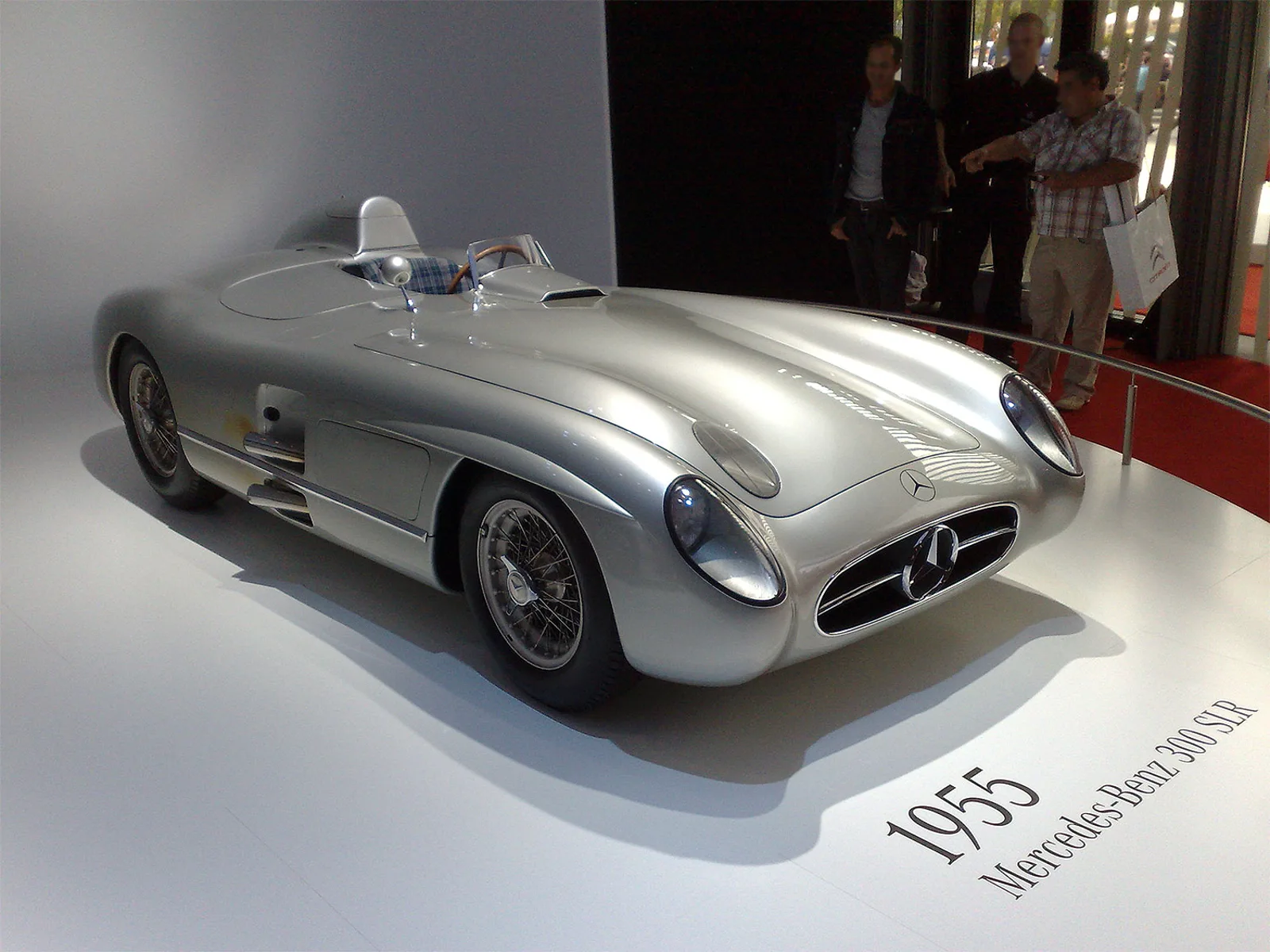
In 1952 Fitch took the wheel of a prototype 300 SL in Mexico's Carrera Panamericana. The repairs to his car were ruled illegal and he was disqualified, but his persistence had won him the respect of Mercedes team manager Alfred Neubauer. In 1955 he was in the Daimler-Benz line-up with Fangio, Kling and Moss.
At Le Mans in 1952 he set the fastest lap in his Cunningham before a late retirement for bad fuel. He was impressed by the new 300 SLs, and Mercedes chief engineer Rudolf Uhlenhaut offered him a test at the Nurburgring. He pushed his two allotted laps to the limit, and then he shaved time off the second.
Neubauer was won over, and Mercedes agreed to field 300 SLs in Mexico for the Carrera Panamericana, an event the team had not planned to enter. Fitch was given one of the roadsters, but his car kept throwing tread from its tyres, and a high-speed blowout damaged a shock absorber mount.
Kling and Lang finished first and second for Mercedes. Fitch was disqualified over the disputed repairs, but he had won Neubauer's respect, which opened the door to his later Mercedes years.
What did Fitch achieve at Sebring in 1953?
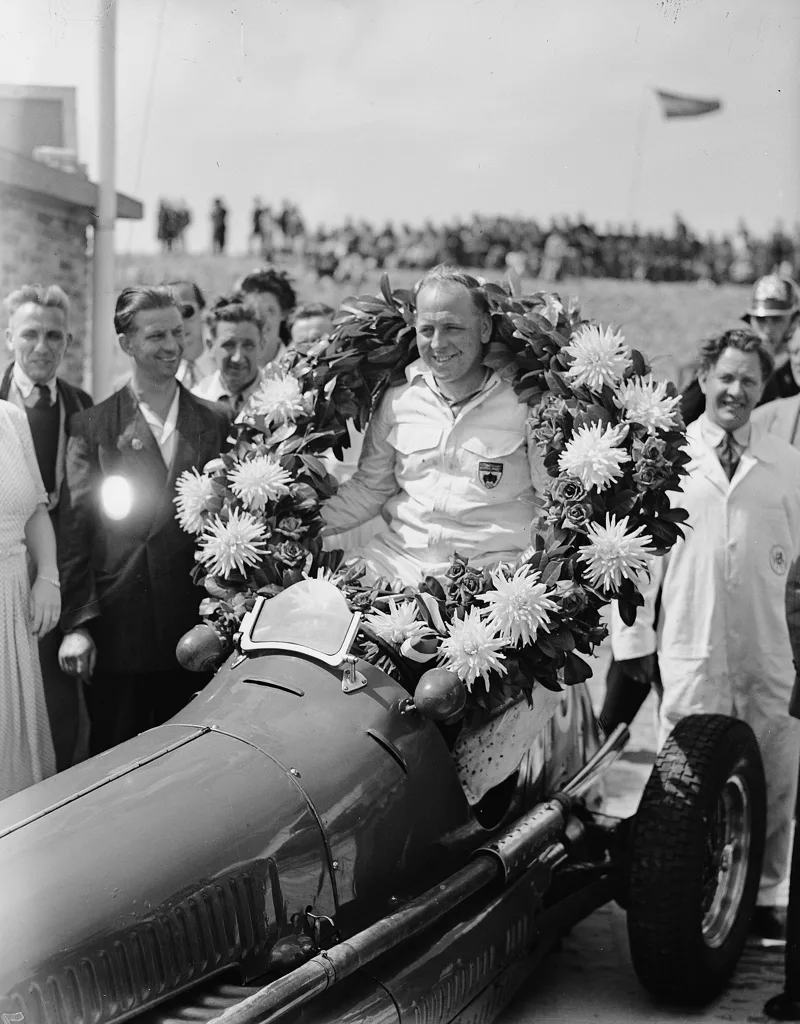
In 1953 Fitch and Phil Walters took the 12 Hours of Sebring from Aston Martin, driving a Cunningham C4R with a Chrysler engine. It marked the first time an American crew won there in an American machine, and Speed Age magazine picked Fitch as its Sports Car Driver of the Year.
John Wyer, the Aston Martin team manager, had expected to win and said he never imagined that Americans would beat his team. That result made the Cunningham squad one of the most respected in sports car racing.
That year Fitch also raced in many European events. He drove a Nash-Healey at the Mille Miglia, a Cooper Monaco at Aix-les-Bains and a works Frazer Nash at the RAC Tourist Trophy, and he made his first of two world championship Grand Prix starts. At Monza he failed to finish the Italian Grand Prix in an HWM-Alta.
He also took a rookie test for the Indianapolis 500 in a Kurtis-Kraft Offenhauser, but he did not qualify for the race. Later that year, while racing a Cunningham C5R at the 12 Heures internationales de Reims, he survived an end-over-end crash at 140 mph.
How did the 1955 Daimler-Benz years unfold?
In 1955 he drove for the Daimler-Benz sports car squad, whose drivers also included Fangio, Kling and Moss. He finished fifth overall at the Mille Miglia in a production 300 SL and won his class. Only dedicated racing cars beat him.
Fitch said the suspension was so bad that the crew had to halt and fasten the axle down with their belts. He also helped Moss's victory by building a scrolling map in a box, which navigator Denis Jenkinson used to guide the 300 SLR around the course.
That summer he and Moss won the RAC Tourist Trophy at Dundrod. Fitch judged the narrow Northern Irish road circuit unfit for racing, and the event later relocated to Goodwood.
His final world championship race came at Monza, where he finished ninth in a Maserati 250F in the Italian Grand Prix.
What happened at Le Mans in 1955?
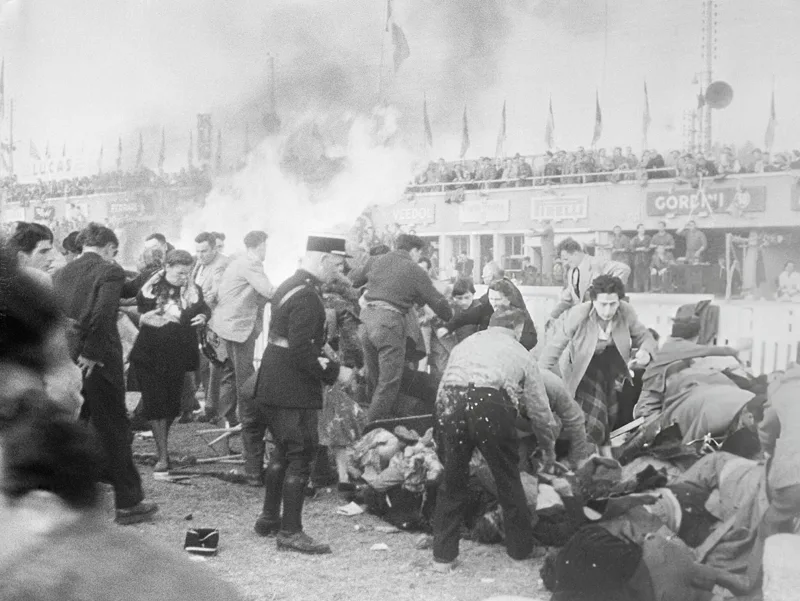
At Le Mans in 1955 Fitch shared a 300 SLR with Pierre Levegh, in the race that produced the worst accident in the sport's history. The crash killed 83 spectators, and in the early confusion his family in the United States was told he had crashed.
At the moment of the explosion Fitch was in the Mercedes trailer behind the pits, having coffee with Madame Levegh. He went to help the injured gendarmes and journalists, then came back to the trailer. He did not have to speak, because his expression told Madame Levegh what had happened.
Fitch later said the disaster sparked his lifelong interest in safety, both on the track and on the highway.
How did his Corvette and Lime Rock years go?
After the 1955 season Chevrolet's Ed Cole chose Fitch to head its new eight-driver Corvette racing team for two years. Under him the team set a production-car class land speed record at Daytona Beach, then won two classes and the team prize at Sebring.
Fitch continued to race with Cunningham's team, which was running Jaguar D-Types around the United States. In 1957 he combined running the Corvette SS entry at Sebring with driving it himself.
Lime Rock Park, where he had helped promote the track, became his base. As circuit director he organised a Formula Libre race in which Rodger Ward beat the expensive sports cars on an Offenhauser midget car.
He raced Maseratis in 1958, mostly at Lime Rock, and in 1959 he drove a factory Porsche 718 RSK at Sebring with Edgar Barth. They finished second in class and fifth overall.
How did Fitch's last years of racing go?
Fitch rejoined the Cunningham team for Le Mans in 1960. The production Corvette they ran won its class and finished eighth overall, a Corvette record that stood for more than 40 years. He later raced a two-litre Maserati with Cunningham at Sebring and Road America through 1961.
Sebring also brought him a Jaguar E-Type entry in 1962 and 1963. A Genie BMC followed in 1963, and he returned to Cunningham in 1965 and 1966 to drive a Porsche 904 at Sebring.
His last race came at Sebring in 1966, sharing a Porsche with Cunningham and Dave Jordan. A valve broke well into the race, which put the car out of contention. By then neither driver was racing to win, and Fitch later wrote that the thought of this being their last race had never occurred to them.
He continued in vintage events at Lime Rock, at the Goodwood Festival of Speed and at the Monterey Historic races.
What did he try at Bonneville in his later years?
At 87 Fitch returned to competition in 2003 and again in 2005, at Bonneville Salt Flats. He teamed up with Bob Sirna to drive a 50-year-old Mercedes-Benz 300 SLR, aiming to break the class land speed record. A fuel injection pump limited the car to 150 mph, and the team vowed to return the following year.
The film A Gullwing at Twilight records the attempt. Fitch also set a 60 mph speed record for driving backwards at Lime Rock, a light-hearted achievement.
What safety inventions did Fitch create?
Fitch devoted much of his later life to safety after the 1955 Le Mans disaster. His barrier system, which has been used on fixed roadside objects since the late 1960s, and estimates put its lifesaving record at as many as 17,000 lives. He also designed compression barriers, displaceable guardrails and driver capsules.
The idea came from sand-filled fuel cans he had used in wartime to shield his tent. He insisted on testing the systems himself, and the designs were affordable and easy to install and maintain.
The Fitch Compression Barrier suits oval tracks with little run-off, using thick-walled elastomer cylinders about a yard in diameter. The Fitch Displaceable Guardrail is mounted on skids so that it slides back on impact, gradually capturing the car and redirecting it parallel to the wall.
The Fitch Driver Capsule has a seatback that pivots with the seatbelt to reduce the driver's inertial force. The Full Driver Capsule anchors the helmet to the seatback, which helps prevent basilar skull fracture and neck hyperextension, in a manner similar to the HANS device.
His other inventions included the Evans Waterless Engine Cooling System, the DeConti brake for trucks and buses, and the Fitch Fuel Catalyst. He also worked on self-levelling suspensions and secured several patents for them.
What were Fitch's cars and automotive projects?
Fitch designed five cars in total. The Fitch Sprint was a Corvair-based road car with minor engine changes that raised output to 155 hp (116 kW), along with upgrades to springs, dampers and steering. It was competitive with much more expensive European sports cars.
The Fitch Phoenix was a two-seat prototype based on the Corvair, with a steel body that weighed 1,950 pounds (885 kg). Its modified Corvair engine produced 175 hp (130 kW), and it was priced at $8,760. The Traffic Safety Act of 1966 and Chevrolet's decision to end Corvair production ended the project.
Fitch kept the Phoenix prototype and showed it at car shows. It was later restored for the Chasing Classic Cars television series, and it sold for $230,000 at auction.
His company, John Fitch and Co., manufactured and marketed the Fitch Firebird and the Toronado Phantom, although those models attracted less attention than the Sprint.
How was Fitch honoured in later life?
In 1998 the Transportation Research Board gave Fitch its Kenneth Stonex Award, recognising a lifetime of road-traffic safety work. He also won the Stonex Roadside Safety Award that year, and the Corvette Hall of Fame added him in 2000.
Further recognition followed: Sebring's Hall of Fame in 2002, the SCCA's in 2005 and, two years later, the Motorsports Hall of Fame of America. In 2009 he entered the New England auto racing hall of fame as its first full-time sports car driver.
Sailing was a pastime for him. His wife Elizabeth died in 2009, and the couple had three sons, John, Christopher and Stephen. He lived in Connecticut, near Lime Rock Park.
Fitch died on 31 October 2012 at his Connecticut home, of Merkel cell carcinoma. His autobiography, Adventure on Wheels, was written somewhat prematurely, in 1960.
What were Fitch's key results by event?
| Year | Event | Result |
|---|---|---|
| 1951 | Gran Premio de Eva Duarte Peron Sport | Won in an Allard-Cadillac J2 |
| 1953 | 12 Hours of Sebring | Won with Phil Walters in a Cunningham C4R |
| 1953 | Italian Grand Prix, Monza | Did not finish in an HWM-Alta |
| 1955 | Mille Miglia | Fifth overall, with a class win in a 300 SL |
| 1955 | RAC Tourist Trophy | Won with Stirling Moss |
| 1955 | Italian Grand Prix, Monza | Ninth in a Maserati 250F |
| 1959 | 12 Hours of Sebring | Second in class, fifth overall, in a Porsche 718 RSK |
| 1960 | 24 Hours of Le Mans | Class win in a production Corvette, eighth overall |
| 2003 | Bonneville Salt Flats | Land speed record attempt at 87, limited to 150 mph |