Charles Nash's Wisconsin company pioneered unibody construction and climate control, built the Rambler compact and ended inside American Motors.
Founded in 1916 in Kenosha, Wisconsin, Nash was an American car maker whose Weather Eye heater of 1938 and 1941 Nash 600 unibody were industry firsts. It merged with Hudson in 1954 to form American Motors, and its compact Rambler became a successful small car.
Nash Motors was an American car maker based in Kenosha, Wisconsin, from 1916 until 1937, and then the automotive arm of Nash-Kelvinator until 1954. It pioneered features that stayed in use for decades, including a modern heating and ventilation system and unibody construction. The company then merged with Hudson, and its compact Rambler became the most successful part of the story.
Who founded Nash Motors and where did it begin?
Charles W. Nash, a former General Motors president, founded Nash Motors in 1916 by acquiring the Thomas B. Jeffery Company. The first car to carry his name was the 1917 Nash Model 671, and sales reached 10,283 units in 1918, a figure that climbed to 27,081 after more models arrived in 1919.
Jeffery's best-known car was the Rambler, whose mass production had begun at a plant in Kenosha in 1902. The new company built on that base, and Kenosha became the centre of Nash's operations for the rest of its history.
The company's success was put down to cars with honest worth, sold at a price that could reach a wide market. That formula carried the business through its early growth and into the 1920s.
Nash's legacy is a set of ideas, from the Weather Eye heater to the compact Rambler, that outlived the brand itself.
What was the Jeffery Quad truck?
The four-wheel drive Jeffery Quad became an important product for Nash, with about 11,500 built between 1913 and 1919. The trucks moved material during the First World War under severe conditions, and they were regarded as the best four-wheel drive truck built in the country.
Its drive ran through half-shafts set above the axles that carried the load, feeding the hubs via reduction gears, and it also steered on all four wheels. Once Nash's capacity ran short, the Paige-Detroit Motor Car Company assembled the Quad under licence and Nash patents.
By the end of the war Nash had become the leading producer of military trucks. Surplus Quads were then used as heavy work trucks in construction and logging, which kept the design in use long after the fighting ended.
Who was Nils Erik Wahlberg and what did he add?
Charles Nash persuaded Finnish-born Nils Erik Wahlberg, the chief engineer of GM's Oakland Division, to join the new company. Wahlberg's first Nash engine, introduced in 1917, used overhead valves, a layout Nash had learned about while working for Buick.
Wahlberg is also credited with helping to design the flow-through ventilation that nearly every motor vehicle uses today. He became an early advocate of wind tunnel testing, and during the Second World War he worked with Theodore Ulrich on the radically styled Airflyte models.
Wahlberg later became Nash's vice president of engineering, a post from which he shaped the postwar line. His work on the Airflyte connected wind tunnel research directly to production cars.
What was the Weather Eye heater?
Introduced in 1938, the Weather Eye heater directed fresh outside air into a fan-boosted, filtered ventilation system, where it was warmed or cooled before being vented from the rear. It also reduced humidity and balanced the pressure difference between the inside and outside of a moving car.
The 1938 system was the first hot-water heater that drew outside air into the vehicle, and it became the foundation of most later car heaters. In 1939 a thermostat was added to the Conditioned Air System, which produced the famous Weather Eye heater.
Another unusual Nash feature was the unequal wheel track. The front wheels were set slightly narrower than the rear, which added stability and improved cornering.
Why did Nash take over Kelvinator?
Before retiring, Charles Nash chose Kelvinator head George W. Mason to succeed him. Mason accepted on one condition: Nash would acquire controlling interest in Kelvinator, then the leading maker of high-end refrigerators and kitchen appliances. The combined company became Nash-Kelvinator on 4 January 1937.
The merger was the largest between companies in two different industries until then. Nash continued as the automobile brand within the group, and the expertise shared between Kelvinator and Nash produced the 1938 air system.
What were the Ajax and LaFayette models?
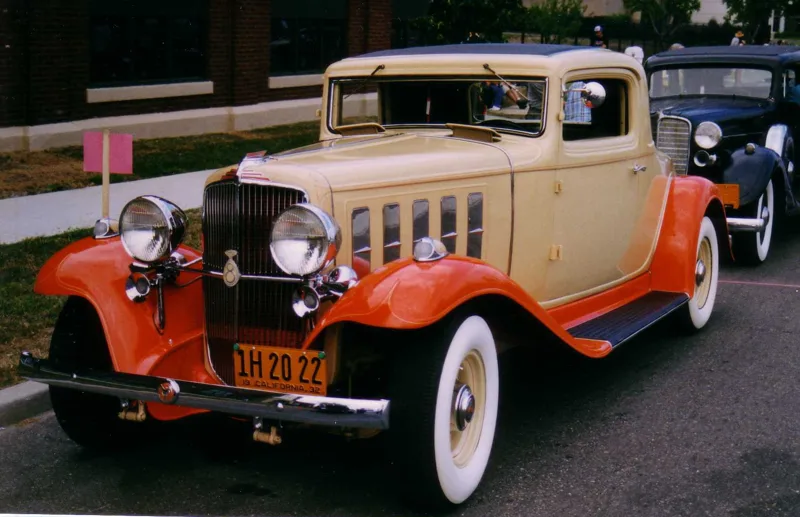
Nash introduced the entry-level Ajax for the 1925 model year, built in the Mitchell plant at Racine that it had acquired. Sales were disappointing, so the car became the Nash Light Six in June 1926, and sales improved as expected.
Nash offered every Ajax owner a conversion kit at no charge. It included new hubcaps and a radiator badge, and it protected owners from falling resale values when the Ajax marque was dropped. Most Ajax owners took the offer, which is why unconverted Ajax cars are rare today.
Nash had absorbed LaFayette in 1924 and converted its plant to build Ajax cars. The LaFayette name returned in 1934 as a lower-priced companion to Nash, and it ceased to be an independent marque with the 1937 models.
What made the Nash 600 a landmark?
The Nash 600, introduced for the 1941 model year, was the first mass-produced unibody car made in the United States. Its lighter weight and lower air drag compared with body-on-frame cars helped it achieve strong fuel economy for its day.
The 600 name is said to come from its ability to cover 600 miles (966 km) on a 20-US-gallon (75.7 L; 16.7 imp gal) tank when fitted with overdrive. It could reach 30 miles per US gallon (7.8 L/100 km; 36 mpg-imp), a remarkable figure at the time.
The 600 used an unusual steering and front suspension with very long kingpins, and inadequate lubrication caused premature failures. The Ambassador shared the same unibody but placed it on a conventional frame, which gave that larger model a sturdy structure.
Front ends, upholstery and chrome trim were revised between 1942 and 1948 to improve the design. The 600 was renamed the Statesman for 1950.
How did Nash return to production after the war?
Car building restarted on 27 October 1945, when an Ambassador sedan rolled off the line first. Postwar Nashes were six-cylinder only, because eight-cylinder engines did not return. The Ambassador's 234-cubic-inch six produced 112 bhp (84 kW; 114 PS).
Nash also explored a pickup and built a prototype, but the company instead introduced the Suburban for 1946. It used wood framing and panels on the body, much like the Chrysler Town and Country and Ford Sportsman. About 1,000 Suburbans were built across 1946 to 1948.
The Ambassador convertible returned in 1948, with about 1,000 made.
What was the Airflyte and why did it stir debate?
The 1949 Nash Airflyte was the company's first all-new design after the war. Its pontoon-like body was developed through wind tunnel testing, with enclosed front fenders that aided drag reduction and stiffened the unibody structure.
The body came from sketches made in 1943 by independent designers Ted Pietsch and Bob Koto. Critics often compared its shape to an inverted bathtub, and its aerodynamic look was judged the most alarming since Chrysler's Airflow. Assembly took place at Kenosha and at El Segundo, California.
The El Segundo plant was later re-purposed as a Boeing satellite development centre immediately south of Los Angeles International Airport. Its styling later came to look dated as the 1950s moved on.
The Airflyte offered a one-piece curved safety glass windshield and coil springs on all four wheels. In 1949 Nash also became the first American car maker to offer seatbelts as a factory option, but buyers largely refused them, and after one year only 1,000 had been used.
The Airflyte's turning radius was larger than most rivals' because of the enclosed fenders. The 600 had a 112-inch (2,800 mm) wheelbase, while the Ambassador stretched to 121 inches (3,073 mm), and both shared the same bodies.
How did the Airflyte change in 1950 and 1952?
The 1950 Airflytes received a wider rear window, a hidden fuel cap and a revised dashboard. Ambassador buyers could pick a GM Hydramatic gearbox, and a five-position Airliner reclining front seatback was available on both models.
The 1952 Golden Airflytes were fully redesigned to mark the company's 50th anniversary. Nash counted the Thomas B. Jeffery years as part of its heritage, which is why the slogan Great Cars Since 1902 appeared in its advertising.
Battista Pinin Farina of Italy was contracted to design a body for the new Golden Airflyte, and management blended that design with in-house work. The six-cylinder grew to 252 cubic inches (4.13 L), and automatic transmissions were offered across the domestic range.
How did the Rambler become a compact success?
The Nash Rambler was introduced in 1950 as a compact designed to appeal to families. It marked a strategic shift toward the small car segment, and George W. Mason led the move, arguing that a small car had to be big enough to serve a family as its main vehicle.
The Rambler was marketed as a premium compact rather than a cheap economy car, and it carried upscale standard equipment. It also debuted as a convertible, which strengthened its appeal and set it apart from rivals.
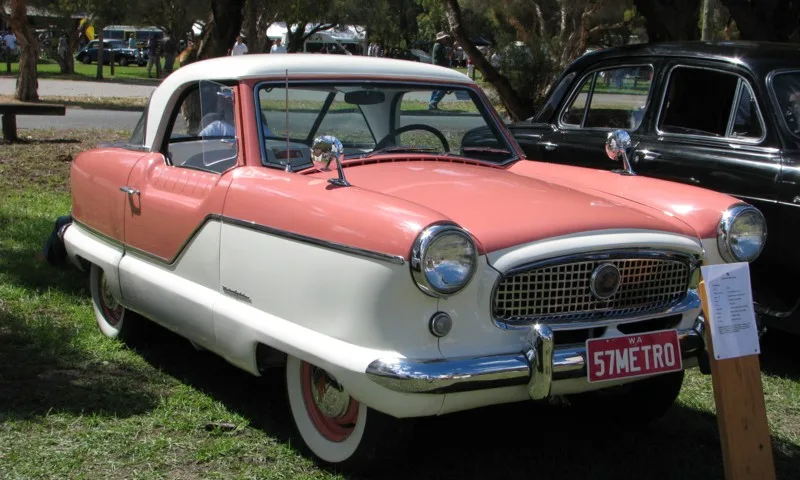
The Rambler is widely regarded as one of the first successful modern small cars in the American market, and it preceded domestic compacts from rival manufacturers by several years. Mason also arranged for Austin of the UK to build the smaller Nash Metropolitan, which filled a niche below the Rambler.
What was the Nash-Healey?
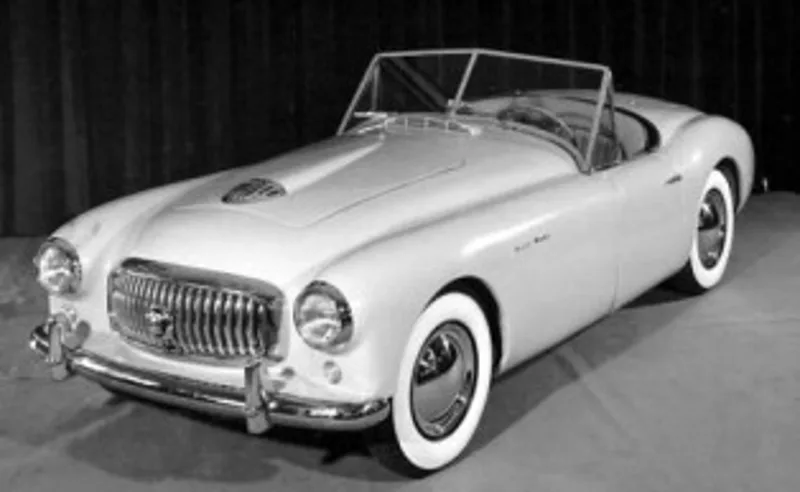
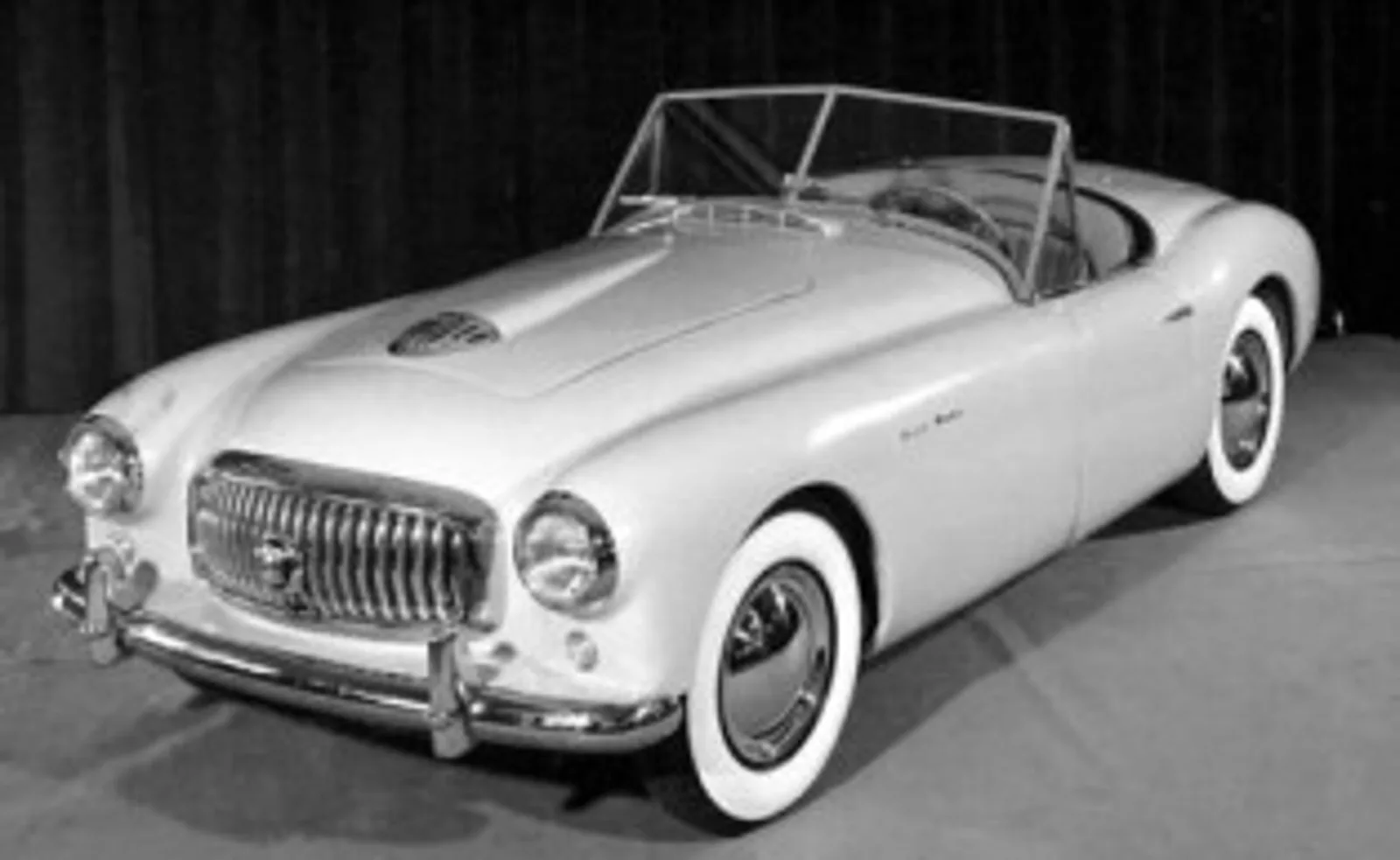
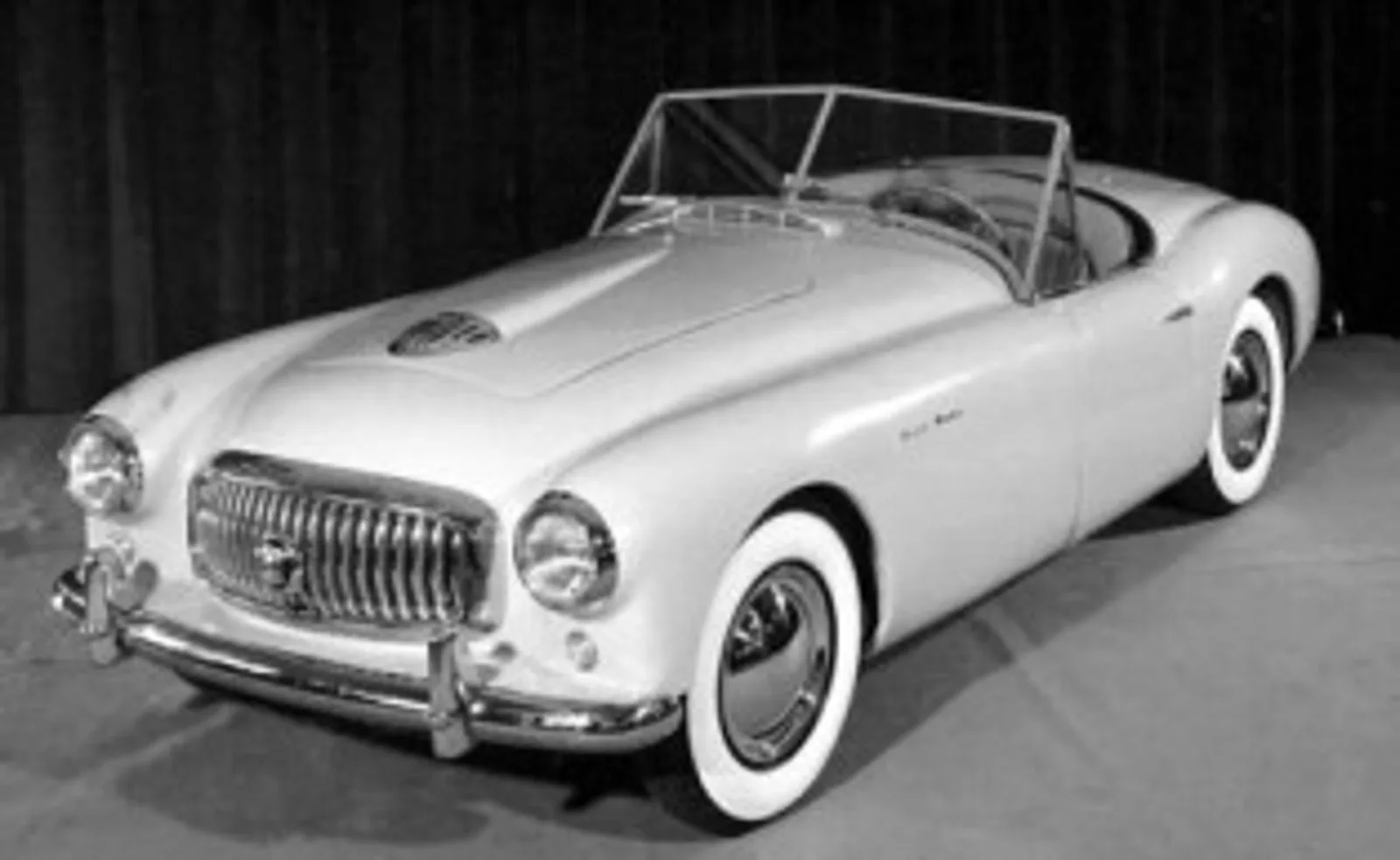
The Anglo-American Nash-Healey sports car arrived in 1951 from a collaboration between George Mason and British maker Donald Healey. Healey designed the chassis and suspension, while Nash supplied the powertrain components. In 1952 Battista Farina restyled the body, and production ended in 1954 after 506 automobiles.
Panelcraft Sheet Metal in Birmingham fabricated the aluminium bodies until 1952, and Healey assembled the finished cars before shipping them to the United States. The car improved Nash's image but did little for showroom traffic, because sales fell steadily from 1951 onward.
Healey and his staff also built three special Nash-Healey race cars with lightweight aluminium bodies. They entered four consecutive Le Mans races and one Mille Miglia, finishing fourth overall in 1950 and third overall in 1952, with a class win in the same year.
Why did Nash sales slide in the early 1950s?
After 1950 small domestic automakers struggled against the Big Three's production and distribution advantages. Full-size Nashes looked dated, their six-cylinder engines could not match GM's new overhead-valve V8s, and Nash charged more than Ford and GM did.
Lower-profit Rambler sales gradually made up more and more of Nash's total production. The full-size cars also lacked body styles, because there was no convertible or station wagon even though the Rambler range offered both.
A price war between Ford and GM in 1953 and 1954 hurt all the independents. Nash had profited from military contracts during the Korean War, but that conflict ended in mid-1953, and the new Secretary of Defense, the former GM president Charles E. Wilson, steered defence work to his old employer.
How did American Motors form in 1954?
In January 1954 Nash announced a friendly merger with the Hudson Motor Car Company, which created American Motors Corporation. Production was consolidated at Nash's Kenosha plant from the 1955 models, and Nash focused its marketing on the Rambler while Hudson concentrated on full-size cars.
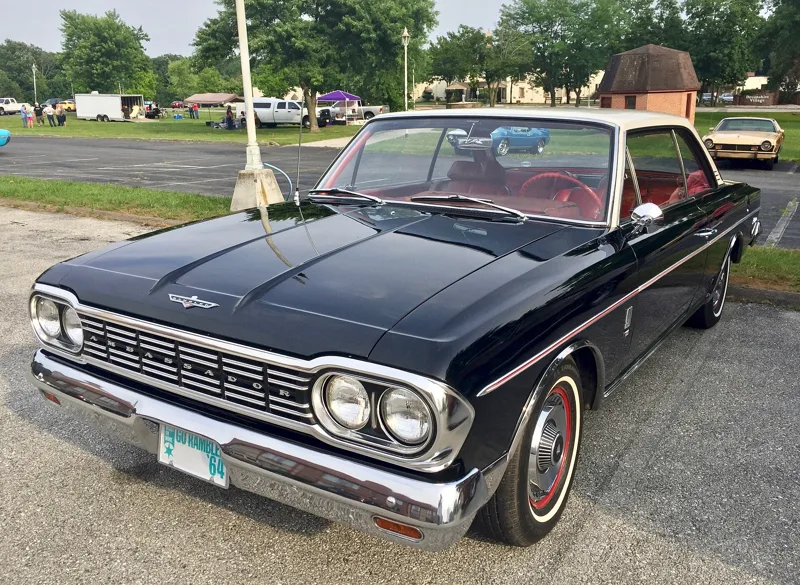
Mason opened talks with James J. Nance, president of Packard, for parts-sharing arrangements. AMC lacked its own V8, so the 320 cubic inch Packard V8 and Packard's Ultramatic transmission were agreed for the 1955 Nash Ambassador and Hudson Hornet.
Mason died on 8 October 1954, and George W. Romney succeeded him. AMC later developed its own V8 and replaced the Packard unit by mid-1956, because Packard's engines and transmissions were comparatively expensive.
What happened to the Nash name after 1957?
The Nash and Hudson nameplates were phased out after the 1957 model year, and the last Hornet was built on 25 June 1957. Rambler became the focus, and from 1958 to 1962 it and the Metropolitan were the only brands AMC sold.
The timing proved fortunate. An economic recession struck the United States, creating strong demand for economical compact cars, and the Rambler was ready to meet it. By 1965 the Rambler name had begun to be phased out, and AMC name took over from the Rambler badge and ran to the 1988 model year.
The 1970 purchase of Kaiser Jeep brought Toledo, Ohio plants into the group. In 1979 AMC formed a technology partnership with Renault, and in 1987 Chrysler Corporation made an offer for all AMC shares, which the shareholders approved, making AMC a division of Chrysler.
Where were Nash cars sold abroad?
Nash cars were exported as complete vehicles or as knock-down kits for local assembly in many countries, among them the right-hand-drive markets of Britain, Australia, New Zealand and South Africa. Export operations were consolidated after the 1954 merger, and they ended in 1957 when both the Nash and Hudson marques were retired.
In Australia several distributors sold Nash vehicles in the 1920s, importing chassis and engines while local coachbuilders made the bodies. After the merger, Rambler vehicles arrived, and the first 1957 shipment consisted of 24 cars, 10 of them station wagons.
New Zealand assembly began in 1935 in Christchurch, and the plant later moved production to Auckland. In South Africa a newly built operation in East London assembled Nash vehicles after the Second World War, and the plant was later taken over by Chrysler and then Peugeot.
Which Nash models defined the brand?
| Model | Years | Note |
|---|---|---|
| Ajax | 1925 to 1926 | Entry-level marque, became the Nash Light Six |
| LaFayette | 1934 to 1937 | Lower-priced companion to Nash |
| Nash 600 | 1941 to 1948 | First mass-produced unibody car made in the United States |
| Airflyte | 1949 to 1951 | Wind tunnel designed postwar model |
| Rambler | 1950 onward | Premium compact that opened the small car segment |
| Golden Airflyte | 1952 | Redesign for the 50th anniversary |
| Nash-Healey | 1951 to 1954 | Anglo-American sports car with Donald Healey |
| Metropolitan | 1954 to 1962 | Small car built by Austin of the UK |
Nash's legacy is the set of features that became industry standards, from the Weather Eye heater to the unibody and the compact Rambler. The brand disappeared inside American Motors, but many of its ideas outlived it.