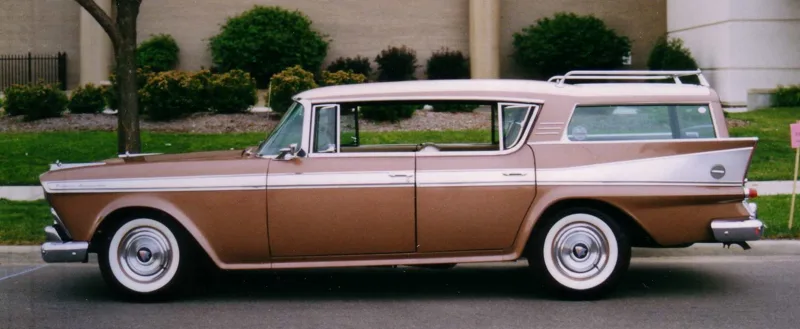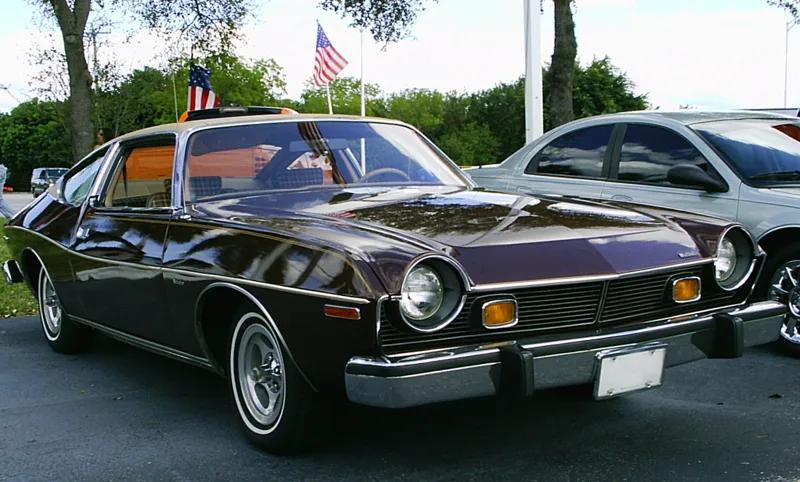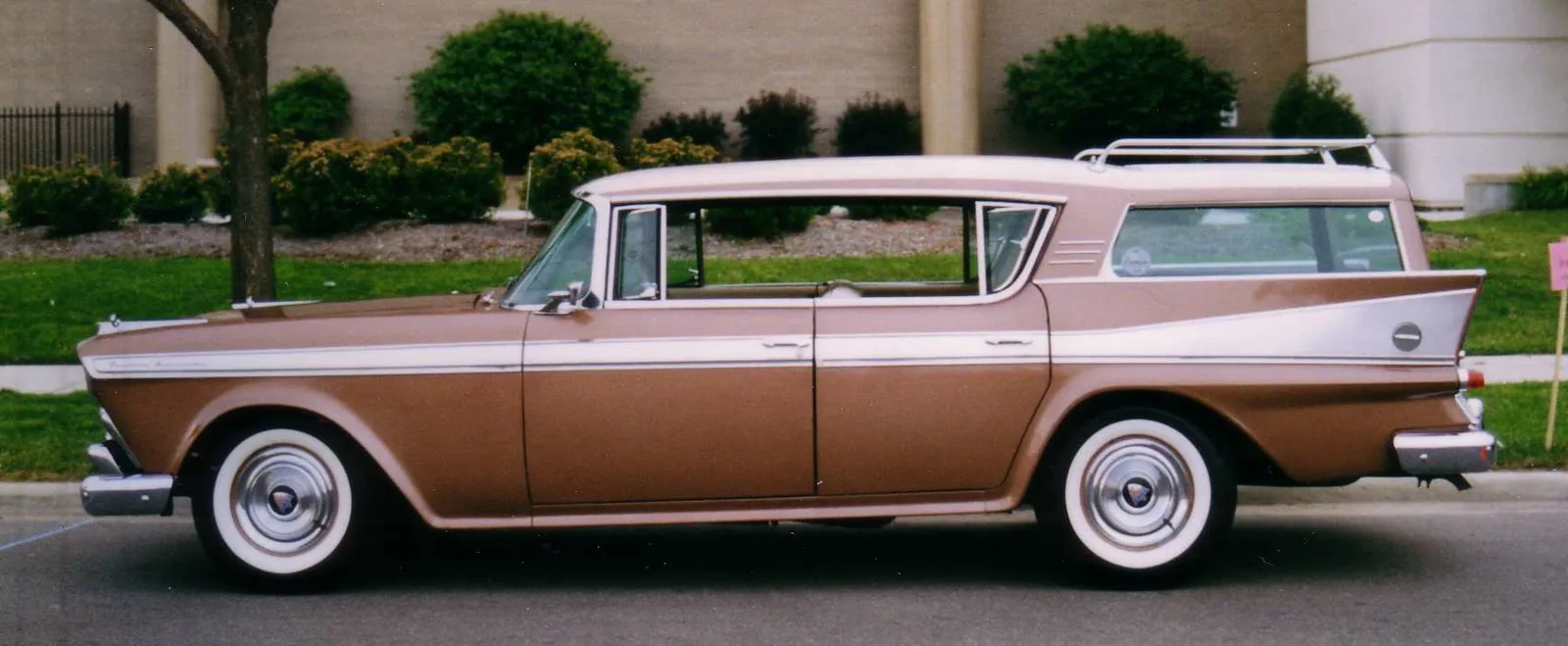
A 1954 merger that produced the Rambler, the Jeep and a Cherokee that started the sport utility market, before Renault and then Chrysler took control.
American Motors was formed in 1954 from Nash-Kelvinator and Hudson, and it sold Ramblers, Matadors and Jeeps. Renault acquired a major holding in 1979, and Chrysler absorbed the firm in 1987, folding it into a Jeep-Eagle division.
American Motors Corporation was a US carmaker formed on May 1, 1954, by merging Nash-Kelvinator with the Hudson Motor Car Company. It built the Rambler, the Matador and the Jeep range, and it survived on compact cars and four-wheel drive. Renault took a large stake in 1979, and Chrysler bought the company in 1987.
Why did Nash and Hudson merge in 1954?
Nash-Kelvinator and Hudson combined in 1954 because their leaders believed independent automakers had to join forces to challenge the Big Three. The deal was a stock transfer, and the new company was the fourth-biggest US car maker, with assets of US$355 million.
George W. Mason, who led the merger, argued that the survival of the remaining independents depended on forming one multiple-brand company able to challenge the largest makers as an equal. The 1953-54 Ford and GM price war had hit the independents hard, and the merger was meant to cut costs and strengthen sales.
Savings followed quickly. Hudson could cut prices by an average of $155 on the Wasp and by up to $204 on the Hornet. American Motors earned $1,592,307 in the second three months of 1955, its first profitable quarter, against a loss of $3,848,667 a year earlier.
A 1954 merger that built the Rambler, the Jeep and a sport utility pioneer before Renault and Chrysler took control.
Where did American Motors get its engines?
Packard had acquired Studebaker in July 1954, and the new Studebaker-Packard company supplied its Packard V8 and Ultramatic transmission to American Motors for the 1955 Nash Ambassador and Hudson Hornet. Those engines proved expensive, so American Motors began developing its own V8.
The company also spent US$40 million on its Double Safe Single Unit monocoque, which debuted in the 1956 model year. By mid-1956 the Packard V8 and TwinUltramatic gearbox had been dropped in favour of American Motors' own V8 and GM transmissions.
Why did American Motors focus on compact Ramblers?
The larger Nash and Hudson range sold poorly, and the company lost money each year. George Romney decided in 1956 that the future lay with the compact Rambler line, so production of the new large cars was halted before their 1957 release.
The 1956 operating loss reached $31.7 million, and 1957 brought an $11.8 million loss. Romney responded with a public relations campaign, travelling 70,000 miles (112,654 kilometres) across the country in 12 months. He spoke at union halls, churches, fairgrounds and radio and television stations.
Rambler sales jumped 58.7% in 1958, and the company signed 425 new dealers. That made 1958 the first profitable year since the merger, with $28 million in earnings. The Nash and Hudson names were dropped, and Rambler became a marque in its own right.
What was the dinosaur-fighter strategy?
American Motors followed a dinosaur-fighter strategy, focusing on the compact car as a fuel-efficient vehicle 20 years before there was a real need for one. The company shared components across its models and refused to join the Big Three's restyling race, which kept costs low.
In 1959 the company announced a $10 million expansion of its Kenosha complex, raising yearly capacity from 300,000 to 440,000 cars. Shareholders were told that year that small-car sales in the US might reach three million units by 1963.
American Motors also looked at other power. On April 1, 1959, it announced a joint research effort with Sonotone Corporation on an electric car powered by a self-charging battery. Dick Teague, hired that year, had worked for General Motors, Packard and Chrysler.
Did American Motors introduce safety features first?
Yes, in several areas. The Rambler Classic had a standard tandem master cylinder from 1962, a feature that only Cadillac also offered six years before US rules required it. American Motors also made air conditioning standard on all 1968 Ambassador models, ahead of luxury makers.
The company offered adjustable front seat backrests from its Nash origins, and in 1964 the Classic and Ambassador had standard dual reclining front seats. Bendix disc brakes were standard on the Marlin in 1965, making it one of the first modern American cars with that equipment.
The Flash-O-Matic transmission had an automatic shift indicator sequence that resembled today's PRNDSL pattern. That layout became mandatory for the 1968 model year, while General Motors still offered a selector with reverse next to low.
How did Abernethy try to move AMC upmarket?
After Romney left in 1962 to run for governor of Michigan, Roy Abernethy shifted the company back to bigger cars such as the Ambassador line. Ambassador sales jumped from 18,647 in 1964 to more than 64,000 in 1965, and then to more than 71,000 in 1966.
The strategy did not fix the cash problem. Sales fell 20% in the first half of 1966, and the firm posted a six-month loss of $4.2 million on sales of $479 million. The costs of new cars and engines had left it short of working capital.
Robert B. Evans invested more than $2 million, bought a large stake because the shares traded below the company's net worth, and became chairman on June 6, 1966. For the quarter to September 30, 1966, the loss stood at $12,648,000 before tax credits and deferred tax assets.
Who replaced Abernethy as chief executive?
Roy D. Chapin Jr., son of the Hudson co-founder, replaced Abernethy in 1967. Chapin cut the price of the Rambler to within $200 of the basic Volkswagen Beetle and aimed the marque at younger buyers, using air conditioning and other features as selling points.
The company launched the AMX for the muscle car boom, and the Javelin entered the pony car market created by the Plymouth Barracuda and the Ford Mustang. In 1968 the Kelvinator Appliance business was sold, leaving American Motors solely a car maker.
The Rambler name was dropped from the larger models for 1968, and the small Rambler American carried it until 1969. From 1970 all passenger cars bore the American Motors name and the new corporate logo.
Why did American Motors buy Kaiser Jeep?
In February 1970 Chapin bought Kaiser Jeep for $70 million, gaining the Jeep brand, Kaiser-Jeep's government contracts and the M151 line of military Jeeps. He believed Jeep vehicles would complement the passenger car business, although the move was opposed by top management.
Jeep dominated the four-wheel-drive market, and the Big Three had little presence beyond the Ford Bronco and the Chevrolet K5 Blazer. The military and special products business was reorganised as AM General, which later built urban transit buses.
What were the Hornet, Gremlin and Pacer?
The Hornet compact arrived in 1970 and became the top-selling passenger car since the Rambler Classic, with more than 860,000 sold when production ended in 1977. The Gremlin, a North American subcompact, sold over 670,000 units from 1970 through 1978.
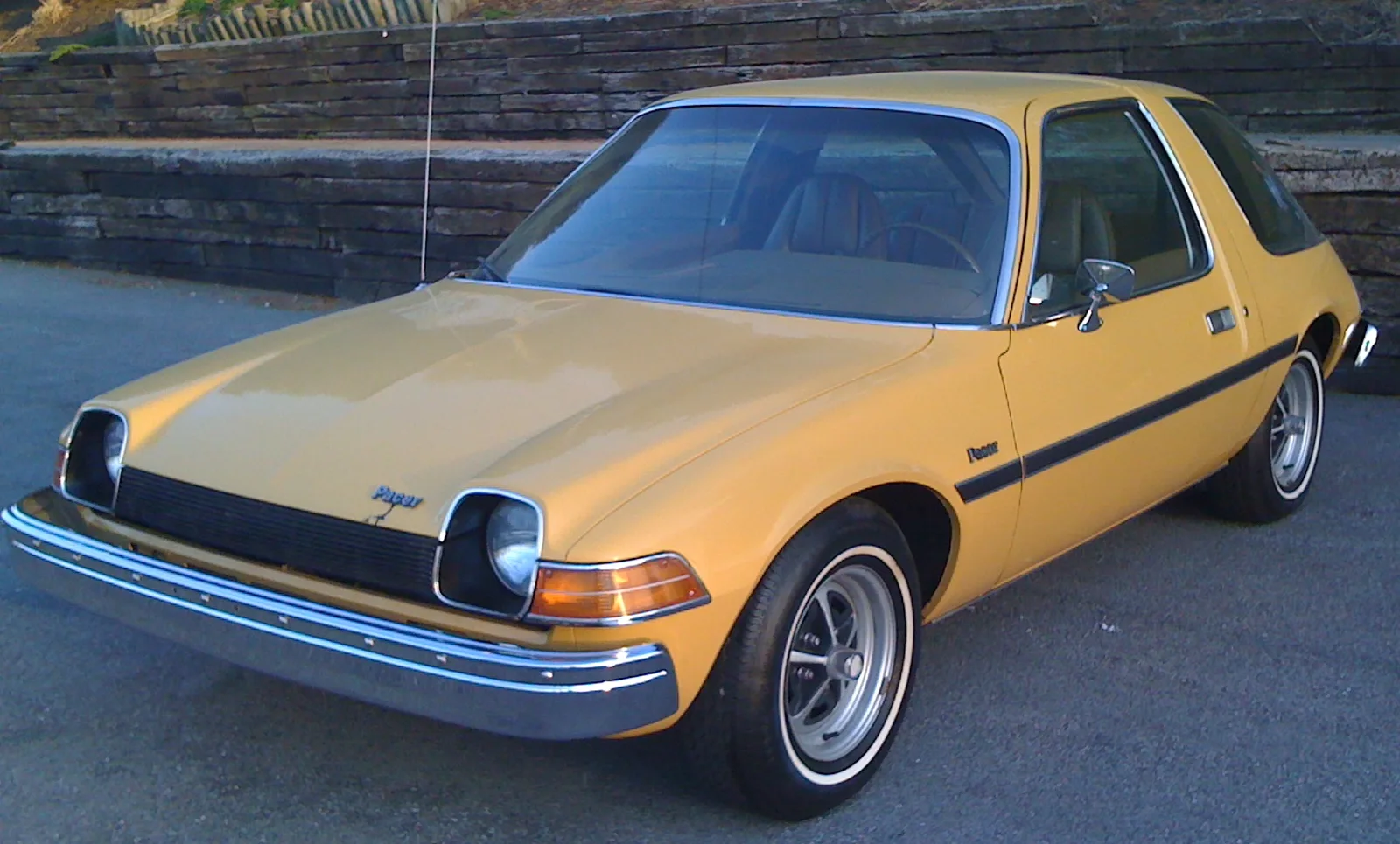
The Pacer, introduced in March 1975 and marketed as the first wide small car, sold 262,772 units in its first two years. The rotary engine it had been designed around was aborted by General Motors after the 1973 Arab Oil Embargo, so the Pacer used AMC's straight-six engines instead. Pacer production stopped in mid-1980.
What was the Matador?
The Matador replaced the Rebel in 1971 and became the mid-sized mainstay of AMC's range through the decade. The Los Angeles Police Department used Matadors from 1972 to 1975, and AMC supplied two Matadors for the television series Adam-12 after Jack Webb bought a Mark VII Limited.
In 1974 the first-generation Matador two-door hardtop, nicknamed the flying brick for its poor NASCAR aerodynamics, was replaced by a smoothly shaped coupe. Car and Driver named it Best Styled Car of 1974, and it sold almost 100,000 coupes over five years.
Sagging sales led to the end of the Matador line after the 1978 model year, when a final total of 10,576 units was sold. American Motors then focused almost entirely on its Hornet-based cars and the Jeep line.
What happened to the Ambassador?
The Ambassador was stretched 7 inches (178 mm) in 1973 to become the biggest car the company had built, just as the Arab Oil Embargo sparked gasoline rationing. The extra length came from a new front end and heavier energy-absorbing bumpers. It was discontinued after the 1974 model year.
Nash and American Motors built Ambassadors from 1927 through 1974, the longest run of one model name in the company's history and, at the time, the longest continuously used nameplate in the industry.
How did Renault become AMC's owner?
In October 1979 American Motors struck a deal with Renault. It received a $150 million cash injection and $50 million in credits, and Renault acquired a 22.5% interest. Renault later increased its stake several times and owned 49% by 1983, a shift that ended the company's run as a truly American car maker.
The crisis hit the whole industry. Gasoline prices jumped 52 percent between September and December 1979, and Chrysler considered bankruptcy. American Motors' domestic market share stood at 1.83% at the time, yet it posted a record $83.9 million profit on sales of $3.1 billion for the fiscal year.
Why did Renault take control in 1980?
By early 1980 the banks refused American Motors more credit, so it turned to Renault for a $90 million loan. Market share fell to 1.7% by September, and the company warned shareholders that it could go bankrupt without a plan for Renault to acquire as much as 59%.
Shareholders approved the plan, and on December 16, 1980, the French government-owned Renault became the principal owner. Renault veteran Jose Dedeurwaerder, with 23 years at the group, became president in 1982. He streamlined management, improved plant layouts and strengthened cost and quality control.
What was the Renault Alliance?
The Alliance, introduced in 1983, was a front-wheel-drive Renault 9 compact restyled for the American market by Dick Teague. It won Motor Trend Car of the Year and was ranked number one on Car and Driver's list of the ten best cars for 1983, and sales reached 200,000 by 1984.
The Alliance was a European design that did not fully suit US demands, and it was offered in only two body styles at first. Dealer quality problems and high warranty costs hurt its image and sales from 1985 until production ended in 1987. The hatchback was sold as the Renault Encore.
Why was the Jeep Cherokee so successful?
The Cherokee and Wagoneer XJ arrived in autumn 1983 for the 1984 model year. Its unibody construction brought the weight down to 3,100 pounds (1,406 kilograms), and sales reached 75,000 in the first year, far above AMC's forecast of 40,000.
Renault's Francois Castaing designed the new platform, with styling by Dick Teague, and the XJ pioneered what later became the sport utility vehicle. Three leading off-road magazines named it 4x4 of the year, and the 4.0 six that followed earned a reputation for reliability.
Chrysler kept the 4.0 engine until the end of the 2006 model year, and many examples passed 300,000 mi (480,000 km). The engine's 244 cu in capacity came from the older 258 cu in six, with a new head and electronic fuel injection.
Why did Chrysler buy American Motors?
Chrysler agreed on March 9, 1987, to buy Renault's stake and all the remaining shares for about $1.5 billion. Its interest lay in Jeep, the Bramalea assembly plant in Canada and AMC's network of 1,300 dealerships across the country.
Lee Iacocca wanted the Jeep brand, in particular the ZJ generation of the Grand Cherokee then under development. The Bramalea plant had been built in anticipation of the Renault 25-based Eagle Premier, and Chrysler also took on AMC's dealers and engineers.
On August 25, 1988, the company became the Jeep-Eagle division of Chrysler, and full integration followed by March 29, 1990. The company's badge last appeared on the Eagle Sports Wagon, which ran until the 1988 model year.
Who led American Motors?
George W. Mason led the 1954 merger as president and chief executive, and he died that October. George Romney succeeded him and built the Rambler line, followed by Roy Abernethy, Roy D. Chapin Jr. and then Gerald C. Meyers, who brought in Renault as the major owner.
Romney stepped away in 1962 to seek the Michigan governorship. Chapin led the company from 1967 and retired in 1977, when Meyers became chairman and chief executive. Meyers was 49 years old, making him the youngest top executive in the automobile industry, and he focused on four-wheel-drive vehicles.
AMC at a glance
| Specification | Detail |
|---|---|
| Formed | May 1, 1954, from Nash-Kelvinator and Hudson Motor Car Company |
| Initial assets | US$355 million |
| Rambler marque | Standalone from 1958 |
| Jeep purchase | US$70 million, February 1970 |
| Renault stake | 22.5% from 1979; 49% by 1983 |
| Peak 1979 profit | US$83.9 million on sales of US$3.1 billion |
| Chrysler purchase | About US$1.5 billion, March 9, 1987 |
| Final integration | Jeep-Eagle division; fully merged March 29, 1990 |