From Civil War wagon orders and electric cars to the Lark, the Avanti and the 1966 exit from car making.
Studebaker was an American wagon and car maker from South Bend, Indiana, founded in 1852. It entered electric motoring in 1902, accepted a takeover by Packard in 1954, and left the automobile business in 1966 when its last plant in Hamilton, Ontario closed.
Studebaker began as a wagon shop in South Bend, Indiana, and grew into a car maker that outlived many rivals before its exit in 1966. It moved from horse-drawn vehicles into electric and gasoline cars, then struggled through the Depression and a difficult merger with Packard.
The story runs from family wagon works to the Lark and Avanti, and then to a last plant in Hamilton, Ontario. The sections below follow that path in order.
Where did Studebaker begin and what did it make?
The business dates from 1852, and it took the Studebaker Brothers Manufacturing Company name in 1868. Its early output was coachwork for wagons, buggies, carriages and harnesses, and its roots went back much further.
The business began with blacksmithing and foundry work. Clement and Henry Studebaker first made metal parts for freight wagons in South Bend before turning to complete wagons, and the family's wider trade stretched back to the eighteenth century.
Peter Studebaker built a wagon factory in 1740 in what became Bakers Lookout, and in 1747 he built a road across his properties. By 1868 annual sales had reached $350,000, and Union Army wagon orders during the Civil War were a major leap forward.
From wagon shops in South Bend to a last car in Hamilton, Ontario, Studebaker reinvented itself several times before 1966.
Who were the Studebaker brothers?
The five brothers were Henry, Clement, John Mohler, Peter Everst and Jacob Franklin, sons of John Studebaker. Their wagon business, started in 1852, became the foundation of the family fortune and of the corporation that bears their name.
The 1918 company history was written by Albert Russel Erskine, who had replaced Fred Fish as president in July 1915. He wrote it for 3,000 stockholders, 12,000 dealers and 15,000 employees, and it was verified by lawyers and board members.
John M. Studebaker saw cars as a companion to the horse-drawn wagon. He worried that running a car could be too costly for a small farmer, which kept the family firm tied to wagons for longer than some rivals.
How did Studebaker move from wagons into cars?
The company moved into motoring in 1902 with electric vehicles, and gasoline models followed in 1904. Its own electric cars were made from 1902 to 1911, and the first gasoline cars it made entirely itself reached the market in August 1912.
Early car work ran through partnerships. The automotive division worked with the Garford Company of Elyria, Ohio until 1911, and with E-M-F and Flanders from 1909. Studebaker's car arm was known as the Studebaker Automobile Company at first.
The corporation was finalised on February 14, 1911, under New Jersey law. Fred Fish, a son-in-law of John M. Studebaker, had urged the development of a practical horseless carriage and drove the firm toward gasoline power.
What was the E-M-F deal and why did it matter?
Studebaker's 1908 agreement with E-M-F had E-M-F manufacture vehicles while Studebaker distributed them through its wagon dealers. The E-M-F cars proved disastrously unreliable, and Studebaker took over E-M-F's facilities in Walkerville and Detroit in 1910.
The E-M-F cars earned the nickname Every Morning Fix-it, a jibe at how poorly they performed. Studebaker then paid mechanics to visit disgruntled owners and replace defective parts, a customer service campaign that cost US$1 million.
The Piquette Avenue plant was bought from Ford in January 1911 and became Studebaker Plant 10, used for assembly work until 1933. Studebaker's own marque went onto all new cars made at the former E-M-F sites, as an assurance of build quality.
Why did the 1913 strike and six-cylinder cars matter?
The 1913 Studebaker strike was the first major labour strike in the automotive industry. The 1913 six-cylinder models were also the first cars to use monobloc engine casting, an advance that suited the production-economy drive of the war years.
Fred Zeder, Owen Skelton and Carl Breer, known as the Three Musketeers, launched the successful 1918 models. They left in 1920 to form a consultancy, which later became the nucleus of Chrysler Engineering.
Guy P. Henry took over as chief engineer and introduced molybdenum steel and an improved clutch design. He worked under Erskine, who favoured a policy of six-cylinder models only.
What happened at the proving ground and with the Erskine Six?
In 1926 the company became the first American carmaker to open a controlled outdoor test ground. That year the Erskine Six went on sale in Paris, and it sold 26,000 units abroad before many more followed in America.
A grove of 5,000 pine trees was planted in 1937 in a pattern that spelled STUDEBAKER when viewed from the air. The grove still stands and has become a popular sight on satellite mapping sites.
By 1929 the sales list had expanded to 50 models. The Great Depression then arrived at the end of that year, bringing widespread layoffs and unemployment across the nation for several years.
How did Studebaker fare through the Depression?
Studebaker produced 110,269 vehicles in 1922 and 145,167 in 1923, and its annual production capacity reached 180,000 cars in the 1920s. The Indiana plant area covered 225 acres (0.91 km2), but the Depression reversed the trend.
Output fell to 107,653 vehicles in 1929 and 67,269 in 1930. Within a year of the crash the firm was cutting wages and laying off workers, even though it had been booming beforehand.
President Albert Russel Erskine maintained faith in the Rockne, a planned small low-cost car, and had the directors declare large dividends in 1930 and 1931. The company entered receivership on March 18, 1933, and Erskine was forced out of the top job in favour of managers focused on costs.
What was the Champion and how did it help recovery?
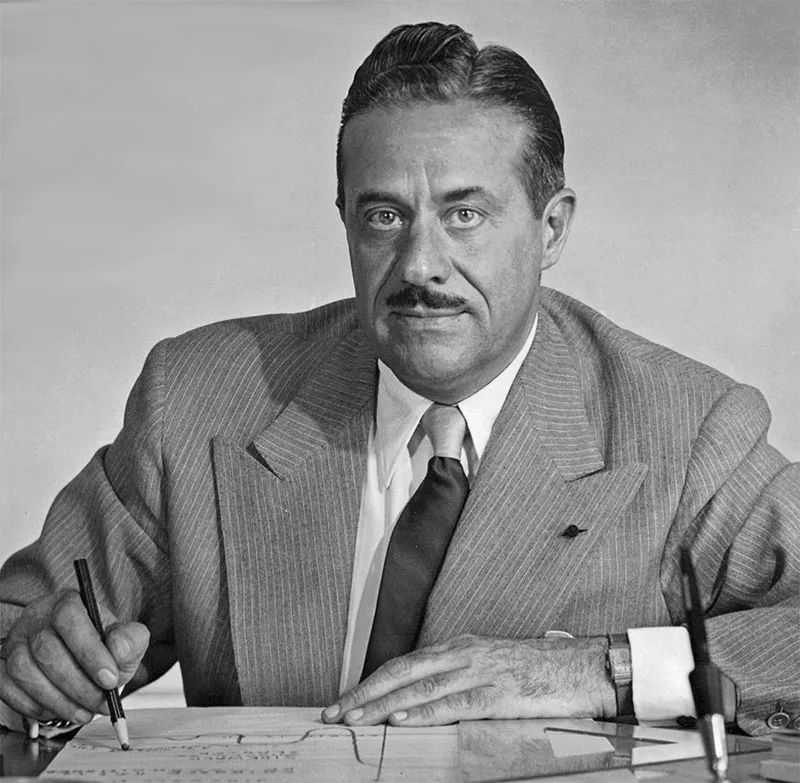
The Champion was designed by Delmar Barney Roos, with final styling by Virgil Exner and Raymond Loewy. It doubled the company's previous-year sales when it was introduced in 1939, and it grew out of the plan for the Rockne.
Full refinancing and reorganisation were achieved on March 9, 1935, with substantial help from Lehman Brothers. The company was back in profit by December 1933, when its banks had been paid down and dealers were added.
Studebaker prepared well for postwar demand, and the Champion gave it a small, affordable model at the moment when its earlier cars were losing ground.
How did Studebaker's wartime production work?
During the Second World War Studebaker produced the US6 truck in great quantity and the M29 Weasel cargo and personnel carrier. It ranked 28th among United States corporations in the value of wartime production contracts.
The Studebaker Pacific operation in California built engine assemblies and nacelles for B-17s and PV-2 Harpoons. The Chippewa Factory in South Bend built Wright R-1820 engines, installed in the B-17 Flying Fortress by January 1944.
The Chicago plant built 63,789 engines for the B-17, and each had nearly 8,000 finished parts. The engines were sent to South Bend for final assembly, which underlined how much the company relied on its South Bend works.
What was the Starlight and postwar styling?
The 1947 Starlight coupe, styled by Virgil Exner, introduced a flatback trunk and a wrap-around rear window that influenced later cars. The slogan First by far with a post-war car backed up that message.
For 1950 and 1951 the Champion and Commander adopted a polarising appearance based on Exner's concepts. The new trunk led to a running joke about whether the car was arriving or leaving.
The trunk design appeared to draw on the Lockheed P-38 Lightning, particularly its shortened fuselage with a wrap-around canopy. It was a deliberate break with the tapered look of the time.
Why did the Lark and Avanti matter?
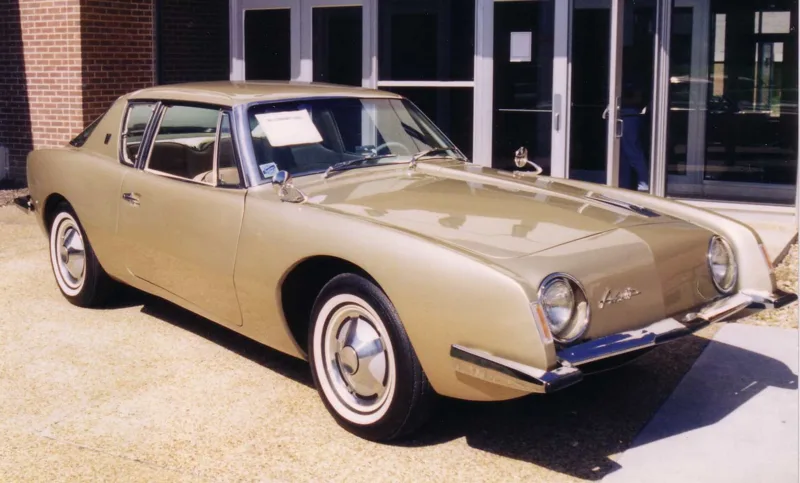
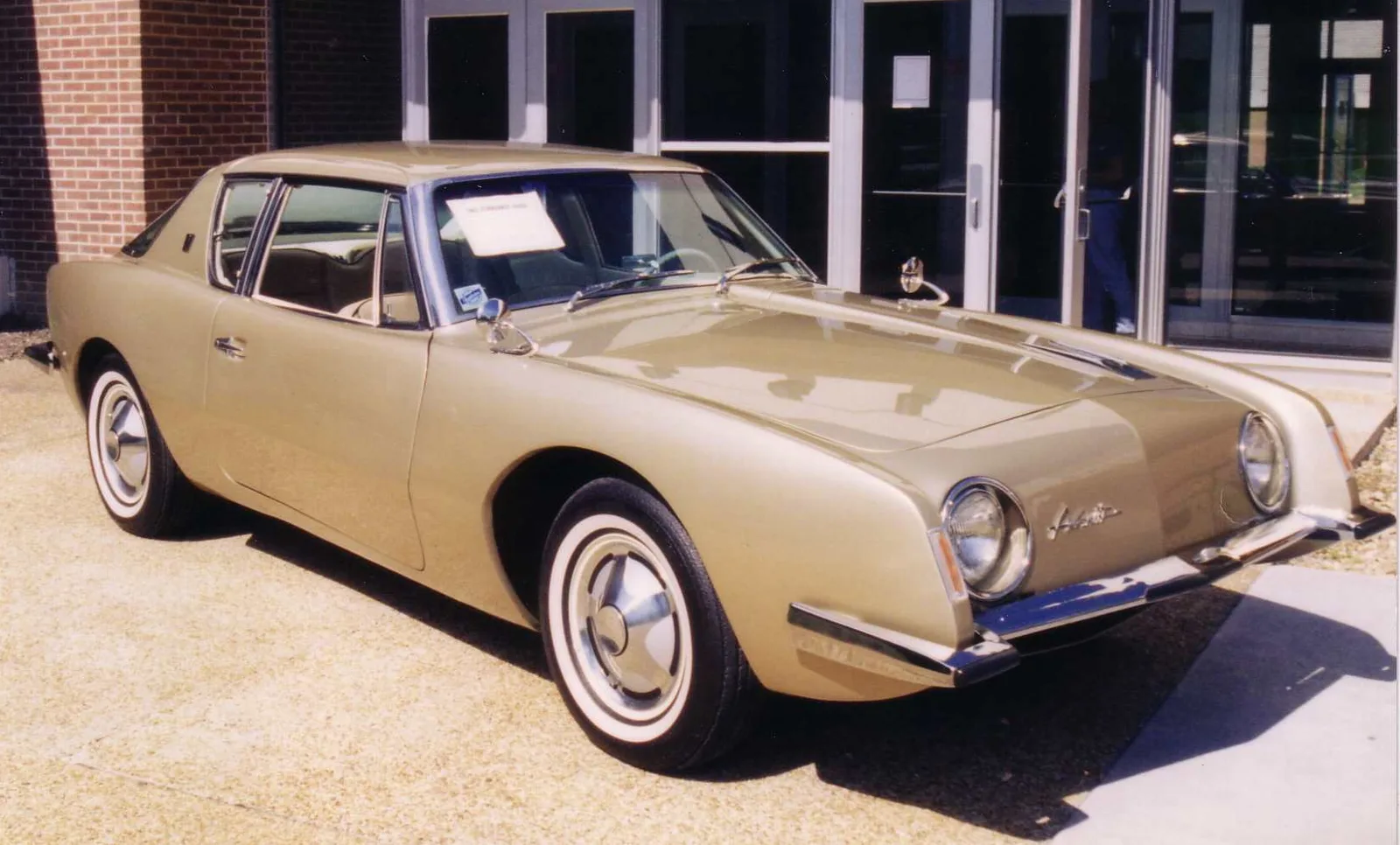
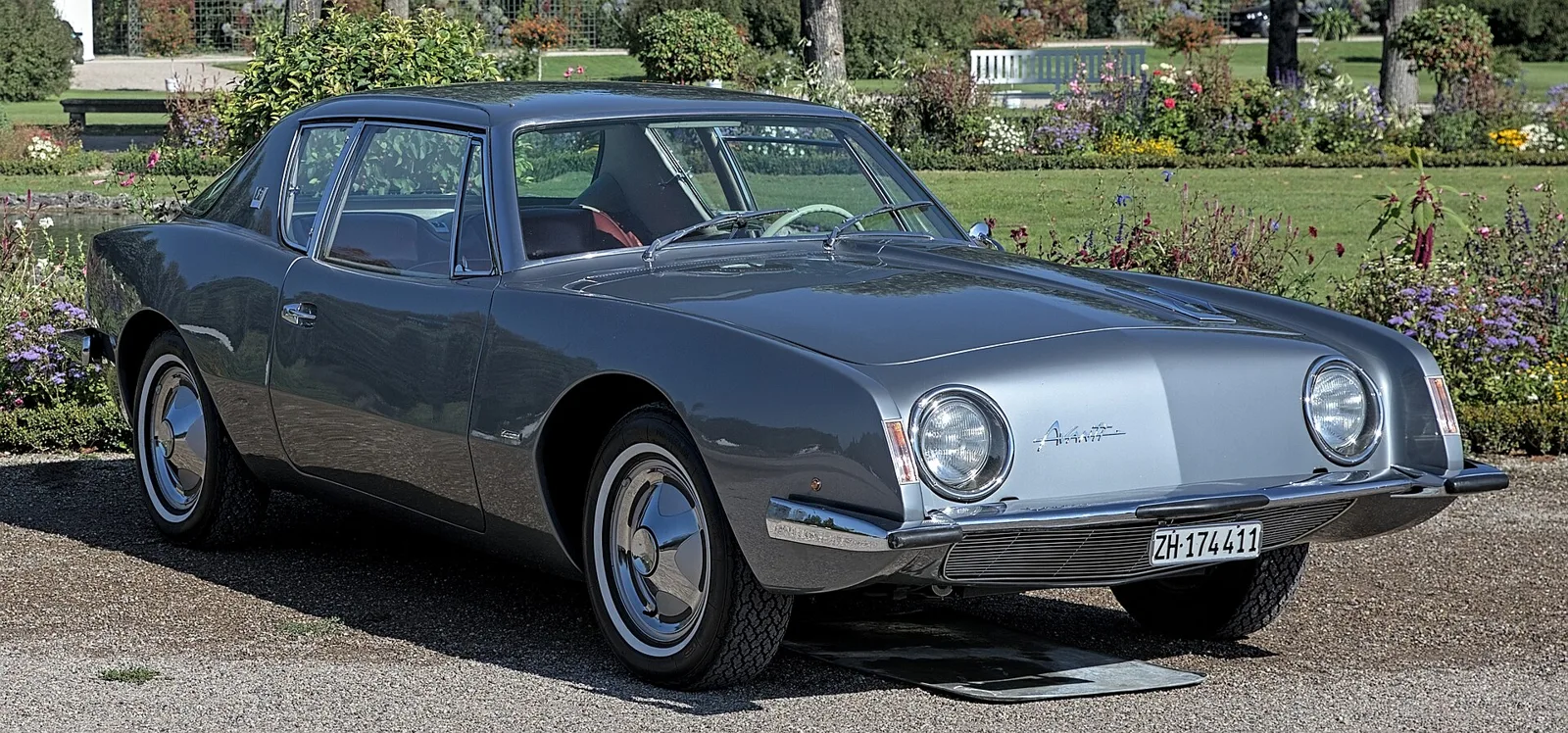
The 1959 Lark was a compact that sold over 130,000 units in its first year and delivered a $28.6 million profit to the automaker. The Avanti sports car followed in 1962, so the two models were the company's last real bids for the market.
The Lark used existing parts, and even its central body section came from the company's 1953 to 1958 cars. Once the Big Three introduced their own compacts in 1960, Lark sales began to drop precipitously.
The Lark gave the company a reprieve, but nothing proved enough to stop the financial bleeding. Studebaker-Packard output had risen from 56,920 units in 1958 to 153,844 in 1959, before the compacts arrived.
Why did Packard take over Studebaker?
Packard, a smaller but less financially troubled car maker, negotiated a strategic takeover of Studebaker in 1954. The cash position proved worse than Packard had been led to believe, and by 1956 the company had been renamed Studebaker-Packard and was nearly bankrupt.
Ballooning labour costs, quality problems and the Ford and General Motors price war wrecked the balance sheet. Studebaker workers were among the highest paid in the industry, although the company had never had an official UAW strike.
The Packard element was retained until 1962, when the name reverted to Studebaker Corporation. The earlier merger had not delivered the strength the two companies had hoped for.
What was the Curtiss-Wright management contract?
In 1956 CEO James J. Nance agreed a three-year management contract with the aircraft maker Curtiss-Wright to improve finances. Curtiss-Wright gained use of idle car plants and tax relief on its aircraft profits, while Studebaker-Packard received further working capital.
Under Curtiss-Wright's guidance the company sold the old Detroit Packard plant and returned the Conner Avenue plant to its lessor, Chrysler. The firm also took on the American import role for Mercedes-Benz, Auto Union and DKW cars.
What happened in the 1962 strike and the 1963 plant closure?
A strike at the South Bend plant began on January 1, 1962, and lasted 38 days. The company then closed its aging South Bend plant after the ousting of President Sherwood Egbert, and the last Larks and Hawks were assembled on December 20, 1963.
The last Avanti was assembled on December 26, 1963. Continuing reports that Studebaker was about to leave the auto business became self-fulfilling, as buyers feared being left with an orphan, and NBC reporter Chet Huntley made a programme called Fight for Survival that aired on May 18, 1962.
The closure weighed heavily on the area, because the company was the biggest employer in St. Joseph County. Close to a quarter of South Bend's workers were African-American.
Who revived the Avanti name?
Leo Newman and Nate Altman, who had long run a South Bend Studebaker-Packard dealership, bought the Avanti name, its tooling and the plant space. They revived the car in 1965 as the Avanti II.
The new owners also bought the rights and tooling for Studebaker's trucks, but they chose not to pursue truck production, and the tooling went back to Kaiser Jeep in late 1965.
The General Products Division was acquired by Kaiser Jeep, forming the nucleus of what became AM General. Today that company is the world's largest producer of tactical wheeled vehicles.
Why did Studebaker leave the car business in 1966?
Studebaker's last car plant was at Hamilton, Ontario, which had always been profitable. The company left the automobile business on March 17, 1966, after an announcement on March 4, having rejected Grundy's request for funds to tool up for 1967 models.
The announced goal of 30,000 to 40,000 1965 models was not reached. Production was just shy of 20,000 cars, and the directors felt the small profits did not justify further investment.
The last car was a turquoise and white Cruiser sedan. It was one of the last of under 9,000 1966 models, and only 2,045 were built in the calendar year 1966.
How did the Hamilton plant begin and what did it build?
The first car off the Hamilton line, a blue Champion four-door sedan, appeared on August 18, 1948. The Hamilton works built cars from 1948 until 1966, and after the South Bend plant shut, Hamilton was its sole factory.
The plant was located in a former military weapons factory, and Hamilton was chosen partly for its proximity to the Canadian steel industry. Studebaker had earlier operated a British Empire export plant at Walkerville.
The Hamilton plant employed about 700 people, and Studebaker was the city's 10th-largest employer. Its closure hit the community hard, not only the workforce but the wider city.
Were Studebakers assembled in Australia?
Studebakers were assembled in Melbourne from CKD kits made in Hamilton, beginning in 1960. The Canada Cycle and Car Company in Tottenham assembled Lark sedans and station wagons, the Champ pickup and the Silver Hawk.
In 1964 Australian assembly moved to Continental and General's factory in West Heidelberg, which built the cars until 1968. Renault products were then brought in to replace them.
What did Studebaker diversify into?
From the early 1960s Studebaker moved into unrelated fields, including tire studs, missile components and appliances. Its 1963 annual report listed divisions ranging from floor machines to tractors, engines and commercial refrigeration.
Trans International Airlines, founded by Kirk Kerkorian, appeared among the divisions. Studebaker also attempted an H-9350 aero engine with 24 cylinders and a displacement of 9,349 cubic inches, but it was never completed.
Did Studebaker have a motorsport record?
Studebaker's best-documented engineering achievements are aircraft engines and military trucks. It built Wright R-1820 engines under licence during the Second World War, and the Avanti is the marque's best-known sports car.
The Avanti was revived in 1965 as the Avanti II by Newman and Altman, which extended the sports car's life beyond the South Bend plant.
Did the Studebaker name return?
Yes, in a limited way. In 2003 Avanti Motor Company unveiled the Studebaker XUV concept in Chicago, and General Motors later filed a lawsuit because the design closely resembled the Hummer H2.
A revised design appeared at the 2004 Chicago Auto Show but did not reach production. A later plan by Colorado owner Ric Reed, who acquired the name in 2001, also failed to reach production.
What is the legacy of the Studebaker name?
The US6 truck was the basis for the Soviet GAZ-51, which was built until 1975. Studebaker's influence was also cited by the designers of the 1993 Dodge Ram, which points to the lasting pull of the marque.
Some prototypes were lost in a secret graveyard at the proving grounds, where most bodies rotted in direct contact with the ground. A single 1953 Commander convertible prototype survived and is now in a private collection.
The name survives in other ways: retro audio equipment is still sold under the Studebaker brand, and the Studebaker Leasing business remained in existence after the car company had gone.