From Paris model aircraft to Pennsylvania Railroad locomotives, Studebaker's postwar cars, farm tractors, logos and a NASA crew cabin.
Born in Paris in 1893, Loewy worked mainly in the United States, designing Pennsylvania Railroad locomotives, Studebaker cars, farm tractors and the Skylab crew interior. Time featured him on its cover in 1949, and the press called him The Father of Streamlining.
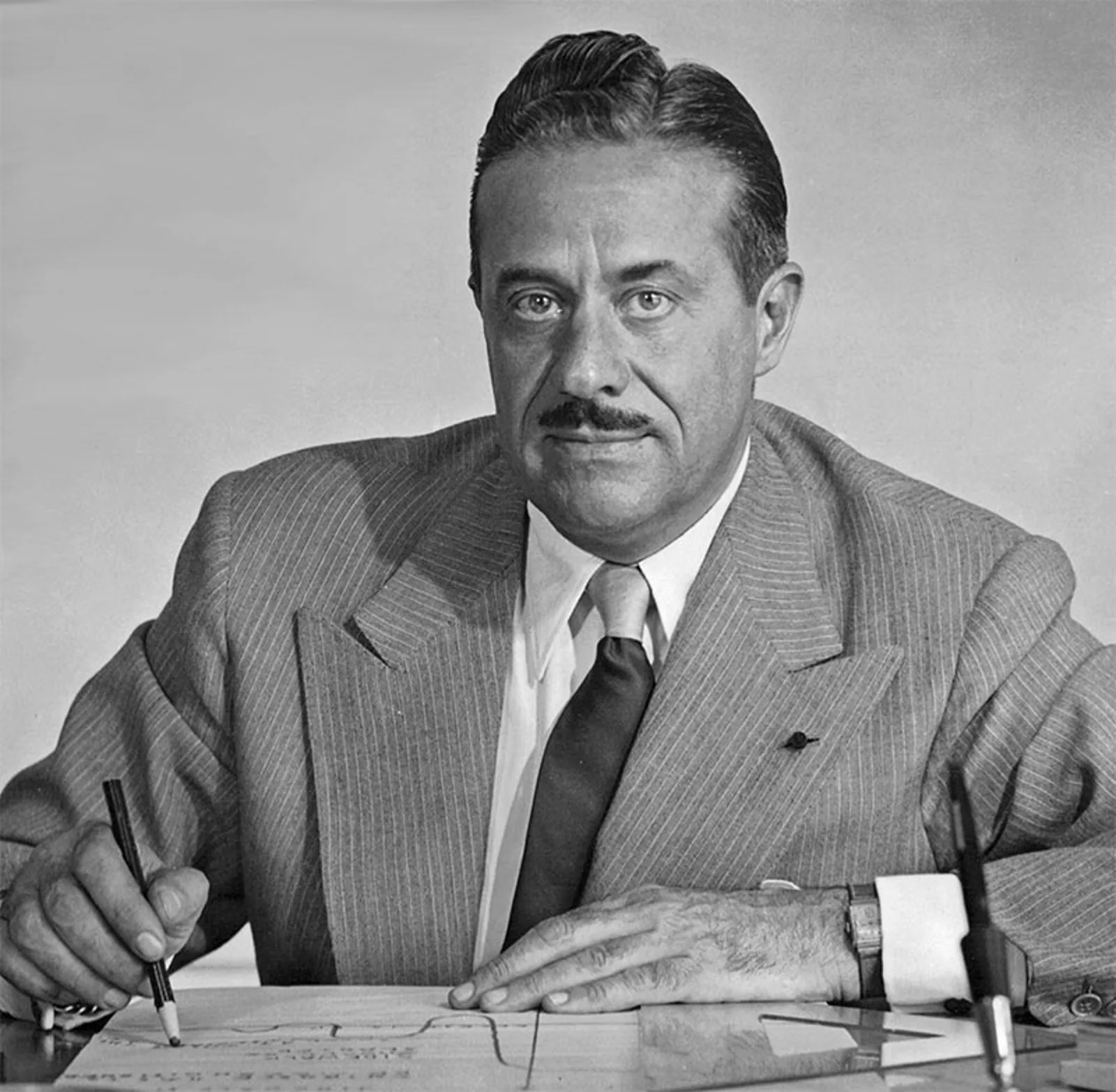
Raymond Loewy was a French-born American industrial designer whose work reached trains, cars, logos, packaging and space interiors. He was born in Paris in 1893 and spent most of his career in the United States, and his name is attached to designs that shaped everyday life across seven decades.
Who was Raymond Loewy?
Loewy was born in Paris on 5 November 1893 and became a naturalised American citizen in 1938. Time magazine recognised the breadth of his work with a cover feature on 31 October 1949, and he was described in the press as The Man Who Shaped America and The Father of Streamlining.
His designs covered a wide range of industries. They included the Shell, Exxon, TWA and BP logos, the Greyhound Scenicruiser bus interior, Coca-Cola vending machines, the Lucky Strike package, Coldspot refrigerators, the Studebaker Avanti and the Air Force One livery.
From a Paris model aircraft to a Skylab crew table, a designer whose work crossed trains, cars, tractors and logos for seven decades.
How did Loewy start in design?
Loewy showed early talent as a designer of model aircraft. One of his models took a prize at the Gordon Bennett Cup in 1908, and within a year he was selling the Ayrel commercially. Those early successes came long before his industrial design work in New York.
He served in the French army during World War I, reaching the rank of captain, and his war service came before his move to America. Combat left him wounded, and he was awarded the Croix de guerre. Once the fighting ended he relocated to New York in September 1919.
In New York he worked as a window designer for department stores, including Macy's, Wanamaker's and Saks, and as a fashion illustrator for Vogue and Harper's Bazaar. His first industrial design commission came in 1929, when he was asked to modernise the look of a Gestetner duplicating machine.
Further commissions followed for Westinghouse and the Hupp Motor Company, where he styled the Hupmobile. The Coldspot refrigerator he styled for Sears-Roebuck established his reputation as an industrial designer.
What did Loewy design for the Pennsylvania Railroad?
In the early 1930s Loewy carried out comprehensive design work for the Pennsylvania Railroad. His Art Moderne approach gave the flagship electric locomotive, the GG1, a modern look that its operators kept for decades under a range of paint schemes.
He also styled the experimental S1 locomotive and the T1 class. His streamlined shroud for K4s Pacific number 3768 was built to haul the redesigned 1938 Broadway Limited, and he later simplified the shroud for four more K4s in 1940.
In 1942 he designed the streamlined shroud for the experimental duplex Q1, which was his last streamlining work on the railroad's steam engines. In 1946 he restyled Baldwin's diesels with a distinctive sharknose front, reminiscent of the T1.
While he did not design the GG1 itself, he improved its appearance with welded rather than riveted construction and a pinstripe scheme to highlight its smooth contours. By 1949 his firm employed 143 designers, architects and draftsmen.
How did Studebaker shape his reputation?
Studebaker was one of Loewy's longest relationships in the car industry. The company first retained Loewy and Associates, and Helen Dryden, as design consultants in 1936. From 1939 Loewy worked with the principal designer, Virgil Exner, and their designs began appearing on late-1930s Studebakers.
The firm also redesigned the Studebaker logo, replacing the turning-wheel trademark used since 1912. Its later logo work added the Lazy S element to the brand.
Loewy's independence from the major manufacturers was important during the war. Wartime rules limited the car-design work that Detroit could carry out in-house, but Loewy's independent firm was not bound by them. That gave Studebaker a head start, and its first all-new postwar automobile reached showrooms in 1947, two years before the Big Three.
The 1953 Starliner and Starlight coupes were among the best-known results of the team's work. The Starlight is regarded as one of the best-designed cars of the 1950s, though the Starliner suffered production problems. His last Studebaker commission of the decade turned the Starlight and Starliner coupes into the Hawk series for the 1956 model year.
Why was the Avanti designed so quickly?
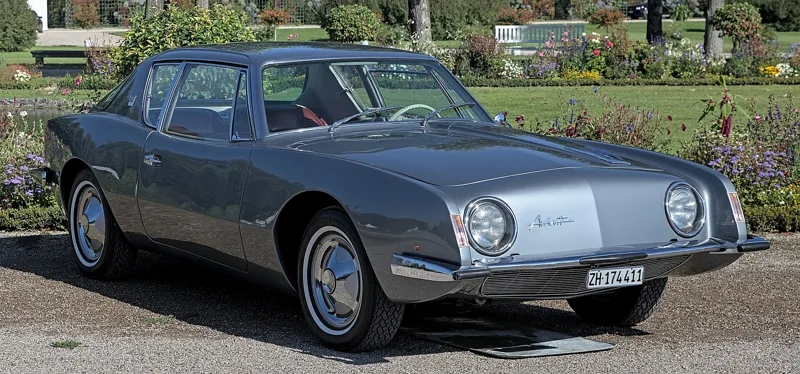
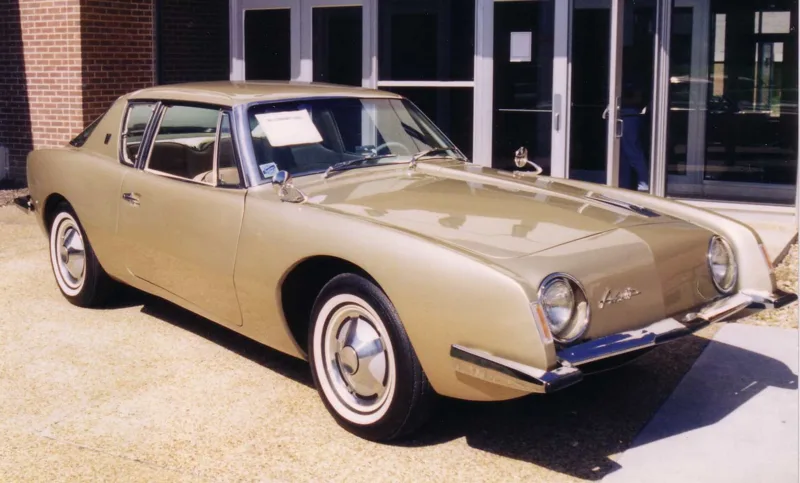
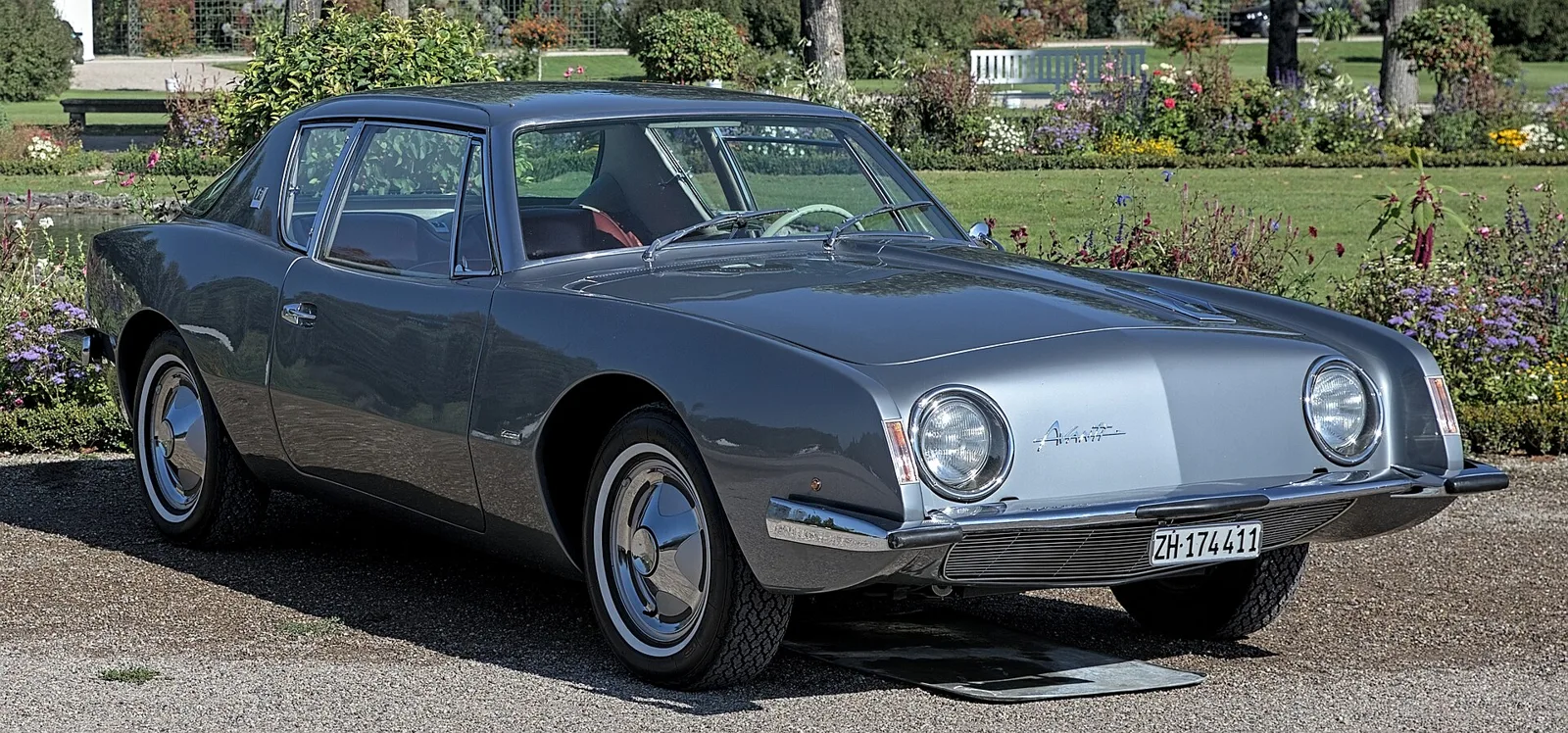
The Avanti was designed in a rush because Studebaker's new president, Sherwood Egbert, recalled Loewy in 1961. He wanted help to energise the new line-up and attract younger buyers, and the team had only 40 days to finish a design and scale model.
Loewy recruited experienced designers, including former employees John Ebstein and Bob Andrews, along with Tom Kellogg, who was still studying at the Art Center College of Design in Pasadena. They worked in a house leased in Palm Springs, California, where Andrews and Kellogg handled sketching and Ebstein oversaw the project. Loewy acted as creative director and offered advice.
What other industries did Loewy serve?
International Harvester hired Loewy in 1935 to overhaul its product line, from the company's logo to operator ergonomics. Its first new machine to reflect his aesthetic, the International TD-18 crawler tractor, launched in 1938, and the Farmall A, B, H and M tractors followed in 1939.
In 1958 he styled the Canadian Cockshutt Plow Company's line of agricultural tractors, including the 540, 550, 560 and 570 models, in the squared-off style that was becoming popular. His designers also influenced the panelwork of Allis-Chalmers crawler tractors, which were described as having stylish, curvaceous lines.
His portfolio also included the logos for Shell, Exxon, TWA and BP, along with packaging and vending work for Lucky Strike and Coca-Cola. These projects show how far his influence extended beyond transport.
What did Loewy contribute to NASA?
Loewy worked for NASA from 1967 to 1973 as a habitability consultant on the Skylab space station, which launched in 1973. NASA wanted him to improve the psychology, safety and comfort of crewed spacecraft, and he treated aesthetics as a serious part of crew well-being.
He suggested a wardroom where the crew could eat and work together, along with a wardroom window, a dining table and a colour scheme. Each of the three sleep compartments had a different floor plan to give the crew a sense of individual identity.
The crew quarters included sleep restraints, storage lockers, privacy partitions, lighting, privacy curtains, mirrors and a communication box. The table was designed to avoid creating hierarchical positions among crew members on long missions, and cutlery was held in place by magnets.
How is Loewy remembered today?
Loewy is remembered through the Raymond Loewy Foundation, which was established in Hamburg in 1992 with support from British American Tobacco. The foundation gives an annual award of 50,000 euros to outstanding designers for lifetime achievement, and past recipients include Karl Lagerfeld, Philippe Starck and Dieter Rams.
His daughter established Loewy Design in Atlanta in 1998, and the estate later promoted his design philosophy of MAYA, which stood for most advanced, yet acceptable. A documentary about him premiered to Paris audiences in October 2017.
Google honoured him with a Doodle on 5 November 2013, showing a streamlined locomotive. He retired in 1980 at the age of 87 and returned to France, and he died in Monte Carlo on 14 July 1986.
Which Loewy designs and projects are on the record?
| Period | Client or project | Work |
|---|---|---|
| 1929 | Gestetner | First industrial design commission, a duplicating machine |
| 1930s | Pennsylvania Railroad | GG1 styling and the S1 and T1 locomotives |
| 1938 | Pennsylvania Railroad | Streamlined shroud for K4s Pacific number 3768 |
| 1936-1956 | Studebaker | Postwar cars, the 1953 Starliner and Starlight, the 1956 Hawk |
| 1935-1939 | International Harvester | TD-18 crawler and Farmall A, B, H and M tractors |
| 1958 | Cockshutt | Styling of the 540, 550, 560 and 570 tractors |
| 1961 | Studebaker | Avanti, designed on a 40-day schedule |
| 1967-1973 | NASA | Habitability consultant for Skylab |