A 1939 car designed to keep Studebaker alive, and a 1962 coupe sketched on a plane that the company planned to sell 20,000 of and built 1,200.
The Studebaker Champion was a light, low-priced car built from the 1939 model year to 1958 that helped keep the company alive. The Studebaker Avanti was a fibreglass four-seat coupe made in 1962 and 1963 as a halo car. Together they show a cheap, light car in 1939 and a fibreglass halo coupe in 1962 as two attempts to keep the company going.
Studebaker planned to sell 20,000 Avantis in 1962 and could build only 1,200. That gap, between the number a company needed and the number a factory could deliver, is the sharpest way into the story of Studebaker's two most talked-about cars. The Champion of 1939 was a light, cheap car on which the company's survival depended. The Avanti of 1962 was a fibreglass coupe meant to rescue it again, and it reached showrooms in far smaller numbers than planned.
The Studebaker Champion: a clean-sheet car built to save the company
South Bend's Studebaker Corporation built the Champion for the 1939 to 1958 model years. The first three generations were full-size; the fourth and fifth were mid-size. Throughout, it sat below the Commander in the range.
Its job was survival. After a poor 1938, Studebaker needed the 1939 Champion to succeed. The designers started from a clean sheet, free of the need to reuse older parts or to share components with heavier vehicles. Market research guided the features, but one engineering rule came first: weight is the enemy. Few cars of its size weighed less. Its compact straight-six lasted beyond the Champion itself, being built until the end of the 1964 model year, with an overhead-valve redesign in 1961.
Buyers responded to the price, which started at US$660 for the 1939 two-door business coupe, along with the durable engine and the styling. Raymond Loewy, the industrial designer under contract to Studebaker, authored the ponton shape. Champions won Mobilgas economy runs with the best fuel figures, and when petrol was rationed in the United States during World War II they were coveted for their efficiency. From 1943 to 1945 the Champion engine powered the Studebaker M29 Weasel, a personnel and cargo carrier whose bogie suspension used four sets of Champion leaf springs mounted across the vehicle.
Champion engine and power by generation
| Generation | Years | Engine | Output |
|---|---|---|---|
| First | 1939 to 1941 | 164.3 cu in (2.7 L) inline-six | 78 hp (58 kW; 79 PS) |
| Third | 1947 | 169.9 cu in (2.8 L) inline-six | 80 hp (60 kW; 81 PS) |
| Third | 1950 | 169.9 cu in (2.8 L) inline-six | 85 hp (63 kW; 86 PS) |
| Fourth | 1954 | L-head inline-six | 85 hp (63 kW) |
| Fourth | 1955 | Larger L-head inline-six | 101 hp (75 kW) |
| Fifth | 1957 | 185 cu in (3.0 L) L-head six, or 289 cu in (4.7 L) V8 | 101 hp (75 kW; 102 PS), or 210 hp (157 kW; 213 PS) |
First and second generation: 1939 to 1946
The first Champion followed the trends of its time, with the grille and headlights partly integrated. Arm rests and twin wipers marked out the deluxe versions. In 1940 Studebaker claimed 27.25 mpg US (8.63 L/100 km), and the 1941 bodies were more streamlined, with a wider, lower grille. The second generation covered the abbreviated 1942 model year. A small run of cars on the same shell followed in 1946, all badged Skyway Champion, ahead of the all-new design due in 1947. Studebaker built nothing but Champions that year, because that series had sold best before the war.
Third generation: the first new car after the war
The 1947 Champion and Commander were all new, and they were the first new cars after the war. Smooth ponton-style front fenders, then newly fashionable, came with a new rear window and conveniences such as lit gauges and automatic courtesy lamps. The Champion accounted for 65.08% of the company's sales that year.
For 1950 the car got new styling, with a fresh grille, sheet metal and rear end, plus a Borg-Warner automatic transmission. The wraparound rear window that had been an option on two-door coupes from 1947 to 1951 became its own trim line in 1950, the Starlight coupe. The spinner grille of that year resembled the one on a 1949 Ford, and Studebaker dropped it for 1952. A single wood-bodied four-door wagon prototype was also built. It appeared at several car shows and ran company errands for years. By about 1955 the body had been lifted off its chassis and dumped in a hidden graveyard of old prototypes at the proving ground. Club members found it in the early 1970s, and after years of restoration it went on show at the Studebaker National Museum.
Fourth and fifth generation: Loewy Coupe to Scotsman
In 1953 Robert Bourke of Loewy's studio redesigned the car, which became known as the Loewy Coupe or Low Boy. The two-door coupe with a central pillar was the Starlight, and the more expensive hardtop was the Starliner. A two-door sedan, built on a shortened four-door body, had a taller profile and bigger rear side windows. Collectors prize the Loewy Coupe far above the sedans, and the two bodies share no interchangeable panels. Its low front end, lower than its contemporaries, looks something like the Citroen DS.
No convertible was sold in 1953, but in late 1952 Studebaker built one prototype, a Commander convertible based on the Starliner hardtop, to test whether it could be mass-produced profitably. Even with the 232 cu in (3.80 L) V8, the extra structure needed to stop body flexing slowed the car too much from 0 to 60 mph, and the company could not afford another body type anyway. Leaders wrongly believed the sedans and the 1954 Conestoga wagon would outsell the coupes. The prototype was stripped and sent to the proving-ground graveyard, though an employee bought it on the condition that he would never sell it. The car resurfaced behind a South Bend gas station in the 1970s.
The Conestoga, a two-door station wagon, arrived in 1954. Power from the L-head six stayed at 85 hp (63 kW) until 1955, when a larger engine raised it to 101 hp (75 kW) and the car also gained a wraparound windshield, losing the Starlight and Starliner labels. The 1956 sedans got pronounced eyebrows over the headlights and big tailfins, while the coupes took Hawk-style bodywork with a square central grille that recalled a Mercedes-Benz of the period. The shape of the Loewy coupes made them favourites with land speed racers, who sometimes chopped the tops to make them even sleeker.
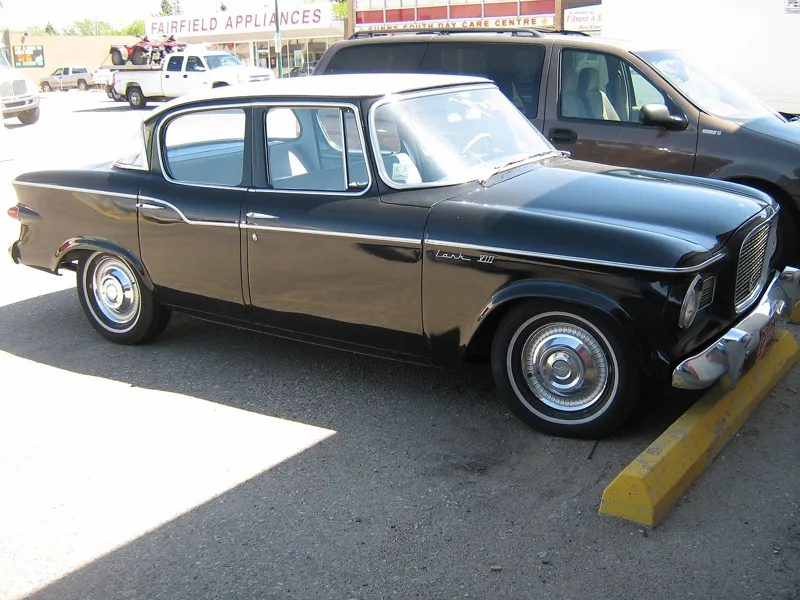
In 1957 Studebaker launched the Champion Scotsman, a stripped-down model intended to take on General Motors, Ford, Chrysler and Nash in the low-price field. It was renamed the Studebaker Scotsman soon after. Buyers could choose a 185 cu in (3.0 L) L-head six with 101 hp (75 kW; 102 PS) or a 289 cu in (4.7 L) overhead-valve V8 with 210 hp (157 kW; 213 PS), both badged Sweepstakes. The Champion was phased out in 1958 to make way for the 1959 Studebaker Lark. By then Studebaker had been in receivership and was trying to return to profit.
Egbert planned to sell 20,000 Avantis in 1962, but could build only 1,200.
The Studebaker Avanti: a halo car in a hurry
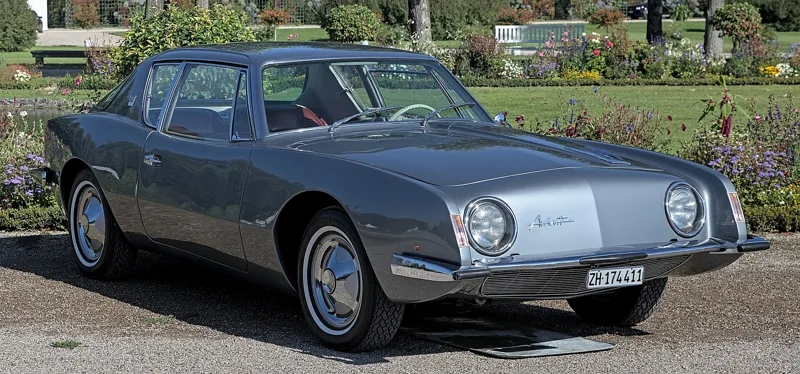
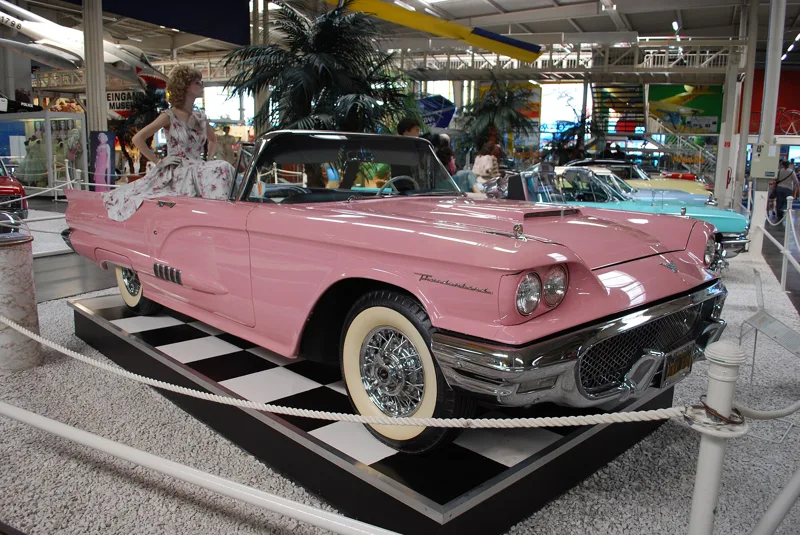
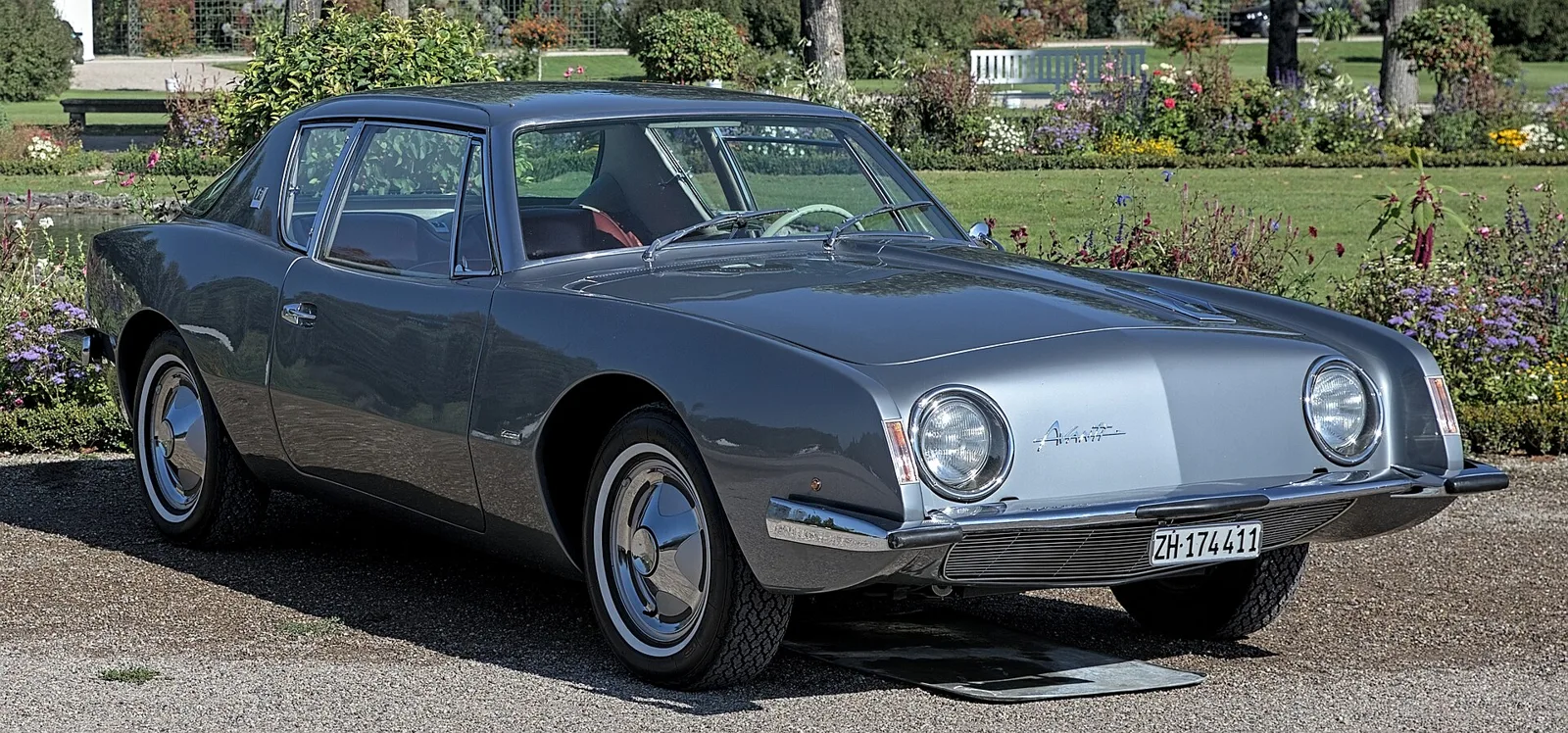
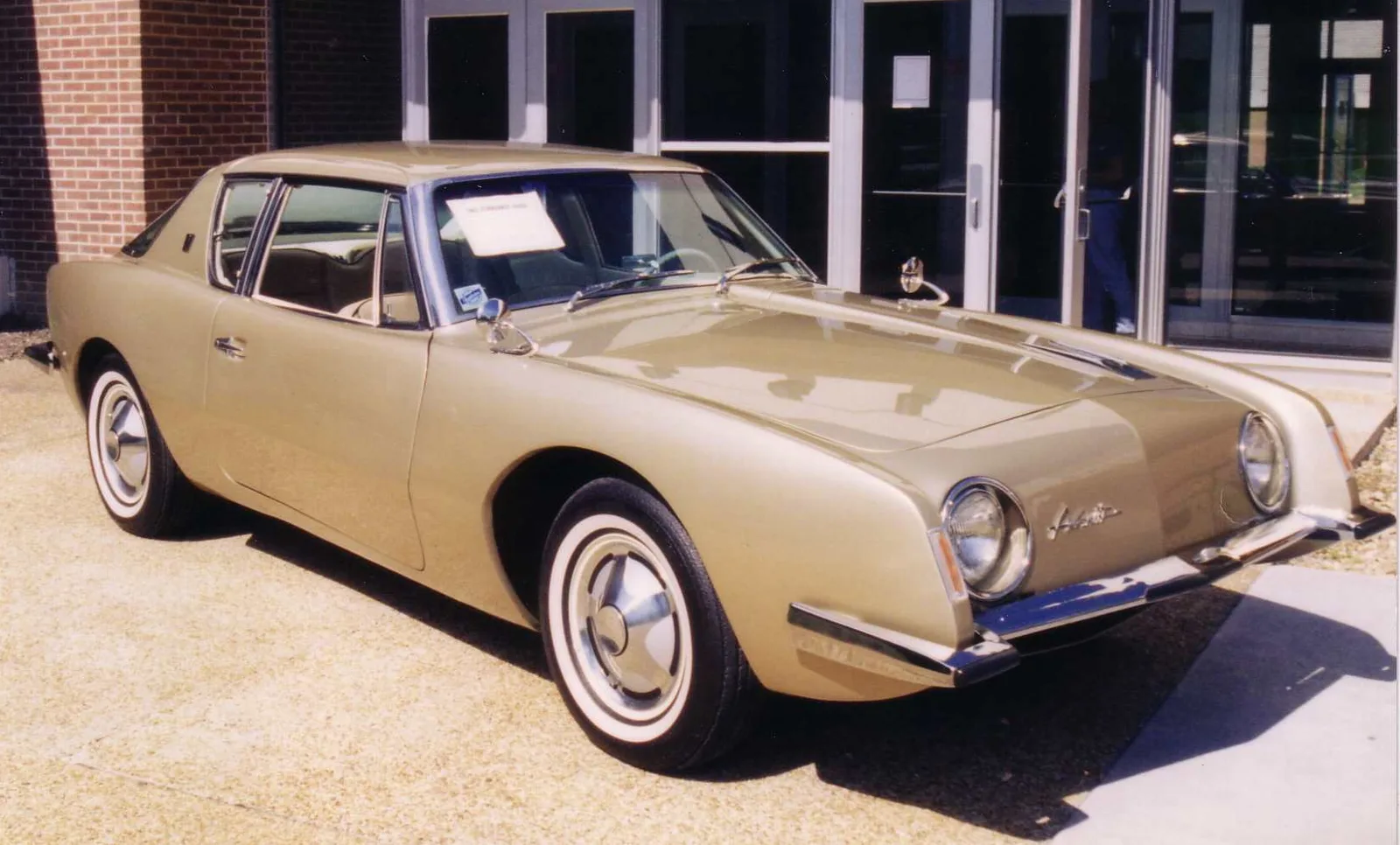
The Studebaker Avanti was a personal luxury coupe built from June 1962 to December 1963, a halo car for its maker, billed as the only high-performance personal car in America with room for four. Studebaker's advertising agency supplied the name, which means forward or onward in Italian. Sherwood Egbert, president since February 1961, directed its development. His idea for the design was allegedly doodled during a flight. It was meant as an answer to the Ford Thunderbird and as a way to lift the automaker's sagging fortunes.
Avanti design and construction
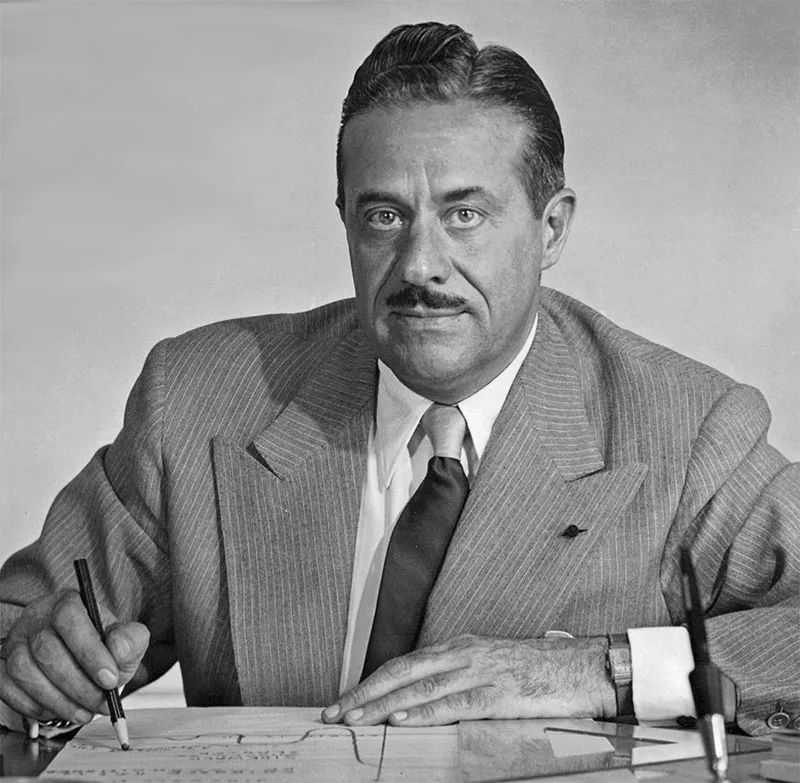
Raymond Loewy's team, made up of Tom Kellogg, Bob Andrews and John Ebstein, designed the Avanti in a 40-day crash programme. The result was a radical fibreglass body on a reworked 109-inch Lark convertible chassis, powered by a modified 289 Hawk V8. A Paxton supercharger was optional. Within eight days the stylists had a scale clay model showing a different car on each side, a two-place sports car and a four-seat GT coupe. Kellogg, a young California stylist hired by Loewy, argued for the four-seater. Loewy imagined a low-slung semi-fastback with a long hood, a short deck, a nose without a grille and rear fenders with a narrow-waisted curve, a shape that hinted at a supersonic aircraft.
That complex shape would have been hard and very costly to make in steel, so Studebaker had the panels moulded in glass-reinforced plastic. The panels came from Molded Fiberglass Body of Ashtabula, Ohio, which had also made the Corvette's fibreglass panels in 1953. The Avanti also had front disc brakes of British Dunlop design, made under licence by Bendix, making it the first American production car to carry them. It was also one of the first bottom-breather designs, drawing air in from under the front rather than through a grille above the bumper, a feature that became far more common after the 1980s.
Avanti speed records
The Avanti was described on its introduction as the fastest production car in the world. A modified example with the supercharged 289 cu in (4,740 cm3) R3 engine passed 170 mph (270 km/h) at the Bonneville Salt Flats, and in all the car broke 29 world speed records there.
Avanti launch problems
Studebaker unveiled the Avanti on 26 April 1962, in New York, at the auto show and the shareholders' meeting on the same day. Rodger Ward, who won the 1962 Indianapolis 500, received an Avanti in his prize package and so became the car's first private owner. A Studebaker Lark convertible was that year's Indianapolis pace car, and the Avanti served as honorary pace car.
Production was a different matter. In December 1962 the Los Angeles Times reported that Studebaker was starting operations at its own fibreglass body works to increase output. Problems with the supplier, and with fit and finish, caused delays and cancelled orders. Egbert had budgeted for 20,000 sales in 1962; the plant managed 1,200.
What happened to the Avanti after Studebaker
Studebaker's factory closed on 20 December 1963, and the Avanti went with it. Competition Press reported shortly afterwards that, denying stories of thousands sitting unsold in warehouses, Studebaker had only five left, dealers about 2,500, and 1,600 had been sold since the introduction. In the same year Chevrolet produced 23,631 Corvettes.
The story did not end there. Two South Bend Studebaker dealers, Nate Altman and Leo Newman, bought the Avanti name, tooling and plant space, and began building a slightly modified, hand-assembled version out of leftover Studebaker chassis and General Motors engines. It had no connection with the Studebaker brand name. According to a book about Stu Chapman, Studebaker's head of advertising and public relations in Canada, Studebaker seriously considered bringing the Avanti back into its own showrooms in 1965/66, after production resumed in 1965 through Newman and Altman.
A succession of other entrepreneurs bought the tooling and name and made small numbers of increasingly modified cars, including the Avanti II, through 2006. In all, five ventures produced Avanti derivatives. The Avanti Owners Association International, founded in 1965, has nearly 2,000 members, meets every year in the United States and Switzerland, and publishes a full-colour quarterly magazine.
What to know about owning a Loewy Coupe or an Avanti
The Loewy Coupe of 1953 is the Champion that collectors prize, and its body panels do not swap with the two-door sedan's. An Avanti offers a fibreglass body and front disc brakes, and its supercharged R3 engine took a modified car past 170 mph (270 km/h) at Bonneville. The cars Altman and Newman built were sold apart from Studebaker itself, derivatives continued through 2006, and the Avanti Owners Association International, with nearly 2,000 members, serves owners worldwide.