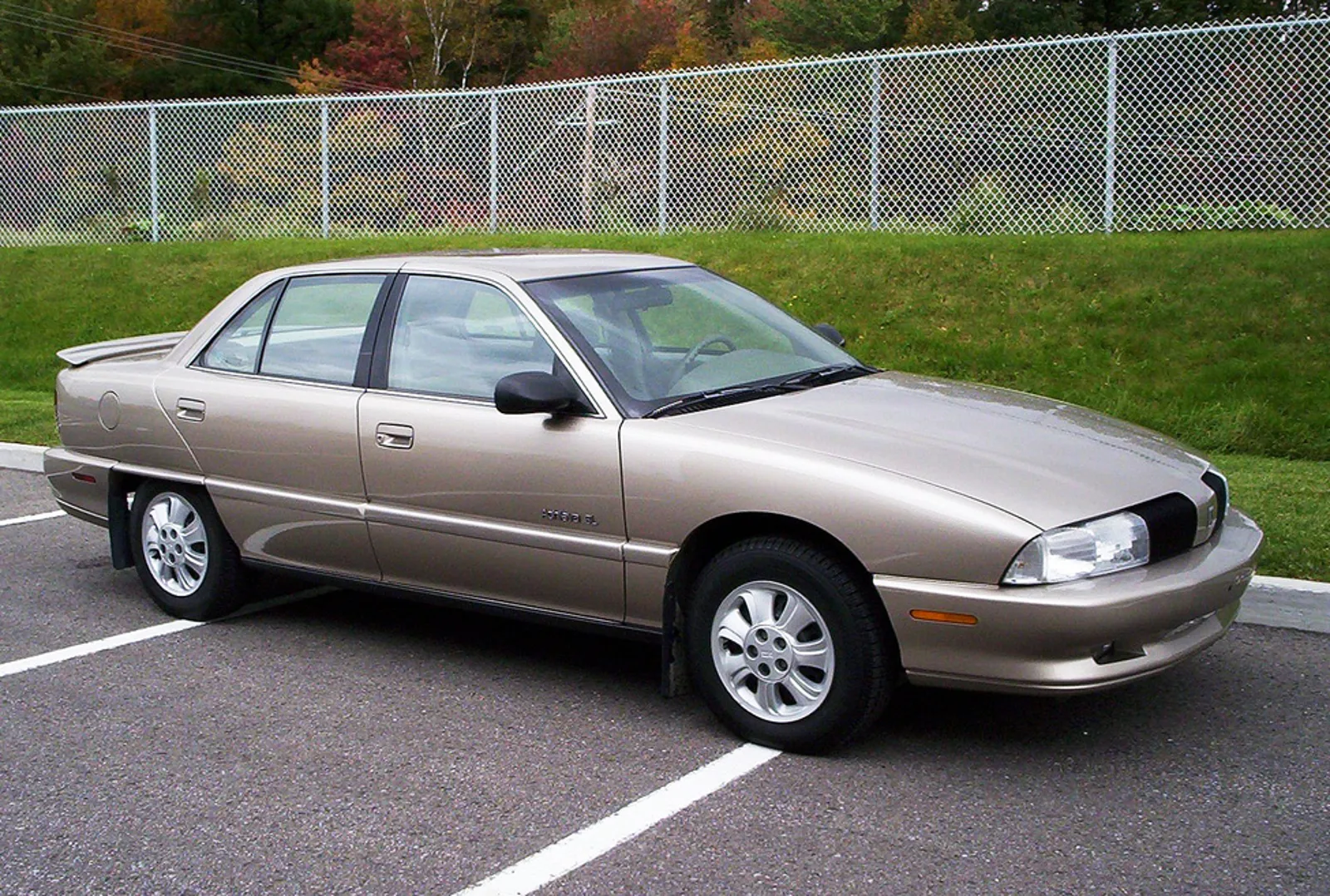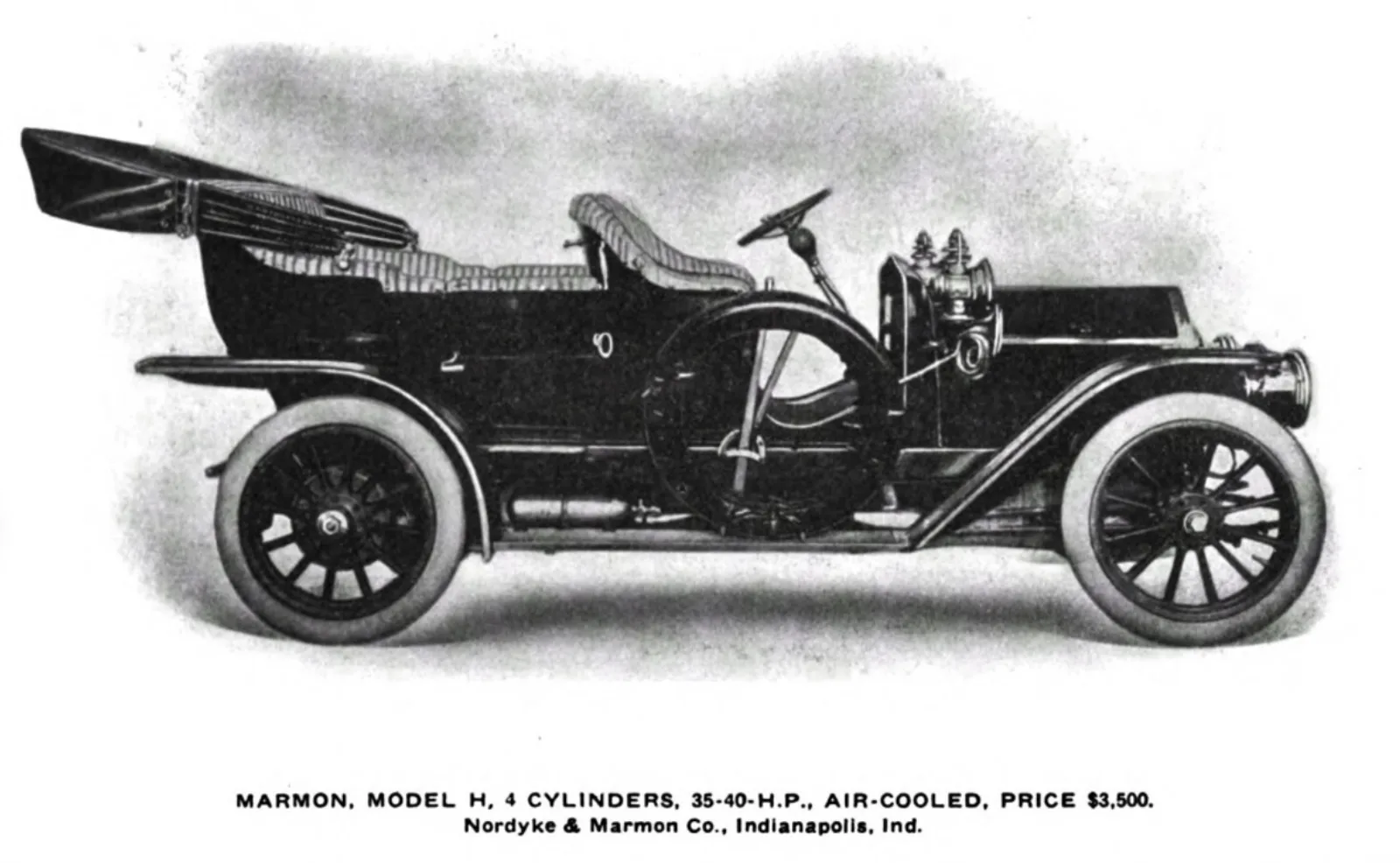
Four American makers, one factory that turned to brewing and a company that finished life as a steel recycler.
Hupmobile, Marmon, Peerless and REO were American makers that left car production between the early 1930s and 1939, mostly through overreach and the Depression. Peerless turned to brewing, Marmon to Marmon-Herrington, REO to trucks and Hupmobile closed after 319 Skylarks.
One of the four makers in this story ended up brewing beer, and another became a steel company. The Peerless factory in Cleveland, which built luxury cars, was idle until Prohibition ended in 1933 and then took out a licence to brew. What was left of the company that built the REO in Lansing, Michigan, passed through a nuclear-services shell and emerged, after a bankruptcy, as Nucor, a recycler of steel.
Hupmobile, Marmon, Peerless and REO were all American makers that built good cars for decades and then left the business, one by one, between the early 1930s and 1939. The reasons were not identical. Overreach, bad timing and the Depression feature in every account, but each company found its own way out of the showroom.
Who were Hupmobile, Marmon, Peerless and REO?
They were four American carmakers from the first half of the twentieth century. Peerless of Cleveland ran from 1900, Marmon of Indianapolis from 1902, REO of Lansing from 1905 and Hupmobile of Detroit from 1909. Each stopped building cars in the 1930s, though Marmon and REO continued with trucks and components.
Peerless was one of the "Three Ps" of American luxury, along with Packard and Pierce-Arrow. Marmon sold upmarket cars and a long line of mechanical firsts. Hupmobile sold medium-priced cars that competed with Ford and Chevrolet. REO was founded by Ransom E. Olds, the same man who had started Oldsmobile, and made cars and trucks from 1905 to 1975, with buses built on its truck platforms at one stage.
Four makers left cars in the 1930s: one for beer, one for trucks, one for steel and one with a car nobody could finish in time.
What made the Hupmobile different?
Hupmobile cars were built from 1909 by the Detroit-based Hupp Motor Car Company. Its most unusual achievement was the all-steel Hupp 32 of 1911, one of the first cars with a steel body, years before the idea became standard.
Bobby Hupp co-founded the company in 1909 with Charles Hastings, a former Oldsmobile man who put up the first $8,500. The investors included J. Walter Drake, who became president, and Emil Nelson, who had worked for Oldsmobile and Packard, took over engineering. The Model 20 raised $25,000 in cash deposits at the 1909 show, the lowest capital of Detroit's eight major car makers, yet the firm built 500 cars by the end of the first model year and more than 5,000 in the next. The Model 20 cost $900 and had a four-cylinder engine of 16 to 20 horsepower. It had one odd quirk: the two-speed gearbox used the same ratio in reverse as in low gear, which meant the car moved quite fast backwards.
The steel body came about because, Nelson said, none of the Detroit plants would agree to make one. He turned to Hale & Kilburn of Philadelphia, where Edward Budd and Joseph Ledwinka worked. Together they devised a system that welded many steel stampings by hand and held the assemblies together with angle iron. The bodies travelled by rail, in pieces, to Detroit, where they were reassembled, painted and trimmed. Touring cars, a coupe and even a limousine were built this way.
Nobody patented the process in 1911. Ledwinka did so in 1914, after he and Budd had left to start their own company, but when the Budd company sued another body maker for infringement it lost, because the court held the patent invalid and pointed to the 1911 Hupp 32 as prior art. Hupmobile itself did not stay with the idea. After Nelson resigned in 1912 the company went back to ordinary body construction, having built several thousand steel-bodied tourers.
The company grew quickly after that. It moved in April 1912 to a seven-acre site off Mt. Elliott and Milwaukee, competed with Ford and Chevrolet, and under president DuBois Young, who took the post in 1924, reached sales of more than 65,000 by 1928. To raise output further it bought the Chandler-Cleveland Motors Corporation for its manufacturing space.
Why did Hupmobile stop making cars in 1939?
Hupmobile ran out of money and time. A strategy of moving upmarket, a pile of different models and weak volume left it unable to build any one car cheaply enough. A last-ditch attempt to build the Cord-designed Skylark in 1938 and 1939 produced only 319 cars before the company stopped production in the late summer of 1939.
Sales and production were already falling in 1930, even before the Depression had its full effect. Hupmobile introduced an eight-cylinder model in 1925 and dropped its four-cylinder car after that year, having made only fours since 1909. Aiming at a more profitable market meant turning its back on the customers it already had, the same error that many medium-priced makers made at about the same time. To catch every sale they offered many models, and with Hupmobile's low volume none could be built in enough numbers to be economical.
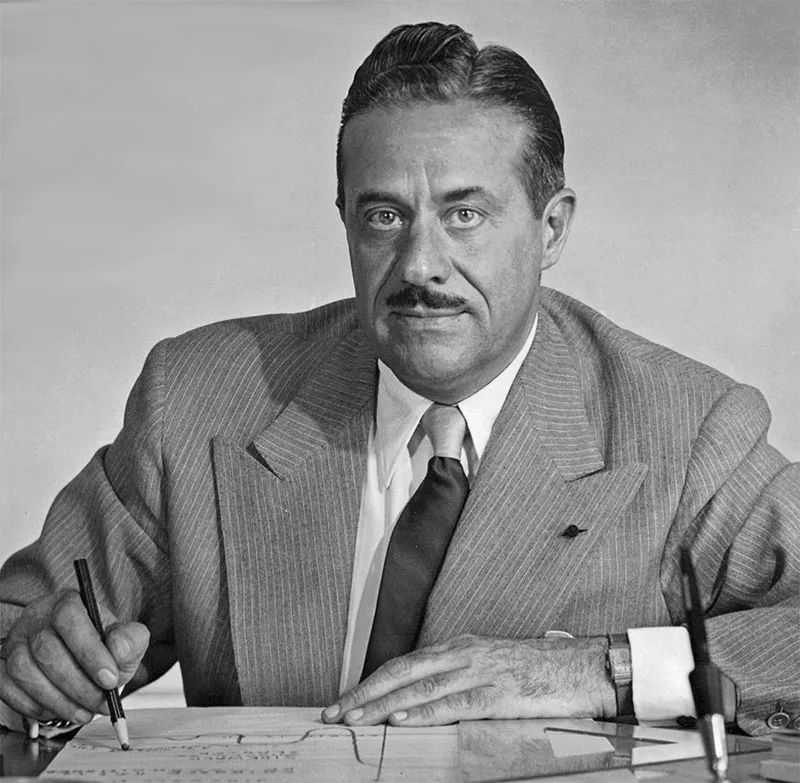
Raymond Loewy then designed the flashy 1932 Model K roadster, which did well on the track but not in showrooms, and in 1934 an "Aerodynamic" restyle. Squabbles among shareholders and an attempted hostile takeover in 1935 did the rest: plants were sold in 1936, and manufacturing was suspended in 1937. A new line of sixes and eights for 1938 found few dealers left to sell it.
On 8 February 1938 Hupmobile paid US$900,000 for the production dies of Gordon Buehrig's Cord 810, hoping to put the striking Cord shape on a cheaper, more orthodox car to be named Skylark. Thousands of orders arrived, yet delays in production cooled customer enthusiasm. Lacking factory capacity, the company teamed up with the struggling Graham-Paige, which built both the Skylark and its own near-twin, the Hollywood, with each maker supplying its own power train. Deliveries finally began in 1939, when most orders had been cancelled. Graham-Paige stopped production soon after the last Hupmobile was built.
The name left traces. Hupmobile was among the first American makers to offer free wheeling and introduced a fresh-air heater, the Evanair-Conditioner. A Hupmobile dealer named Wickman, unable to sell cars, began carrying miners in one, and Greyhound grew from that. The National Football League was formed in 1920 in a Hupmobile showroom run by Ralph Hay, in Canton, Ohio. The Skylark grille is said to have inspired Lincoln Continental grilles in the 1940s, and Buick took the Skylark name for a convertible in 1953 and used it until 1998.
What was the Marmon Motor Car Company known for?
Marmon was an Indianapolis luxury maker credited with the rear-view mirror, an early V16 and extensive use of aluminium. Its racing car, the Wasp, won the first Indianapolis 500 in 1911 and is regarded as the first single-seater of the monoposto layout.
The firm sprang from a company founded in 1851 to make flour-mill equipment. It began building experimental cars in 1902, starting with an air-cooled V-twin, then a V4, then trying V6 and V8 layouts before settling on straight engines. Marmons soon gained a reputation as reliable, quick and upmarket. The Model 32 of 1909 led to the Wasp, which engineer Ray Harroun drove to victory in 1911 after returning from retirement for that single race. The car carried the first known rear-view mirror.
The 1913 Model 48 was a left-hand-drive tourer with a cast aluminium engine, electric lights and horn, and a T-head six of 9,382 cc with between 48 and 80 hp. It cost US$5,000 as a tourer, with the Berlin limousine at US$6,450. In 1916 the Model 34 used an aluminium straight-six and aluminium in its body and chassis to get the weight down to 3295 lb (1495 kg). A Model 34 crossed the country on a publicity run that beat the record of Erwin "Cannonball" Baker, and by 1920 more than 11,000 had been built.
Why did Marmon stop building cars?
Financial trouble began in the mid-1920s, when new models replaced the long-lived Model 34 for 1924 and the firm was reorganised as the Marmon Motor Car Co. in 1926. The 1929 crash made things worse, and the Depression then collapsed the luxury market. Marmon turned to components and trucks.
The company tried to broaden its appeal first. The Little Marmon series arrived in 1927, and in 1929 it introduced an under-$1,000 straight-eight called the Roosevelt. Neither saved it. Its biggest swing was the Marmon Sixteen, built from 1931 to 1934 by one count, though the car company itself is dated to 1933. Howard Marmon began work on the first V16 in 1927, but Cadillac, helped by a former Marmon engineer named Owen Nacker, got its V-16 to market first, and Peerless developed one with another ex-Marmon engineer, James Bohannon. The Sixteen's all-aluminium 8.0-litre engine made 200 hp (149 kW), and the body was designed by Walter Dorwin Teague.
When the Depression hit the luxury market, Marmon joined forces with Colonel Arthur Herrington, a former military engineer who worked on all-wheel-drive vehicles, and the new company was named Marmon-Herrington. The Pritzker family bought it in the early 1960s, and in 2007 sold a large share of the resulting group to Berkshire Hathaway.
Marmons attracted famous owners, among them the actors Francis X. Bushman, Wallace Reid and Douglas Fairbanks, and the Finnish statesman Mannerheim, whose Marmon E-75 survives as the ceremonial car of an Aalto University student union.
What was the Peerless Motor Company?
Peerless was a Cleveland luxury maker that popularised drum brakes and built the first production cars with enclosed bodies. It began in 1900 using De Dion-Bouton engines made under licence and ranked alongside Packard and Pierce-Arrow.
Engineer Louis P. Mooers designed the early cars. The first Peerless-branded vehicles of 1902 had a front engine driving the rear wheels by a shaft, which later became the normal layout. In 1904 Mooers designed the Green Dragon racer and hired Barney Oldfield to drive it, and Oldfield set several early world speed records. A 35 hp Green Dragon led the first hour of the world's first 24-hour race, in Columbus, Ohio, in 1905, before crashing into a fence and finishing third.
Between 1905 and 1907 the firm expanded rapidly and pushed upmarket. Electric lighting arrived in 1911 and electric starters in 1913. In 1915 Peerless introduced its first V8, aimed at the Cadillac V8 of a year earlier, and it stayed the staple until 1925, when other makers' engines were first used.
How did Peerless go from luxury cars to brewing?
The Depression ended its car business. The 1929 range was redesigned to compete with Stutz and Marmon, but luxury sales collapsed anyway, and after a single V16 car was finished in June 1932 the Peerless factory sat idle until the end of Prohibition in 1933, when it began brewing beer.
The redesign worked at first, and sales rose. For 1930 the Peerless-built V8 gave way to a Continental straight-eight to save money, and the firm tried to sell a single line to wealthy buyers who had not been hit by the Depression. In 1930 and 1931 it commissioned Murphy Body Works to design its planned 1933 model. A young Frank Hershey produced a clean, elegant car, and one example with a V16 engine was built, the last Peerless ever made. It stayed in the factory until the end of the Second World War and is now displayed in Ohio, at the Crawford Auto-Aviation Museum. The company itself is usually dated 1900 to 1931, even though that prototype followed in 1932.
After Prohibition the factory was revamped and the company obtained a licence from the Brewing Corporation of Canada to brew beer. The Classic Car Club of America counts several of the later Peerless models, from the 1925 Series 67 to the 1932 Deluxe Custom 8, as classics.
What did REO build, and how did it end?
Ransom E. Olds started REO in Lansing in 1905 after leaving Oldsmobile. It made cars until 1936 and then concentrated on trucks. The vehicle business was sold in 1954, became part of Diamond Reo Trucks in 1967, and the leftover company eventually turned into Nucor.
Olds held 52% of the stock and the posts of president and general manager. He wanted to call the company after himself, but the owner of his earlier firm threatened legal action over the likely confusion, so he used his initials. In 1907 the gross sales of REO reached $4.5 million, which put it among the four wealthiest American makers. Its share slipped after 1908 as Ford and General Motors grew. A truck division and a Canadian plant at St Catharines, Ontario, followed in 1910, and in 1912 an REO touring car made the first crossing of Canada by automobile, driving 4,176 miles (6,720 km) from Halifax to Vancouver.
Output rose from 5728 vehicles in 1909 to 27811 in 1916 and 32800 in 1920, reaching 34542 in 1926. The REO Speed Wagon of 1915, a light motor truck, was an ancestor of the pickup, and an early recreational vehicle, the Motor Pullman Car, went on sale in 1923, with a drop-down sleeping extension, a gas range and a refrigerator.
The Flying Cloud of 1927 was the first car to use hydraulic internal-expanding brakes of Lockheed's design, and its name, evoking speed and lightness, changed how cars were named. The 1931 Reo Royale 8, with coachwork by Murray designed by Amos Northup, introduced streamlining to the American market and carried a 125 hp straight-eight; Beverly Rae Kimes called it the most fabulous Reo of all. The optional Self-Shifter semi-automatic gearbox added in 1933 was unreliable, and Consumers Union Reports told readers to avoid it.
The trouble came from expansion. In 1925 general manager Richard Scott began an ambitious plan to offer cars at different price points, and its failure, with the Great Depression, drove losses so deep that Olds came back from retirement in 1933 and resigned a year later. In 1936 REO gave up cars, and its last model, fittingly, was a Flying Cloud. Truck sales fell from 5101 in 1935 to 4227 in 1936, 2929 in 1938 and 853 in 1939. Wartime orders revived the company briefly, including about 20,000 Studebaker US6 trucks built under licence for export to the Soviet Union, but it remained unstable and went through a bankruptcy reorganisation.
In 1954 the vehicle operation was sold to Bohn Aluminum and Brass, in 1957 it became a subsidiary of White Motor, and in 1967 White combined it with Diamond T as Diamond Reo Trucks. White itself was later taken over by Volvo, which holds the rights to the REO name. What was left of the original company went into a proxy fight in 1955 and a reverse takeover of Nuclear Consultants, becoming the Nuclear Corporation of America. Most of its acquisitions failed, it was bankrupt again by 1966, and only a steel-joist business survived; it moved into recycled steel and in time took the name Nucor.
The four makers side by side
| Maker | Based in | Active | How the car business ended |
|---|---|---|---|
| Peerless | Cleveland, Ohio | 1900 to 1931 | Depression; one V16 finished in June 1932; later brewing |
| Marmon | Indianapolis, Indiana | 1902 to 1933 | Financial trouble and the Depression; became Marmon-Herrington |
| REO | Lansing, Michigan | 1905 to 1975 | Cars abandoned in 1936; trucks continued |
| Hupmobile | Detroit, Michigan | 1909 to 1939 | Too many models, then 319 Skylarks before closure |
What survives of the four names?
The names live on in odd places. The band REO Speedwagon took its name from the Speed Wagon truck, and the country band Diamond Rio took its from Diamond Reo Trucks, misspelling it by accident. The Marmon brand name was sold in 1964 to a company in Denton, Texas, and the Marmon Group of Chicago carries the old name too. The Hupmobile dealership in Omaha is a landmark, and the one in Washington became the H Street Playhouse.