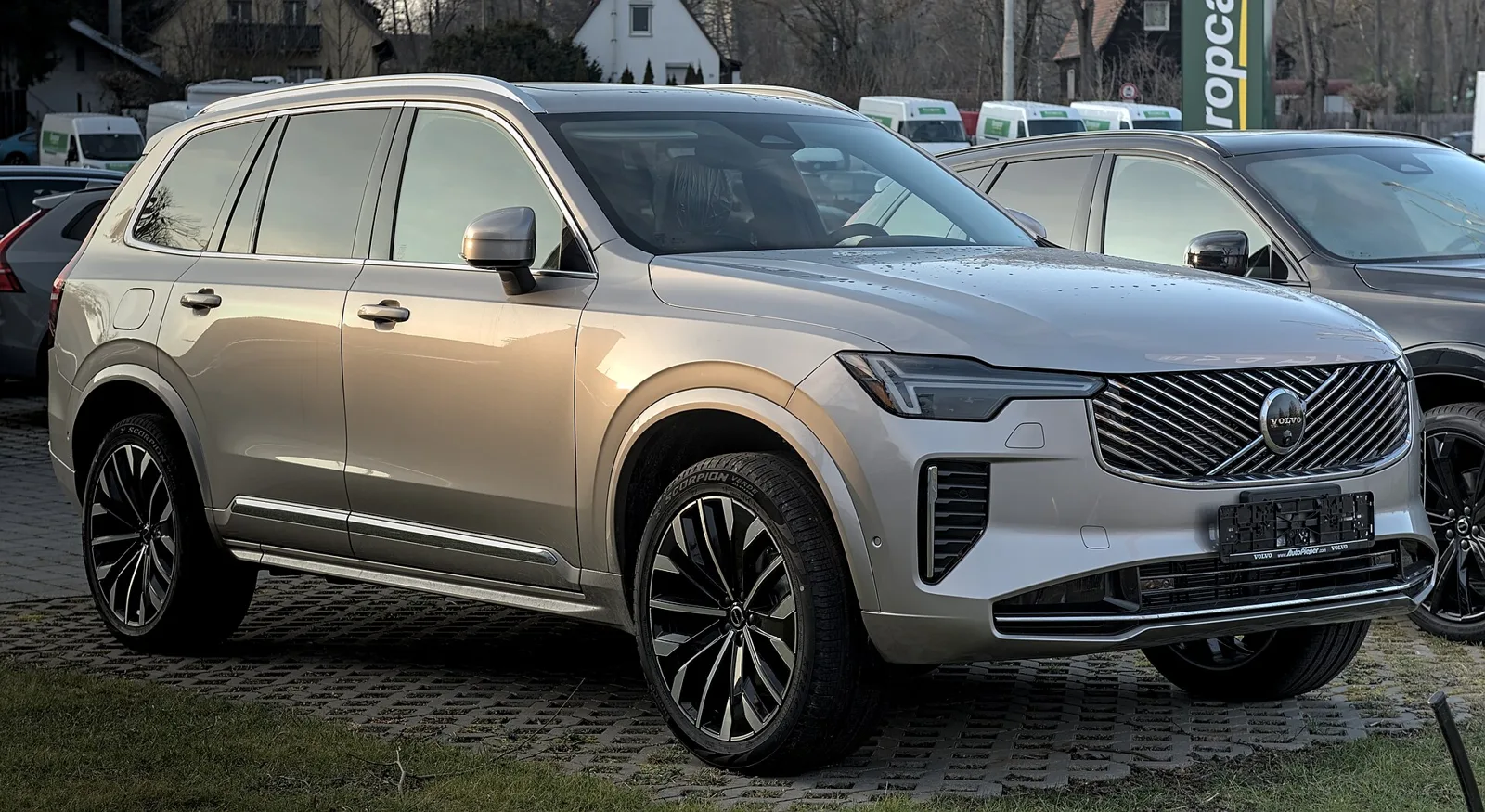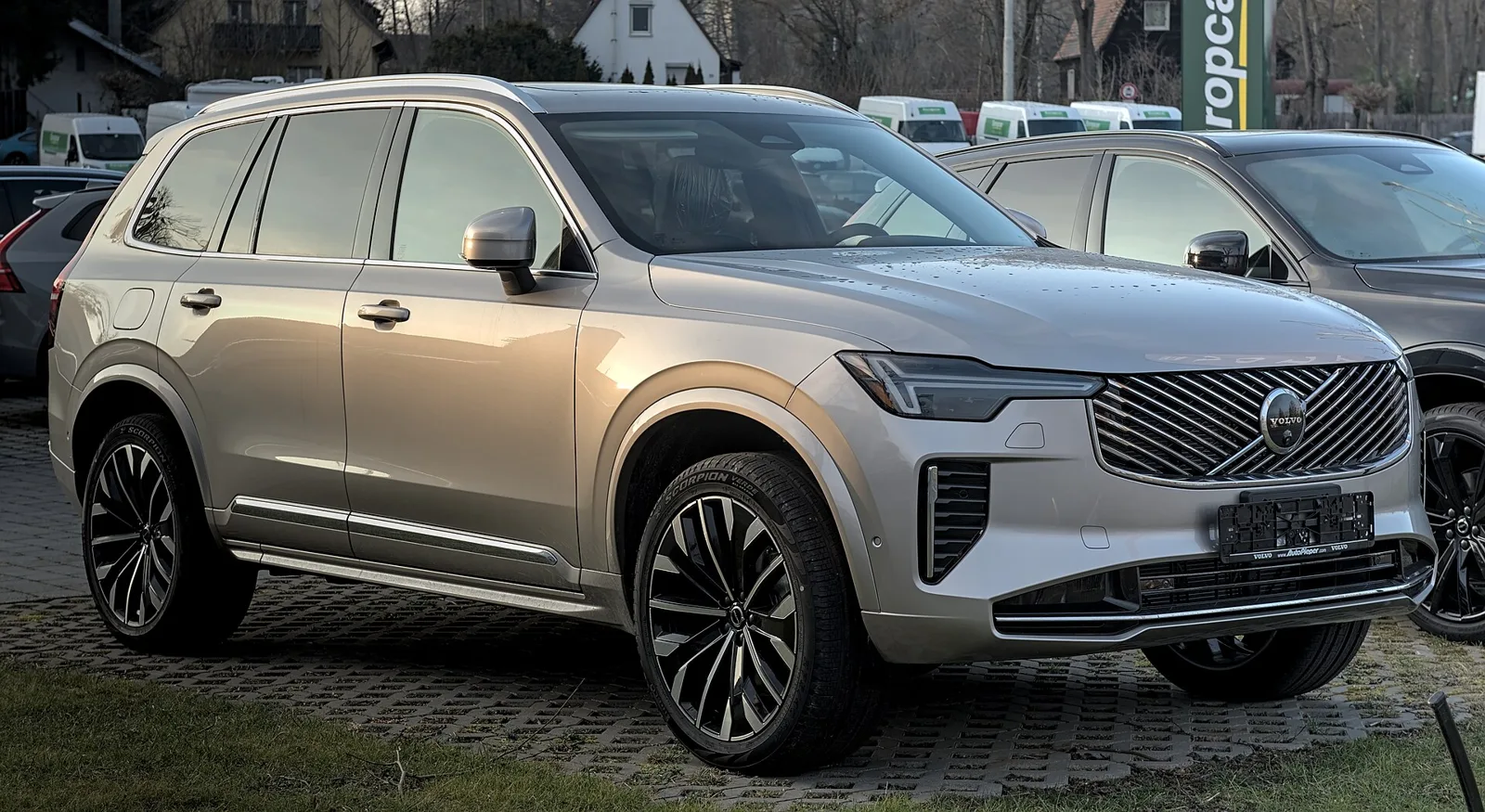
From the 1927 OV 4 and the 1959 three-point belt to Ford ownership, the Geely years, a 2010s rally of safety scores and an all-electric pivot.
Volvo is a Swedish luxury car maker founded in Gothenburg in 1927 with a focus on safety. Ford owned it from 1999 until Geely bought it in 2010. Volvo has long led in crash safety, pioneering the three-point belt that became standard in 1959.
Volvo Car AB, which trades as Volvo Cars, is a Swedish luxury vehicle manufacturer headquartered in Torslanda, Gothenburg. The brand was founded in 1927 on the concept of safety, and that principle still shapes its marketing. Its story runs from the PV444 and the American market to Ford and Geely ownership and a shift towards electric cars.
When and why was Volvo founded?
Volvo was founded in 1927 in Gothenburg, Sweden, and the guiding principle from the start was safety. The company was created as a subsidiary of the ball bearing maker SKF, and Assar Gabrielsson was appointed its managing director.
The name Volvo is Latin for I roll. The first Volvo car left the assembly line on 14 April 1927, and it was called the Volvo OV 4. Its design reflected the company's aim to build cars that could cope with harsh conditions.
Founded on safety in 1927, Volvo has turned a single principle into a brand that still shapes how carmakers think about crashes.
How did the PV444 open up the American market?
The Volvo PV444 was presented in 1944 and entered production in 1947. It was the smallest Volvo yet, but it became the company's most produced car and spearheaded Volvo's move into the American market.
Volvo cars first reached America in 1955, and from 1956 the company handled its own imports. North America has been the company's main outlet ever since, and in 1986 Volvo sold 113,267 cars there, a record year for the company.
Where has Volvo built its cars?
Volvo opened the Halifax Assembly plant in 1963, the first assembly plant in its history outside Sweden. The Torslanda plant in Sweden followed in 1964 and remains one of the largest production sites, mainly for large cars and SUVs.
The Ghent plant in Belgium opened in 1965 and was Volvo's first location producing cars within the European Economic Community. The Uddevalla plant in Sweden opened in 1989, and later plants included Chengdu in China from 2013 and Daqing from 2014.
Volvo's Shah Alam plant in Malaysia opened in 1967, and the Bangalore plant in India opened in 2017. The Ridgeville plant in South Carolina opened in 2018, which made the American market a manufacturing base as well as a sales territory.
How did Volvo expand through the DAF deal?
Early in the 1970s Volvo took over the car arm of the Dutch firm DAF. It sold the small cars under the Volvo name before launching the Dutch-built 340, a big seller in Britain in the 1980s.
The 340 showed that a smaller Volvo could compete in price-sensitive markets. It also prepared the company for the wider range that would follow in the later decades of the century.
How does the Volvo model numbering work?
From the 140 series in 1966 onward, Volvo's numbering used three digits. The first identified the series, and the later digits were meant to indicate engine and body, although the company broke that pattern more than once.
The 780 came with turbocharged four-cylinder and naturally aspirated V6 engines, but never an eight-cylinder, as the name might suggest. The company later dropped the meaning of the final digit for cars such as the 740, although the digit still identified the car underhood.
The in-line five-cylinder engine became a Volvo signature when it was introduced in 1991 in the 850. That engine layout helped the car stand out among its rivals and was used across the range for years.
Which models defined the 1990s and 2000s?
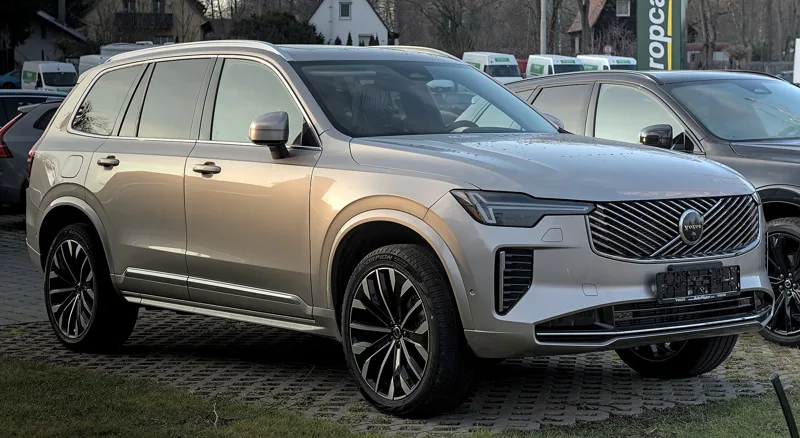
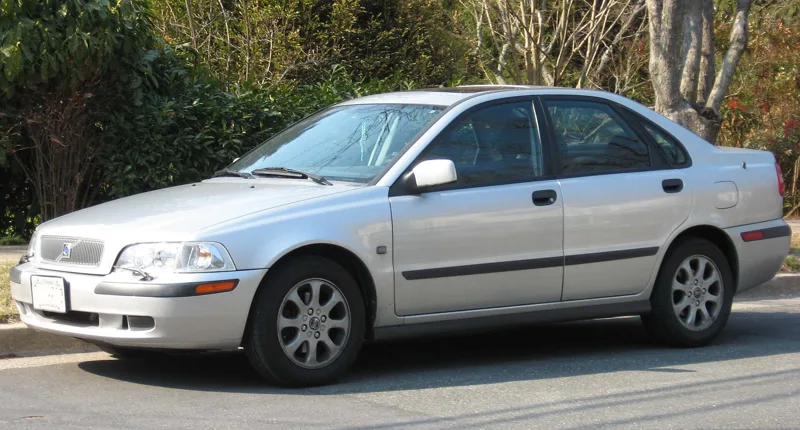
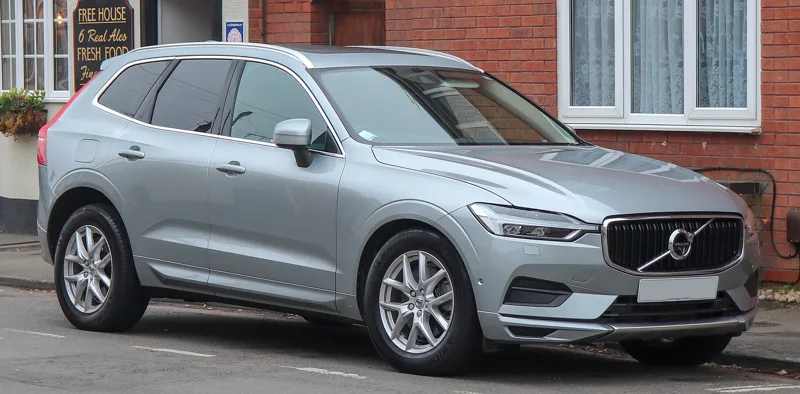
The S40 and V40 arrived in 1995, followed by the S70 and V70 in 1996. The XC90 arrived in 2002, and the XC60 followed in 2008, which showed how the range was shifting towards crossovers and SUVs.
The C30 arrived in 2006, and the S80 became the first Volvo model with adaptive cruise control with Collision Warning and Brake Support. These models balanced the brand's safety credentials with the sporty and family roles the company wanted to cover.
How did Ford shape Volvo?
Volvo Cars was bought by the Ford Motor Company in 1999 for US$6.45 billion. Ford saw advantages in acquiring a profitable prestige mid-size European manufacturer renowned for its safety aspects, and the company became part of Ford's Premier Automotive Group.
Ford later decided to push Volvo further upmarket, which produced the luxurious second-generation S80 and the small premium crossover XC60. The brand's ownership was finally settled when Ford sold it on, at a loss, to Geely Holding.
How did Geely change Volvo?
Ford sold Volvo Cars to Geely Holding for $1.8 billion, and the deal closed on 2 August 2010. The purchase was a landmark for the Chinese industry, which had never bought a European premium brand of this scale.
Under Geely, Volvo sold more than half a million cars in 2015 for the first time in its 89-year history. Sales in Europe rose 10% in 2015 to 269k units, and US sales were up 24% that year.
Volvo Cars was listed on the Nasdaq Stockholm stock exchange in 2021. The listing reflected a new chapter in which the brand had grown into a global maker with a clear set of goals for the next decade.
What is Volvo's plan for electric cars?
The company's electric pivot began with the 2022 EX90, a fully electric replacement for the XC90 II, and the 2023 EX30. Volvo had earlier shown the ECC of 1992, which offered a battery-only range of 90 miles (140 km) and about 415 miles (668 km) with a full tank for its turbine.
Volvo's electric development had an early milestone in the C30 DRIVe Electric, which was exhibited at the 2010 Paris Motor Show. It reached a top speed of 130 km/h (81 mph) and offered an all-electric range of up to 150 kilometres (93 mi), with field testing starting in 2010 with 10 units in Goteborg. Those early trials helped shape the electric models that followed, and they showed how plug-in technology could fit into a family car.
The company also planned to stop selling fossil fuel-only cars by 2025 and move to electric-only models by 2030. In 2024, however, Volvo scrapped its goal of becoming fully electric by 2030, which showed how the timetable was reshaped by industry challenges.
How did Volvo lead on safety?
Volvo has long been marketed as a safe car, and it has used high-tech systems as standard equipment for many years. Nils Bohlin's three-point safety belt became standard on all Volvo cars in 1959, and the company then made the design available to other manufacturers for free.
The firm also developed the first rear-facing child seat in 1964 and brought in the Side Impact Protection System (SIPS) in 1991. Side airbags became standard from 1995, and the Whiplash Protection System (WHIPS) arrived in 1998.
In 2004 Volvo introduced the Blind Spot Information System (BLIS), which uses a side-view-mirror-mounted camera to alert drivers. The S80 of 2006 added the Personal Car Communicator remote control, which could warn of a person hiding inside the car.
How well has Volvo scored in crash tests?
Since 2009 every Volvo model tested by Euro NCAP has earned a five-star safety rating. The second-generation V40 achieved the best test result of any car model Euro NCAP had tested at the time.
The redesigned XC60 received the highest adult occupant score of 98% in 2017. Volvo's reputation for crash safety has therefore been reinforced by independent tests over more than a decade.
Not every judgement has gone the brand's way. A French court found Volvo partially responsible for a 1999 crash and fined it 200,000 euros, and the company also paid $19.6 million in fines for missing its fuel economy targets.
What is the E.V.A. Initiative?
In 2019 Volvo launched the E.V.A. (Equal Vehicles for All) programme, sharing its research and safety work. The aim is safer cars for all drivers, whatever their gender or size.
The initiative recognises that male crash test dummies have traditionally been used in safety tests, which left women at higher risk of injury. Volvo's accident research team has collected real-world collision data for many years to correct that imbalance.
What did Volvo achieve in motorsport?
Volvo set up its own motorsport department in 1959, and a PV544 borrowed from the company won the 1965 Safari Rally with Joginder and Jaswant Singh at the wheel. The company's rally credentials were established early and reinforced in later decades.
In 1985 the 240T team, with Gianfranco Brancatelli and Thomas Lindstrom leading, won the European Touring Car Championship. A 240 Turbo driven by Per Stureson also won the 1985 Deutsche Tourenwagen Meisterschaft, and the 240T won the Guia Race at Macau in 1985 and 1986.
In the 1990s Volvo raced in the British Touring Car Championship alongside Tom Walkinshaw Racing. The 850 Saloon won six races in 1995, and in 1998 TWR Volvo won the championship with Rickard Rydell driving the S40R.
How did Volvo race in Australia and at home?
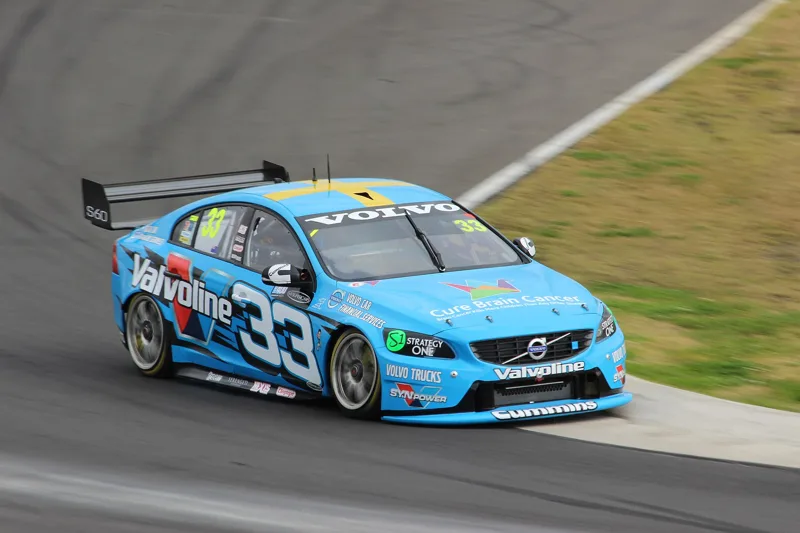
Peter Brock drove an 850 T5 to finish 25th in the 1994 Bathurst 12 Hour. Volvo later entered the V8 Supercars Championship in 2014, and Scott McLaughlin finished fifth in the championship that year.
At home the S60 became a fixture of Swedish touring car racing. The S60 Challenge Cup ran from 2002 to 2007 with 26 modified S60s, and Thed Bjork won three consecutive titles from 2013 to 2015 in a car prepared by Polestar Racing.
What are the key Volvo models and figures?
| Model | Year | Defining figure | Role |
|---|---|---|---|
| Volvo OV 4 | 1927 | First Volvo car, built from 14 April 1927 | Founding model |
| PV444 | 1947 | Volvo's most produced car | American market opener |
| Volvo 340 | 1980s | Big seller in the UK market | Dutch-built small car |
| 850 | 1991 | In-line five-cylinder engine | Side impact protection pioneer |
| XC90 | 2002 | Launched the large SUV line | Flagship crossover |
| XC60 | 2008 | 98% adult occupant score in 2017 test | Premium crossover |
| ECC | 1992 | 90 miles (140 km) battery range | Environmental concept |
| EX90 | 2022 | Fully electric replacement for the XC90 II | Electric flagship |