A cyan Swedish saloon, a Gold Coast and Bathurst campaign, a three-year renewal and a reversal a week later.
Volvo entered V8 Supercars in 2014 because the Car of the Future rules invited new brands. It built the S60 with Garry Rogers Motorsport and Polestar Racing, now Cyan Racing, raced it for three seasons, renewed in April 2016, then reversed the decision a week later and withdrew.
On 27 April 2016 Volvo renewed its Australian V8 Supercars programme for another three seasons. Seven days later, on 4 May, the Swedish company changed its mind and said it would quit at the end of the year.
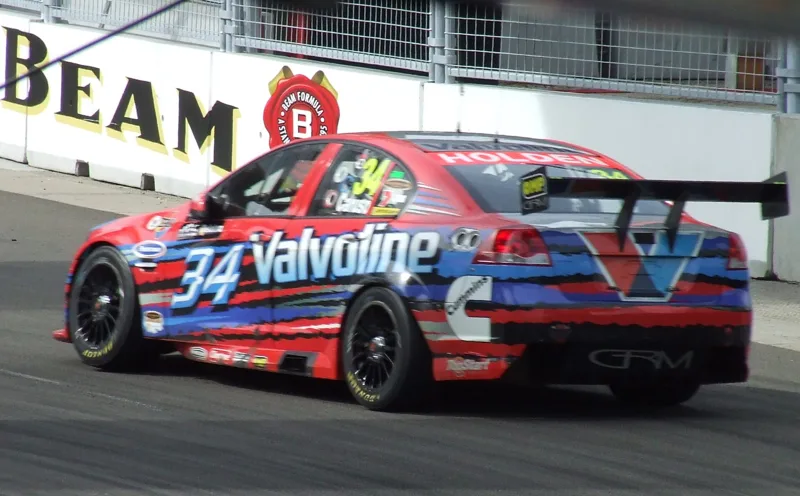
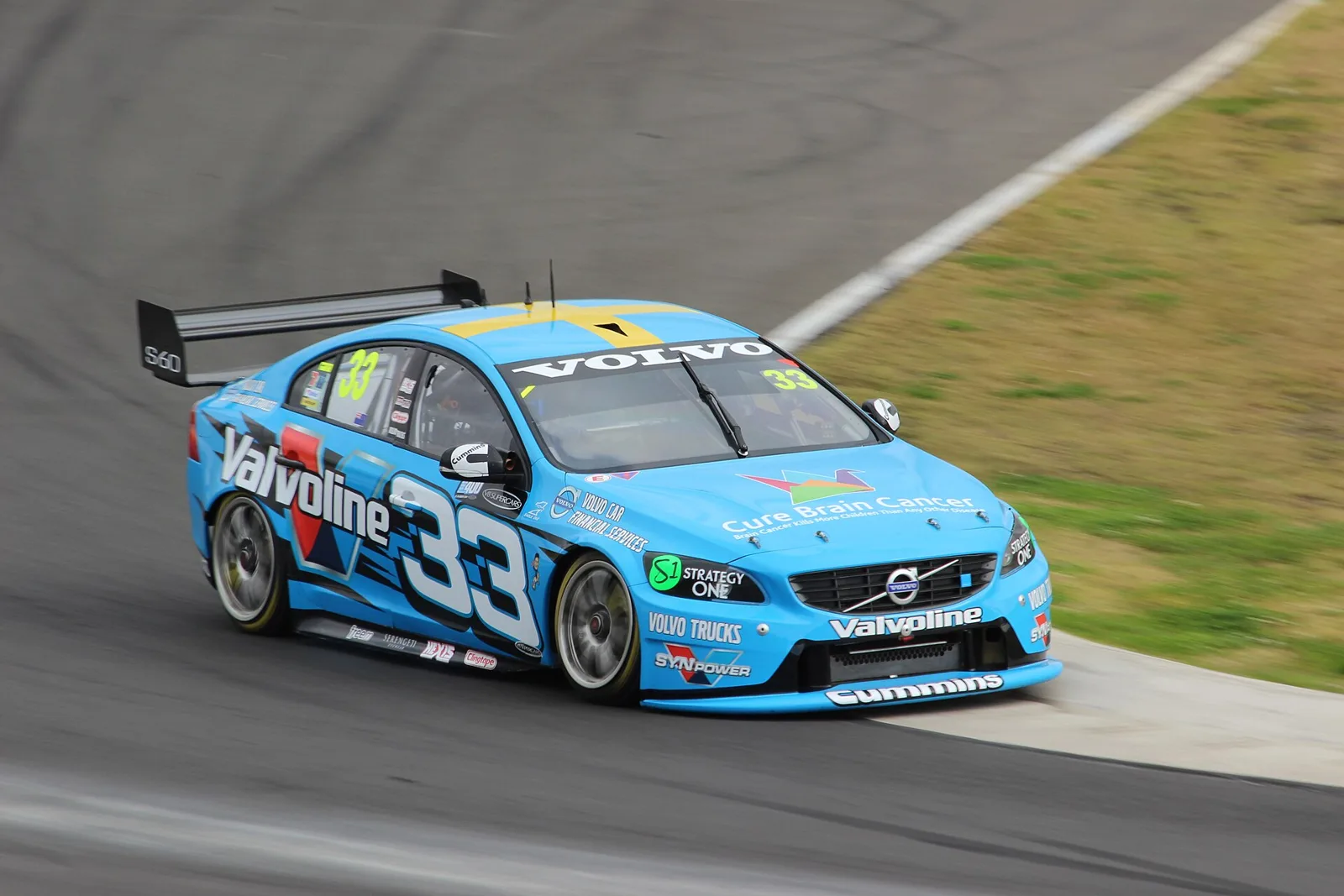
That reversal capped a short, noisy and often quick run for the Volvo S60 V8 Supercar. It was built by Garry Rogers Motorsport with Volvo Cars and Polestar Racing, it raced for three seasons from 2014, and in the hands of Scott McLaughlin it finished 2016 third in the drivers' championship.
Why V8 Supercars went looking for new brands
The car only existed because the championship rewrote its rules. In 2010, during a debate about future-proofing, V8 Supercars unveiled a regulation set called Car of the Future. The goal was to halve costs through control parts. A standardised chassis and roll cage were meant to tempt new manufacturers to join Holden and Ford, while the popular 5.0L V8 engines stayed. Each base platform would be homologated for technical parity, and teams could still develop certain components on top.
The rules arrived in 2013, a year later than first planned. Nissan came in with Altima models homologated by Kelly Racing, and Erebus Motorsport built Mercedes-AMG E63-derived cars without factory help.
Volvo renewed for three years on 27 April 2016 and backed out a week later.
Why did Volvo enter V8 Supercars?
Volvo announced its entry in June 2013, on a three-year deal with Garry Rogers Motorsport (GRM). It was the brand's first step into Australian touring car racing since 1986, when Robbie Francevic took the championship in a 240T run by Mark Petch Motorsport and the Volvo Dealer Team.
Another brand had nearly got the job. Garry Rogers had been in what he called very, very close talks with Chrysler about the 300C since January 2012, before he signed with the Swedes.
Building the S60 V8 Supercar
The road car chosen was the second-generation S60. Its panels and fixings followed the production design but were altered in places, with the roofline raised and moved back, to suit the control chassis. GRM designed and assembled the finished car together with Volvo Cars and Polestar Racing.
Power came from the Yamaha-designed B8444S, enlarged in bore and stroke from 4.4L to 5.0L to satisfy the rules. A flat-plane crank and 60-degree block gave it a deeper note than the pushrod 90-degree engines around it. There was a wrinkle, though: the engine was reportedly replaced during homologation at RAAF Base East Sale by a Chevrolet unit derived from the Holden Commodore VF.
The Swedish side: from Flash Engineering to Cyan Racing
The Swedish partner had a long racing pedigree. The Swedish Touring Car Championship started in 1996, and Volvo, a British Touring Car Championship competitor since 1994, teamed up with the newly founded Halmstad team Flash Engineering, owned by driver Jan Nilsson, known as Flash. Volvo paid for the project and supplied the cars.
Nilsson won the Swedish title in 1996 and 1997 in an 850 Super Touring built by Tom Walkinshaw Racing. Volvo then took the manufacturers' title in 2002, when Flash won 6 of 18 rounds, and again in 2003. That year Super 2000 rules arrived, the team took charge of engine and chassis development from Volvo, and the S60 S2000 that Prodrive had first built did the rest.
In 2005 Christian Dahl purchased the team, which became Polestar Racing. The Polestar years brought a 2009 drivers' title for Tommy Rustad in a C30, a 2010 teams' title, and in 2012 a clean sweep of the Swedish breakaway series with an S60 driven by Fredrik Ekblom. Thed Bjork then took two straight drivers' titles after the championships merged again in 2013.
In July 2015 Volvo announced it had bought Polestar Performance, the road-car tuning arm, together with the Polestar name. The racing team stayed under Dahl and became Cyan Racing. It joined the World Touring Car Championship in 2016 with Volvo Cars and Polestar and the S60, and Bjork won the drivers' and teams' crowns in 2017.
2014: a launch over the Harbour Bridge
The S60 was unveiled on 13 February 2014 after a sunrise drive across the Sydney Harbour Bridge behind a police escort. The paint was mostly Volvo's cyan, the roof carried a Swedish flag, and the doors had black panels. McLaughlin returned for his second season in the category, joined by Volvo Sweden factory regular Robert Dahlgren. Bjork, the reigning Swedish champion, had asked for the seat but was sent to test the WTCC car built on the same road model.
Rivals cried foul from the start, claiming the car had an aerodynamic and power advantage. At its pre-season test at Sydney Motorsport Park the car made so much power that it was running down other cars before the throttle was fully open. Volvo were later told to shift 20 kg of ballast in the engine bay to alter the centre of gravity.
The results were mixed. McLaughlin qualified fifth and second at the opening round in Adelaide, then fended off Jamie Whincup to take second behind Craig Lowndes in the evening race. He won the S60's first race in the last heat of the non-championship Challenge at the Australian Grand Prix meeting, and its first championship win followed in Perth despite a cracked header. In Western Sydney he suffered an engine failure and a lost wheel, Dahlgren crashed out and missed the rest of the weekend, and McLaughlin still won on the Sunday by a whisker from Nick Percat.
Bathurst was cruel. McLaughlin and Alexandre Premat led 70 of the first 120 laps until Dahlgren crashed at the Cutting, and McLaughlin crashed at the same spot after the restart, leaving the car last classified in 17th, 11 laps down. The season ended with a win at Phillip Island that came when Garth Tander ran dry within sight of the flag, and McLaughlin drew level with Whincup on 10 poles. He ended fifth overall, Dahlgren 25th, and GRM sixth in the teams' standings, 23 points ahead of Erebus.
2015: patchy and unlucky
David Wall, from Dick Johnson Racing, took over from Dahlgren. Volvo had talked about running four cars in mid-2014 but chose to concentrate on speed. In 2021 Lee Holdsworth said Erebus had been in line to move from Mercedes to Volvo for 2015 before the deal fell apart at Bathurst.
The year began badly, with an oil pump failure on McLaughlin's warm-up lap in the opener and an engine failure at Symmons Plains. Wall suffered burns in Adelaide, and Chris Pither stood in for him at the Australian Grand Prix event. Only three top-ten finishes came in the next nine races, though Townsville gave McLaughlin the season's first pole, and a podium at Ipswich and two top fives at Eastern Creek followed.
At Sandown a pit-stop error sent the car out with the air-jack still attached. At Bathurst, Wall and Pither retired with another engine failure inside 100 km, while McLaughlin and Premat finished fifth. After a pole on the Gold Coast, Volvo Global said it felt positive about continuing beyond 2016. McLaughlin closed with a top-ten result in eight of the last nine races, four of them podiums, plus two more poles, and finished eighth, while Wall was 23rd and GRM seventh among teams.
2016: success, a renewal and a reversal
James Moffat, from Nissan Motorsport, took Wall's seat. McLaughlin opened with two fourth places in Adelaide and then dominated Phillip Island, winning a grand slam in both races. Volvo's three-year renewal followed on 27 April, and McLaughlin was handed a guest drive in the Swedish championship opener on 1 May.
On 4 May Volvo backflipped. Suggestions that GRM might run the existing cars privately from 2017 were closed down when Cyan Racing clarified that every part of the Volvo intellectual property, chassis, engines and panels included, had to be shipped to Sweden after the season.
The racing carried on, and rather well. The Sandown 500 staged the series' first Retro Round, with both Volvos re-liveried to honour the 1986 title, and McLaughlin and Wall finished fourth. At Bathurst McLaughlin qualified on the front row but lost his chance in a late crash involving Whincup and Tander. On the Gold Coast he and Wall collected two podiums, and McLaughlin went viral for a wildly out-of-control overtake of Mark Winterbottom. The S60s ended with top-ten results in each of the last six races, among them two Pukekohe podiums for McLaughlin.
Three seasons side by side
| Season | Drivers | Drivers' championship | Teams' championship (GRM) |
|---|---|---|---|
| 2014 | Scott McLaughlin, Robert Dahlgren | 5th and 25th | 6th |
| 2015 | Scott McLaughlin, David Wall | 8th and 23rd | 7th |
| 2016 | Scott McLaughlin, James Moffat | 3rd and 20th | 3rd, best since 2010 |
Why did Volvo withdraw from V8 Supercars?
The sequence is short. Volvo renewed on 27 April 2016, reversed the decision a week later, and Cyan Racing then made clear that the programme's intellectual property was going home to Sweden.
In 2024 GRM director Barry Rogers said the project had been set back by a culture clash between Volvo's Swedish arm and the, in his words, ocker-type GRM team, with each side guarding its intellectual property. Both sides conceded that Volvo Cars in Australia had gained from the programme: vehicle sales rose 62 per cent in the first half of 2014.
What happened to the cars and the people
After the 2016 season, two of the three chassis went to Sweden with the Volvo componentry, and into the museum collections of Volvo and Cyan Racing in Gothenburg. A single bare chassis stayed in Australia as a reserve for GRM.
GRM returned to Holden Commodores for 2017. McLaughlin was poached by DJR Team Penske, and Tander came back to take his seat.
Where the Swedish side went next
Cyan Racing kept going. When the Swedish series adopted TCR rules for 2017 the team left it, spent a season in Swedish GT with the S60, and moved to a Lotus Evora GT4 for 2018. It also ran a pair of Hyundai i30 N TCR cars with Yvan Muller Racing in 2018, winning the WTCR teams' title, and took the teams' title again in 2019 with four Lynk and Co cars. Yann Ehrlacher won the drivers' title in 2020 and became the first driver to defend a WTCR crown in 2021. Cyan now acts as the motorsport partner of Geely Group Motorsport, the former Volvo factory squad.
On the road, Cyan released the Volvo P1800 Cyan in 2020, a limited-run, road-legal restomod. Volvo also pushed E85 bioethanol in the Swedish series, claiming as much as an 80 per cent cut in fossil-fuel CO2, and an E85-fuelled Polestar S60 won the first two rounds of 2007 despite predictions that ethanol cars would be slower.