From a Nissan dealership in Melbourne to two Bathurst 24 Hour victories, the team ran Holden, Nissan, Volvo and Renault machinery.
The Melbourne team that carries Garry Rogers' name grew from his own racing and took the 2000 Bathurst 1000 together with the 2002 and 2003 Bathurst 24 Hour events. It also became known for spotting future champions such as Garth Tander and Scott McLaughlin.
Garry Rogers Motorsport is an Australian racing team based in Melbourne, built around the driver Garry Rogers. It won the Bathurst 1000 in 2000 and both Bathurst 24 Hour races held in 2002 and 2003. Over several decades it raced Holden, Nissan, Alfa Romeo, Honda, Ford, Volvo and Renault machinery, and it became known for spotting future champions.
Rogers was a talent spotter first and foremost. Lee Holdsworth, Garth Tander, Scott McLaughlin, Jason Bargwanna, Steven Richards and Jamie Whincup all found their feet with the team, and many of them went on to become champions. Rogers died in October 2025 at the age of 80, and his team remains one of the more colourful names in Australian touring car history.
Where did Garry Rogers Motorsport come from?
The operation grew out of Garry Rogers' own racing career. He started in 1963 in Appendix J Holdens, and the team later operated from a Nissan dealership he owned in Melbourne. The first incarnation disbanded while he concentrated on the dealership, and the name returned to the grid in 1986.
Rogers raced Sports Sedans through the late 1960s and 1970s. In the mid-1970s he ran a BDA Escort with some success, then took over an ex-Ian Geoghegan Holden Monaro. In late 1978 he took a privately run ex-Bob Jane Holden Torana into the Australian Touring Car Championship, and he stayed in touring cars until the end of 1979.
He returned to Sports Sedans for a serious tilt at the 1981 Australian Sports Sedan Championship in a Holden Torana LX SS A9X Hatchback. In the early 1980s he drove for other teams at Bathurst, and in 1983 he qualified in the top ten and finished 13th alongside Clive Benson-Brown after suffering brake problems.
Built around one driver, the team became a launchpad for future champions and won at Bathurst three times.
How did the early touring car seasons go?
Between 1984 and 1985 Rogers raced only at Sandown and Bathurst, so the team was barely visible. It came back properly in 1986, when he bought a former JPS Team BMW and ran it through a full touring car season. That season the car also took a race at Amaroo Park, a win in the AMSCAR series.
In 1984 he shared Peter Janson's Commodore at Sandown in the Castrol 500, and the pair also took the car to Bathurst. Neither endurance event ended with a finish. In 1985 he partnered Jim Keogh in Keogh's ex-JPS BMW 635 CSi, and the pair finished sixth at Bathurst, four laps down on a TWR Jaguar XJS crewed by Goss and Hahne.
The 1986 car wore the orange of sponsor Bob Jane T-Marts, in the famous Hugger Orange paint. At the 1986 James Hardie 1000 Charlie O'Brien started from 22nd, but a slipping clutch ended the car's race after 19 laps, and Rogers never got to drive.
The team sat out 1987 and returned at the 1988 Tooheys 1000 with a Holden VL Commodore SS Group A SV that Les Small of Roadways Racing had prepared. The car ran without a major sponsor and was shared with John Andretti, the nephew of Mario Andretti, who was still on crutches from a broken leg. On lap 37 Andretti crashed at Reid Park, and he admitted the mistake was his, driving too hard on tyres that had not warmed up.
In 1989 Rogers accepted a drive in Colin Bond's second Ford Sierra RS500 at Bathurst with Ken Mathews, and they failed to finish. Through the early 1990s the team moved into AUSCAR at Calder Park Thunderdome with Ford Falcons. Rogers shared the first car with Paul Fordham, then handed the seat to Steven Richards. Valvoline became a major sponsor along the way, and the team also ran a Nissan Pulsar and a 300ZX in production car events.
What did the Super Touring years look like?
The team joined the Australian Super Touring Championship in 1995 with Steven Richards as its lead driver. It started with an Alfa Romeo 155, switched to a Honda Accord during the year, and Richards won the Privateers Cup in the Honda and finished fifth in the championship. Two factory-supported BMW and Audi drivers finished ahead of him.
The team's form slipped in 1996. The Honda was replaced by a Nissan Primera, and the new V8 Supercar commitment took attention away from the touring programme. Richards finished seventh and lost the Privateers Cup to Cameron McLean.
When did the team reach the Supercars grid?
The squad entered the Australian Touring Car Championship in 1996. Richards's car was a Holden VS Commodore obtained from Gibson Motorsport. The team grew to two cars in 1998, when Jason Bargwanna joined. Richards then tested with Nissan in the British Touring Car Championship, and Garth Tander, the 1997 Australian Formula Ford champion, took over the seat.
Bargwanna took the first win of the team's Supercars history at Calder in 1998. Tander's first round victory came in 1999 at Queensland Raceway. The same year, Bargwanna and he were runners-up in the Queensland 500.
Why was 2000 the team's best season?
The 2000 season was the team's most successful to date. Tander collected three round victories, one of them the Bathurst 1000 alongside Bargwanna, and was beaten to the crown only by Mark Skaife. Tander led the championship early, but a couple of weak rounds in the middle of the year let Skaife take the lead.
The following year was far poorer. Tander finished tenth in the points and Bargwanna fifteenth, and Tander's best result was second at Canberra. His last triumph in the colours came at Surfers Paradise in 2002, and then he moved to Larkham Motor Sport. Jamie Whincup, the 2002 Australian Formula Ford champion, took his place.
What were the team's key milestones by season?
| Season | Lead drivers | Milestone |
|---|---|---|
| 1995 | Steven Richards | Privateers Cup and fifth in the Super Touring championship |
| 1996 | Steven Richards | Seventh in the Super Touring championship; team joins the Touring Car Championship |
| 1999 | Garth Tander, Jason Bargwanna | Tander's first round win at Queensland Raceway |
| 2000 | Garth Tander, Jason Bargwanna | Bathurst 1000 win and Tander runner-up in the title |
| 2002 | Garth Tander, Jason Bargwanna | Bathurst 24 Hour win with the Monaro 427C |
| 2003 | Garth Tander, Jamie Whincup | Second Bathurst 24 Hour win; one of the first teams to run the VY Commodore |
| 2013 | Scott McLaughlin, Alexandre Premat | McLaughlin becomes the youngest ever V8 Supercar race winner at Pukekohe |
| 2014 | Scott McLaughlin, Robert Dahlgren | Volvo S60 debut; McLaughlin wins four races and finishes fifth |
| 2016 | Scott McLaughlin, James Moffat | McLaughlin wins both races at the Phillip Island SuperSprint |
| 2019 | Jordan Cox, James Moffat, Chris Pither | Seven TCR Australia podiums |
How did the Monaro 427C win at Bathurst?
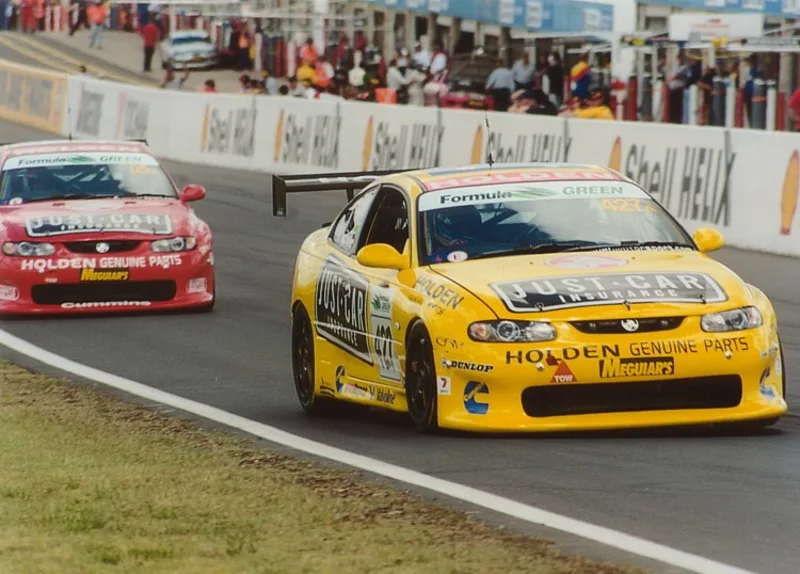
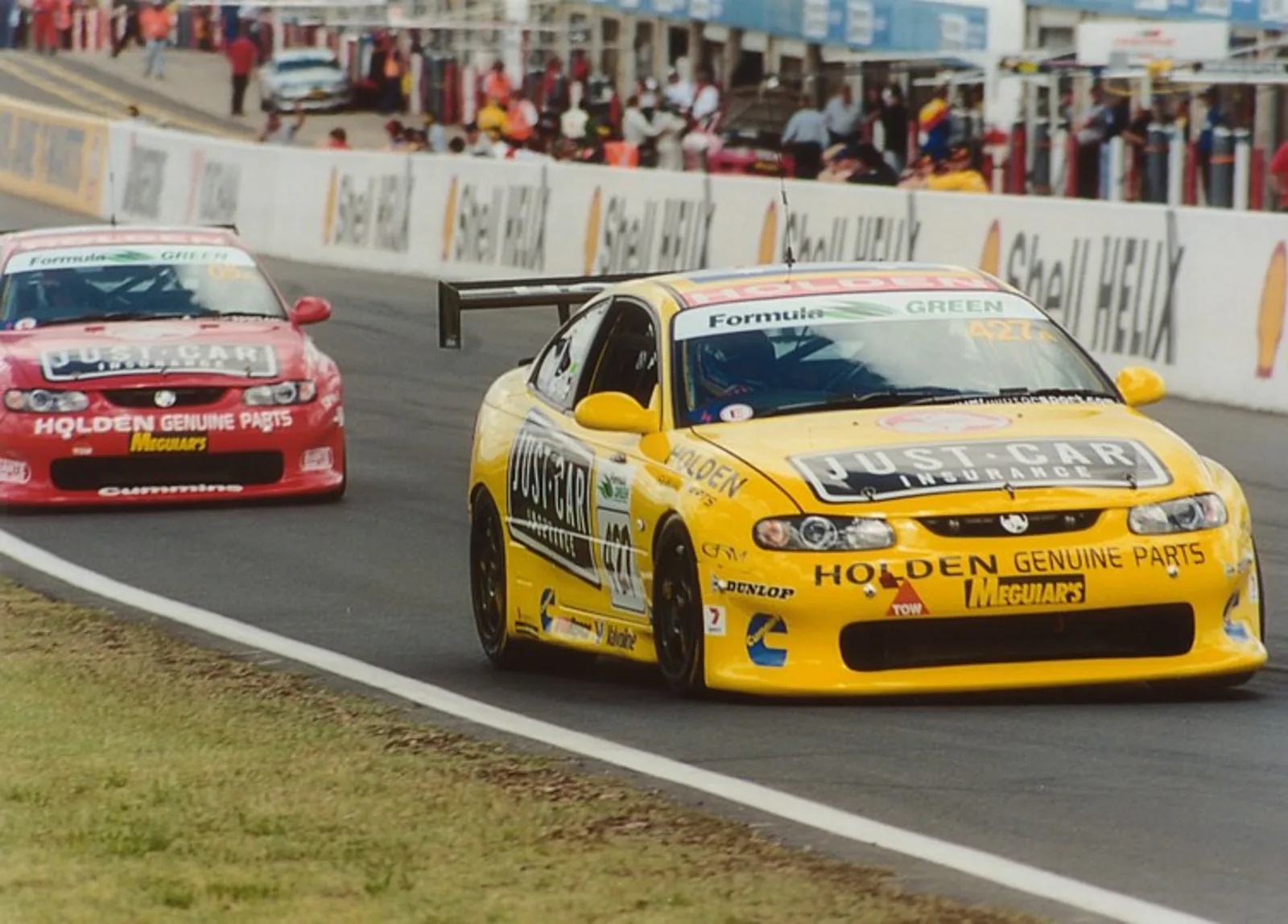
The Monaro 427C was a GT specification Holden built and run by the team after Holden's own racing arm reportedly declined the job. It won the 2002 Bathurst 24 Hour by 24 laps, then took a 1-2 finish in 2003 with a second car built for Peter Brock.
Its engine was a team-developed version of the 7.0 litre (427 cu in) V8 from a Chevrolet Corvette C5-R, a unit that had taken many class wins at the 24 Hours of Le Mans. The team's engine builder Mike Excel assembled the GRM units. In the 2002 race the yellow #427 car, nicknamed the Nuclear banana, qualified second behind a Ferrari F360 N-GT. A flat tyre, a fuel cell replacement, a gearbox jammed after contact with a BMW 318i and loose rear suspension bolts all cost time, yet the car still came back to the front.
Tander's fastest lap of 2:14.3267 was quicker than the pole time of 2:15.0742 set by Brad Jones. The Ferrari had already suffered engine failures, and a Porsche in contention crashed out, which left the Monaro in front for the last five hours. Tander, Nathan Pretty, Steven Richards and Cameron McConville won from the Mosler MT900R of Martin Short.
In 2003 the team built a second Monaro for Peter Brock, and Brock, Jason Bright, Todd Kelly and Greg Murphy won. The 2002 winning car finished second, less than a second behind. With seven minutes remaining, Rogers allowed Murphy and Tander to race for the win, on the condition that they did not take each other out. Tander posted the quickest lap of the event, a 2:14.489, with three laps left, while Murphy's best was 2:14.499. Yellow flags on the final lap stopped Tander from making a last-lap pass.
Rogers later argued that the PROCAR limits on induction and revs made the 7.0 litre engines less competitive than a smaller production-based 5.7 litre unit. He also said that professional drivers in a V10 Viper built to the same standard would have beaten the Monaros, pointing to Greg Crick's privately entered Viper as proof of what a small budget could achieve.
How did the Volvo years and McLaughlin's rise unfold?
Scott McLaughlin became the standout driver after joining full-time in 2013. The team then announced a switch to the Volvo S60 for 2014, working with Volvo Cars and Polestar Racing. McLaughlin won four races in 2014, and the association ended after 2016.
McLaughlin was quick from the start. He stayed inside the top ten in each of the opening six races and became the youngest ever V8 Supercar race winner at Pukekohe. A second place and a victory at Queensland Raceway followed, and he ended 2013 tenth in the points standings while Premat finished nineteenth.
Robert Dahlgren replaced Premat for the Volvo years and largely struggled, so McLaughlin carried the programme. David Wall drove the second car in 2015 and James Moffat took over in 2016. Polestar was split in two in 2015, and by 2016 the team ran under Cyan Racing and Volvo Dealer Racing branding. The cars and engines went back to Sweden at the end of the agreement, and McLaughlin won both races of the 2016 WD-40 Phillip Island SuperSprint.
Why did the team leave Supercars?
The team returned to Holden Commodores in 2017 after Volvo withdrew from the series, and Garth Tander came back in place of McLaughlin. In October 2019 Garry Rogers announced that the team would not return to the Supercars grid for 2020. He cited escalating costs and a model that forced teams to buy parts rather than develop them.
The Holden years brought modest returns. In 2017 Tander gave the team its only podium at Phillip Island, and James Golding was added as a wildcard. In 2018 the team ran ZB Commodores in place of the VF cars, and Tander scored a single podium at Melbourne. At the end of 2018 Wilson Security left as main sponsor, Boost Mobile took its place, and Richie Stanaway replaced Tander.
What did the team do in TCR Australia?
In 2019 the team entered TCR Australia with two Renault Megane R.S TCR cars and an Alfa Romeo Giulietta Veloce TCR. Jimmy Vernon withdrew halfway through the series and was replaced by Jordan Cox. Cox, James Moffat and Chris Pither together claimed seven podiums.
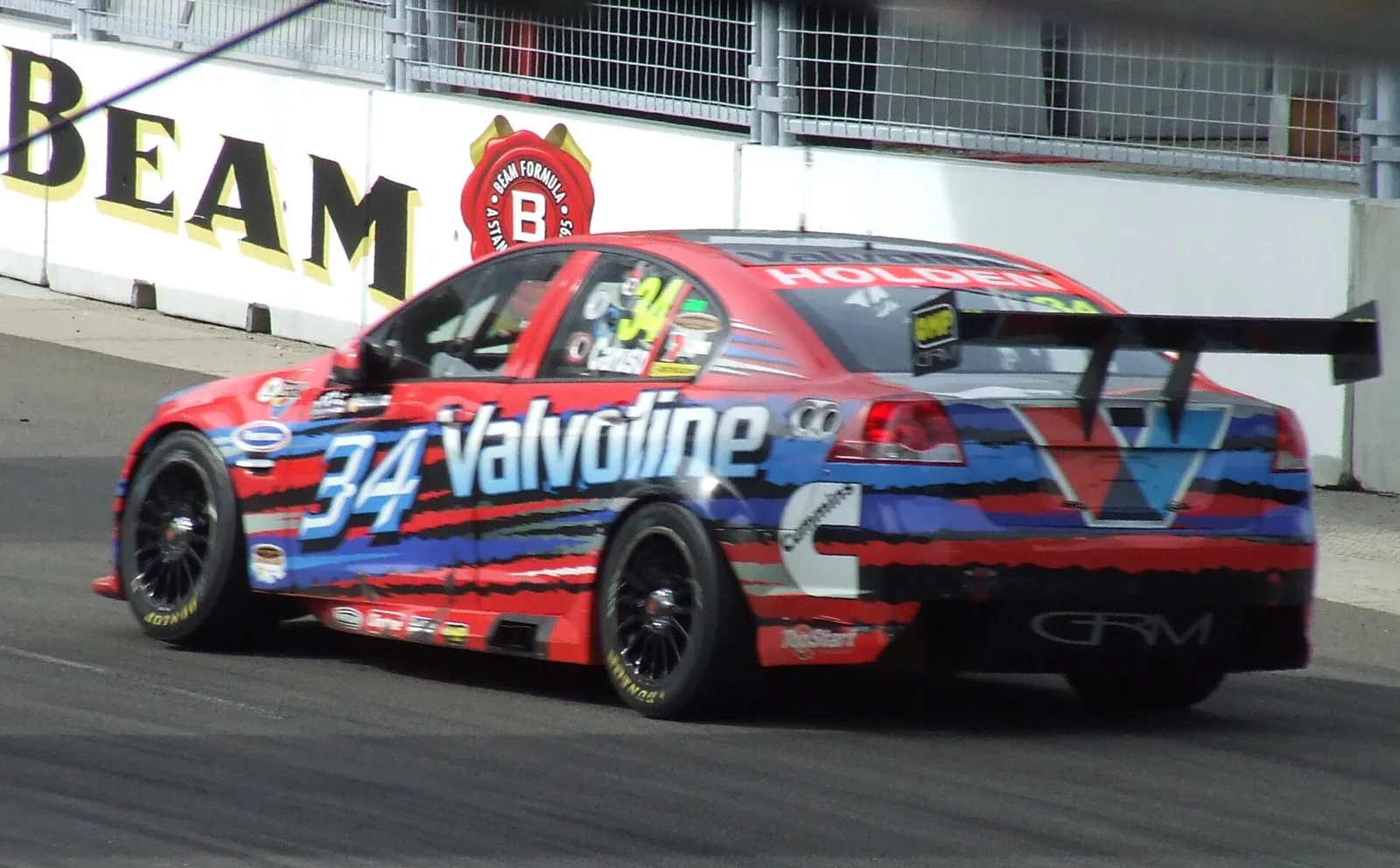
For 2020 Renault increased its backing, and the team became Renault Sport GRM with three Megane R.S TCR cars. James Moffat and Dylan O'Keeffe were the confirmed drivers. The team also ran as GRM Customer Racing with a Giulietta for Jordan Cox and a Peugeot 308 for Jason Bargwanna, while Team Valvoline GRM fielded a Giulietta for Michael Caruso and a Peugeot 308 for Aaron Cameron.
What is the team's legacy?
Garry Rogers Motorsport is remembered for its three Bathurst wins, its talent spotting and the Monaro 427C. In 2018 the team also constructed its opening group of S5000 open-wheelers, built to support the S5000 Australian Drivers' Championship as it launched. Aaron Cameron won the 2023 championship while driving for the team.
The news of Rogers' death, which came in October 2025, closed a long chapter in Australian motor racing. The team had marked its 50th year in racing in 2013, a milestone that reflected how long he had been involved. The car that won the 2002 Bathurst 24 Hour is now displayed at the National Motor Racing Museum on Mount Panorama.