Built by Garry Rogers Motorsport in about nine months, the Monaro 427C won the 2002 and 2003 Bathurst 24 Hour races before the Nations Cup series folded.
Garry Rogers Motorsport's Monaro 427C ran a 7.0-litre V8 in Australian touring events and at Bathurst. It won the 2002 and 2003 Bathurst 24 Hour races, and it raced in the Nations Cup until 2004, the year that series closed for good.
The Holden Monaro 427C was built for the Bathurst 24 Hour after the Holden Racing Team reportedly declined the job, and Garry Rogers Motorsport took it on. The story runs from a nine-month build to a race-winning debut, a controversial engine and a series that closed within three seasons.
What was the Monaro 427C?
The 427C was a GT-style race car built on the Monaro CV8 road car. It competed in the Procar-run Australian Nations Cup Championship and the Bathurst 24 Hour, where its 7.0-litre engine became the centre of a long debate about fairness.
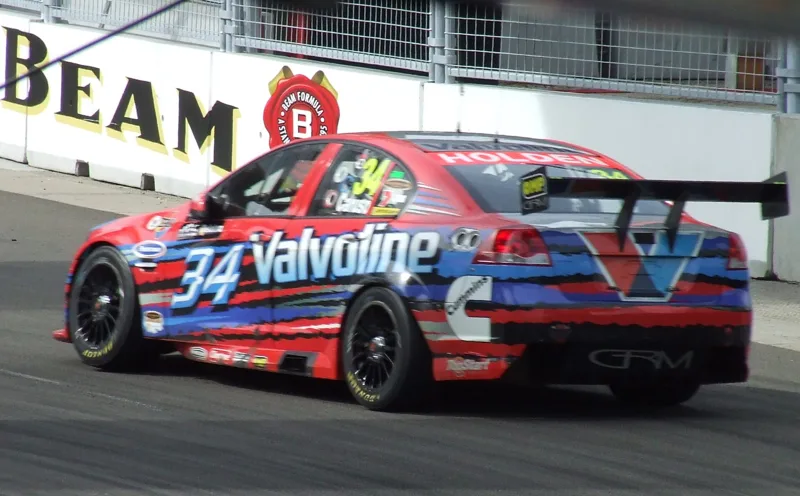
Its aero kit was borrowed from the package used on the Holden VX Commodore in V8 Supercars, with a larger rear wing that had to sit lower than the roofline to meet GT regulations. The car ran 18 x 11 inch wheels at the front and 18 x 13 inch wheels at the rear, supplied by OZ Wheels, and a 6-speed sequential gearbox from Melbourne supplier Peter Holinger.
A privately built 7.0-litre GT racer that won Bathurst's 24-hour classic twice and then outlived the series that created it.
How was the Monaro built so quickly?
Garry Rogers Motorsport accepted the job in 2002 after the Holden Racing Team reportedly turned it down. The Bathurst 24 Hour had been confirmed for November 2002, so the project was originally planned for a 2003 debut but was compressed into a build of about nine months.
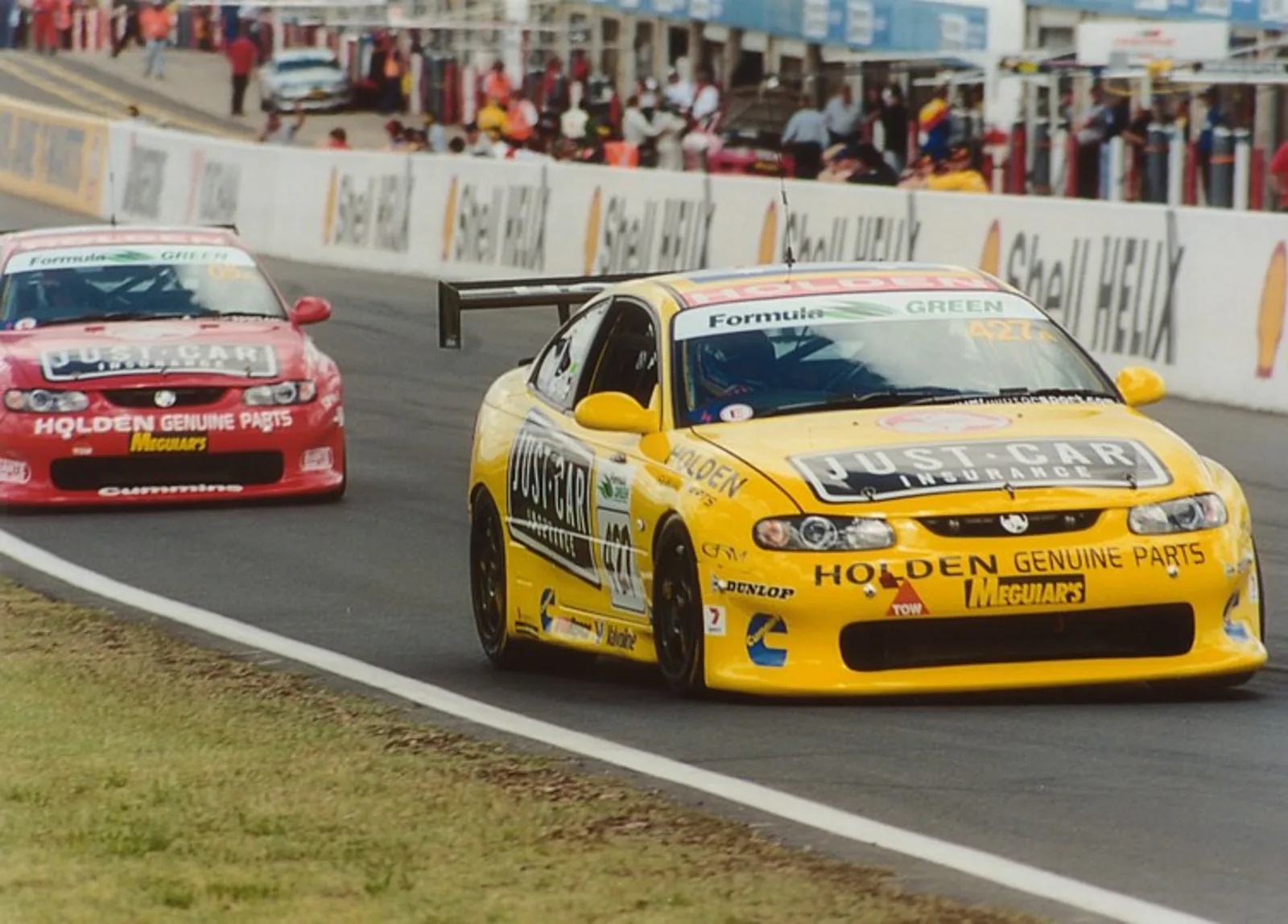
The first car was completed in mid-2002. Garth Tander gave it a shakedown at Calder Park Raceway, and Holden Motorsport then bought track time at the 2002 Bob Jane T-Marts 1000 at Bathurst to promote the 24-hour race. The yellow car, nicknamed the Nuclear Banana, first ran with Tander's number 34 before it appeared as 427.
Testing was limited. The team completed a few sessions at Winton with three of its four nominated drivers, and Cameron McConville was not brought into the team until about a week before the race. He qualified the car second on the grid for his first laps in it.
Why was the 7.0-litre engine controversial?
The Monaro used a GRM-developed version of the 7.0-litre engine from the Chevrolet Corvette C5-R, while the road Monaro carried a 5.7-litre Gen III (LS1) V8. Procar gave Holden special permission to run the larger unit in order to compete with the Lamborghini and Viper entries, but other Nations Cup cars had to use production-based engines of the same capacity as their road versions.
The engines were actually developed from the upgraded LS6 block of the Chevrolet Corvette Z06, which remained a 5.7-litre unit. GRM still called them C5-R engines, because the internals used off-the-shelf C5-R racing parts to reach the full 7.0 litres. Engine builders Mike Excel and Jeff Maxwell assembled them, and Excel designed a special inlet manifold for the engine.
Many fans assumed the Monaros were running full Le Mans race engines, which gave them an unfair advantage in their eyes. Channel 7, which broadcast the Nations Cup and Bathurst 24 Hour, described the cars as having a Corvette-based engine, but it was never made clear that the units were Z06 derivatives.
The engine was also tied to a road car that never reached production. Holden announced the HRT 427 at the 2002 Sydney Motor Show, and many expected it to be the road version of the race car. It used a modified Monaro bodyshell and a 580 hp (433 kW) 7.0-litre engine developed by John Sidney Racing, but the business case collapsed because Holden could not build the car in the numbers needed to support its A$215,000 asking price. Only two road cars and four racing versions were ever built.
How did the Monaro perform at the 2002 Bathurst 24 Hour?
The 427 won its debut, the 2002 Bathurst 24 Hour, by 24 laps. Garth Tander started the race and took the lead almost from the start, and the car then overcame a flat tyre, a fuel cell replacement and a gearbox jam before retaking the lead for good.
Holden had expected a rev limit of 6,700 rpm, the figure generally used for the Le Mans Corvettes. Procar set the Monaros to 5,700 rpm instead, and the drop in power, combined with a weight of around 1,400 kg, was blamed for the cars failing to match V8 Supercar lap times at Mount Panorama. Nathan Pretty later explained that the 7.0-litre engines did not make their full power until well above 6,000 rpm, so the drivers never exploited it.
The race was a long struggle. An early flat tyre dropped the car to second behind the Cirtek Porsche 996 GT3 RS of David Brabham, and a fuel cell replacement later put it 13 laps behind. Pretty was then hit by the BMW 318i of Debbie Chapman in The Chase, and the gearbox jammed before sunrise. Pretty had to rock the car free, a task made harder by its weight and sequential transmission.
By the 18-hour mark the Monaro had climbed back to second, three laps behind the Porsche. The Porsche then broke a half-shaft, and both cars pitted together, but the GRM crew won that pit race and the Monaro returned to the lead with just over four hours to run. When Allan Grice hit the wall while chasing the Mosler MT900R, the Porsche's rear suspension was broken and it fell out of contention.
The Monaro led for the final four hours and won by 24 laps from the Mosler of Martin Short. Tander's fastest race lap, 2:14.3267, was quicker than Brad Jones' pole time of 2:15.0742, and it remains the Nations Cup class record lap at Mount Panorama.
Who drove the winning Monaro?
The 2002 winner was driven by Tander, Steven Richards, Nathan Pretty and Cameron McConville. Before the race the Monaro was seen as too new to win or even finish, and only a handful of the entrants were considered genuine chances for outright honours.
Veteran driver and twice Bathurst 1000 winner Allan Grice pointed out that the Monaro shared a lot of parts with V8 Supercars, which had over ten years of proven Bathurst history. Jim Richards, father of driver Steven Richards, called it a better V8 Supercar.
| Year | Result | Drivers | Notable detail |
|---|---|---|---|
| 2002 | Winner, by 24 laps | Garth Tander, Steven Richards, Nathan Pretty, Cameron McConville | Fastest race lap 2:14.3267 by Tander |
| 2003 | Winner (Brock Monaro) | Jason Bright, Todd Kelly, Greg Murphy | Margin of 0.3505 seconds over the 2002 winner |
What happened at the 2003 Bathurst 24 Hour?
The 2003 Brock Monaro won the Bathurst 24 Hour with Jason Bright, Todd Kelly and Greg Murphy sharing the driving. The 2002 winner finished second, only 0.3505 seconds behind after 527 laps, and the team's own pair of Monaros controlled much of the race.
The field was stronger than in 2002. It included the Stokell Lamborghini, a new 5.0 L BMW M3 GTR for John Bowe, a Ferrari 360 N-GT led by David Brabham, the Mosler MT900R that had finished second the year before, and many Porsche 911s. Tander took pole at 2:13.2856, the fastest Monaro time ever around the Mountain, and he was 2.7 seconds quicker than Murphy in the other car.
Rain stopped the 46-car field on the pit straight for almost 10 minutes, and lightning forced the television camera operators off their scaffolds. Stokell's Lamborghini had the early speed but suffered punctures and finished 40 laps down in eighth. With seven minutes left, team boss Garry Rogers allowed his two Monaro drivers to race for the win, and Tander closed on Murphy and set the race's fastest lap of 2:14.489 with three laps to go.
Tander's late attack was blocked by a BMW parked just before the start-finish line, and yellow flags on the final lap kept him behind. He finished second, while Murphy, who had set his own fastest lap at 2:14.499, took the win.
The 2003 race showed how far the team had come since its debut. The Monaros controlled the race in both wet and dry conditions, and the two cars ran nose to tail as they approached the finish.
Did the Monaro dominate the Nations Cup?
Not in the way many had expected. Nathan Pretty won several races, including two at Winton, but the tight Australian circuits suited the Italian sports cars, and the Lamborghini and Ferrari entries took most of the wins over the two seasons the Monaros competed.
Procar then enforced 30mm FIA-approved air restrictors on the Monaros, as it had done for other rivals in the name of parity. Their power fell from an alleged 700 hp (522 kW) to around 600 hp (447 kW), while torque held at about 780 N m (580 lb-ft). Brock's second car, painted red and initially without the team's usual sponsor, took his first Nations Cup round win only at Surfers Paradise.
In 2003 GRM built a second car for Peter Brock. It raced in Brock's famous number 05 at the Australian Grand Prix support races in Melbourne, where it won all four races. Brock later admitted he would not have won those races had Stokell not struck trouble in each one. Pretty and Brock finished third and fourth in the 2003 championship.
How did the Monaro era end?
For 2004 Team Brock ran Peter and James Brock alongside Pretty's GRM car, while Mark Coffey Racing bought an ex-Team Rafanelli Ferrari 550 Millenio with a V12 making about 600 bhp. Pretty finished second in the championship behind Stokell, James Brock fourth and Peter Brock sixth.
The GRM Monaros won both the first and last races they contested. James Brock took the final race of the 2004 Nations Cup at Mallala, but Ross Palmer could no longer fund the series, and Procar disbanded after failing to find a major sponsor. The 2005 Australian GT Championship then ruled out the 7.0-litre Monaros, because no road-going 7.0-litre Monaro existed.
Where are the Monaro 427Cs today?
The 2002 Bathurst-winning Monaro is displayed at the National Motor Racing Museum, which sits outside Murray's Corner at Mount Panorama. The 2003 winner is owned by a historic racing enthusiast, and the third Monaro, driven by James Brock, was placed under auction in February 2020.
The car's appearances have continued. Greg Murphy drove the 2003 winning No. 05 Monaro at the 2025 Goodwood Festival of Speed, long after the series that created it had gone.