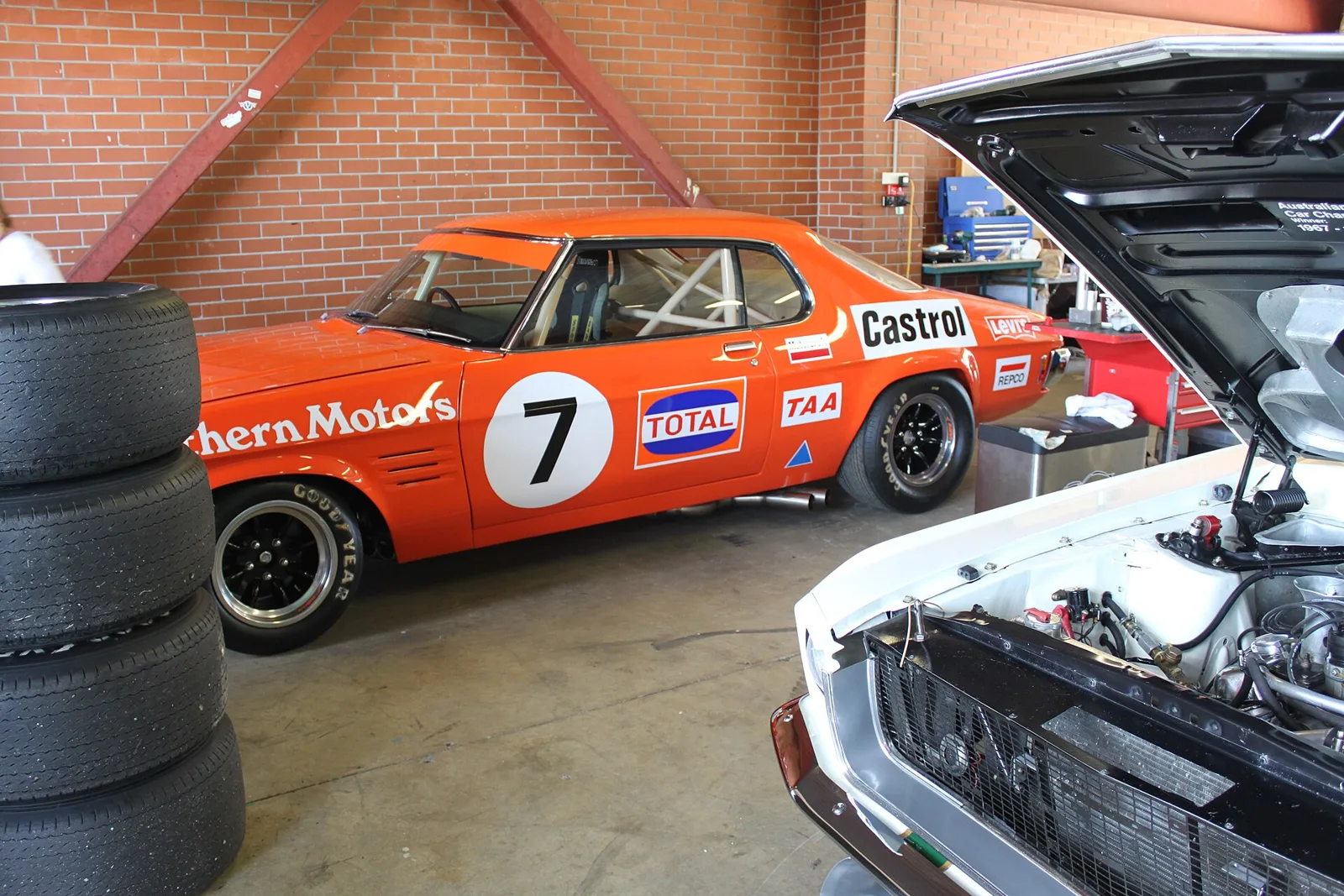
The Melbourne bicycle champion who won Australia's great endurance race four times, promoted the Australian Grand Prix and built the Thunderdome at Calder Park.
Bob Jane took four Armstrong 500 wins and four Australian Touring Car titles, while also building the Thunderdome at Calder Park. That oval hosted NASCAR in Australia in 1988, and his T-Marts chain grew into a national tyre business. He died in September 2018.
Bob Jane was an Australian race driver and businessman, born on 18 December 1929, who died on 28 September 2018. He won the Armstrong 500 four times and claimed four Australian Touring Car championships, and he founded the Bob Jane T-Marts tyre chain. He was inducted into the V8 Supercars Hall of Fame in 2000.
Beyond his own driving, Jane is remembered for bringing stock car racing to Australia and for running the Grand Prix at Calder between 1980 and 1984. He also died from prostate cancer in 2018, 21 years after his diagnosis.
Who was Bob Jane before he raced?
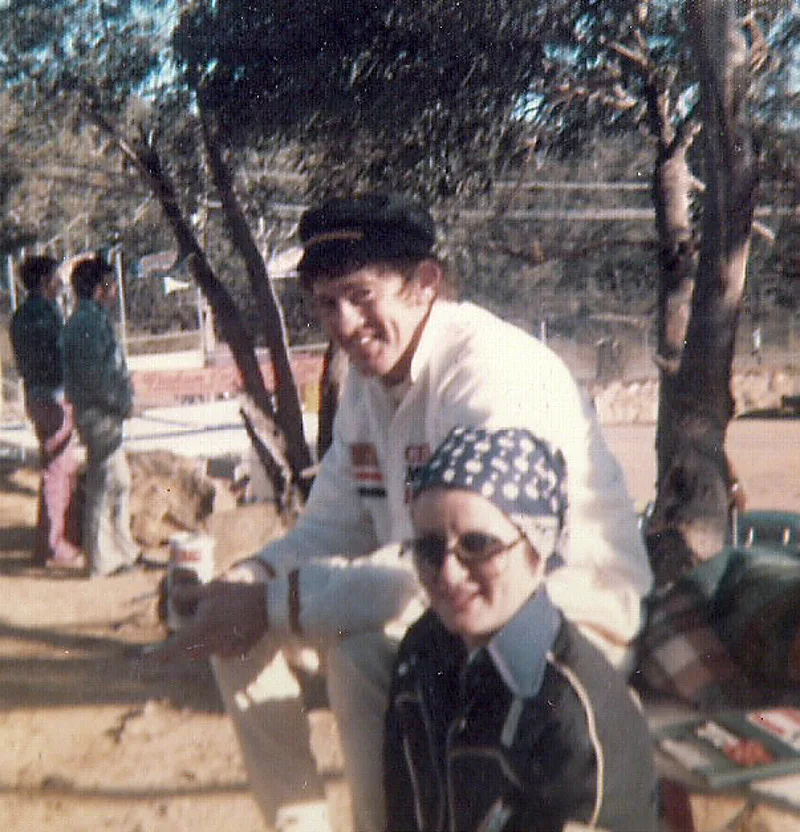
Jane grew up in Brunswick, an inner-city suburb of Melbourne. In the early 1950s he was a champion bicycle rider and held many state records before he turned to four wheels. The later 1950s brought Bob Jane Autoland, a parts distributor for Jaguar and Alfa Romeo, and that venture deepened his love of cars and motorsport.
He first entered competitive racing in Australia in 1956, and by 1960 he was racing with some of the country's top sedan drivers.
A Melbourne bicycle champion who won the Armstrong 500 four times, then built a NASCAR-style oval on the outskirts of the city.
How did Jane win the Armstrong 500 four times?
Jane won the Armstrong 500 at Phillip Island in 1961 with Harry Firth, driving a Mercedes-Benz 220SE. He and Firth won again in 1962 in a Ford Falcon XL, the last race held at Phillip Island. The event then moved to Mount Panorama at Bathurst, where Jane won in 1963 with Firth and again in 1964 with George Reynolds.
Although the race changed venue, the record credits Jane with four consecutive wins. No other driver has managed that run, not even Peter Brock, who won the race nine times. The Armstrong 500 became the Bathurst 1000 in later years, and Jane's four wins remain part of its early history.
What were Jane's Australian Touring Car championship years?
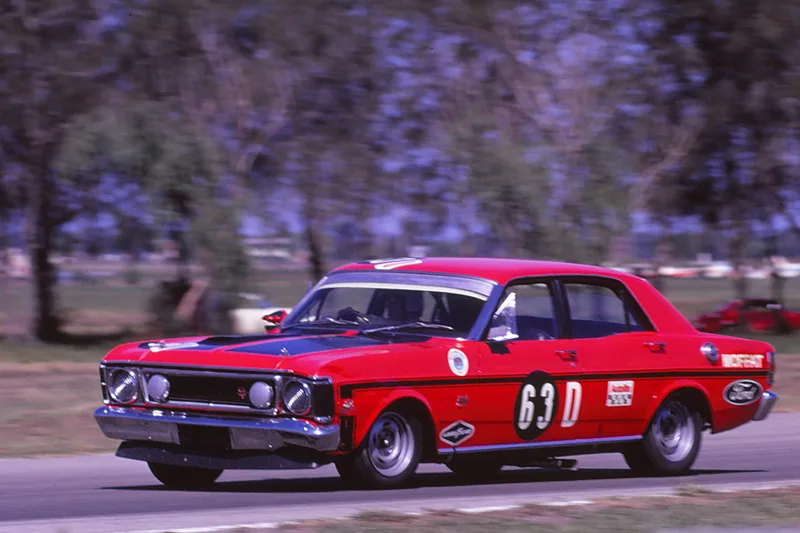
Jane took four Australian Touring Car titles, in 1962, 1963, 1971 and 1972, in the series now known as V8 Supercars. The 1971 win came in a Chevrolet Camaro ZL-1 fitted with a 427 cubic inch engine. A rule change forced a 350 cubic inch engine for 1972, yet the Camaro still prevailed against a field that included Allan Moffat in a Ford Boss 302 Mustang, Ian Geoghegan in a Ford XY Falcon GTHO Phase III and Norm Beechey in a Holden HT Monaro GTS350.
Across 38 ATCC starts he finished on the podium 21 times. He also won the 1963 Australian GT Championship in a Jaguar E-type, which broadened his record beyond touring cars.
At his own Calder Park Raceway he won the Marlboro Sports Sedan Series in 1974 and again in 1975, driving a Holden Monaro GTS 350. He sometimes drove his Repco V8 powered Holden LJ Torana GTR XU-1 as well, which John Harvey usually handled.
Jane retired from competitive racing at the end of 1981 because of sciatica. His final car was a 6.0 litre Chevrolet Monza, which he ran in the Australian Sports Sedan Championship. Afterwards Jane asked Peter Brock to race the Monza in the revived Australian GT Championship, and Brock did so in 1982 and 1983. Jane sold the car in 1984 to Allan Browne, the owner of Re-Car.
How did Jane shape the Australian Grand Prix?
From 1980 to 1984 Jane promoted and staged the Australian Grand Prix at Calder Park Raceway, hoping the circuit would be granted a round of the Formula One World Championship. Calder was only 1.6 km long, and the faster cars lapped it in less than 40 seconds, which made the plan ambitious at best.
The 1980 race was won by Alan Jones in his Williams FW07B-Ford, with Bruno Giacomelli second in an Alfa Romeo 179 and Didier Pironi third in an Elfin MR8 Formula 5000 car. From 1981 to 1984 the race ran under Formula Mondial regulations, and each winner drove a Ralt RT4-Ford. Jane attracted many of the era's best Formula One drivers to these events. Geoff Brabham, who finished third in 1981, was the eldest son of Sir Jack Brabham, who was then building a career in the United States.
The 1981 race was won by future Formula One driver Roberto Moreno from Brazil, with Nelson Piquet second and Geoff Brabham third. That field was the first at Sandown since 1968 with two or more current or former world champions on the grid. In 1982 Alain Prost won from Jacques Laffite and Moreno, and Prost later won the 1986 race in Adelaide, the only driver to win the event in both its world championship and domestic formats.
Moreno won again in 1983, beating John Smith and Laffite, and the race was the last one held as a round of the Australian Drivers' Championship. That year the race drew 24 entries, mostly Ford-powered RT4s, and Alfredo Costanzo led the first quarter in his Tiga before a differential failure on lap 26. In 1984 Moreno took his third Australian Grand Prix in four years, ahead of Keke Rosberg, with Niki Lauda among the entrants. Rosberg recovered from a poor start and a collision to finish second, while Andrea de Cesaris, who had started from the pit lane, climbed to third. From 1985 the race moved to the streets of Adelaide and became the 16th and final round of the Formula One season.
What was the Thunderdome, and why did NASCAR race in Australia?
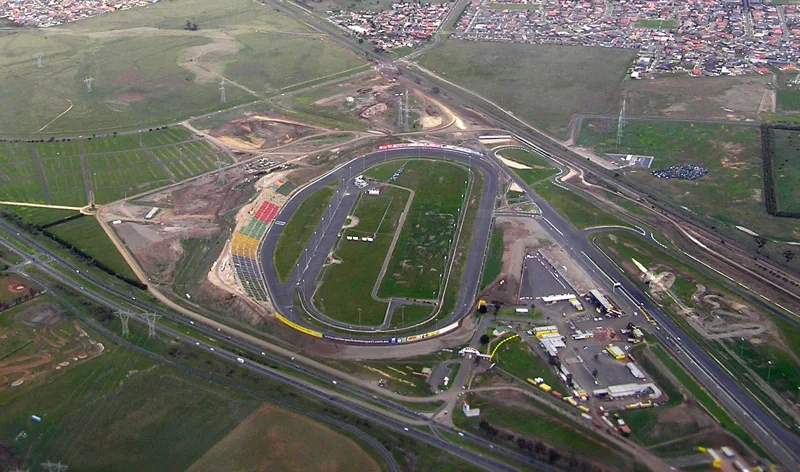
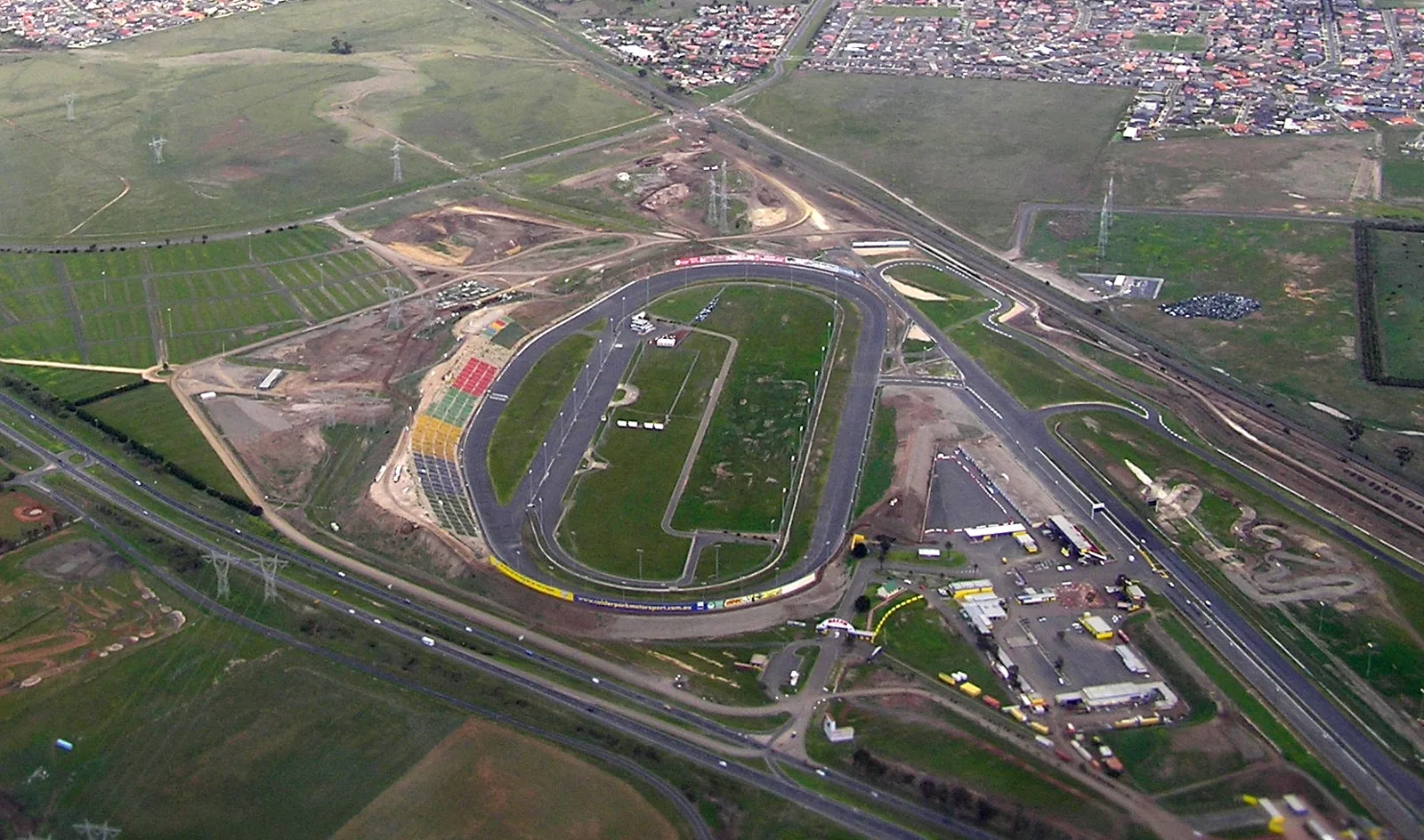
Jane spent A$54 million building the Thunderdome at Calder Park Raceway. The 1.801 km (1.119 mi) quad-oval, with 24 degree banking in the turns, was modelled on Charlotte Motor Speedway and opened on 3 August 1987. It hosted the first NASCAR event held outside North America on 28 February 1988, the Goodyear NASCAR 500.
That race drew several prominent American drivers, including Neil Bonnett and Bobby Allison from the Alabama Gang, along with Kyle Petty, Michael Waltrip and Dave Marcis. Bonnett had won the Pontiac Excitement 400 at Richmond the previous weekend, and Allison had won the 1988 Daytona 500 a week earlier. Bonnett won the 280-lap race from Allison, with Marcis third. The cabin temperatures were reported to reach over 57 degrees Celsius (135 degrees Fahrenheit) on a hot summer afternoon.
An early pile-up in turns 3 and 4 caught eight cars, among them the Ford Thunderbird of touring car champion Dick Johnson. Allan Grice, whose Oldsmobile ran out of brakes, broke his collarbone and was sent to hospital for checks.
Jane also owned Adelaide International Raceway, which featured a half-mile oval known as the Speedway Super Bowl. In 1992 he and speedway promoter Mike Raymond announced plans to turn the old harness track around Parramatta Speedway into a paved oval for NASCAR and the AUSCAR category. The project never got past the planning stage.
What did Jane build in business?
Jane opened the first Bob Jane T-Marts store in Melbourne in 1965. The company remains an independent, family-owned business, and his son Rodney Jane is its chief executive. From 1984 to 1997 Jane ran a cross-shareholding partnership with Ian Diffen, with Jane operating in Queensland and Diffen in Western Australia.
Between 2002 and 2004 the company sponsored the Bathurst 1000 by name, a race Jane had dominated early on. The business also once put its name on the former Bob Jane Stadium, the home of South Melbourne FC. T-Marts is the only major tyre retailer in Australia that does not sell retreads.
Jane later tried to start a new tyre business under his own name. The attempt was blocked in court, which also ordered him to pay costs. He declared bankruptcy on 8 July 2016.
What are the key results of Jane's career?
Jane's record spans touring cars, sports cars, Formula One promotion and oval racing. The table below sets out the main results and the milestones that shaped his career.
| Achievement | Year or period | Detail |
|---|---|---|
| Armstrong 500 wins | 1961 to 1964 | Four, credited as consecutive wins |
| Australian Touring Car titles | 1962, 1963, 1971, 1972 | Four championships, including the 1971 Camaro title |
| Australian GT Championship | 1963 | Won in a Jaguar E-type |
| Marlboro Sports Sedan Series | 1974 and 1975 | Won at Calder Park in a Holden Monaro GTS 350 |
| Australian Grand Prix promotion | 1980 to 1984 | Calder Park, then Formula Mondial rules |
| Thunderdome | 1987 | Opened 3 August 1987, built for A$54 million |