From a dirt road at Phillip Island to Senna's last McLaren win in Adelaide and a lakeside Melbourne circuit contracted until at least 2035.
The Australian Grand Prix began at Phillip Island in 1928 and has used 23 venues. Adelaide hosted Formula One from 1985 to 1995, then Melbourne won the race. Since 1996 it has run at Albert Park, under a contract that lasts at least until 2035.
The Australian Grand Prix has used 23 different venues since 1928. The one that took it from Adelaide in 1996 has held on ever since, and its contract now runs to at least 2035. How a street race built in one city's parklands ended up in another's lakeside park is a story of politics, a run of famous seasons and a park whose neighbours still have mixed feelings.
Australian Grand Prix history: from a farm road to 23 venues
An event called the Australian Grand Prix ran on the grass of Goulburn Racecourse in 1927, as a series of sprints, but the race is generally dated from 1928, when the 100 Miles Road Race took place on the dirt roads of Phillip Island. Arthur Waite won in a modified Austin 7 that was effectively factory-supported. Bugattis then won four years running, 1929 to 1932, and Phillip Island held its final race in 1935. The title lay dormant for three years until it was revived in 1938 for the opening of Mount Panorama near Bathurst. Peter Whitehead won that one in an ERA B-Type, a voiturette too fast for the local machinery.
After the war the race toured the states, run at converted airfields and street circuits. In 1952 Doug Whiteford pointed to the future by winning at Mount Panorama in an imported Talbot-Lago Formula One car. The following year the cars raced for the first time round Albert Park Lake in Melbourne, and Whiteford took his third and last Grand Prix there. In 1955 Jack Brabham won at the short Port Wakefield circuit in a Bristol-powered Cooper T40, the first rear-engined car to win the race. In 1956, the year Melbourne held the Summer Olympics, Stirling Moss and the factory Maserati team came to Albert Park, and Moss won from his teammate Jean Behra.
Twenty-three venues have hosted the Australian Grand Prix, and Melbourne has kept it since 1996.
The Tasman years and the road to Adelaide
That 1956 meeting inspired the next great era. Brabham, and a few years later Bruce McLaren, brought Cooper and Lotus chassis to Australasia and killed off the local specials. In the summer of 1962 the BRM team toured Australia, and the Tasman Series grew from it. Between 1963 and 1969 the top European teams spent their winters racing in Australia and New Zealand. World champions who made the trip included Rindt, Graham Hill, Stewart, Phil Hill, Surtees and Clark. Brabham took three Grands Prix in those years, with McLaren and Clark winning two each, Clark's second a closely fought 1968 win over Chris Amon at Sandown. Amon won the final Tasman race in 1969 at Lakeside, leading Ferrari teammate Derek Bell home.
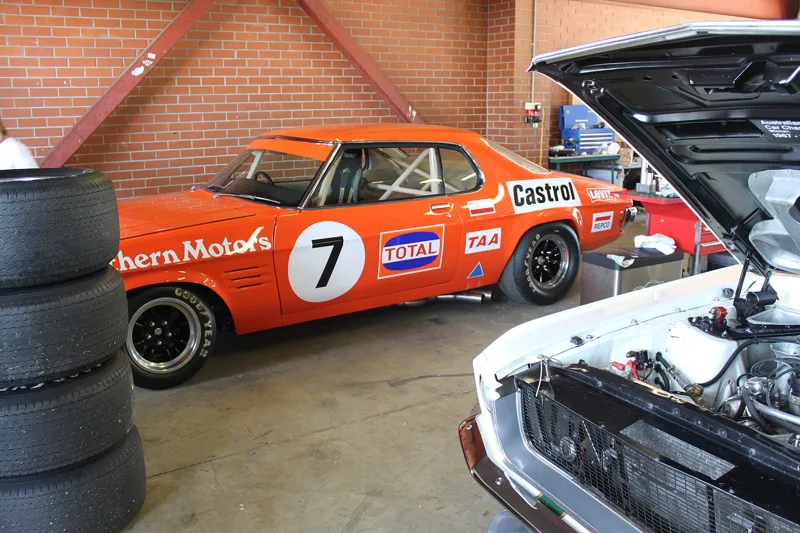
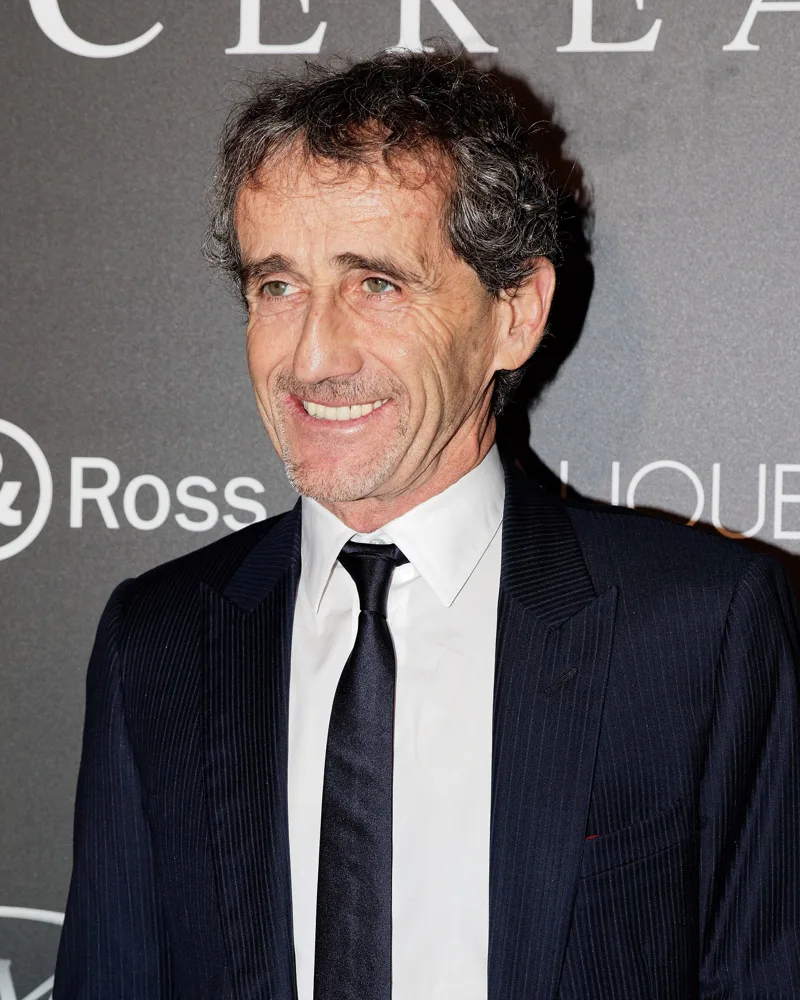
Formula 5000 took over in the 1970s, and by 1976 the Australian Grand Prix had become a stand-alone race again. That year the touring car driver John Goss became the only man to win both the Grand Prix and the Bathurst 1000. In 1980, with Alan Jones then the world champion, the entrepreneur Bob Jane took the race to his Calder Park Raceway as a Formula One event. Jones won in his Williams-Ford, but only two Formula One cars started. Jane then turned to Formula Pacific, later Formula Mondial, and Roberto Moreno won three of the next four races, the exception being a victory for Alain Prost in 1982. Jane's efforts to win a World Championship round failed.
Adelaide Grand Prix history: eleven races and a street circuit that made its name
A far more attractive option arrived. Adelaide was awarded a round of the 1985 World Championship in October 1984, and Macmahon Holdings built the 3.78 km (2.349 mi) street circuit in the East Parklands next to the city centre. The first race, which doubled as the 50th Australian Grand Prix, was the last of the season. Ayrton Senna put his Lotus-Renault on pole with 1:19.843, and the race became a duel between Senna and Keke Rosberg, in what was his farewell drive for Williams-Honda.
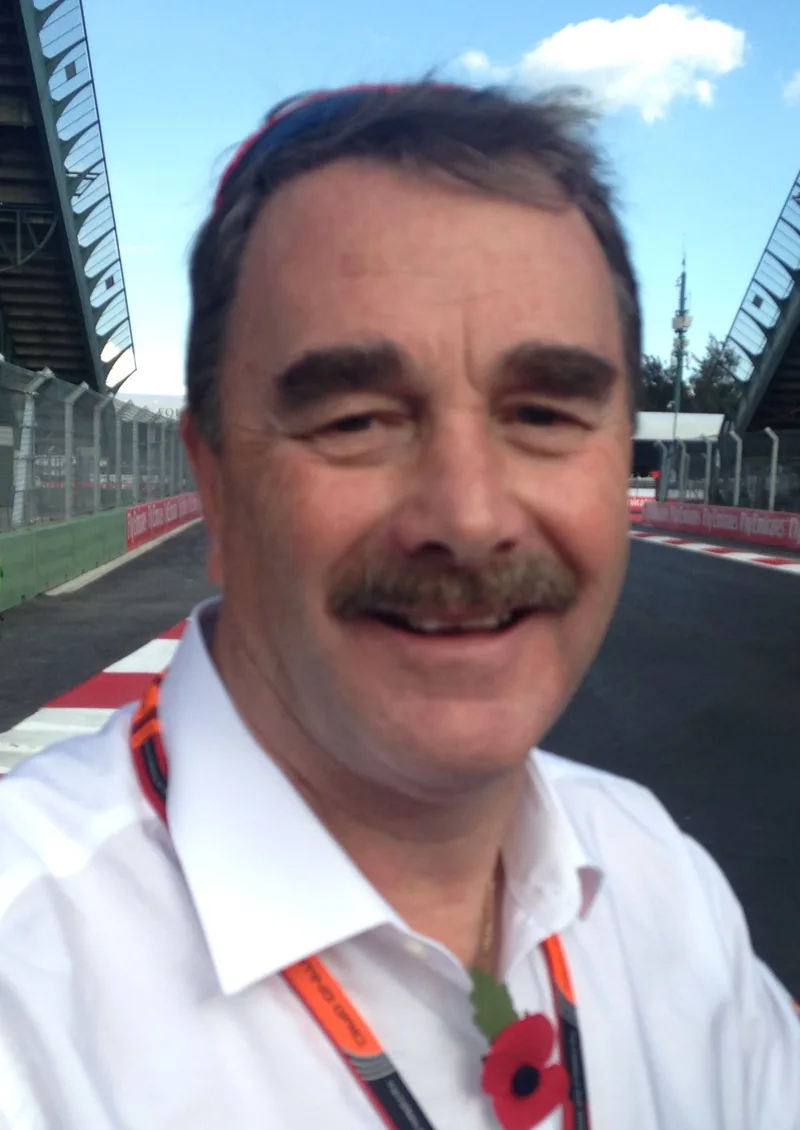
The 1986 race settled a three-way title fight between Nigel Mansell, Nelson Piquet and Alain Prost. A year later Gerhard Berger won in a Ferrari, and Senna, who had finished second, was thrown out for technical irregularities in what turned out to be his final Lotus start, which promoted Michele Alboreto and made it a Ferrari one-two.
In 1988, the last turbo-era Grand Prix, Prost took his seventh win of the year, ahead of McLaren teammate Senna, the new champion. McLaren-Honda finished the year with 15 wins and 15 poles in 16 races, a dominance said never to have been seen before or since. The 1990 race was the 500th World Championship Grand Prix. In 1991 wet conditions made the race tricky, and Senna's victory with Berger third gave McLaren its fourth straight Constructors' Championship. Berger won in 1992 as Mansell took the title.
The emotional peak came in 1993. Senna won what proved to be his 41st and final victory, in his last race for McLaren, ahead of Prost, who was also contesting his final race in a Williams. On the podium Senna embraced his once bitter rival. In 1994 Mansell, 41 years old, won for Williams and became the oldest winner since Brabham in 1970. The last Formula One race at Adelaide in 1995 went to Damon Hill, who finished two laps ahead of Olivier Panis after most of his rivals retired.
The circuit left its mark. The Dequetteville Terrace straight ran for 900 m, and during the turbo era cars of over 1,000 bhp (746 kW) exceeded 200 mph (320 km/h) there, which made Adelaide the fastest street circuit of its time. A chicane carries Senna's name after the crash that killed him at the 1994 San Marino Grand Prix, and Rundle Road was named after Alan Jones in 1987. Senna's 1:13.371 in qualifying for the 1993 race is the quickest lap of the original layout, though it does not count as a lap record because it was set in qualifying.
How Melbourne won the Australian Grand Prix
Melbourne businessman Ron Walker teamed up with the Kennett government in 1993 in a bid to land the race. It was announced around the time of that year's Adelaide round that the Australian Grand Prix would move for 1996. After the 1995 race, Adelaide lost the rights and the event relocated to Albert Park.
Albert Park had a racing history of its own. Attempts to stage races there before the war failed in 1934 and 1937. The Light Car Club of Australia finally got the park in 1953, and a 5.029 km (3.125 mi) course hosted six race meetings through to November 1958, after which it closed. That layout ran anti-clockwise, whereas the current one runs clockwise, and Albert Park remains the only venue to have hosted the Grand Prix both as a World Championship round and outside the championship.
Albert Park Circuit: a street track that drives like a race track
The Albert Park Circuit uses ordinary roads around a small, man-altered lake just south of Melbourne's central business district. The FIA gives it a Grade 1 licence. Because the roads were rebuilt before the first race in 1996, the surface is unusually smooth for a public-road track. Each sector has the medium to high-speed feel of a purpose-built circuit, with grass and gravel run-off areas rebuilt every year, but concrete barriers go up on the Lakeside Drive curve, where the lake shore leaves no room.
Drivers describe the circuit as fast and relatively easy to learn, because corners are consistently placed. The flat ground and the shortage of true straights make overtaking hard, and the spectating poor unless you have a grandstand seat.
The event takes over a public park. Fences, pedestrian overpasses and grandstands go up about three months before the race and come down within nine weeks of it, and access to the aquatic centre, golf course, stadium and rowing boathouses is restricted for the whole period. Some nearby residents and facility users still protest quietly, and South Melbourne FC lost its home ground, Middle Park Stadium, to demolition in 1994 because of expansion at Albert Park. The event is nonetheless reasonably popular in the city.
For the other nine months, ordinary registered vehicles can use most of the track in either direction, under a general speed limit of 40 km/h (25 mph). Black swans breed in the park and frequently halt traffic, sometimes with up to six cygnets in tow. Roughly 80% of the circuit's edge has low chain-link fence beside it, which leaves everyday drivers less room for error than Formula One drivers get on race weekend.
Crowds, the pandemic and the return to the front
The Grand Prix regularly draws crowds of more than 270,000, and the 2024 event set a record of 452,055, including 132,106 on race day. There has never been a night race, although in 2009 and 2010 the start time was 5:00 p.m.
The race was cancelled in 2020 and 2021 because of the COVID-19 pandemic, and the break was used to rebuild part of the track. The pit lane was widened, turns 1, 3, 6 and 15 were widened, turn 13 was altered significantly, and turns 9 and 10 were removed, all to improve safety and create more overtaking chances by lengthening the high-speed section. The race returned in 2022 as the third round, after Bahrain and Saudi Arabia. In 2025 it went back to the opening slot of the season. The fastest pole lap at Albert Park is 1:15.096, set by Lando Norris in a McLaren MCL39 in 2025.
| Feature | Adelaide Street Circuit | Albert Park Circuit |
|---|---|---|
| Formula One years | 1985 to 1995, eleven races | 1996 to 2019, then 2022 on |
| Setting | Temporary circuit in the East Parklands | Public roads round Albert Park Lake |
| Typical slot | Last race of the season | Opening round or early in the year |
| Best lap on record | 1:13.371, Senna, qualifying, 1993 | 1:15.096, Norris, pole lap, 2025 |
| Other racing | Adelaide 500 Supercars since 1999 | Formula 2, Formula 3, Supercars, Porsche Carrera Cup |
Where this goes next
The Australian Grand Prix is contracted to be held in Melbourne at least until 2035.
Adelaide's circuit is in line for a new role. The Australian Motorcycle Grand Prix is due to move from Phillip Island to a heavily modified version of the Adelaide layout in 2027. South Australia's Premier, Peter Malinauskas, announced the MotoGP plan on 19 February 2026 and said about 45 trees would be destroyed and the Glover East Playspace would have to be moved. The Adelaide Parklands Association argued that this significantly understated the impact. As of August 2026 residents and councillors, among them Lord Mayor Jane Lomax-Smith, had criticised the plan, saying up to 200 trees could be felled, and some suggested The Bend at Tailem Bend as an alternative. On 8 August Dorna Sports promised news of the approved layout within weeks.