From Enzo Ferrari's 1939 company to the 499P's 2023 Le Mans win, the Prancing Horse marque has built its name on racing and rarity.
Ferrari is an Italian luxury sports car manufacturer based in Maranello, founded by Enzo Ferrari in 1939. Its road cars are prized for rarity and exclusivity, and its Formula One team, Scuderia Ferrari, is among the most successful in the sport's history.
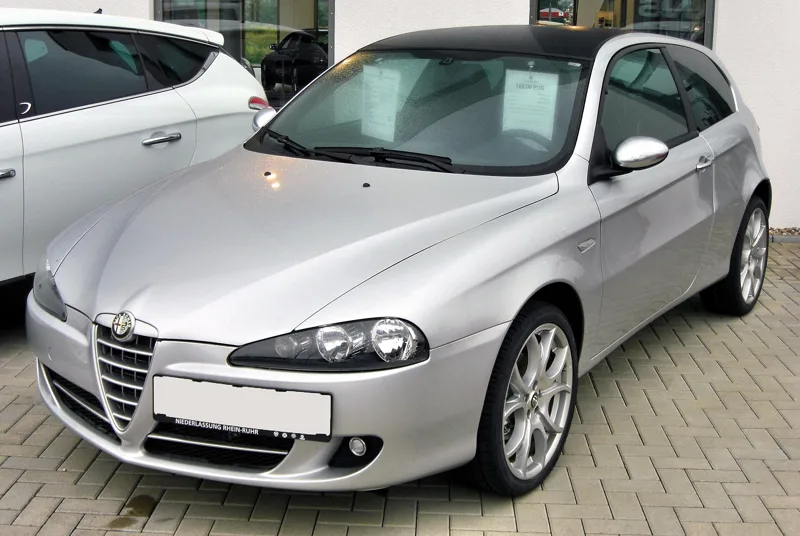
Ferrari is an Italian luxury sports car maker that has worked out of Maranello since the 1940s. Enzo Ferrari set the company up in 1939 after leaving Alfa Romeo, and it has since paired a long racing record with some of the most sought-after road cars ever built. Its works racing team, Scuderia Ferrari, has competed since 1929 and remains central to the brand.
When was Ferrari founded and how did it begin?
Enzo Ferrari had worked as a salesman and racing driver for Alfa Romeo before he founded the Scuderia Ferrari racing team in 1929. He left Alfa Romeo in 1939 after disputes with management, and that year he set up a new company. The company built its first car in 1940 and adopted the Ferrari name in 1945.
The wartime years kept the young firm busy. Ferrari built aircraft engines and machine tools, and in 1943, under threat of Allied bombing, the factory moved to Maranello, where the company is still based.
The road car business took shape from 1947, when the company began producing its current line. The 125 S was the marque's first car and carried a V12 engine. Only two 125 S cars were built, but its layout set the tone for the front-engined V12 road cars that followed.
A company that began with one racing team in 1929 now sells some of the most exclusive cars on earth.
How did Ferrari become a public company?
Ferrari became a public company in 1960 and later came under Fiat's control. Fiat bought 50% of Ferrari's shares in 1969, and Ferrari was a Fiat subsidiary from 1963 to 2014. The company was spun off from Fiat Chrysler Automobiles in 2016, which ended a long period of Fiat ownership.
The path to Fiat was not straightforward. Ford approached Ferrari about a buyout in 1963, but the talks collapsed. Ford then turned its racing effort toward building a car that could beat Ferrari at Le Mans, which became the Ford GT40.
Enzo kept a 10% share after the Fiat deal, so the family retained a stake even as control passed to the larger group. That arrangement shaped the company's governance for decades and remains part of its ownership story today.
Road cars from front-engined V12s to the mid-engine era
Early road cars were front-engined V12s with coachbuilt bodywork. The 1949 166 Inter was a four-seat grand touring coupe, and it marked the company's move into the grand touring market. Road cars soon became the bulk of Ferrari's sales.
The big change came with the 1967 Dino 206 GT, the first mass-produced mid-engined road car. The 1968 365 GTB/4 followed with streamlined styling that modernised the design language. The mid-engine layout has continued to the present day and now underpins many of the brand's sports cars.
The Dino name introduced mid-engined and smaller engine configurations in the 1970s. Later models included flat-12 and V8 Ferrari-branded road cars, which carried the mid-engine theme forward. Styling was brought in-house by Centro Stile Ferrari from the 2010s.
What is Ferrari's flagship supercar line?
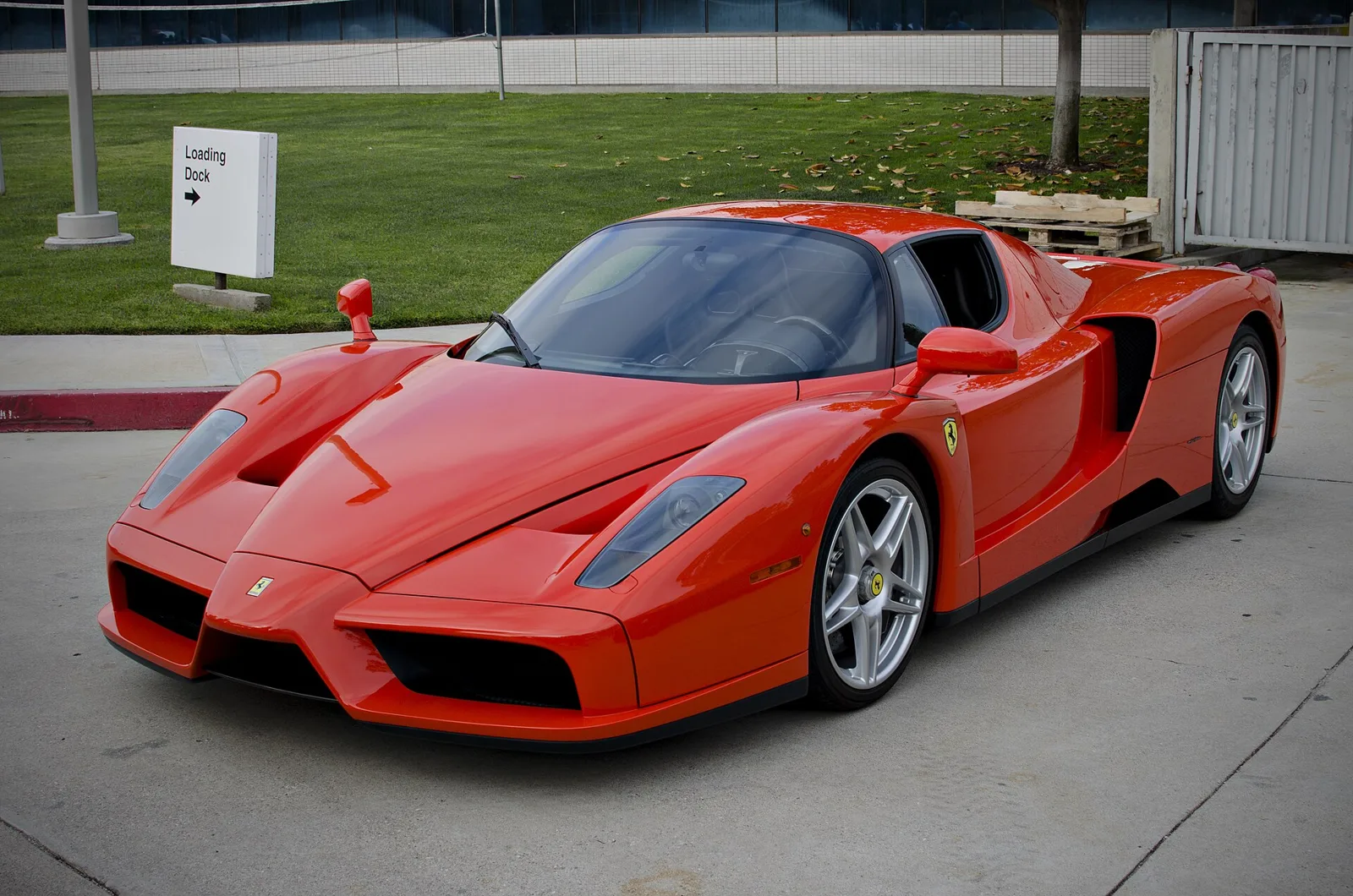
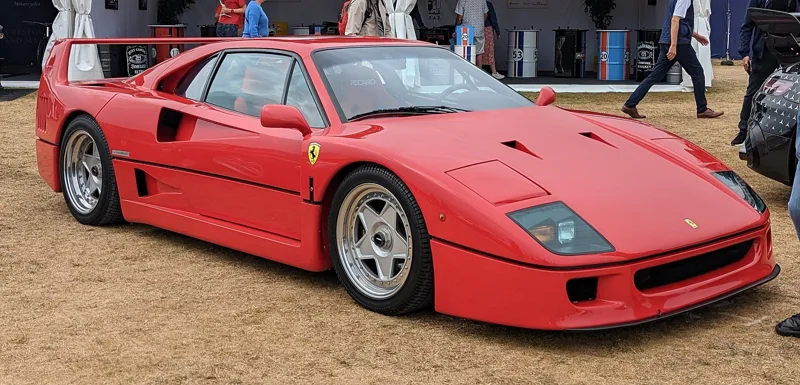
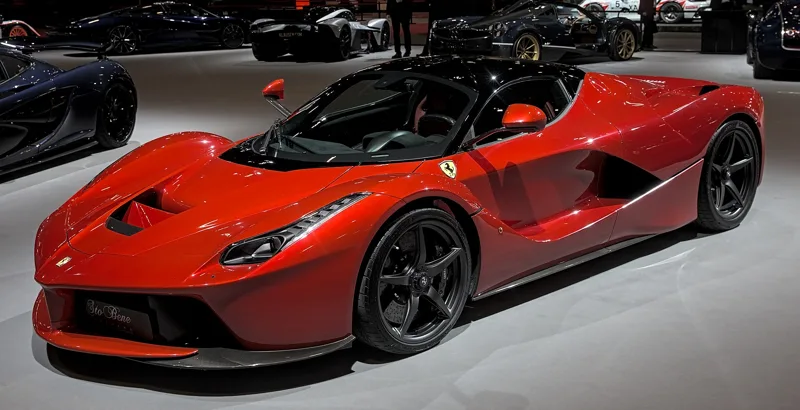
Ferrari's flagship supercar line is usually traced back to the 288 GTO, which many consider the first in the lineage. The line runs through the F40, F50, Enzo, LaFerrari and F80, with each car taking the brand's most extreme engineering to the next level. The F40 expanded on the approach of the 288 GTO.
The 1984 288 GTO started the series, and the later cars were built as limited, flagship models sitting above the regular range. The succession is one of the clearest threads through the company's road car history, and it keeps the brand's most expensive machines within a single family of models.
How did Ferrari move into hybrids and electric cars?
LaFerrari went into production with a hybrid system in mid-2014. The SF90 Stradale became the first series-production plug-in hybrid Ferrari in 2019, followed by the 296 in 2021. Ferrari has also said its first fully electric vehicle would be shown at its Capital Markets Day on 9 October 2025.
The first hybrid step came from a concept built around the 599 Fiorano. Its hybrid system added more than 100 horsepower to the car, showing that electrification could work alongside the company's high-output V8 and V12 engines.
Can customers personalise a Ferrari?
Yes. In the 1950s and 1960s every Ferrari could be built to an individual customer's specification, which added to the brand's mystique. The Tailor Made programme launched in late 2011 lets clients work with designers at every step, and the Special Projects programme from 2008 added coachbuilt one-offs.
The first car completed under the Special Projects programme was the 2008 SP1. Ferrari also keeps output deliberately below customer demand, which protects the exclusivity that the brand sells as much as its performance.
How has the Ferrari Driver Academy developed drivers?
The Ferrari Driver Academy began in 2009 as the team's junior programme, and it teaches the rules and history of formula racing while drivers compete. As of 2019, 5 of 18 Academy inductees had become Formula One drivers, while others moved into development roles or continued racing in lower-tier formulae.
One graduate went on to race for Scuderia Ferrari itself, while the other graduates signed with rival teams. The Academy therefore acts both as a pipeline for the works team and as a wider talent programme for the sport.
How successful has Scuderia Ferrari been in Formula One?
Scuderia Ferrari returned to Grand Prix racing in 1947 and won its first Formula One race at the 1951 British Grand Prix. Between 1952 and 1964 the team took six World Drivers' Championships. Since 1952 it has fielded fifteen champion drivers and won sixteen Constructors' Championships.
Before the car company existed, the Scuderia won 144 of its 225 races between 1929 and 1937. That early record shows how quickly the team built its reputation, long before the road cars arrived.
The team later added Constructors' Championships in 1982 and 1983, and Niki Lauda won drivers' titles in 1975 and 1977. Those results kept the marque in the headlines through the middle decades of the sport.
The 2000s brought the strongest run. Michael Schumacher won five consecutive drivers' titles from 2000 to 2004, and the team took six consecutive constructors' titles beginning in 1999. That era is the one most fans associate with the team's peak.
Which Le Mans results matter most to Ferrari?
Ferrari won the 1949 24 Hours of Le Mans, and the 499P took the 2023 race for the company's first overall win there in 58 years. The 499P repeated the result in 2024, the first consecutive Le Mans victory since 1965.
The 125 S won six of the ten sports car races it entered in 1947, giving Ferrari an early foothold in endurance racing. The team also won the 1951 Carrera Panamericana, another early highlight that helped build the reputation of the road cars.
Sports car racing, the Challenge series and the 499P
Ferrari stopped racing its own sports cars in 1973 and supplied cars to privateer teams instead. It returned to prototype racing in 2023 with the 499P. Its one-make Ferrari Challenge series, which has run since 1993, keeps customer racing close to the road car line.
In 2025 Ferrari secured the Manufacturers' and Drivers' titles in the World Endurance Championship. Customer teams also contribute, and the Frikadelli Racing 296 GT3 won the 2023 Nurburgring 24 Hours. Together those results show how far the brand's racing reach extends.
Motorcycles, the Tasman Series and other ventures
From 1932 to 1935 Ferrari ran a motorcycle division that offered a route to future Grand Prix drivers. The division won 44 overall victories before the economic troubles of the time ended it. The motorcycle work shows how broadly the early company looked for competitive advantage.
Ferrari also took part in non-F1 open-wheel series. Chris Amon won the 1969 Tasman Series in a Dino 246 Tasmania. The company supplied a V8 engine for the Powered by Ferrari car in A1 Grand Prix from 2008 to 2009.
How valuable are Ferrari road cars?
Many early Ferraris from the 1950s and 1960s rank among the most expensive cars ever sold at auction. Brand Finance named Ferrari the world's strongest brand in 2019. In company history Ferrari has built and sold 219,062 cars, to the end of 2019.
Value and scarcity go together at Ferrari. The company limits output and has built a reputation for exclusivity that keeps demand high for both new and classic cars, which is why its older models still command top prices.
Brand image, ownership rules and colour
The Wall Street Journal has tied the Ferrari brand to opulence and speed. The company protects that image closely, filing many lawsuits to defend its trademarks. Its bounty system rewards reports of counterfeit Ferrari products.
Ownership rules are strict. Terms of sale ban unauthorised resale in the first year of ownership, and Ferrari refuses pink paint under its brand rules. Owners are expected to respect those guidelines when they care for their cars.
Colour is part of the identity too. In 2012, 40% of Ferraris left the factory painted red, and in the early 1990s the figure was 85%. Red remains the most closely associated shade, even though customers now choose yellow, silver and white more often.
Corporate affairs, retail and museums
Shell has supplied fuel and oils to Ferrari since 1996. The company runs an internally managed merchandising line and a museum, the Museo Ferrari in Maranello, which displays road and race cars from its history.
Roughly thirty Ferrari boutiques operate worldwide, with two owned by Ferrari and the rest run as franchises. Ferrari World Abu Dhabi has 37 rides and attractions, while Ferrari Land has 16 rides and attractions in Catalonia.
Ferrari also began accepting cryptocurrency payment for its vehicles in the US in October 2023. The company's Formula Uomo programme, meanwhile, was a case study in social sustainability, aimed at corporate efficiency and employee wellbeing.
Ferrari recalls and what they covered
In January 2020 Ferrari recalled 982 vehicles for passenger airbags linked to the Takata inflator problem. In August 2022 it recalled 23,555 US cars over a brake fluid reservoir cap that might not vent pressure properly. Both recalls were handled through software updates or replacement parts.
Ferrari at a glance
The table below gathers the company's headline figures, from its founding and first car to its current leadership. It is a quick reference for the key dates, numbers and people that shape the brand.
| Specification | Detail |
|---|---|
| Founded | 1939 by Enzo Ferrari |
| Headquarters | Maranello, Italy |
| First car | 125 S, 1940, with a V12 engine |
| Name adopted | 1945 |
| Public company | 1960 |
| Market capitalisation | US$85.5 billion (May 2023) |
| Cars sold to end 2019 | 219,062 |
| World Drivers' Championships, 1952-1964 | 6 |
| Le Mans 2023 | First Ferrari win in 58 years, with the 499P |
| Chairman | John Elkann (2018-present) |
| CEO | Benedetto Vigna (2021-present) |
| Boutiques | Roughly thirty worldwide, two owned by Ferrari |
Frequently asked questions
Who founded Ferrari?
Enzo Ferrari founded the company in 1939, after leaving Alfa Romeo. He had already launched the Scuderia Ferrari racing team in 1929.
How many cars has Ferrari sold?
Ferrari has built and sold 219,062 cars in its company history to the end of 2019. Its market capitalisation was about US$85.5 billion as of May 2023.
Which was the first Ferrari hybrid?
LaFerrari was an early Ferrari hybrid, entering production in mid-2014. The SF90 Stradale, which arrived in 2019, was the brand's first plug-in hybrid for production, and the 296 followed in 2021.
Did Ferrari win at Le Mans in 2023?
Yes. The 499P won the 2023 24 Hours of Le Mans, the first Ferrari win there in 58 years, and repeated the result in 2024.
Where can visitors learn about Ferrari history?
The Museo Ferrari in Maranello displays road and race cars and other items from the company's history. Roughly thirty Ferrari boutiques also operate worldwide, with two owned by Ferrari.
.jpg)