A Tasmanian Ford driver who built a Bathurst win on a Shell-backed Falcon, then took a Jaguar to a second Great Race victory.
John Goss is a retired Australian racing driver who won the Bathurst 1000 in 1974 and 1985 and the Australian Grand Prix in 1976. He is the only driver to win both races, and he received the Medal of the Order of Australia in 2018 for services to motorsport.
John Goss OAM, a retired Australian driver, raced at home from the 1960s to the mid-1980s. He stands alone as a driver who has won both the Bathurst 1000 and the Australian Grand Prix, taking the Bathurst race in 1974 and 1985 and the Grand Prix in 1976. In 2018 he was recognised with the Order of Australia medal, honouring his motorsport service.
Who is John Goss?
John Goss was born on 2 May 1943 in Glen Iris, Victoria, and moved to Tasmania as a child. He started in Holden FJs and Ford Customlines before building the Tornado, a sports car that took him to the mainland with some success.
The Tornado scored in national sports car rounds in 1969 and 1970. From 1969 Goss also drove GTHOs in production car events, and Ford remained his manufacturer of choice for most of his career.
The only driver to win Bathurst and the Australian Grand Prix, from a Shell-backed Falcon to a Jaguar that refused to quit.
How did Goss start in touring cars?
Goss made his Bathurst debut in 1969 in a McLeod Ford Falcon GTHO, but his co-driver Dennis Cribbin crashed the car at Forrest's Elbow. In 1970 Goss set the fastest lap of the Bathurst 500 in an XW Falcon GTHO Phase II.
Goss then took two rounds of the Toby Lee Series at Oran Park. In 1972 he took the South Pacific Touring Series and the Sandown 250 endurance race, a season that was the last under Series Production rules. He also qualified an XY Falcon GTHO second at the Hardie-Ferodo 500, before engine failure after 24 wet laps ended his race.
What changed with Group C?
Series Production gave way to Group C in 1973, a class that allowed far more modification. Goss was first out in the new Ford XA GT Hardtop. He took Shell sponsorship and continued his link with the McLeod Ford dealership in Rockdale.
Ford Australia supplied purpose-built XA racing chassis. Goss raced the hardtop in the 1973 ATCC before the works team, which initially ran a modified Phase III GTHO, moved to the hardtop for the later endurance races.
How did Goss win Bathurst in 1974?
Goss and Kevin Bartlett had qualified their 1973 Falcon on pole, at 2:33.4, which was Goss's only Bathurst pole. A crash at The Cutting damaged the front end, and radiator damage forced the car out on lap 110 of 163. Before 1973 the race covered 500 miles, or 130 laps.
The pair returned in 1974 in the same Falcon, repainted blue once Shell sponsorship ended. Driving rain marked the race, which was only the second wet running of Bathurst, and reliability carried them to victory in 7 hours, 51 minutes and 43 seconds.
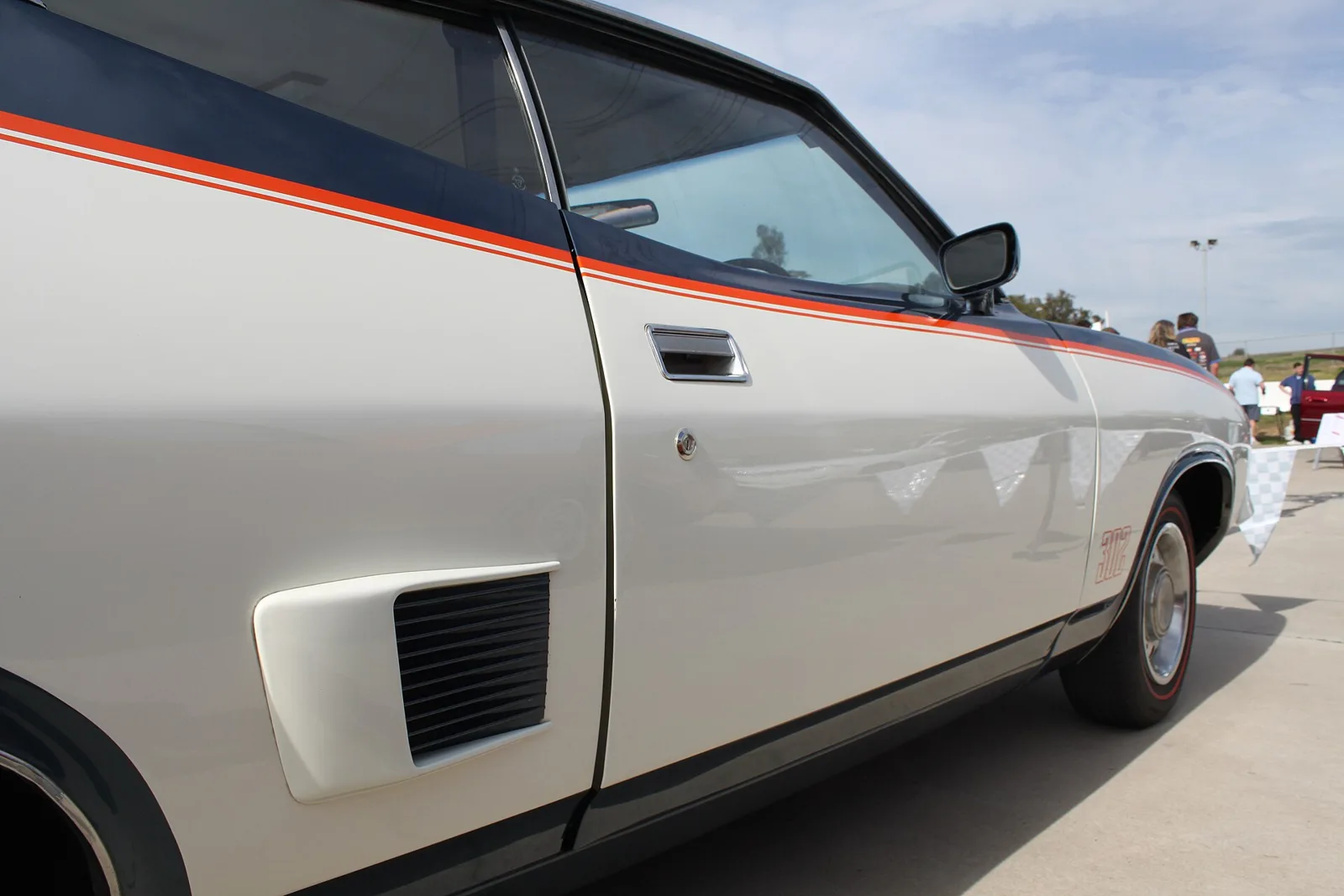
Ford Australia responded with the XB Falcon 500 Hardtop John Goss Special in 1975. Ford never published production figures, but estimates range from 260 to 800 cars, and the model is now collectible.
What did Goss achieve in Formula 5000?
Goss concentrated more on Formula 5000 than on his Group C Falcons in the mid-1970s. He took the 1975 Tasman Series round at Sandown Park, then the 1976 Australian Grand Prix at the same track, both in a Matich A53 Repco Holden. That double is unique in Australian motor sport.
He also experimented with a 5.0L Ford V8 in the A53, though the idea went nowhere.
Why did Goss race a Jaguar at Bathurst?
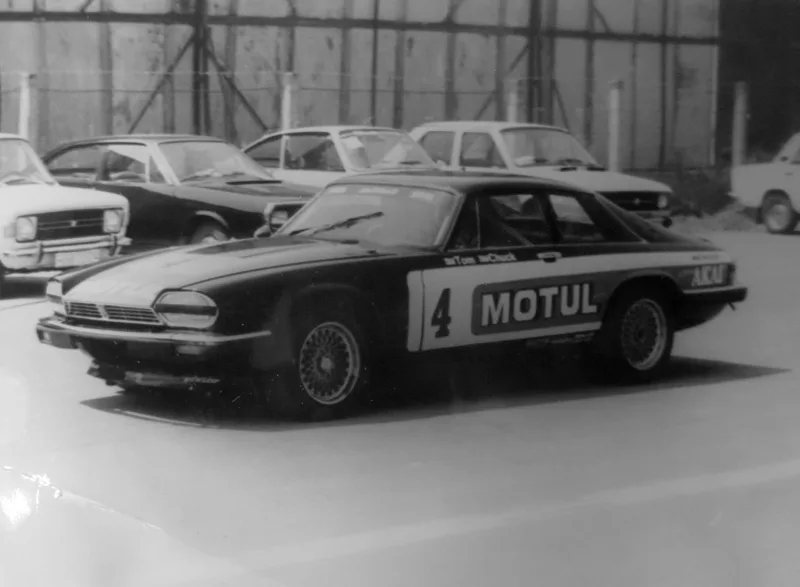
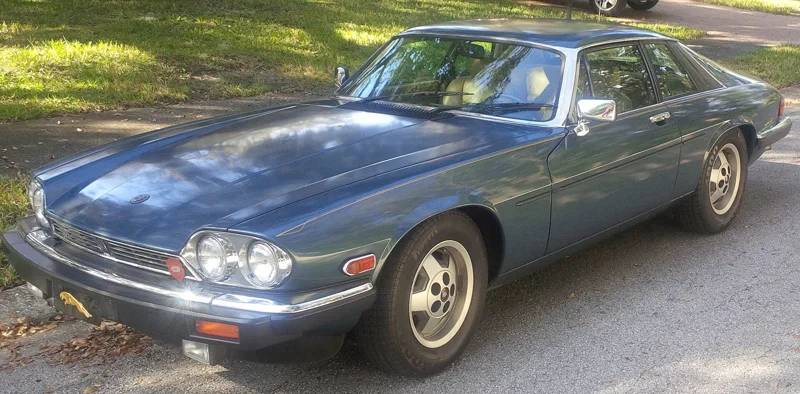
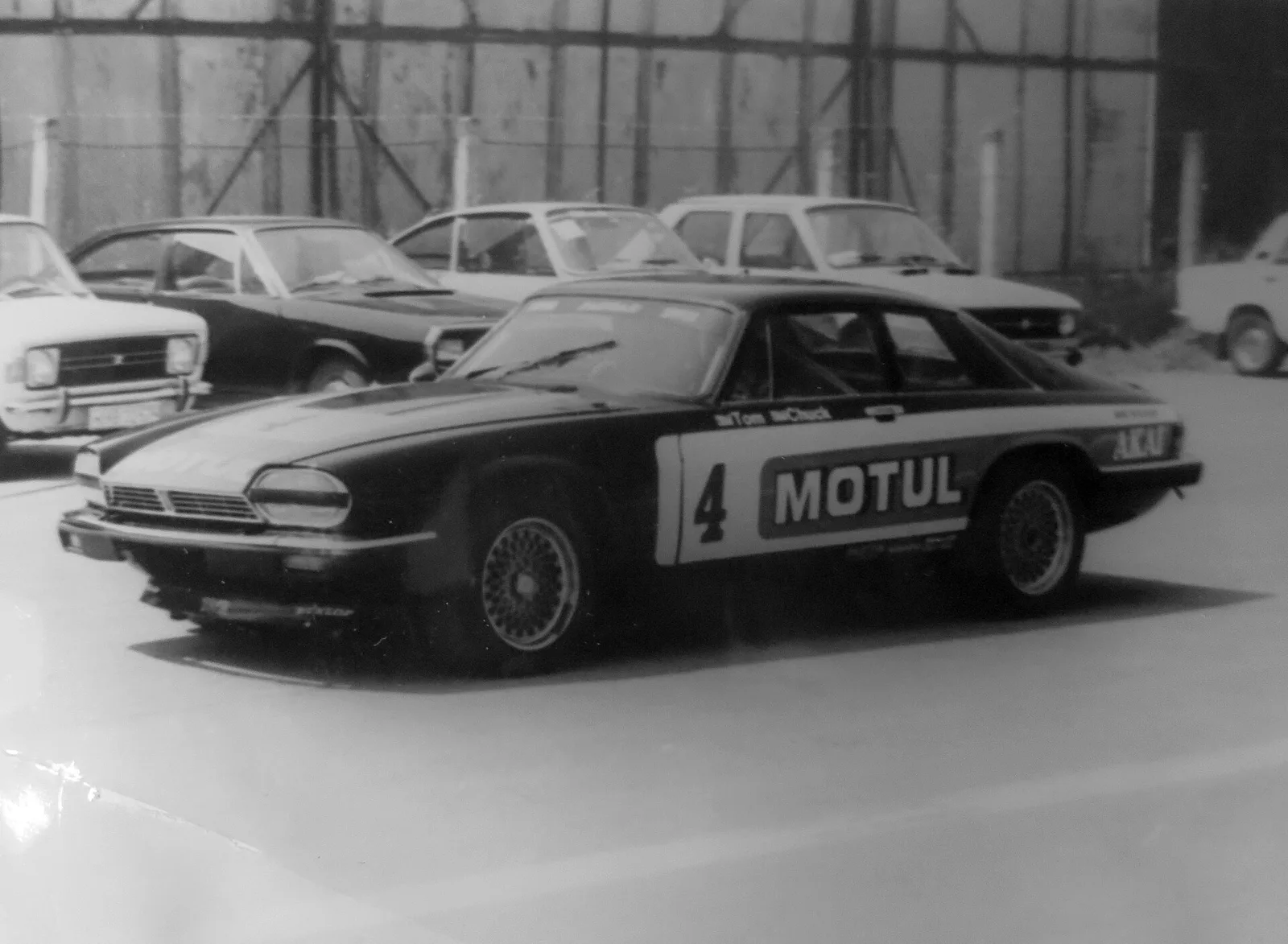
Between 1977 and 1979 Goss had three Bathurst retirements in Falcons, with Henri Pescarolo as one co-driver. In 1980 he began campaigning a V12 Jaguar XJS, which started from 58th and retired after 14 laps with gearbox failure.
In 1981 he shared the car with Barry Seton and qualified 19th. A crash on the mountain shortened the race, and the pair were credited with 73 of the 120 laps. In 1982 he partnered the IMSA driver Bob Tullius, qualified 14th, and retired on lap 119 with suspension failure.
The 1984 entry was the most ambitious. Tom Walkinshaw, who won the European Touring Car title that year, shared the car and supplied revised suspension and one of his own V12 engines. The Jaguar qualified eighth, but its clutch failed at the start and a multi-car crash stopped the race, the only restart in Bathurst's history.
How did Goss win Bathurst a second time in 1985?
In 1985 Bathurst moved to Group A rules, and Walkinshaw's team ran three V12 Jaguars. Goss led the third car, qualified fastest going into Hardies Heroes and answered doubters who thought he was past his best. He ran second for most of the race with co-driver Armin Hahne.
The driver's seat broke at its base during the race. The team could have replaced it, but that would have cost at least a lap, so the pair kept going with the seat held in place by cable ties. Goss could not drive hard through the corners and relied on the V12's power on the long straights. When Peter Brock's engine failed on lap 160, Goss eased off over the last three laps to take the win.
What were Goss's final years in racing?
In 1986 Goss ran a privately entered XJ-S backed by Citibank, with Bob Muir. Problems in qualifying left them 26th on the grid, and they finished 24th overall after electrical trouble. An incident on lap 2 with Roberto Ravaglia's BMW led to a confrontation in the pits, and Goss chose not to pursue the matter.
He missed the 1987 and 1988 races. In 1989 he drove a Ford Sierra RS500 for Glenn Seton Racing, finishing 20th after starting 17th. His final Bathurst start came in 1990 in a Mercedes-Benz 190E for Phil Ward Racing, where he finished 12th overall after starting 38th and won Division 2.
Honours and legacy
The Medal of the Order of Australia came in 2018, recognising his services to motorsport. The combination of two Bathurst wins and a Grand Prix victory is an unusual one in Australian racing.
Career milestones
| Year | Event | Car or team | Result |
|---|---|---|---|
| 1969 | Bathurst 500 debut | McLeod Ford Falcon GTHO | Crash at Forrest's Elbow |
| 1972 | Sandown 250 | Falcon | Won |
| 1973 | Hardie-Ferodo 1000 | Ford Falcon XA GT Hardtop | Pole, retired lap 110 |
| 1974 | Hardie-Ferodo 1000 | Same Falcon, repainted blue | Won in wet conditions |
| 1976 | Australian Grand Prix | Matich A53 Repco Holden | Won at Sandown Park |
| 1980 | Bathurst | Jaguar XJS | Retired after 14 laps |
| 1985 | Bathurst | TWR Jaguar XJS, Group A | Won with Armin Hahne |
| 1990 | Bathurst | Mercedes-Benz 190E | 12th outright, Division 2 win |
What happened at the 1985 start?
The 1985 field waited a long time on the grid before the green flag, and several cars overheated. Goss turned his car off and restarted it only when the 30-second board appeared, but it still ran hot as the race began.
He made a strong start and joined a battle for second with Allan Grice, Robbie Francevic, Dick Johnson, Jim Richards and Peter Brock. Francevic and then Goss broke clear, and Goss took second from the Volvo in under ten laps.
How did Walkinshaw's team operate?
Walkinshaw had been stung by the poor 1984 showing and was determined to return his own team to the Great Race. Jaguar Rover Australia declined to help fund a 1986 effort, which left Goss to run a privately entered XJ-S that year.
The 1989 season saw Goss partner Tony Noske in a Glenn Seton Racing car, and Seton himself joined the pair in the race after his own car failed. The pair finished 20th outright.