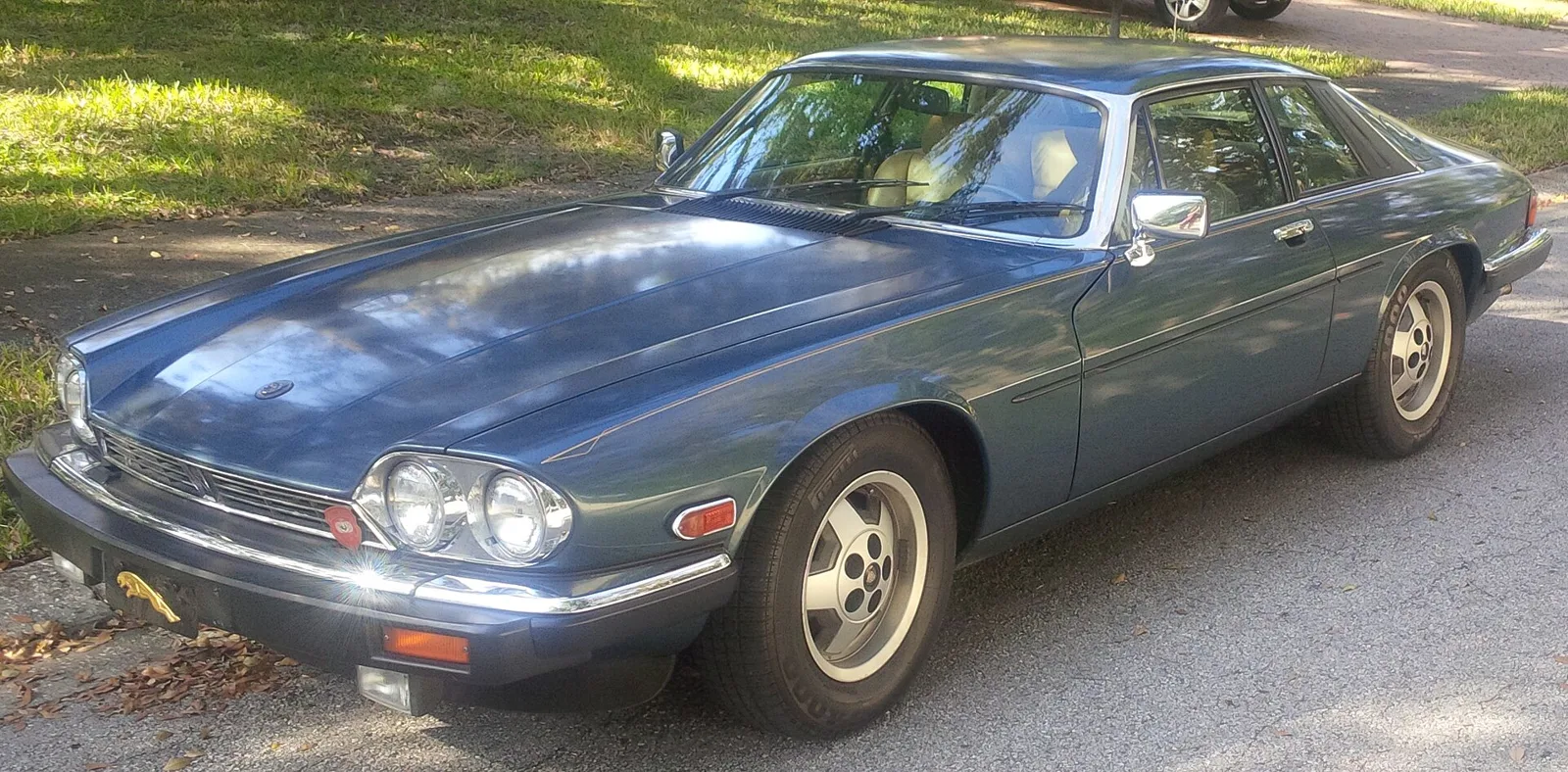
Jaguar's grand tourer replaced the E-Type with a V12, a striking roofline and a convertible that finally sold well, and it went racing with TWR.
Built by Jaguar Cars from 1975 to 1996, the XJS was a V12 grand tourer across three distinct versions, with 115,413 produced. Its successor, the XK8, carried a reworked form of its platform until 2005.
The Jaguar XJ-S, later simply the XJS, was a luxury grand tourer that Jaguar Cars built from 1975 to 1996. It came as a coupe, a fixed-profile car and a full convertible, and three distinct versions were produced. Across the 20 years and seven months of its life, 115,413 were built, which made it the company's longest-running model.
Where did the XJS come from?
Chief engineer William Heynes developed the car on the platform of the XJ saloon of the day. The early styling was partly the work of aerodynamicist Malcolm Sayer, one of the first designers to apply serious aerodynamic thinking to road cars. Sayer died in 1970, before the design was finalised.
The XJS was introduced on 10 September 1975. Its development had begun in the late 1960s under the project code XJ27, with the initial shape penned by Sayer. After his death the work was completed by Jaguar's in-house design team, headed by Doug Thorpe.
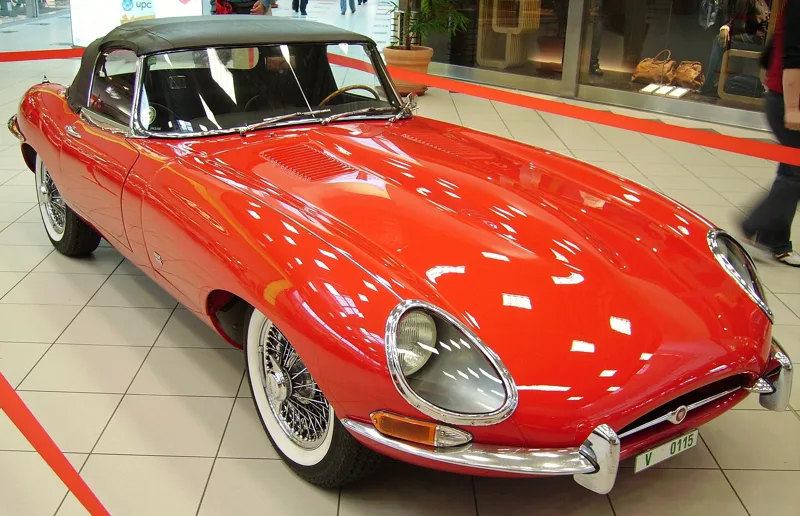
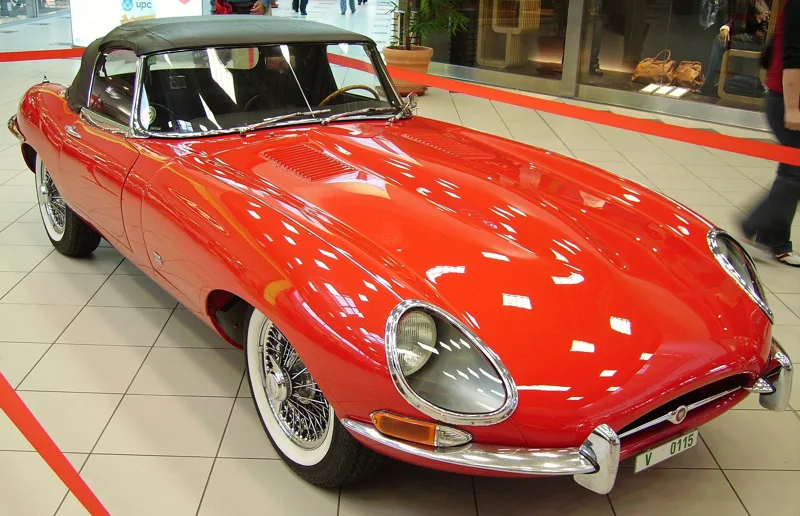
The car was a clear break from the E-Type it replaced. It moved from a sports car to a grand tourer, and it lost the option of a convertible roof for its first years on sale.
A V12 grand tourer with flying buttresses that started as a sales disappointment and ended as Jaguar's longest-running model.
Why did the XJS have flying buttresses?
The design was radical for its time, with long overhangs and buttresses that swept down the back of the roofline. Those buttresses are the car's best-known feature, and they gave it a silhouette that few other production cars shared.
A common belief holds that the buttresses and the black plastic vents behind the rear windows were leftovers from a possible mid-engined layout. The company did consider a mid-engine car, but that idea never got past early brainstorming. The buttresses were always intended as a styling feature that helped the aerodynamics.
Not everyone welcomed them. German authorities were concerned that the buttresses would restrict rearward vision, and they refused to grant type approval. German buyers therefore had to obtain road approval for each individual car when it was registered.
What engine did the XJS use?
Power came from the Jaguar V12, which was initially a 5.3-litre unit. It was offered with a manual or an automatic transmission, but the manual was soon dropped, since the gearboxes had been left over from E-Type production.
V12-powered road cars were unusual at the time, and Italian makers Lamborghini and Ferrari were among the few who built them. The XJS matched those cars well. Automatic models reached 60 mph (97 km/h) in 7.6 seconds, and the top speed was 230 km/h (143 mph).
Transmissions changed during the car's life. The first series used a BorgWarner Model 12 with a cast-iron case, and from 1977 General Motors' Turbo-Hydramatic 400 took over. The TH400 had an all-aluminium case with an integrated bell housing that could not be detached.
How did the XJS fare after the fuel crisis?
Jaguar launched the XJS in the wake of a fuel crisis, when the market for a grand tourer with a 5.3-litre V12 was small. Sales remained stubbornly low, and production was halted for half of 1981 so that unsold stock could be cleared.
Leyland Cars had decided to discontinue the car, but it was given another chance with a light facelift and some engine revisions. The engine work that followed reshaped the car for the rest of its life.
What was the High-Efficiency V12?
From July 1981 the car was renamed the XJ-S HE and fitted with the new High-Efficiency V12 for much better fuel economy. Designed by the Swiss engineer Michael May, the more efficient Fire Ball combustion chamber also lifted output: 295 hp (220 kW; 299 PS) in most markets and 263 hp (196 kW) in North America.
The HE also brought exterior and interior changes. Five-spoke Starfish alloy wheels were fitted with 215/70R15 Pirelli Cinturato P5 tyres, chrome inserts were added to the bumpers, and burled elm inserts appeared on the dashboard and door cappings.
How did the six-cylinder and convertible models arrive?
In 1983 Jaguar introduced the 3.6-litre AJ6 straight-six, along with a new convertible called the XJ-SC. The coupe's small rear seats were removed to make room for a removable soft top, which turned it into a strict two-seater.
The XJ-SC was not a full convertible. It had a fixed profile with a removable central targa-style section, fixed cant rails and fixed rear quarter windows. The six-cylinder cars can be spotted by their raised bonnet centre section.
Between 1983 and 1987 the six-cylinder cars came only with a five-speed Getrag manual, and a four-speed ZF automatic arrived in 1987. A V12 XJ-SC followed in 1985. Production of the first XJ-SC ran from June 1982 to January 1988, with 5013 built in all.
Did the targa-style convertible succeed?
The two-seat XJ-SC was never a great success in the market, and it was replaced in 1988 by a two-seat full convertible that proved a great hit. That car was a turning point for the XJS as a seller.
Of the 5013 XJ-SC cabriolets, roughly 1598 were right-hand drive and 3416 left-hand drive. Jaguar built only one car with a rear seat conversion, for Princess Diana, and later aftermarket firms carried out similar work on owners' cars without the factory's approval.
What was the Hess and Eisenhardt convertible?
From 1986 a full convertible was offered through some dealers, modified by Hess and Eisenhardt, a coachbuilder in Ohio that worked under contract from Jaguar. It arrived before the official Jaguar-built full convertible in 1988.
Its roof folded lower into the body than the later car's, giving a cleaner rear profile with the top down. That required two separate fuel tanks, and the conversion also included steel reinforcements behind the driver's seat and 9.1 kg (20 lb) of weight behind the headlights to damp resonance.
The number built is uncertain, because a fire at the Hess and Eisenhardt factory destroyed most of the conversion records. Some sources put the total at 2,100 cars.
Was the XJS used by the police?
In 1984 Jaguar Special Vehicle Operations converted a 3.6-litre manual XJS into a Police Special demonstrator, with a roof lightbar, a police radio and plastic trim in place of the luxury fittings. It was loaned to several forces, including the Warwickshire Constabulary, Greater Manchester Police and the Metropolitan Police.
No orders followed, because the car lacked the interior space that traffic police needed for their equipment and passengers. After its demonstration work ended, the car went to the Greater Manchester Police Museum and later to the Jaguar Daimler Heritage Trust, which displays it at the British Motor Museum in Gaydon.
What was the XJR-S?
The XJR-S was a high-performance model built from 1988 to 1993 by JaguarSport, a company owned equally by Jaguar and TWR Group. It had a distinctive body kit, 15-inch alloy wheels, a suspension using modified coil springs and Bilstein shocks, and Connolly leather with walnut trim.
The first 100 were called Celebration Le Mans cars, marking Jaguar's 1988 win at the 24 Hours of Le Mans, and they were sold only in the UK. Between 1988 and 1989, 326 cars were built with the 5.3-litre engine, which produced 318 hp (237 kW).
After September 1989 the engine grew to 5,993 cc (6.0 L) with Zytek injection and engine management. Output rose to 333 PS (328 hp; 245 kW) and 495 N-m (365 lb-ft) of torque, and the car reached a top speed of 260 km/h (160 mph).
A total of 787 coupes and 50 convertibles were built for the world market. In 1992 a limited run of 100 cars was made for the United States, as a commemoration of the XJ220 launch. In a 1997 comparison test by Motorsport magazine, the XJR-S beat rivals including the BMW 850i, Porsche 928 GT and Ferrari Mondial.
How did the XJS change under Ford?
The XJS was relaunched in its final form in May 1991 under Ford's ownership, as part of its Premier Auto Group. Ford dropped the hyphen from the name. The frames were removed from the doors, which made the rear side windows look larger, and the windscreen was flush-fitting.
The buttresses remained. Designer Geoff Lawson said they were part of the car's character. The rear fascia and boot lid were redesigned, and the V12 received new injection and fuel systems, along with a tidier engine bay.
The V12 was enlarged to 6.0 litres in May 1992, with 227 kW (304 hp). Its transmission became a GM 4L80E with a fourth-gear overdrive. Outboard rear brakes replaced the earlier inboard units from May 1993, and the instrument pack was simplified to a more conventional binnacle.
A 4.0-litre version of the straight-six appeared in 1991 and a convertible with the same engine in 1992. In April 1994 the 4.0-litre engine was revised and renamed AJ16, with coil-on-plug ignition. The 1995 Celebration model marked Jaguar's 60th year and featured diamond-turned wheels and a wooden steering wheel.
What happened to the XJS in the end?
The XJS ended in 1996 after 21 years in production, and the XK8 took its place. The XK8 kept a reworked form of the XJS platform until 2005.
How did the XJS race?
In 1977 the Group 44 team campaigned a race car based on a production XJ-S chassis in the Trans Am series. The team won the series' drivers' title for Bob Tullius, but it missed the manufacturers' title by two points.
In 1978 a purpose-built tube-frame silhouette car replaced it. Group 44 retained the drivers' title for Tullius and also won the manufacturers' title, with Brian Fuerstenau driving the 1977 car at some venues to add points for Jaguar.
In April 1979 Dave Heinz and Dave Yarborough entered an XJS in the Cannonball Run, covering the 4,608 kilometres (2,863 mi) from New York to Los Angeles in 32 hours and 51 minutes. That time stood for four years before David Diem and Doug Turner beat it in a Ferrari 308.
How did Tom Walkinshaw Racing campaign the XJS?
British Leyland approached Tom Walkinshaw's TWR in 1981 to find a car for the new Group A touring car rules. Walkinshaw chose the XJS over the Rover 3500 that British Leyland had wanted, because its double-wishbone suspension could take the widest possible wheels under the rules.
British Leyland gave no factory backing, so TWR relied on outside sponsors such as Akai and Motul, although Jaguar offered some engineering support. The XJS won its first race when Walkinshaw and Chuck Nicholson took the XIV Grand Prix Brno, and the cars were soon the ones to beat.
Walkinshaw claimed the 1984 European Touring Car Championship drivers' title. The TWR team also won the Spa 24 Hours that season with Walkinshaw, Hans Heyer and Win Percy, which showed the reliability of the 5.3-litre V12 as well as its speed.
The 1985 James Hardie 1000 at Bathurst gave the team its finest moment. John Goss won in one of the TWR cars, and after a late oil line repair Walkinshaw passed a BMW to finish third, which made it a Jaguar 1-3.
The Fuji 500 in 1986 was the Group A swansong of the XJS, and Walkinshaw took pole there. In total TWR built seven of these cars.
Who else raced the XJS?
In Australia the privateer Garry Willmington ran an XJS in the 1985 and 1986 Australian Touring Car Championships. He had more power from his V12 than TWR had, but he lacked the resources to develop the car or its reliability.
John Goss ran his own XJS in the 1986 James Hardie 1000 after the backing for a TWR return fell through, although electrical problems left him 24th. Willmington did win the opening heat of the 1986 AMSCAR series at Amaroo Park, the short circuit where his car struggled most on the straight.
The XJS still appears in club-level motorsport. The Jaguar Championship, launched in 2001 by the Jaguar Enthusiasts' Club, lets the car compete in classes based on how much it has been modified.
Which aftermarket and special versions exist?
Lynx turned a number of XJS cars into a three-door shooting brake called the Lynx Eventer. Records suggest 52 pre-facelift cars and 15 post-facelift cars were adapted, and 49 of them were right-hand drive.
Lister Cars, led by engineer Laurence Pearce, began offering a high-performance package for the XJS in 1986, and 90 customer cars were converted. The standard package took the engine to 7.0 litres, with a modified fuel system, new cylinder heads and Cosworth connecting rods, and produced 496 bhp (370 kW) and 500 lb-ft (678 N-m).
Lister-Jaguar cars ran a 5-speed Getrag gearbox and 17-inch wheels, and they were quoted at 4.5 seconds from 0-60 mph and a top speed of 200 mph (322 km/h). The Le Mans package added a six-speed Getrag, a new exhaust and twin superchargers, which raised output to 604 bhp (450 kW).
How are XJS cars remembered in model form?
The original coupe was made as a Corgi Toys model. A 1/40 scale convertible was made in China, and PRX and IXO modelled the Lynx Eventer. Yatming produced a 1/18 scale 1975 coupe as part of its Road Signature range.
Autoart made 1/18 versions of the coupe, the convertible and the Group A race car that won the 1984 Spa 24 Hours. Oxford produced a 1/76 coupe, including a Return of the Saint and police version, and Hot Wheels made a 1/64 model of the US specification.
What are the Jaguar XJS specifications?
| Specification | Detail |
|---|---|
| Built | 1975 to 1996 |
| Total production | 115,413 |
| Launch V12 | 5.3-litre, automatic 0-60 mph in 7.6 seconds |
| Top speed (1975) | 230 km/h (143 mph) |
| HE output | 295 hp (220 kW; 299 PS), or 263 hp (196 kW) in North America |
| Late V12 | 6.0-litre, 227 kW (304 hp) |
| Six-cylinder | 3.6-litre AJ6, later 4.0-litre |
| XJR-S output | 333 PS (328 hp; 245 kW) |
| XJR-S torque | 495 N-m (365 lb-ft) at 3,650 rpm |
| XJR-S top speed | 260 km/h (160 mph) |
| XJ-SC built | 5013 |
| Successor | XK8, until 2005 |
_1985.jpg)