How a London company founded in 1896 built Britain's first serial production car, served royalty, fell under BSA and Jaguar, and was finally dissolved in December 2025.
Founded in London in 1896 by H. J. Lawson, Daimler grew into a Coventry factory, a royal supplier and later a BSA and Jaguar property. Its name was dissolved in December 2025 after years as a dormant company.
The Daimler Company was a British car maker founded in London in 1896, with its factory in Coventry. Over more than a century it moved from independent maker to part of BSA, then Jaguar, then Ford and Tata. The company was formally dissolved on 23 December 2025, after years as a dormant registered name.
Who founded the Daimler Company?
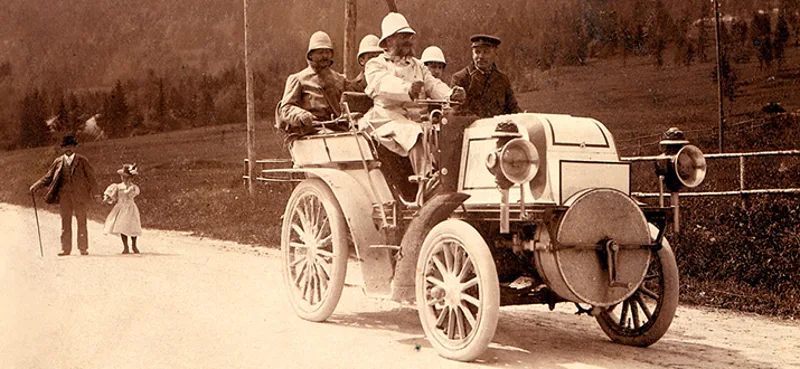
The company was founded in London in 1896 by the investor H. J. Lawson, who set up its manufacturing base in Coventry. It acquired the right to use the Daimler name from Gottlieb Daimler and from Daimler-Motoren-Gesellschaft of Cannstatt, Germany.
Engineer Frederick Richard Simms had brought Daimler motors to England in 1890, and he obtained British and Empire rights to the patents in 1891. He planned a British car factory, but the project soon passed to Lawson.
Britain's first serial production car maker ended as a dormant name, but its fluted grille outlived the company that made it.
How did Lawson take control of the Daimler patents?
Lawson approached Simms on 15 October 1895, seeking the right to float the proposed new company and to take a large shareholding. Simms agreed, and the Daimler Motor Syndicate was sold to Lawson's interests by the end of November 1895.
To transfer the licences, DMG was paid 17,500 pounds and agreed that Gottlieb Daimler and Wilhelm Maybach would rejoin the German firm. The shareholders of the Syndicate made a profit of 200% on their original investment, a result that set the tone for the company's early years.
Where was Britain's first car factory?
Simms had found the Trusty Oil Engine Works at Cheltenham, a company in receivership with a six-acre site, but Lawson persuaded the board to buy a disused cotton mill in Coventry instead. Daimler stayed with the mill as the site of Britain's first automobile factory.
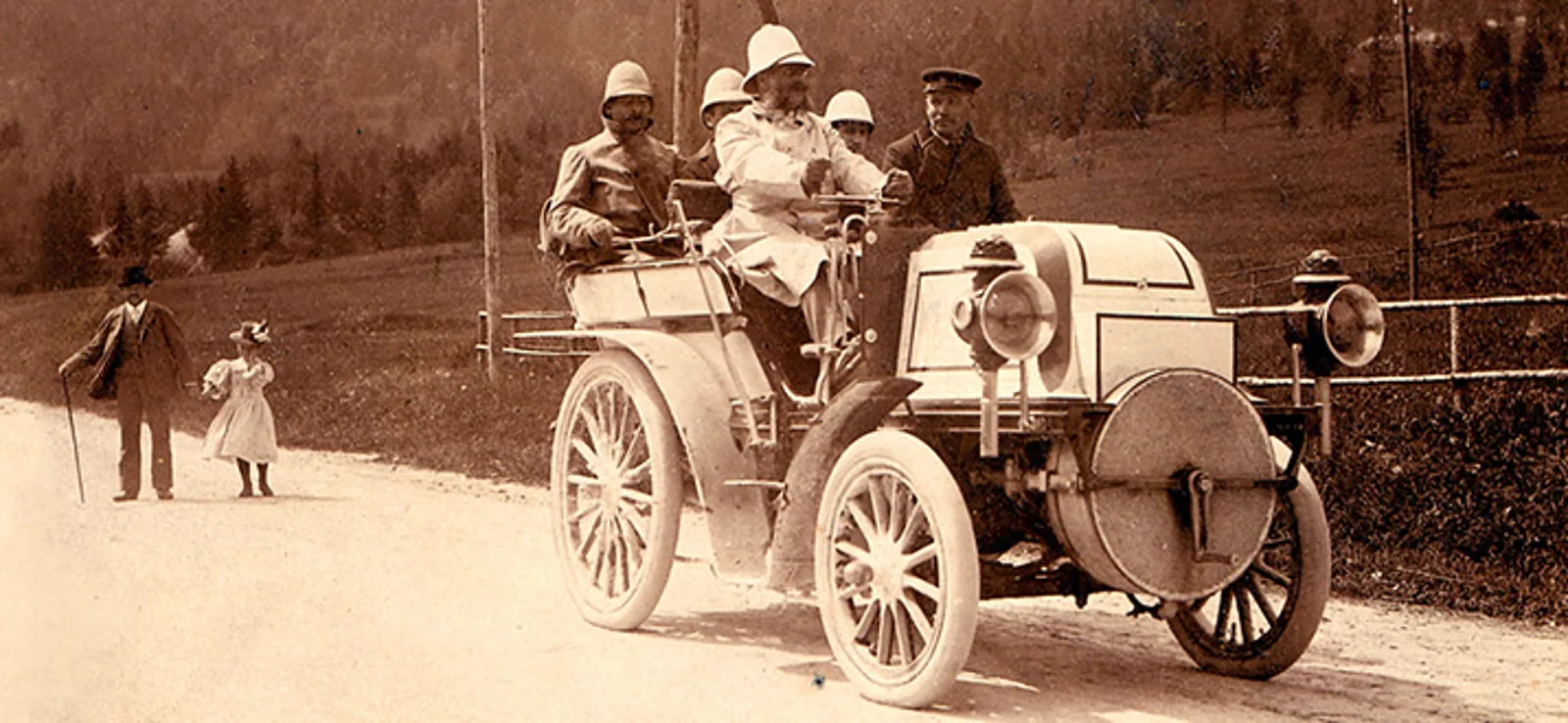
Deliveries of machines kept the factory unfinished through 1896 and into 1897. The first car left the works in January 1897 with a Panhard engine, and by mid-year the company was producing three of its own cars a week.
Why were the early years so difficult?
Lawson claimed to have built 20 cars by July 1897, making Daimler the first British car to go into serial production. The company's finances were weak, however, and Simms resigned as consulting engineer in July 1897 after a dispute over working drawings.
Lawson resigned from the board on 7 October 1897, and Henry Sturmey took the chair. Sturmey made the first journey from John O'Groats to Land's End in a motor car, arriving on 19 October 1897 in his personal Daimler.
A committee later judged the management inefficient, and E. H. Bayley replaced Sturmey as chairman after the board was reorganised. Persistent money problems led to a fresh reorganisation in 1904.
How did Daimler come to serve royalty?
Daimler was first linked with royalty in 1898, when the Prince of Wales, later Edward VII, took a ride in a Daimler driven by John Douglas-Scott-Montagu. The company sold the Prince a mail phaeton in early 1900.
A royal warrant for supplying motor cars came from Edward VII in 1902. Undecimus Stratton, who joined as head of the London depot, later secured further appointments from the Court of Spain and the Court of Prussia and sold Daimlers to the Sultan of Johor.
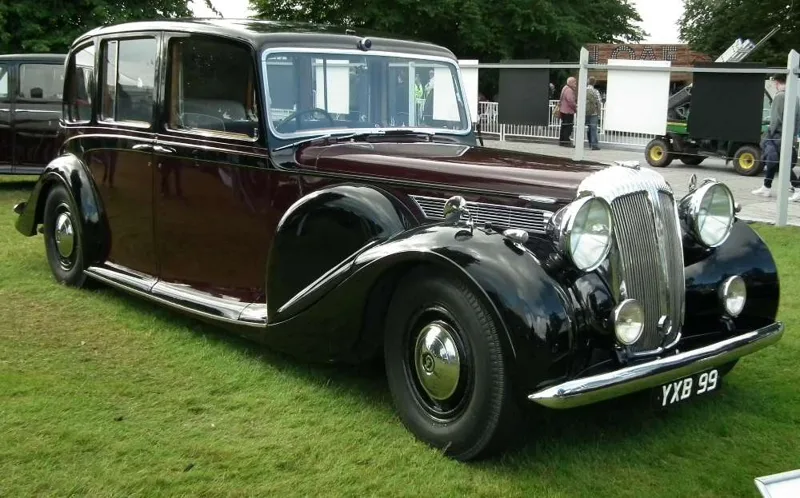
Daimler limousines carried every British monarch from Edward VII to Elizabeth II, although Rolls-Royce took over the state cars in 1950 after a transmission failure on the King's car.
What was the Daimler sleeve-valve engine?
Daimler's chairman approached Charles Yale Knight, who settled near Coventry in 1907. Daimler bought rights for England and the colonies, and it took 60% of the European rights shared with Minerva of Belgium. Dr Frederick Lanchester was retained to refine the design in great secrecy.
The engine was unveiled in September 1908 and caused a sensation. Daimler stopped making poppet-valve engines and earned the 1909 Dewar Trophy after two engines showed no visible wear when dismantled. Its only drawback was oil use, up to an Imperial gallon every 450 miles.
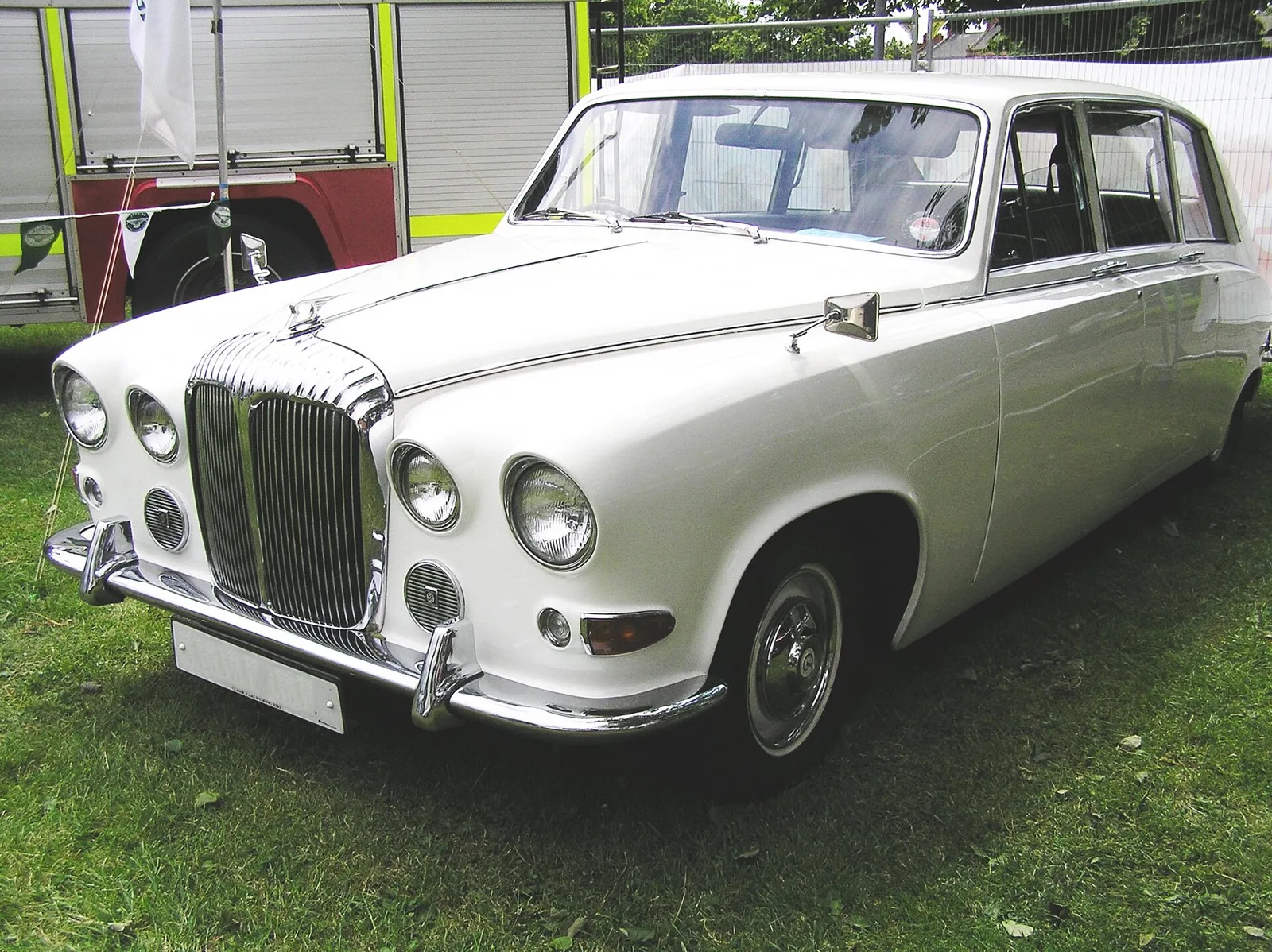
Daimler kept the sleeve-valve engines until the mid-1930s, and the fluted radiator grille, which has been the marque's signature since 1904, outlasted them.
How did BSA take over Daimler in 1910?
Under an agreement dated 22 September 1910, the shareholders of The Daimler Motor Company merged with the Birmingham Small Arms Company (BSA) group. Five BSA shares were offered for four ordinary Daimler shares, and the deal was engineered by BSA deputy chairman Dudley Docker.
Daimler had 4,116 workmen and 418 staff immediately before the merger. The combined group was not a great success, and by 1913 Daimler had 5,000 workers making only 1,000 vehicles a year.
What did Daimler build before the First World War?
In 1913 the range included 15 HP, 20 HP, 26 HP, 30 HP and 38 HP chassis, along with a six-cylinder Special. Most of the range used sleeve-valve engines, and the same units powered Daimler's commercial vehicles.
Percy Martin, the managing director, created a commercial division under Frank Searle that handled vans, trucks, buses, tractors and railcars. Its Foster-Daimler tractor was developed for South America, and the Metropolitan Electric Tramways ordered 350 double-decker buses in 1912.
How did Daimler contribute to the First World War?
During the war the military took normal production cars, lorries, buses and ambulances, and Daimler also built aero-engines, complete aircraft, tractor engines and munitions. Its first aircraft engine was the 80 hp Gnome Monosoupape rotary, reverse-engineered from an engine delivered in August 1914.
Daimler built 100 units of the Royal Aircraft Factory B.E.2c by the end of 1914, and it made the 105 hp engines used on early British artillery tractors. These engines later powered the first British tanks, and Daimler made more twelve-inch shell casings than any other private business in the country.
How did the bus business develop?
Daimler had been interested in commercial vehicles since 1904. The KPL bus of 1910 was an advanced petrol-electric design, but its production was stopped by a patent action in 1911 after just twelve examples had been built.
Frank Searle designed a 34-seat bus with a gearbox transmission for Daimler in 1912. Later the CO chassis became the main 1930s model, and the Daimler Fleetline, built from 1960 to 1980, was a major double-decker.
The last Fleetline was built at Radford, Coventry, in 1973, and after that buses were built at the Leyland factory in Farington. During the Jaguar years Daimler became the second-largest double-decker maker in Britain.
How did Daimler gain Lanchester and the fluid flywheel?
In January 1931 Daimler completed the purchase of The Lanchester Motor Company. In 1933 BSA bought Lanchester outright and made it a subsidiary of the Daimler Company, and the new Lanchester 15/18 was fitted with Daimler's fluid flywheel transmission.
Daimler began testing the Fluidrive system in a bus chassis in 1928. By October 1930 the fluid flywheel appeared on the Light Double-Six, paired with a Wilson preselector gearbox, and by November 1933 it was used throughout the range.
What did Daimler do in the Second World War?
Daimler returned to military work, producing the Dingo scout car and the larger Daimler Armoured Car, both with fluid flywheels and epicyclic gearboxes. Output included around 6,600 scout cars and roughly 2,700 armoured cars of the Mk I and Mk II types.
The company also made 74,000 Bren guns and 50,800 Bristol radial aero-engines, and it produced more than 10 million aircraft parts overall. Its peak wartime workforce reached 16,000 people.
How did Daimler recover after the war?
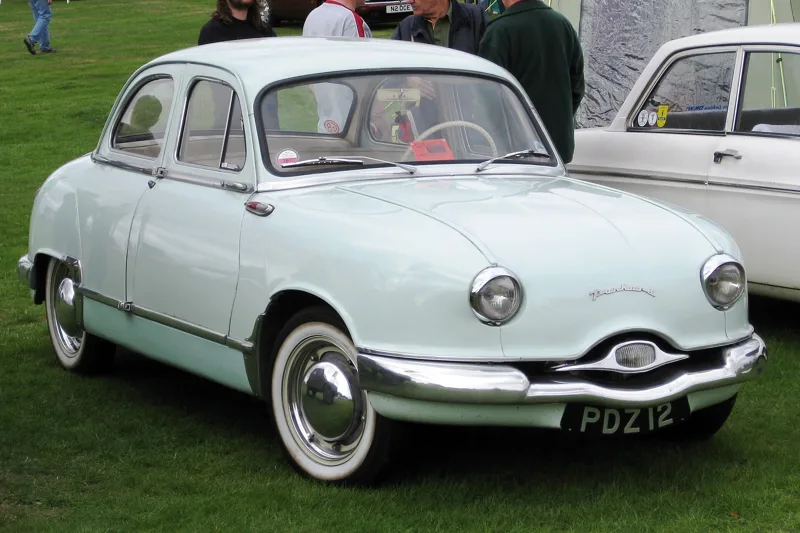
In 1946 Daimler celebrated its golden jubilee with a luncheon at the Savoy. It announced the Eighteen and the Lanchester Ten, and it began building the DE 27 and DE 36 limousines, the last straight-eight car to be built in Britain.
Lady Docker encouraged show cars such as the Golden Daimler and the Golden Zebra, but the publicity damaged the brand, and the royal family moved to Rolls-Royce. The moderately sized Conquest of 1953 was an attempt to widen the range.
Why did Jaguar buy Daimler in 1960?
In May 1960 Jaguar bought the Daimler business from BSA for 3.4 million pounds. Daimler had shrunk to 15% of BSA turnover, and BSA wanted to dispose of its motoring interests. Jaguar promised to continue Daimler's range and to expand its markets.
Jaguar kept the 4.5-litre V8 Majestic Major, and the DR450 limousine sold 864 examples, against 1,180 for the Majestic Major saloon. The 2.5 V8, a more luxurious Jaguar Mk 2 with a Daimler grille, became the most popular Daimler ever built.
What was the Daimler DS420?
The DS420 limousine arrived in 1968 to replace the DR450. It used a Jaguar Mk X unit body with a floor extended by 21 inches behind the front seat, and it was fully Jaguar-based but unique to Daimler.
More than 300 DS420-based hearses were built by Startin of Birmingham. The DS420 was withdrawn in 1992, and the last Startin hearse was delivered on 9 February 1994.
How did Daimler fare under Ford and Tata?
Ford's 1989 purchase of Jaguar, at 1.6 billion pounds, also brought the Daimler name. In 1996 Daimler marked its centenary with 100 Double Six and 100 straight-six cars, and the Super V8 replaced the Double Six in 1997.
The Super Eight arrived in July 2005 with a 4.2 L supercharged V8 derived from the Jaguar XJ (X350). Tata completed its purchase of Jaguar and Land Rover around 2008, and a US trademark application for Daimler was rejected in 2009.
How did the Daimler name come to an end?
In 2013 the rights to the Daimler car brand passed to Jaguar Land Rover Limited. The Super Eight was the last Daimler model, and the Daimler Motor Company Limited was kept registered with accounts filed each year, marked as non-trading.
On 23 December 2025 the Daimler Company was dissolved. Jaguar Land Rover made no official statement about the dissolution.
What are the key Daimler figures?
| Item | Detail |
|---|---|
| Founded | 1896 in London, factory in Coventry |
| Royal warrant | 1902 |
| BSA agreement | 22 September 1910, five BSA shares for four Daimler shares |
| Workforce, 1913 | 5,000, making 1,000 vehicles a year |
| Lanchester purchase | Completed January 1931 |
| Jaguar purchase | May 1960 for 3.4 million pounds |
| DR450 and Majestic Major | 864 DR450 limousines against 1,180 Majestic Major saloons |
| DS420 withdrawn | 1992 |
| Ford purchase of Jaguar | 1.6 billion pounds in 1989 |
| Super Eight | 4.2 L supercharged V8, July 2005 |
| Dissolved | 23 December 2025 |