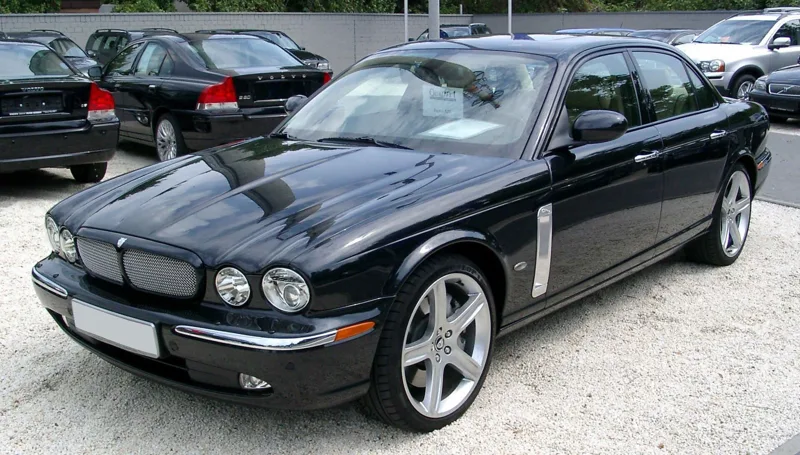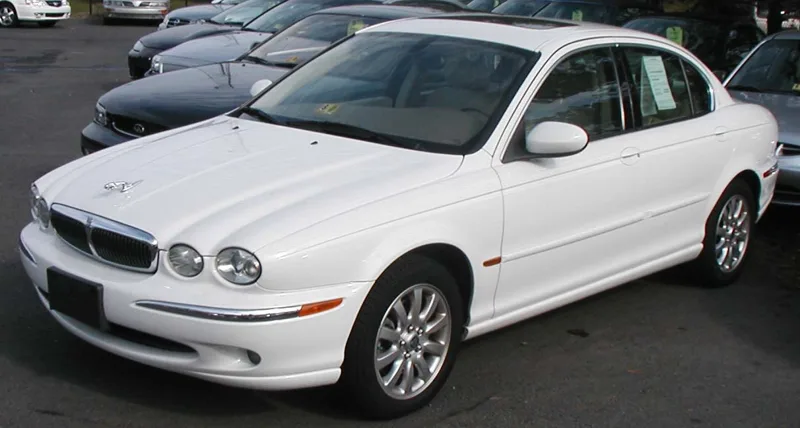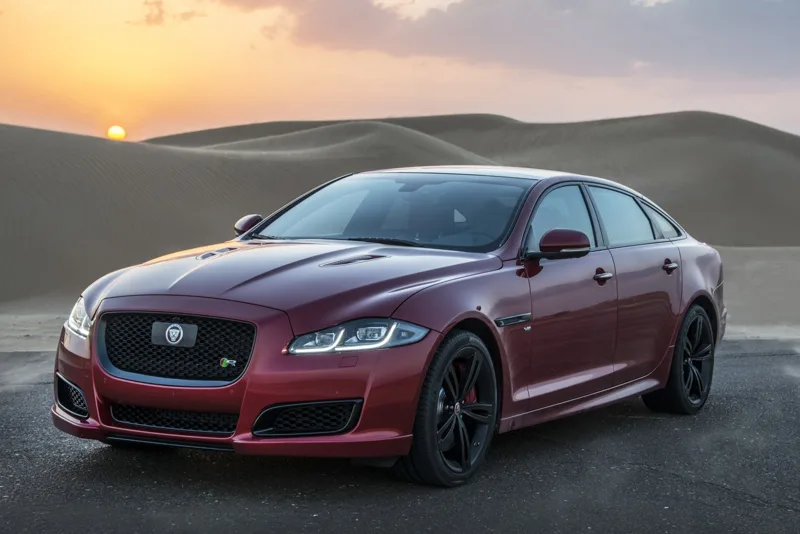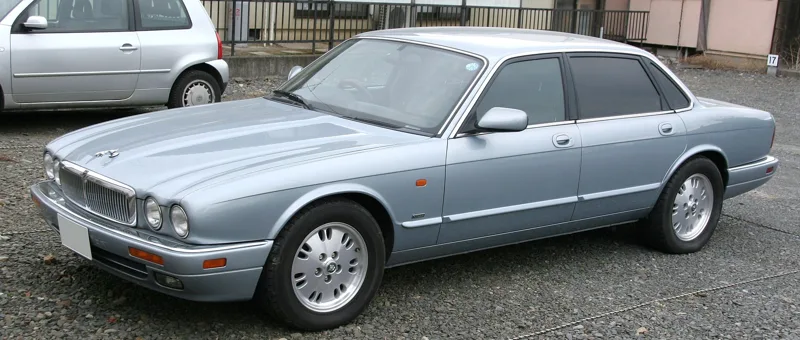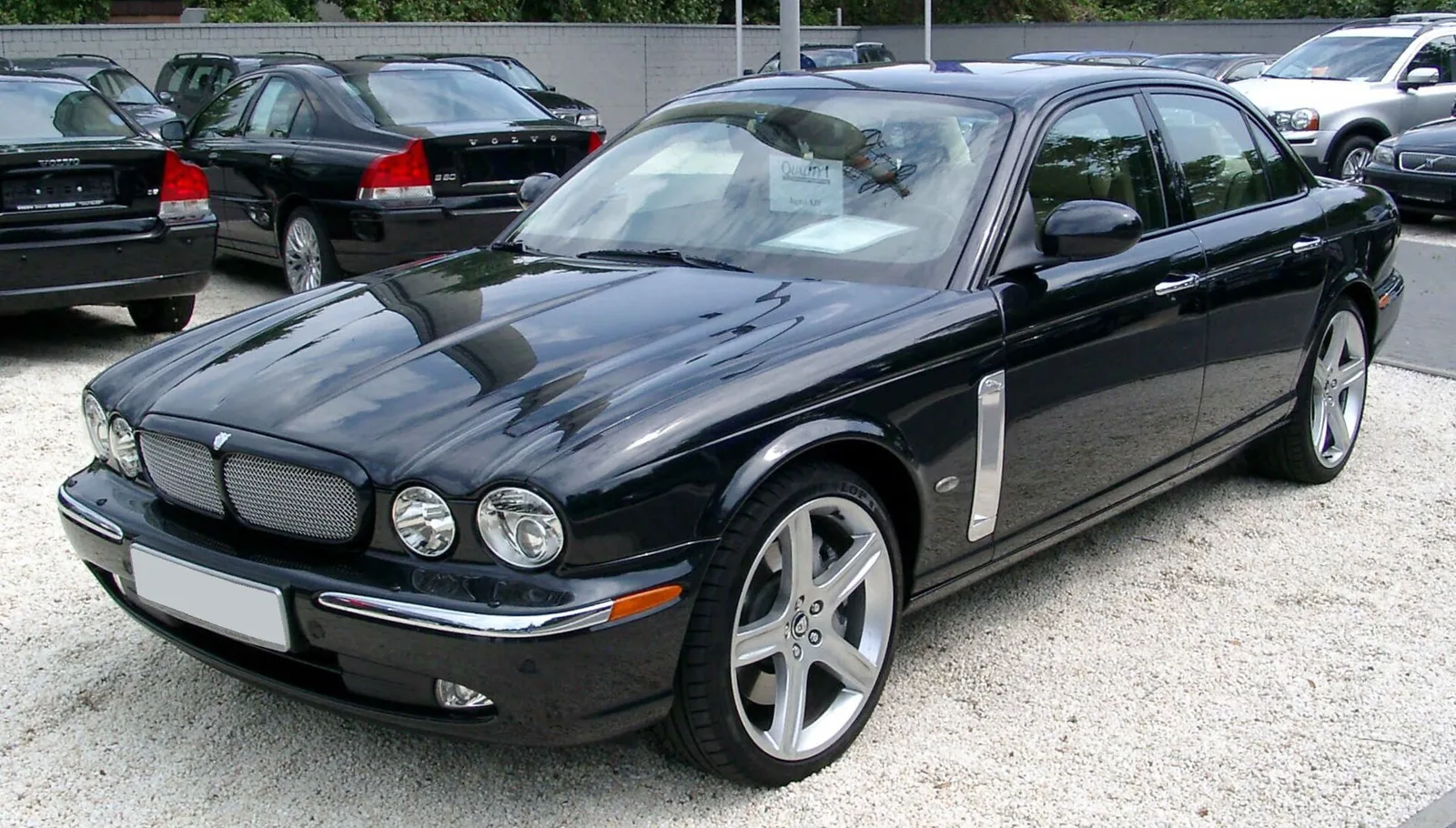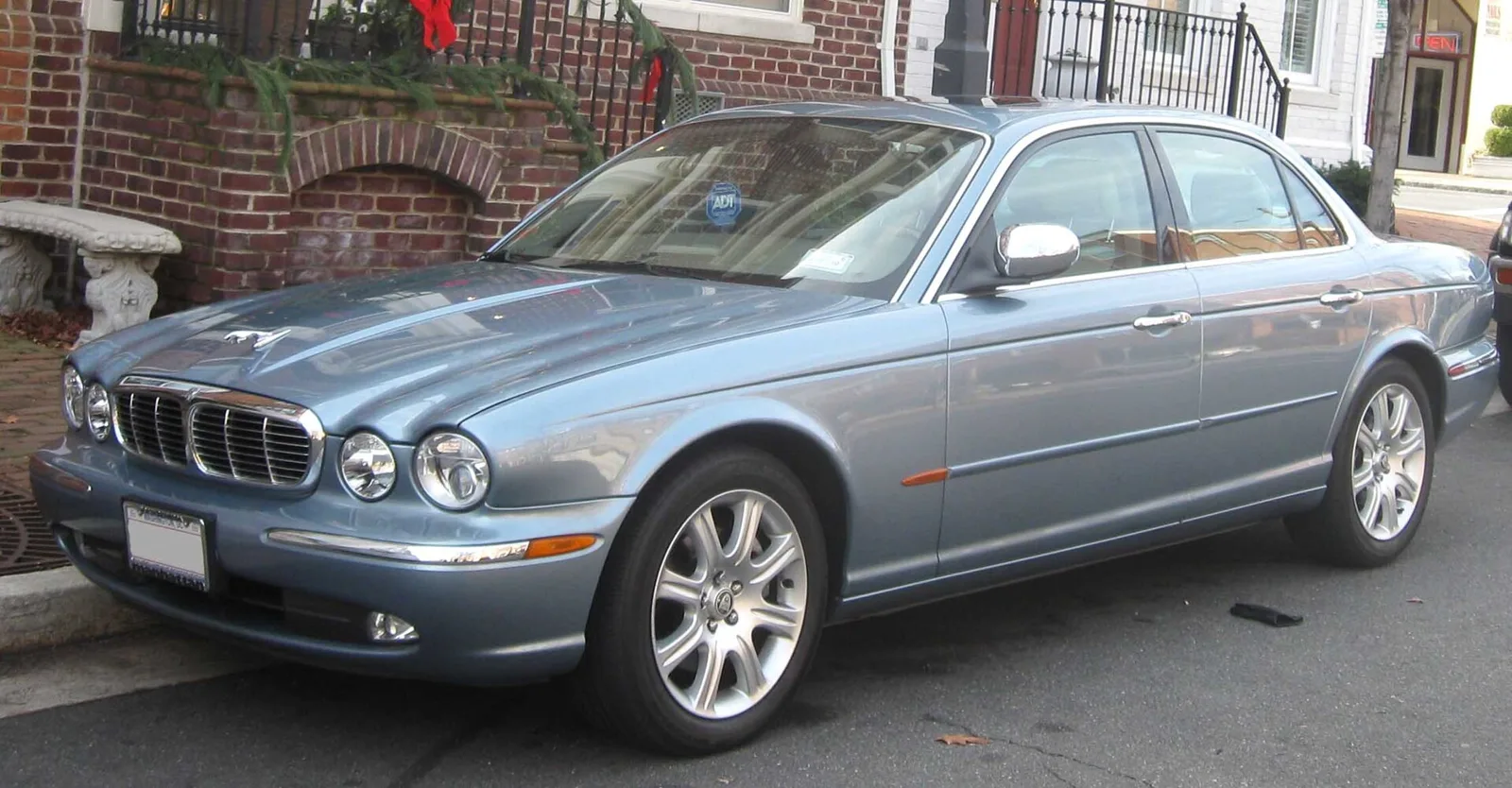
Jaguar's third-generation XJ, built around a riveted and bonded aluminium body, with a 2007 facelift and a long-wheelbase version for the rear seat.
The Jaguar XJ X350 was a full-size luxury saloon built from 2003 to 2009, the third generation of the XJ. It used a bonded and riveted aluminium body, adaptive air suspension and a choice of V6, V8 and diesel engines. It sold 83,566 cars before production ended in March 2009.
The Jaguar XJ X350 was the third generation of Jaguar's XJ saloon, built from 2003 to 2009 with a full aluminium body. It was offered in short and long wheelbase versions, with V6, V8 and diesel engines and a six-speed automatic gearbox. After a 2007 facelift it carried the internal code X358, and it was the last Jaguar built at Browns Lane in Coventry.
What was the Jaguar XJ X350?
The X350 was a full-size four-door luxury saloon sold worldwide by Jaguar Cars. It debuted at the 2002 Paris Motor Show, with an unpainted and highly polished example of its all-alloy body on display. Production ended in March 2009 after seven years, with a total of 83,566 cars built.
The extended-length model was the longest saloon Jaguar had built, eclipsing the 1961 to 1970 Mark X. The Mark X remains 3 inches (8 cm) wider.
The first aluminium-bodied luxury saloon of its kind, built for seven years and still praised for its ride.
Why was the X350 body built from aluminium?
The X350 was noted for its advanced electrical systems, self-levelling adaptive air suspension and a full aluminium unibody chassis and bodywork. Among mass-produced cars, that was an early example. The bodyshell was 40 per cent lighter and 50 percent stiffer than its predecessor, even though the car had grown.
The aluminium body used a hybrid of adhesive bonding and rivet joinery, known as rivet-bonding or riv-bonding. It was an industry first in volume car production. Using aluminium rather than steel required new techniques, new production layouts and significant investment, and the process made Jaguar's first use of self-piercing rivets.
The stressed unibody used 15 aluminium castings, 35 extrusions and 284 stampings. These were bonded with 120 yards of robotically applied, heat-cured, aerospace-grade epoxy, and joined by about 3,200 self-piercing zinc-coated boron steel rivets. Castings and extrusions made up about 11 percent of the bodyshell.
How did the aluminium change the design?
Several styling elements had to change to suit aluminium rather than steel. The bonnet profiles around the headlamps, the radii in the wing-to-bumper gaps, the rear wing and door shut pressing, the side light layout and the bodyside haunch were all redesigned. Jaguar's chief programme engineer Russ Varney said the XJ also taught the company about springback in stamped parts.
Repair costs were a concern, because aluminium construction could raise insurance premiums. The body was designed to withstand a 10 mph impact without structural damage, and it used a bolt-on front-end module. A hydroformed aluminium bumper beam with a foam cover and sacrificial crash cans protected the structure.
Steel was kept for the front and rear subframes. Magnesium, which is as strong as aluminium but 30 per cent lighter, was used for seat frames and the lateral instrument panel beams. Jaguar had used aluminium before, on the XK120 of the 1940s, its C-Type and D-Type race cars, and the 1960s E-Type.
How did the X350 handle?
The X350 used a multi-link suspension with four-wheel self-levelling, adaptive air suspension in place of the double wishbones of the earlier Jaguar IRS. The system was controlled electronically and adjusted damper settings in milliseconds, and Jaguar marketed it as Computer Active Technology Suspension, or CATS. The air suspension raised the car to a level position every 24 hours while parked.
The body was wider, longer and higher than before, with more head, leg, shoulder and cargo room. It carried a drag coefficient of .32. Door shut lines were engineered to a uniform 3.8 mm gap, and the bonnet and boot to 3.5 mm. The doors opened to 62 degrees at the front and 65 degrees at the rear.
The 12-volt wiring used multiplexing to link four systems, covering low-speed body communications, a high-speed powertrain network, a fibre-optic link for telematics and audio, and a separate safety protocol. Safety systems included four-channel anti-lock brakes, traction control and dynamic stability control.
What was the long-wheelbase X350?
The long-wheelbase model arrived for the 2005 model year and was the longest vehicle Jaguar had made at the time. Its rear doors were 5 inches longer, behind the B-pillar. The extended car had a 3,159.8 mm (124.4 in) wheelbase and an overall length of 5,214.6 mm (205.3 in).
The longer body added 24 kg (53 lb) to the bodyshell and 7 mm (0.28 in) to the roof height, and the turning radius grew by 13 inches. The rear seats could be fitted with a fixed or power-adjustable bench, or with individually powered and heated seats.
What engines did the X350 use?
The V8s were revised versions from the 2003 S-Type. The 4.2 L naturally aspirated V8 produced 300 PS (221 kW; 296 hp), and the supercharged 4.2 L produced 400 PS (294 kW; 395 hp). A new 3.5 L V8 was derived from the 4.2 for the European market and was rated at 265 PS (195 kW; 261 hp).
The 3.0 L V6 from the X-Type and S-Type powered the XJ6. In 2005 Jaguar introduced the diesel XJ TDVi, which used the 2.7-litre twin-turbocharged V6 developed by Ford and Peugeot. The AJD-V6 made 204 PS (150 kW; 201 hp), with 321 lb-ft (435 N-m) of torque, and it used electronically controlled active engine mounts.
Every X350 and X358 used a six-speed automatic from ZF Friedrichshafen. North American cars came with a 300 hp naturally aspirated engine or a 400 hp supercharged V8, whose top speed was electronically limited to 155 mph (249 km/h).
How did the X350 look?
The styling was a conservative evolution of the previous XJ, and the slatted grille recalled that of the original 1968 XJ Series I. Exterior styling was led by principal designer Tom Owen, working with Sandy Boyes, under the direction of Geoff Lawson. Lawson died midway through the project, and Ian Callum took over as design director.
The interior was styled by Giles Taylor. Standard equipment included walnut burl wood grain trim, leather seats, dual-zone climate control, a sunroof, rain-sensing wipers and 24 lamp LED taillights. Options included xenon headlights, adaptive cruise control and heated front seats.
How much did the X350 cost at launch?
At launch the UK range started with the XJ6 3.0-litre at GBP 39,000. The XJ6 3.0-litre Sport and the XJ 3.0 SE were GBP 42,250, the XJ8 3.5 SE was GBP 48,000, and the XJ8 4.2 SE was GBP 51,500. The XJR was GBP 58,500 and the Super V8 was GBP 68,500, making it the most expensive model in the range.
The Super V8 was first offered in the 2003 model year in short wheelbase form, and a long-wheelbase Super V8 followed in 2004. Its main rival was the Maserati Quattroporte. In 2005 the Super V8 was replaced by the Daimler Super Eight in most markets, with boxwood inlays and other interior luxuries as standard.
What was the Super V8 Portfolio?
The Super V8 Portfolio was a limited-edition trim for the 2006 model year, first shown at the New York show in March 2005 at a base price of US$115,995. It added a DVD player and 7-inch screens in the rear headrests, and it was sold only in Black Cherry and Winter Gold.
It used the supercharged 400 PS, 4.2 L, 32-valve AJ-V8 with a top speed of 249 km/h (155 mph) and a 0 to 60 mph time of about 5 seconds. It became available in North America in August 2005.
What changed in the 2007 X358 facelift?
The facelift debuted in February 2007 for the 2008 model year. It brought a revised front grille with a prominent lower section and a front bumper. A Jaguar emblem within the grille replaced the bonnet-mounted ornament, and the door mirrors gained side repeaters.
The front wings had prominent faux side vents, the side sills, rear bumper and tail lights were revised, and the front seats were redesigned. The changes were aimed at answering criticism that the original car looked too conservative.
How did critics judge the X350?
The X350 was generally well received and compared well with its main rivals. Criticism focused on its conservative styling, which some said did not match its technology. Reviewers praised its elegant looks, engines, technology, interior and handling, but rear legroom was small for the car's length.
Motoring Research's Peter Burgess praised the interior and the engine, and he said the XJ6 averaged 23 mpg on the 3.0-litre. He liked the six-speed automatic but missed a full manual mode, and he said the car had a sense of individuality that set it apart from the Audi A8, BMW 7 Series and Mercedes-Benz S-Class.
Top Gear sent an X358 TDVi from Basel to Blackpool on a single tank, and the presenters admitted it came second behind a Volkswagen Polo BlueMotion. They still called the Jaguar the true hero. Andrew Frankel of Hagerty described the car as a revolution in aluminium construction for a mass-produced road car.
How well did the X350 sell?
The X350 was profitable, but sales were below what Jaguar had expected. As of February 2010 it had sold 295,365 units. It was followed by the XJ X351, which had a more radical, postmodern design but shared the X350's platform.
Like many used luxury cars, the X350 depreciated significantly. RAC reviewer Andy Enright called it a great used buy in 2007, and prices quoted for used examples ranged from GBP 1,500 to GBP 20,000 for the low-mileage, more luxurious models.
Why was the XJ used as a state car?
British prime ministers used the XJ as their official car, including Tony Blair and Gordon Brown. Earlier and later versions were used by Margaret Thatcher, John Major, David Cameron, Theresa May and Boris Johnson. Daimlers had been the official state car since the 1980s, until Jaguars took over that role in 2011.
What are the Jaguar XJ X350 specifications?
| Specification | Detail |
|---|---|
| Model years | 2003 to 2009 (X350), with X358 from 2007 |
| Long-wheelbase wheelbase | 3,159.8 mm (124.4 in), from 2005 |
| Long-wheelbase overall length | 5,214.6 mm (205.3 in) |
| Drag coefficient | .32 |
| 4.2 L V8 | 300 PS (221 kW; 296 hp) |
| Supercharged 4.2 L V8 | 400 PS (294 kW; 395 hp) |
| 3.5 L V8 (Europe) | 265 PS (195 kW; 261 hp) |
| AJD-V6 diesel | 204 PS (150 kW; 201 hp), 321 lb-ft (435 N-m) |
| Transmission | Six-speed automatic by ZF Friedrichshafen |
| Total production | 83,566 |
| Sales to February 2010 | 295,365 |