Four platform generations, a V12 from 1972, and a touring car attempt whose best result was second place.
The Jaguar XJ was Jaguar's full-size luxury saloon, built in four platform generations from 1968 to 2019. It became the flagship in 1970, its V12 arrived in 1972, and the electric successor planned for the nameplate was shelved in 2021, closing a long run.
The Jaguar XJ was a full-size luxury saloon made from 1968 to 2019, and it carried Jaguar's top badge from 1970. It went through four platform generations, and each one was a sharp break with the last. Its story runs from the last saloon Sir William Lyons shaped, through a V12 that the company struggled to fit, to an electric successor that was shelved in 2021.
Where did the XJ come from?
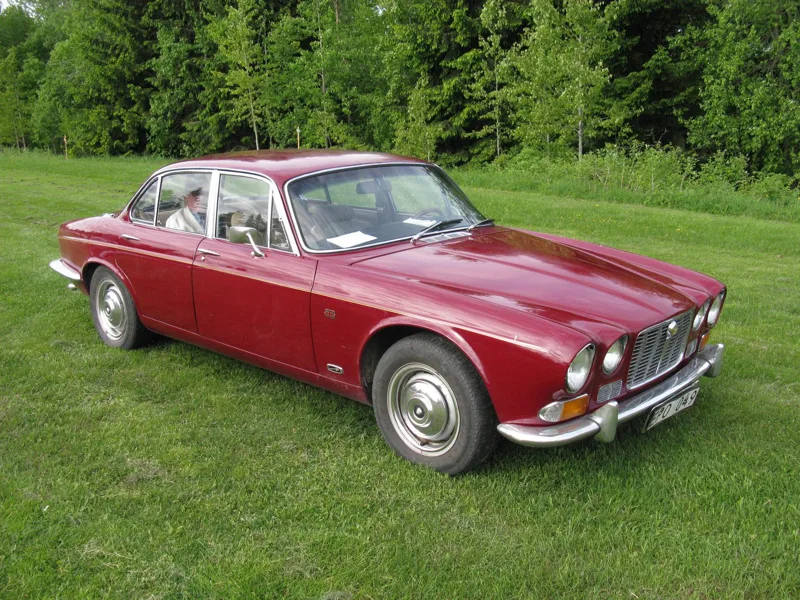
The XJ6 replaced most of Jaguar's saloons, which had grown into four separate ranges during the 1960s. The original model was the last Jaguar saloon designed under Sir William Lyons, the company's founder. It was launched as the Series 1, with a four-door body on a 2.76 m (108.75 in) wheelbase and the XK straight-six.
The Series 1 carried over the 2.8-litre (2,792 cc) and 4.2-litre (4,235 cc) versions of the XK engine, along with the front and rear suspension from earlier models. The rear used the widest version of Jaguar's independent rear unit from the Mark X, and the front used a subframe-mounted independent layout that had debuted on the 1955 Mark 1, updated with anti-dive geometry.
An upmarket version was sold as the Daimler Sovereign from September 1968, continuing the name from the Daimler version of the Jaguar 420. Sir William fronted television advertisements in October 1969, in which he called it the finest Jaguar ever. The Series 1 also had an unusual twin fuel tank arrangement, with one tank on each side of the boot and a separately lockable filler on each wing.
Four platform generations, one flagship badge, and an electric successor that was cancelled before it reached the road.
When did the XJ get a V12?
A high-performance XJ12 was announced in July 1972 with a 5.3-litre V12 and the Borg-Warner Model 12 transmission. It was the only mass-produced 12-cylinder four-door car in the world at the time, and Jaguar described its top speed as around 225 km/h (140 mph), which made it the fastest full four-seater available.
Fitting the V12 was a tight job, and cooling was a real challenge. Jaguar rejected bonnet louvres like those on the 12-cylinder E-Type and built a cross-flow radiator divided into two horizontal sections, with coolant feeder tanks at each end. The fan was geared to run at one and a quarter times engine speed, with a limiter cutting in at 1,700 rpm.
The fuel system had a relief valve that returned fuel to the tank above 1.5 psi, to limit vapour lock at high operating temperatures. The battery had its own thermostatically controlled fan. A total of 3,228 Series 1 XJ12s were built, and a Daimler Double-Six, which revived a Daimler name from 1926 to 1938, was introduced in 1972 as a badge-engineered version.
What did the Series 2 change?
The XJ received a facelift in autumn 1973 for the 1974 model year, and the cars became known as the Series 2. The 4.2 XJ6 remained the most popular engine in the United Kingdom, and the 5.3 V12 carried on alongside it. A 3.4-litre version of the XK engine was added in 1975.
At the 1974 London Motor Show Jaguar withdrew the standard wheelbase, so all saloons gained the extra 4 inches (10 cm) of cabin length that had been limited to the long-wheelbase car. Series 2 cars also received raised front bumpers to meet US crash rules, which forced a smaller grille with an additional inlet below the bumper.
The interior was substantially updated, with simplified heating and air-conditioning systems that answered complaints about the Series 1 units. In April 1975 North American cars received revised bumpers with full-length rubber over-riders and integrated turn signals. The V12 lost its Zenith-Stromberg carburettors to Bosch-Lucas electronic fuel injection, and the six-cylinder XJ6L followed in 1978.
Worldwide production of the Series 2 ended in 1979, although some cars were built in Cape Town until 1981. In total 91,227 Series 2 models were produced, and 14,226 of them had the V12. New Zealand had a locally assembled version, and its 1978 SuperJag XJ6-SLE came with half-leather seats and air conditioning as standard.
What was the XJ-C coupe?
The XJ-C was a two-door coupe with a pillarless hardtop body, and 9,378 were built between 1975 and November 1977. Jaguar also built about 2,000 Daimler-badged examples. The car had first been shown at the London Motor Show in October 1973, but it was clearly not ready, and the oil crisis that began that year took away the urgency to launch it.
The coupe was based on the short-wheelbase XJ, and its long doors were made by grafting two front door shells together under a single outer skin. Six-cylinder models numbered 6,505 and the V12 cars 1,873. Even so, the coupes suffered from water leaks and wind noise, and the labour-intensive body, the higher price and the arrival of the XJ-S all kept the run small.
Lynx Cars and Avon converted some XJ-Cs into convertibles with a retractable canvas roof, and 16 of those conversions were made with powered tops. They were not factory products. All coupes came with a vinyl roof as standard, and because the pillarless body flexed, Jaguar's paint of the time cracked. That is why many surviving XJ-Cs now run without the vinyl.
How did the XJ-C do in racing?
Ralph Broad of Broadspeed developed the XJ12C for the European Touring Car Championship. Derek Bell drove it, and at Silverstone's RAC Tourist Trophy in September 1976 it led on debut before retiring. Overweight and unreliable, the cars rarely finished well, and the best result was second place at the Nurburgring in 1977.
British Leyland cancelled the programme before the 1977 season ended. BMW won every race that year. Jaguar had spent four weeks solving lubrication problems that had sidelined its cars at Monza, and it took pole at the Salzburgring, but both cars retired after 35 minutes with rear suspension failure.
What changed on the Series 3 in 1979?
The car was significantly facelifted in April 1979 as the Series 3, with a subtle exterior redesign by Pininfarina. The bumpers became thicker and more fully rubber-faced, with chrome only on the top edge, and the door handles went flush. The grille had only vertical vanes, and the reverse lights moved to the larger rear clusters.
The C-pillar gained a more prominent Hofmeister kink, and the roofline had narrower door frames with more glass. The option of a sunroof and cruise control appeared for the first time. The 5.3 V12, 4.2 and 3.4 engines carried over with minor changes. The larger six-cylinder and V12 cars used Bosch fuel injection made under licence by Lucas, while the smallest six stayed carburetted.
How did the Series 3 end?
In 1981 the V12 heads were replaced by a new high-compression Fireball design by the Swiss racing driver Michael May. Those engines were badged HE, for High Efficiency, until 1985. A trip computer appeared in 1983 and was standard on the V12, and the much sought-after pepperpot alloy wheel with its many round holes arrived in the same year.
For the 1984 model year the Sovereign name moved from the Daimler marque to a top-specification Jaguar model. The Vanden Plas name was dropped in Britain, although Jaguar kept it in North America. Production of the six-cylinder Series 3 ended in early 1987, when the all-new XJ40 took its place. The V12 Series 3 continued until 1992.
The last 100 cars were numbered and sold in Canada as a commemorative series. Buyers could have a brass plaque fitted to the glove box, the console or nowhere, and it was a local initiative by Jaguar Canada staff rather than Coventry.
How many Series 3 cars were built?
Some 132,952 Series 3 cars were built, and 10,500 of them had the V12 engine. Across the whole XJ6 and XJ12 run from 1968 to 1992, about 318,000 cars were produced.
What was the XJ40 like?
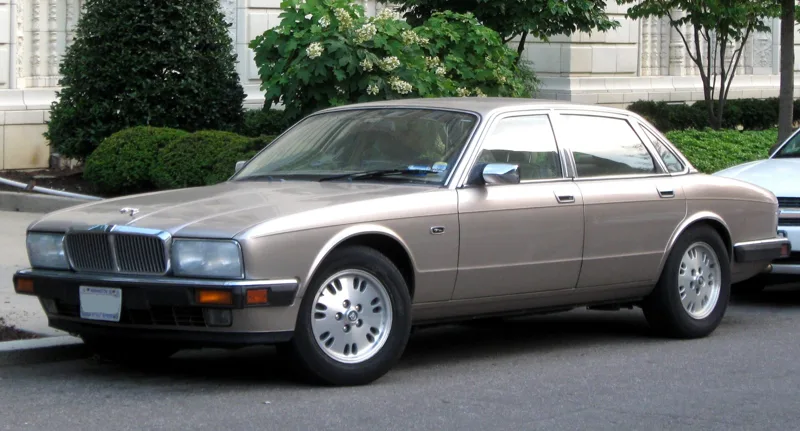
The XJ40 was unveiled on 8 October 1986 at the British International Motor Show. Development had started in the early 1970s, with small models built as early as 1972, and it was delayed by problems at parent company British Leyland and by the 1973 oil crisis. Jaguar put more emphasis on build quality and simplified the build process, cutting body panel pressings by 25%, which also saved weight and stiffened the chassis.
The styling was squarer and more angular than the Series 3. Rectangular headlamps replaced round units on the better-equipped cars, and a single wide wiper swept the windscreen. A digital instrument cluster was tried but dropped for the 1990 model year in favour of analogue dials. The six-cylinder cars used the AJ6, a four-valve twin-cam inline-six that replaced the XK unit.
The V12 XJ12 and Daimler Double Six returned in 1993, one year before the XJ40 ended production. The Series 3 V12 had been kept alive for longer because the XJ40 was reportedly designed in a way that stopped a V12 from fitting easily.
What did the X300 and the Ford years bring?
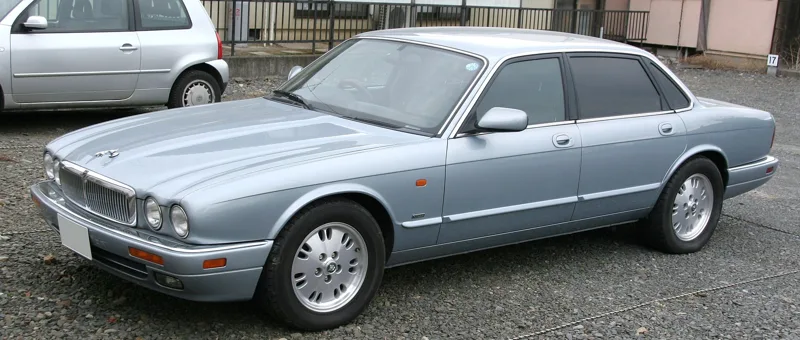
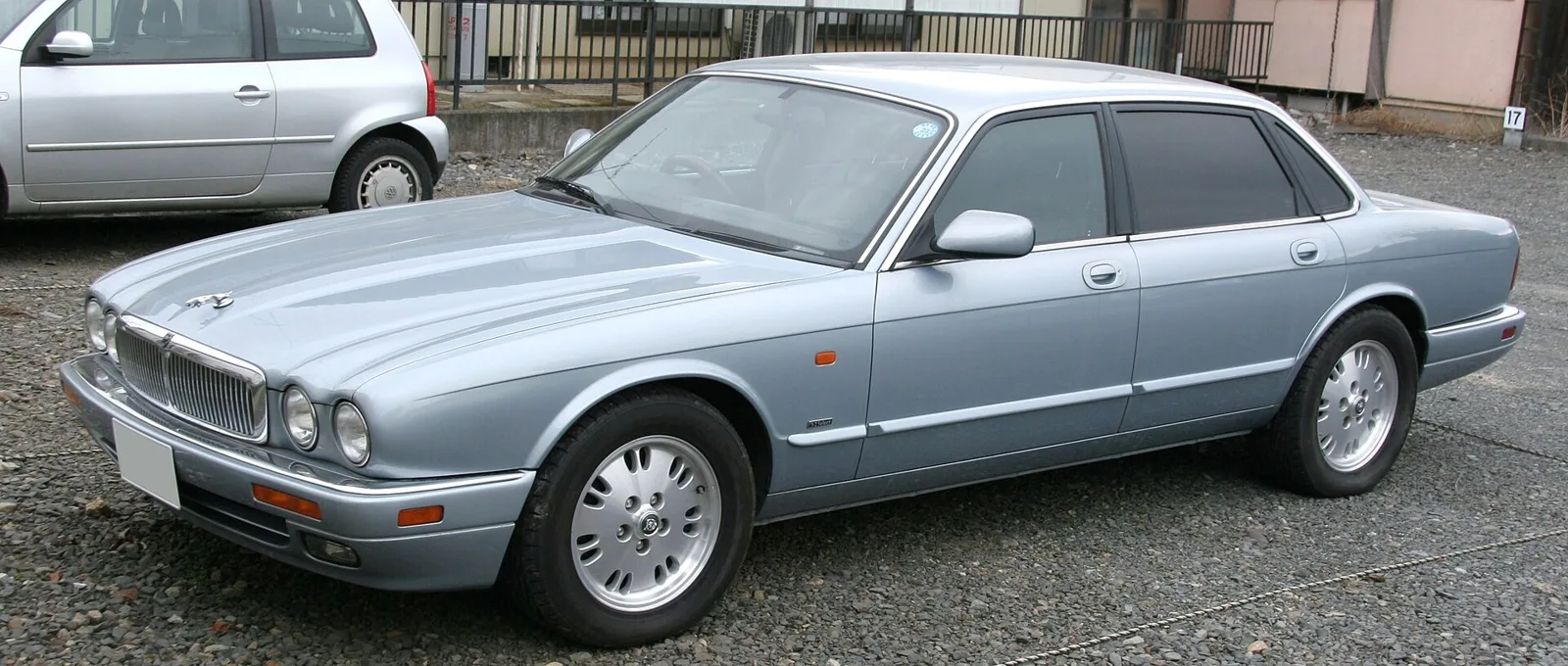
The X300 was introduced in October 1994 at the Paris Motor Show. It was styled to evoke the curvaceous Series XJ, and it returned to four individual round headlamps. Mechanically it was close to the XJ40 it replaced, but its six-cylinder engine was the AJ16 with electronic distributorless ignition. The XJR was the first supercharged road car the company had built.
The V12 remained until the X300 ended in 1997, though it finished a year earlier in the United States because of OBD-II emissions problems. Ford owned Jaguar from 1990 to 2007, and that showed in the X300's product development processes more than in its parts. The traction control came from the Ford Mondeo, and the air conditioner was a Denso unit bought through Ford channels.
A Car and Driver comparison found the X300 less roomy than the BMW 5 Series and Mercedes-Benz E-Class, despite its longer dimensions.
What did the X308 change?
The X308 arrived in 1997 and switched the nomenclature from XJ6 and XJ12 to XJ8, because it was powered by a new V8. Ford had halted a new saloon, codenamed XJ90, and proposed putting its V8 and front and rear ends onto the XJ40 centre section. The V8 was not ready in time, so the X300 ran on longer than planned.
The X308 kept the X300's rounded four-headlamp bonnet, low roofline and wrap-around rear lights. The engines were new AJ-V8 units of 3.2 and 4.0 litres, with the 4.0 also available in supercharged form in the XJR. Certain markets, such as the United States, only received the 4.0. Every X308 came with a five-speed automatic, and the optional Computer Active Technology Suspension, known as CATS, was on offer.
Inside, the rectangular instrument binnacle that had lasted since the XJ40 gave way to three deeply recessed dials, similar to the Jaguar XK8. The new fascia allowed a proper glove compartment to return after it had been lost to an airbag on the XJ40.
What was the X350 and its later facelifts?
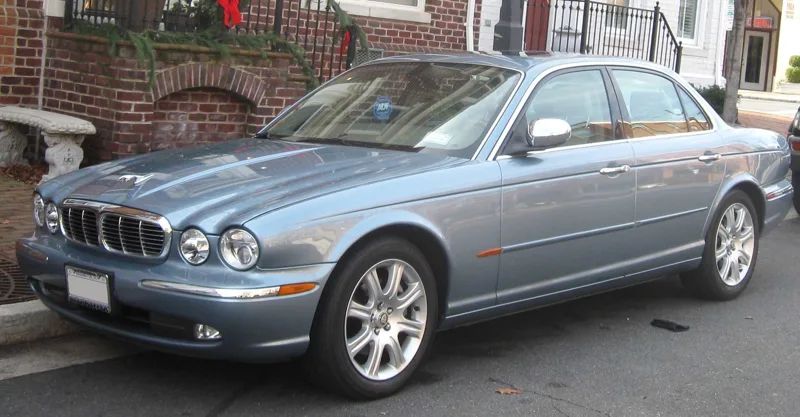
In 2003 Jaguar introduced the third-generation XJ, continuing with the XJ8 name. Designated X350, it had an all-aluminium body and chassis, and it was the first XJ designed completely under Ford ownership. It was built for seven years, and 83,518 were manufactured.
The V8 came in 3.5 and 4.2 litres, with a supercharged version, and a 3.0-litre V6 was also offered, though neither V6 engine was sold in the United States. A new six-speed automatic provided lock-up on every gear, and air suspension with computer-controlled ride height was fitted front and rear. Two-zone climate control was standard, with four zones on the long wheelbase.
The facelifted X356 arrived in 2005 for the 2006 model year, with a revised grille and slightly redesigned front fenders. The X358 followed at the end of February 2007 with a lower grille, faux side vents, a small boot spoiler and revised seating. A Jaguar emblem in the grille replaced the bonnet mascot.
What did the 2009 X351 look like?
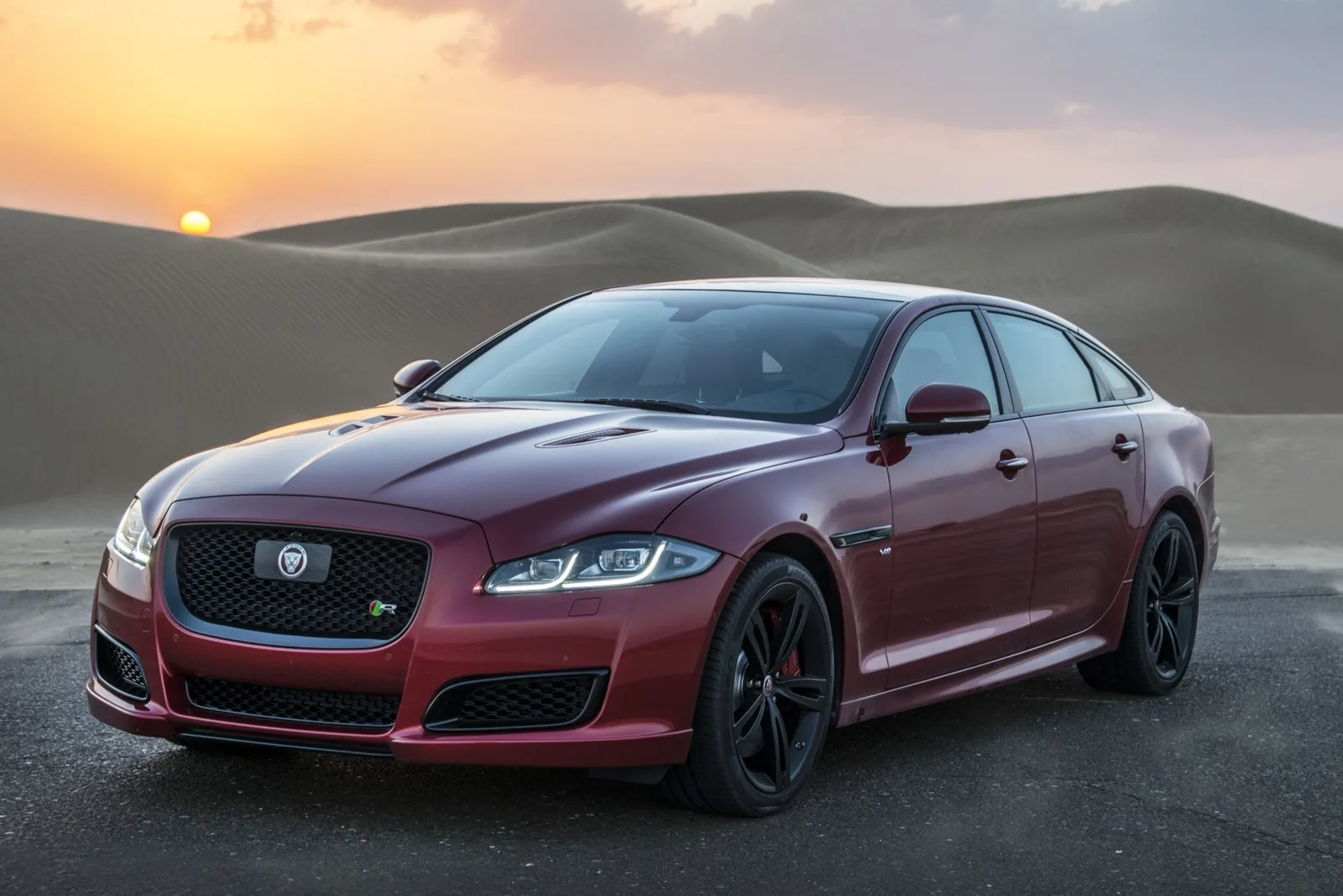
The redesigned XJ was unveiled in July 2009 at the Saatchi Gallery in London, with Jay Leno and Elle Macpherson revealing the car. Its look came from Ian Callum's new design direction, and it was a clean break from the Series mould. It was longer and wider than its predecessor, and it shared visual links with the XF.
The rear divided opinion. The upright, swooping tail lights, nicknamed cat's claws, and the black roof panels at each side of the rear window were designed to hide the car's width. A full-length sunroof ran the length of the roof, and the dashboard was an all-LCD design that could show virtual dials, with a console display offering different views to driver and passenger.
Engines were modern units from other Jaguar Land Rover products: a 5.0-litre V8 in normal or supercharged form, and a 3.0-litre twin-turbocharged diesel V6 expected to account for most sales. A supercharged 3.0 V6 joined in 2013 as an alternative to the diesel. A 2014 facelift upgraded the suspension and rear seats on the long wheelbase and made stop-start standard. A 2015 update added LED headlights, J-Blade rear lights and driver assistance features such as Queue assist, a 360-degree camera and semi-automated parking.
Which prime ministers used the XJ?
British prime ministers used the XJ. Various versions were used by Margaret Thatcher, John Major, Tony Blair and Gordon Brown. David Cameron took delivery of a dark grey XJ Sentinel on 11 May 2010, and a second Sentinel followed in 2011 with bomb-proof doors, bullet-proof glass and armoured plating beneath the floor.
The XJ Sentinel was later used to transport Theresa May and Boris Johnson. Under Johnson the XJ was replaced for the first time since 1979, when the Range Rover Abio Sentinel took over as the prime ministerial car in 2019.
What happened to the electric XJ?
On 5 July 2019 Jaguar Land Rover confirmed plans for an all-electric XJ luxury saloon at its Castle Bromwich plant, with a launch expected in 2020. First images of the new taillights were shown, and the car was rendered again on that basis in 2020.
On 15 February 2021 the company shelved the electric XJ. It said the planned replacement did not match its vision for a reimagined Jaguar brand, following a broad technology review.
Jaguar XJ generations at a glance
| Generation | Years | Engines | Key figures |
|---|---|---|---|
| Series 1 | 1968-1973 | XK straight-six 2.8 L and 4.2 L; 5.3 L V12 from 1972 | Wheelbase 2.76 m (108.75 in); 3,228 XJ12s |
| Series 2 | 1973-1979 | 3.4 L six added in 1975; V12 with fuel injection | 91,227 built, 14,226 with V12 |
| Series 3 | 1979-1992 | Fireball V12 heads from 1981 | 132,952 built, 10,500 with V12 |
| XJ40 | 1986-1994 | AJ6 inline-six; V12 from 1993 | Unveiled 8 October 1986; 25% fewer body pressings |
| X300 and X308 | 1994-2003 | AJ16 six, AJ-V8 3.2 and 4.0 L; XJR supercharged | X308 five-speed automatic only |
| X350 to X358 | 2003-2009 | V8 3.5 and 4.2 L, 3.0 V6 | 83,518 built |
| X351 | 2009-2019 | 5.0 V8, 3.0 diesel V6 | Unveiled July 2009 at the Saatchi Gallery |