Battista Farina's Turin firm styled cars for Ferrari, Alfa Romeo and Cadillac, then built trains, yachts and buildings before Mahindra took control in 2015.
Pininfarina is an Italian car design firm and coachbuilder headquartered in Cambiano, near Turin. Battista 'Pinin' Farina founded it in 1930. It styled Ferrari and Alfa Romeo cars for decades, later moved into trains, yachts and architecture, and has been controlled by Mahindra since 2015.
Pininfarina is a design house and coachbuilder whose studio sits in Cambiano, outside Turin. It began as a body maker for private customers before the Second World War, then became the styling partner of Ferrari, Alfa Romeo and General Motors. Over the decades its work spread into trains, yachts, furniture and consumer goods.
Who founded Pininfarina?
Battista 'Pinin' Farina founded the company in Turin. He left his brother's coachbuilding firm in 1928 and set up Carrozzeria Pinin Farina, which was incorporated in 1930. In its first year it employed 18 people and built 50 automobile bodies. Financial backing came partly from his wife's family and Vincenzo Lancia.
Lancia was a pioneer of the monocoque, a body and chassis built as one structure. Pininfarina took up the method in the mid-1930s and became the first coachbuilder to make bodies for it, a move other coachbuilders had feared would end their trade. Through the 1930s the workshop served Lancia, Alfa Romeo, Isotta Fraschini, Hispano-Suiza, Fiat, Cadillac and Rolls-Royce.
A Turin coachbuilder that grew into a design partner for carmakers across Europe, Asia and America.
How did the Second World War affect the firm?
Car production across Europe stopped during the war, and the Pinin Farina workshop had reached 400 employees, building 150 bodies a month by 1939. Wartime orders moved to ambulances and searchlight carriages. Allied bombers later destroyed the factory, and the firm's operations came to a halt.
Why was the 1946 Paris Motor Show important?
Italian exhibitors were barred from the 1946 Paris Motor Show, but Battista Farina and his son Sergio drove two cars from Turin to Paris and displayed them at the entrance. The show drew 809,000 visitors, twice the pre-war figure. The stunt turned a snub into publicity for the Turin coachbuilder.
The two cars were an Alfa Romeo and a Lancia Aprilia cabriolet. Organisers at the Grand Palais reacted with irritation, but the press and public treated the display as a triumphant 'anti-salon'. The Cisitalia 202 Coupe, designed at the end of 1945, is usually credited with establishing the firm's reputation. Only 170 were built, yet the Museum of Modern Art's 1951 exhibition 'Eight Automobiles' gave the design lasting recognition.
How did Pininfarina reach the United States?
Publicity from the Museum of Modern Art brought Pinin Farina to the attention of Nash-Kelvinator managers, and the collaboration led to high-volume production of Pininfarina designs for Nash Motors. The Nash-Healey body was built in Turin from 1952 to 1954. General Motors commissioned Cadillac Eldorado Brougham bodies, with 99 built in 1959 and 101 in 1960.
The Nash link brought mixed results. The Ambassador and Statesman lines carried some Pininfarina detailing, but Nash's own styling staff reworked the design because the original did not suit American buyers. Nash's advertising about the Italian connection still made the designer's name familiar across the country.
The Cadillac Allante came later. A 1983 agreement with General Motors led to a car whose bodies were built and painted in Italy, then flown to Detroit for final assembly.
What was the relationship with Ferrari?
The partnership began in 1951 at a restaurant in Tortona, a town halfway between Turin and Modena, which both men accepted as neutral ground. It lasted 61 years. Up to the F12berlinetta, Pininfarina styled every road-going production Ferrari except the 1973 Dino 308 GT4.
The two firms went further than styling. Pininfarina was a partner in Scuderia Ferrari SEFAC, the company that managed Ferrari's race team from 1961 until 1989. Pinin Farina served as a Ferrari vice president, and Sergio later joined the board.
The relationship ended with the F12berlinetta, built from 2012 to 2017 and the last Ferrari fully penned by Pininfarina. Centro Stile Ferrari has designed every car since the LaFerrari in 2013.
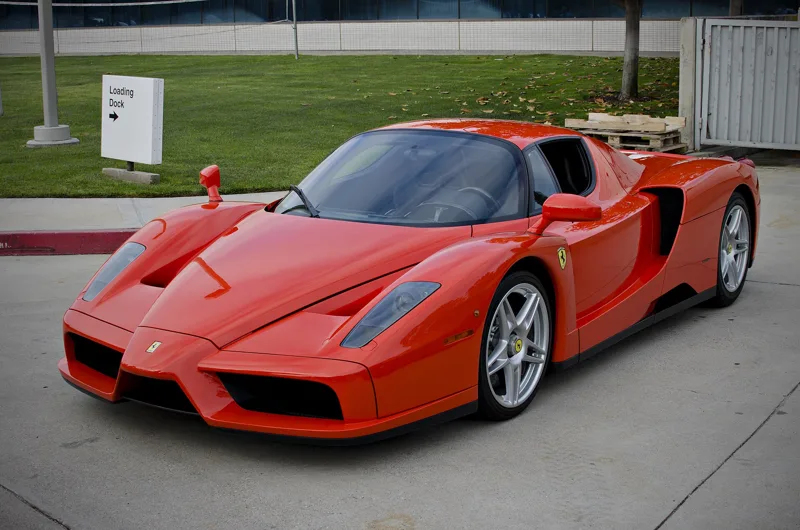
Pininfarina also built one-offs for private clients. The P4/5 of 2006 reworked the exterior of a single Enzo Ferrari to a client's specification. More than 200 components were designed for the car, and it kept the VIN of the Enzo it came from. The P4/5 was revealed on 18 August 2006 at the Pebble Beach Concours d'Elegance.
How did Pininfarina move into mass production?
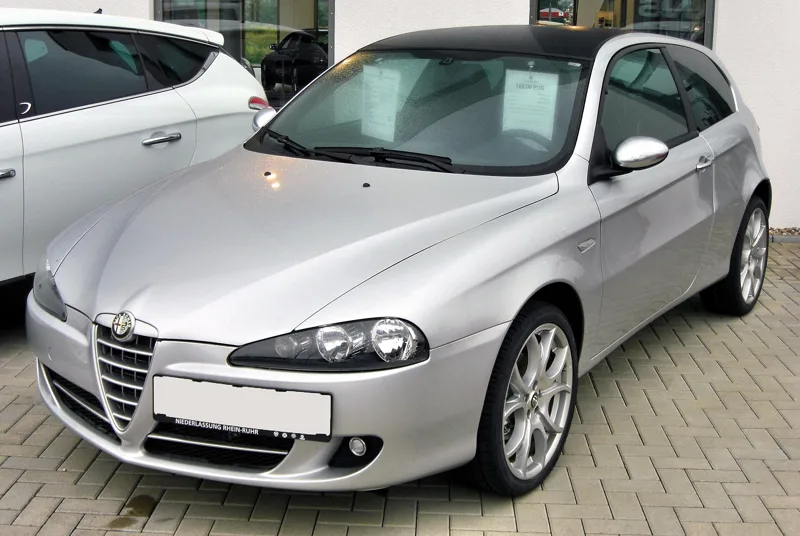
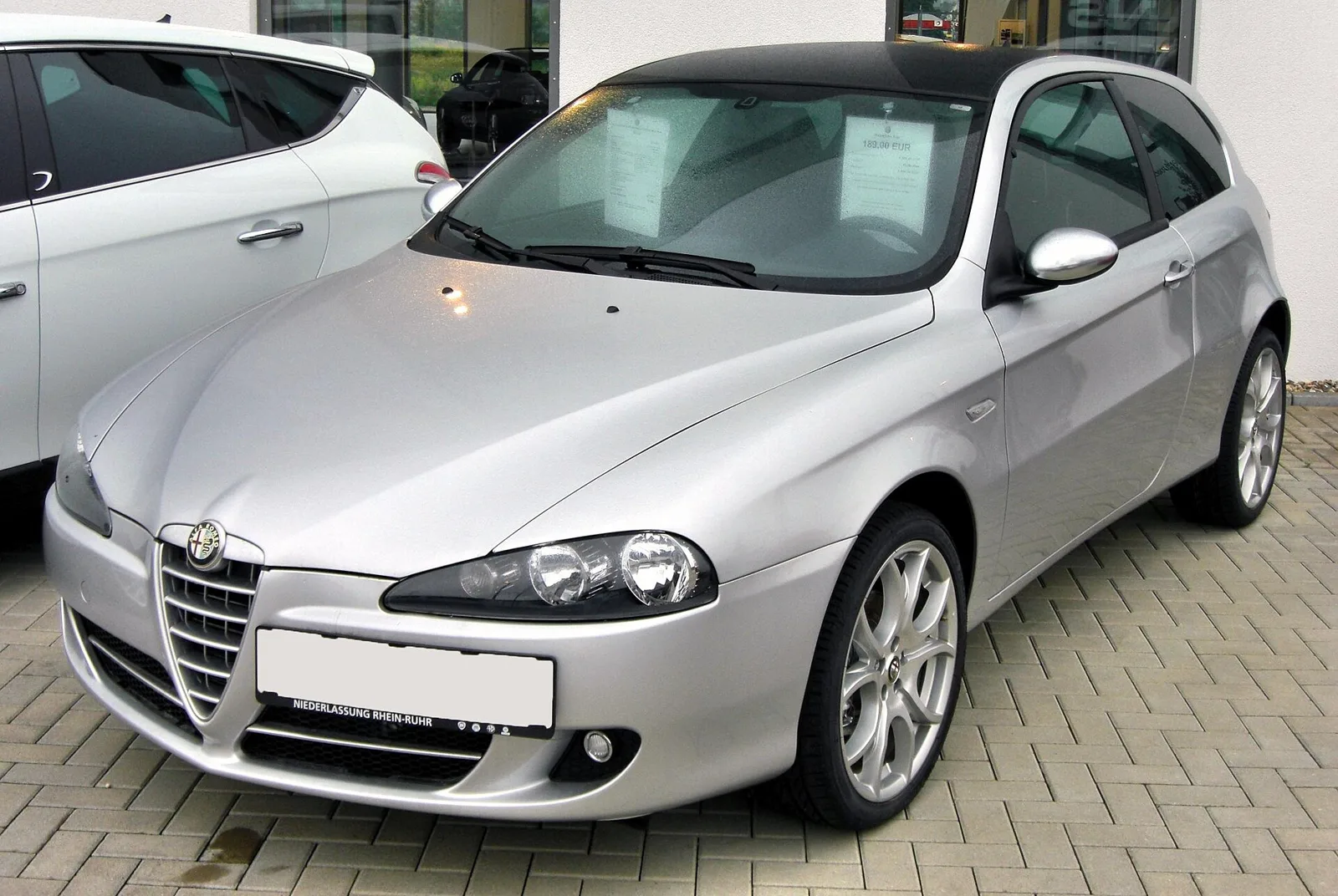
The Alfa Romeo Giulietta Spider was the first car the firm built in large numbers. Alfa Romeo chose Pininfarina over Bertone, reckoning on 20 cars a day across a run of 1,000 bodies. Output reached 1,025 units in 1958 and more than 4,000 in 1959, the first full year at the new Grugliasco factory.
Pininfarina bought land at Grugliasco in 1954 and 1955, and the plant opened in 1958 with nearly 1,000 employees. By 1960 output had passed 11,000 car bodies. Max Hoffman, the American importer, said he could sell as many Spiders as the factory could make.
Why did Pininfarina build a wind tunnel?
Pininfarina built a full-size wind tunnel as part of a wider push to put car design on a scientific footing. Work began in 1966 and the tunnel was completed in 1972. It was the first facility in Italy able to test full-size cars, and one of the first in the world with that ability.
General Motors did not open its own full-size tunnel until 1980. The Studi e Ricerche research centre had opened in Grugliasco in 1966 with 180 technicians producing 25 prototypes a year across 8,000 square metres (2 acres). A Calculation and Design Centre followed in 1967.
In 1982 the research arm moved to Cambiano, away from the Grugliasco factory and wind tunnel, so design research stayed apart from manufacturing. The engineering centre inaugurated on 14 October 2002 gave engineering more visibility and independence.
What joint ventures did Pininfarina run?
The main ones were a 1996 deal to build a Mitsubishi compact SUV in Italy and a 2003 joint venture with Volvo in Sweden. The Pajero Pinin began production at the Bairo Canavese plant in April 1997, while the Uddevalla plant built the Volvo C70 from 2006 until June 2013.
Mitsubishi chose Pininfarina partly because manufacturing costs in Italy were half those in Germany. The Volvo venture was 60% Pininfarina and 40% Volvo, and its C70 shared the P1 platform used in the S40.
Volvo ended the joint venture in 2011 and became sole owner of the Uddevalla plant. A termination fee of 30 million euros was due to Pininfarina.
Why did Pininfarina run into financial trouble?
Three years of serious losses, totalling 115 million euros by the end of 2007, pushed the group into a debt crisis. Its share value fell 67% in 2008, leaving a market capitalisation of about 36 million euros against total debt of 598 million euros. A bank consortium agreed to restructure 555 million euros of that debt.
In April 2008 the company announced that investors including Piero Ferrari and Ratan Tata would put in 100 million euros, while the Pininfarina family's stake would drop from 55% to 30%. In 2012 the repayment date was pushed back to 2018 from 2015. In 2013 the company reported a net profit of 32.9 million euros, but it came from a one-off gain of about 45 million euros, against an operating loss of 8.2 million euros.
Who owns Pininfarina today?
Mahindra Group, the Indian conglomerate whose carmaker is Mahindra and Mahindra, acquired 76.06% of Pininfarina S.p.A. on 14 December 2015 for about 168 million euros. Mahindra also offered the same price to remaining shareholders, put 20 million euros into the business and guaranteed 114.5 million euros owed to creditors.
In 2016 Paolo Pininfarina served as president, with Silvio Pietro Angori as chief executive and general manager. Staff numbers have shrunk from a peak of 2,768 people in 2006 to 821 in 2012, and the company reported more than 700 employees in 2021.
Why did Pininfarina stop building cars?
Pininfarina announced on 10 December 2011 that it would end all automotive production. In practice the last cars were built in November 2010, when the contract to make the Alfa Romeo Brera and Spider at the San Giorgio plant finished. Ford production there had already ended in July 2010.
The Grugliasco factory was sold in 2009 to Finpiemonte, the public finance body of the Piedmont Region, for 14.4 million euros. The Bairo Canavese site was leased to the Cecomp Group, which built 4,000 electric Bollore Bluecars under a contract running from April 2011 to December 2013.
Pininfarina still designs, builds and tests prototypes for other carmakers on contract, but it no longer runs a production line for its own cars.
Which Pininfarina designs are best known?
Among the best-known Pininfarina designs are the Cisitalia 202 Coupe, the Alfa Romeo Giulietta Spider, the Cadillac Eldorado Brougham and a long run of Ferrari road cars. Several prototypes also reached production, including the Ferrari 612 Scaglietti and the F50.
- Cisitalia 202 Coupe, designed late in 1945, with 170 built
- Alfa Romeo Giulietta Spider, 1,025 units in 1958
- Cadillac Eldorado Brougham, 99 in 1959 and 101 in 1960
- Ferrari P4/5, a 2006 one-off reworked from an Enzo Ferrari
- Ferrari F12berlinetta, the last Ferrari fully penned by Pininfarina
- Pininfarina B0, a solar-electric concept shown at the 2008 Paris Motor Show
Some concepts never reached the road. The Pininfarina Nido was a two-seat sub-compact described as a way to make airbags obsolete.
What is the Pininfarina Battista?
The Battista is a luxury electric sports car developed by Automobili Pininfarina, a company that invested over 20 million euros in Pininfarina design and engineering services in 2018. It has four electric motors, 1,900 horsepower and a top speed of 350 km/h (217 mph). Only 150 were planned.
Automobili Pininfarina planned to reveal the car at the 2019 Geneva Motor Show, and the performance target was to reach 100 km/h from a standstill in under two seconds.
What has Pininfarina designed since 2015?
Since the Mahindra takeover the firm has kept up concept and transport work. It developed the Furio mass transport truck with Mahindra in 2018, and in 2020 it won four Good Design awards, including one for the AutoNomia driving simulator. In 2021 it showed Teorema, an electric concept that uses wheel space for extra seating.
In 2022 Pininfarina expanded its North American retail partner network with shops in Chicago and Orange County.
Did Pininfarina design things other than cars?
Yes. Its non-car work includes high-speed trains, trams, buses, yachts and private jets. The Pininfarina Extra consultancy, set up in 1986, also advises on industrial, interior, architecture and graphic design, and its product work runs from a Bovet watch to a Costa Coffee espresso bar and a Coca-Cola Freestyle dispenser.
Train projects include the ETR 500 high-speed trainset built from 1987 to 2000 and the Fyra V250 for NS Hispeed in 2008. Eurostar's e320 received new external livery and interiors in 2015.
Smaller projects range from the 2006 Winter Olympics torch, cauldron and medals to appliance collections for Gorenje. A 1999 collaboration with Casio produced a G-Shock watch that drew criticism for its weak strap.
Pininfarina at a glance
The table gathers the core company facts. Where a figure belongs to a particular year, the table says so, so that staff numbers from 2006 are not confused with those from 2012.
| Specification | Detail |
|---|---|
| Founder | Battista 'Pinin' Farina |
| Founded | 1930 in Turin; the firm began in 1928 |
| Headquarters | Cambiano, Turin, Italy |
| Owner | Mahindra Group, 76.06% from 14 December 2015 |
| Listing | Milan Stock Exchange, from 1986 |
| Peak staff | 2,768 people in 2006 |
| Staff in 2012 | 821 |
| Staff in 2021 | More than 700 |
| Car production end | Announced 10 December 2011; last cars November 2010 |
| Ferrari partnership | 1951 onward, 61 years |
Frequently asked questions
Is Pininfarina still a car maker?
Not in series production. Mass car output ended in 2010 and 2011, but the company still designs and builds prototypes for other manufacturers on contract. Its Battista electric car comes from Automobili Pininfarina, a separate business.
How did the Pininfarina name come about?
The family name was formally changed in 1961, when the President of Italy authorised the switch from Farina to Pininfarina. The business adopted the new name the same year, after Battista handed the firm to his son Sergio and son-in-law Renzo Carli.
Which Ferrari road car was not styled by Pininfarina?
The 1973 Dino 308 GT4 was the only road-going production Ferrari from the partnership years that Pininfarina did not design. Centro Stile Ferrari later took over styling from the LaFerrari onwards.
What was the Pininfarina B0?
The B0 was a four-seat hatchback concept developed with the Bollore Group and shown at the 2008 Paris Motor Show. Its solid-state lithium-polymer battery, supercapacitors and roof-mounted solar panel gave an estimated range of 153 miles (246 km).
Where is Pininfarina based?
The company is headquartered in Cambiano, a town near Turin in the Piedmont region of north-west Italy. Its research and engineering centres sit on the Cambiano campus, while the former Grugliasco factory was sold in 2009.