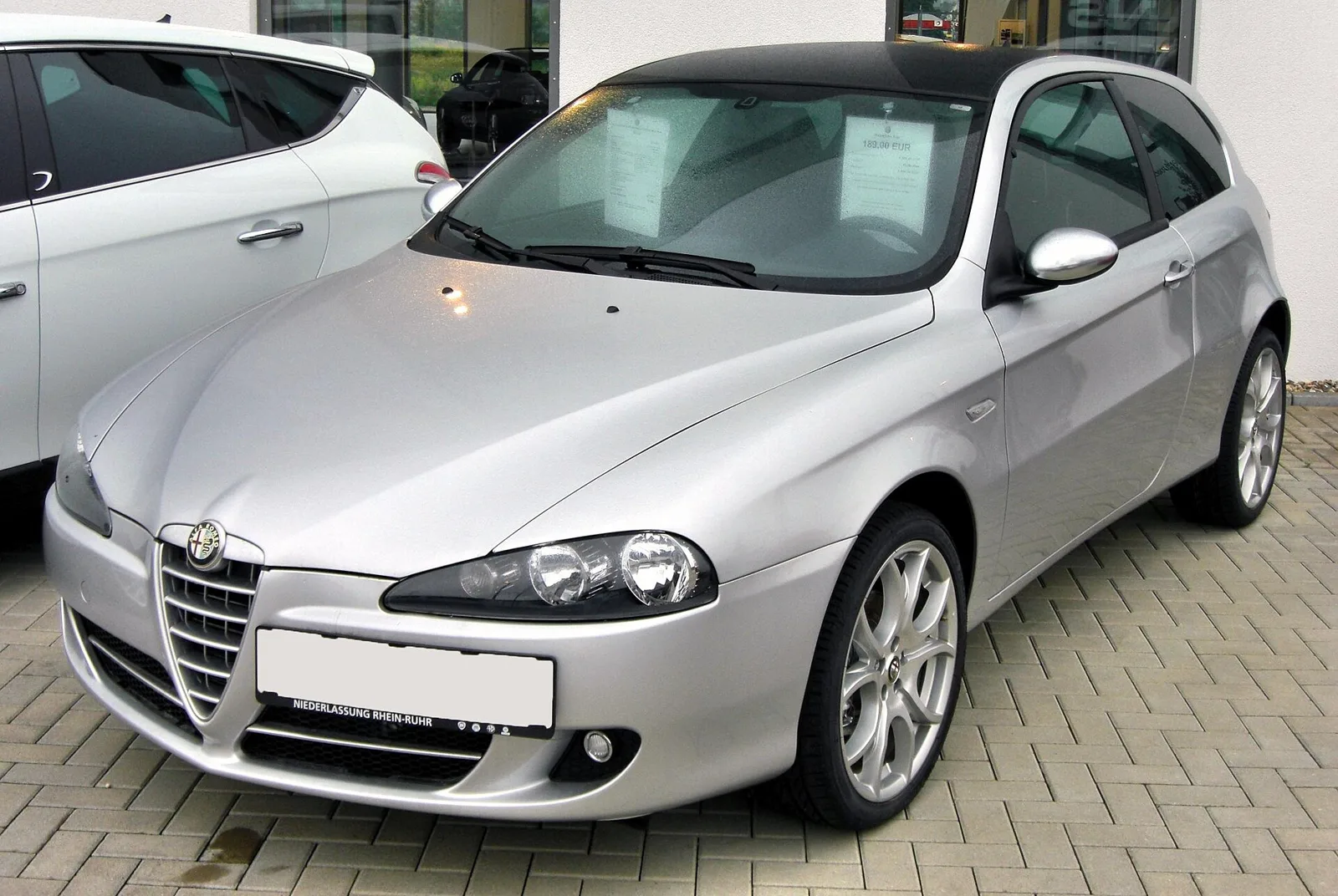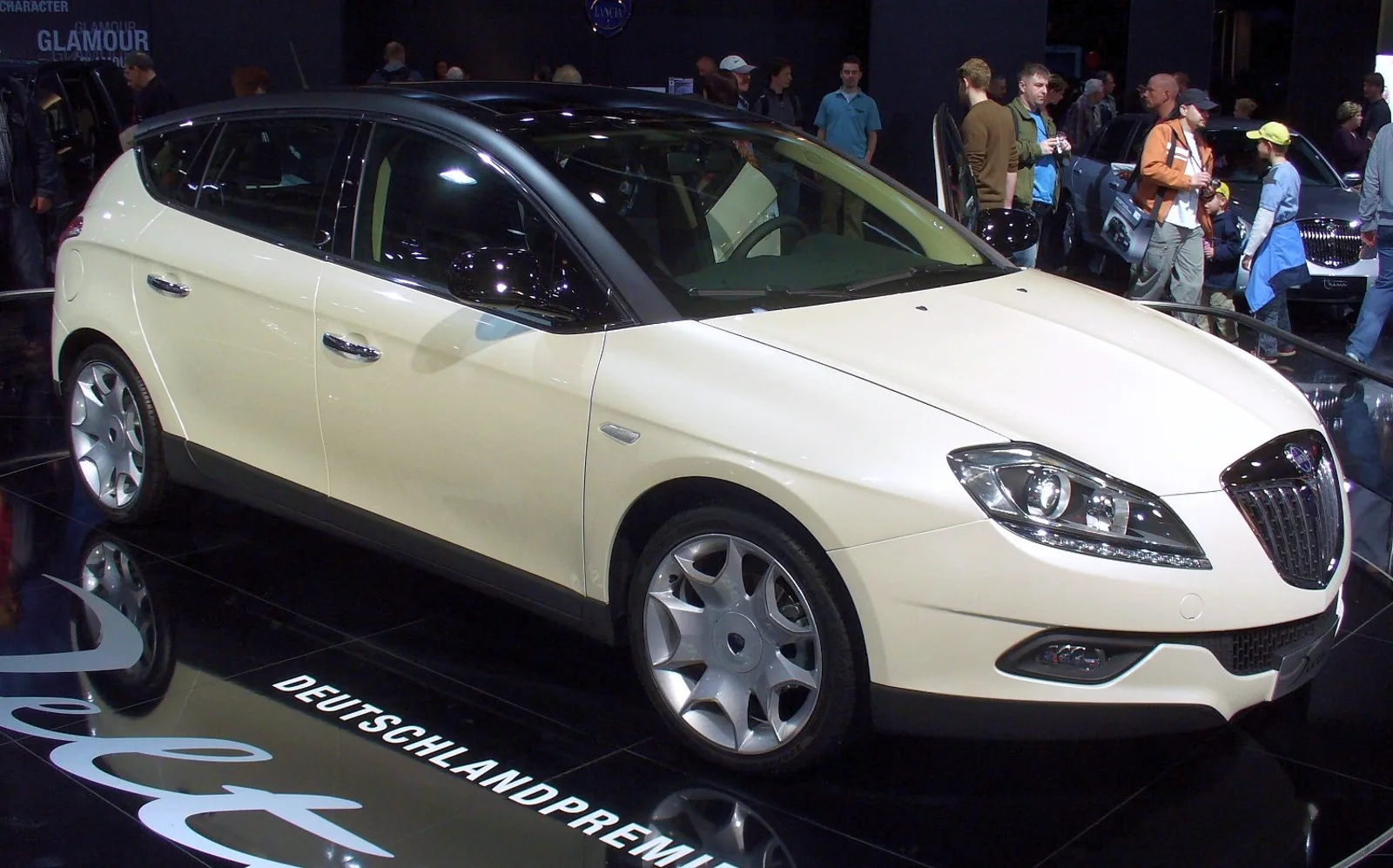
A 1906 Turin founding, monocoque and V6 firsts, a string of world rally titles and a brand now rebuilding around a single model.
Lancia traces its start to a Turin workshop of 1906 and now sits inside Stellantis Europe. Its engineering milestones run from a 1922 monocoque to a 1950 V6, and it holds more Manufacturers' Championships than any rival. Sales have shrunk, and the Ypsilon is now the core of the range.
Lancia is an Italian car manufacturer founded in Turin on 27 November 1906, and it is now a subsidiary of Stellantis Europe. The brand's engineering record includes a 1922 monocoque and the first full-production V6 of 1950, and its rallying record is hard to match. Its modern range is built around a single model, the Ypsilon.
When was Lancia founded and by whom?
Lancia & C. was founded on 27 November 1906 in Turin by Vincenzo Lancia and Claudio Fogolin. The company's history is traced to that date, although the present legal entity of Lancia was only formed in January 2007 when its corporate parent reorganised its businesses.
Vincenzo Lancia lived from 1881 to 1937, and the firm he started became one of Italy's most inventive car makers. The founding partners were Fiat racing drivers, and that link with Fiat would shape the company's future for decades.
The brand's continuity is one of its strengths. Lancia has kept its name, its logo tradition and its rallying identity through several owners and reorganisations.
From a 1906 Turin workshop to a Croatia Rally win in 2026, the Lancia name has always been about daring engineering.
Why did Fiat take control of Lancia in 1969?
Fiat launched a take-over bid for Lancia in October 1969. The bid was accepted because Lancia was losing significant sums of money, with losses of 20 million pounds in 1969 alone. Lancia became part of Fiat that year.
The takeover ended the company's independence, but it did not end the Lancia name. The brand kept its distinct identity, and the parent company used it to occupy a particular niche in the Italian market.
The financial pressure of the late 1960s is a useful reminder of how hard it was for a specialist maker to stay independent. Lancia's cars were expensive to build, and that cost base was hard to sustain without a larger partner.
Who ran Lancia after Vincenzo Lancia died?
Vincenzo Lancia died in 1937, and his son Gianni took the helm in the years that followed. Gianni Lancia was president of the company from 1947 to 1955, and he brought a focus on motorsport and engineering that marked the period.
In 1956 the Pesenti family took control, with Carlo Pesenti in charge of the company. The change of ownership came after a long period in which the firm had built a strong engineering reputation under the Lancia family.
Vittorio Jano also joined the company as an engineer. He had already designed Alfa Romeo race cars, and his arrival brought fresh experience to a company that was building some of its most ambitious machines.
What engineering firsts did Lancia achieve?
Lancia is renowned for introducing cars with numerous innovations. The Theta of 1913 was the first European production car with a complete electrical system as standard equipment, and the Lambda of 1922 was the company's first monocoque car.
The Ardea of 1948 was the first production car with a 5-speed gearbox. The Aurelia of 1950 premiered the first full-production V6 engine, and Lancia was also the first manufacturer to produce a V4 engine.
Lancia introduced rear transaxles on the Aurelia and Flaminia range, and the Aurelia's front engine rear transmission layout was later used by Ferrari, Porsche and Volvo. These choices made the company a source of ideas that other makers borrowed.
What was the Lambda and why does it matter?
The Lambda was produced from 1922 to 1931 and was Lancia's first monocoque car. It featured Sliding Pillar independent front suspension, which put the spring and hydraulic damper into a single unit that was reused in later Lancias.
That suspension design stayed in use up to the Appia, which was replaced in 1963. The Lambda therefore set the pattern for a run of Lancia models over more than four decades, and it is still cited as a milestone in the company's technical history.
Which concept cars has Lancia shown?
Lancia has shown several concept cars over the years, starting with the Flaminia Loratmo in 1958 and the Stratos Zero in 1970. The Hit by Pininfarina arrived in 1988, which gave the brand a bold design statement at a time when it was struggling for sales.
The company's newest design language is Pu+Ra, revealed on 28 November 2022. It led to the Pu+Ra HPE Concept, presented on 15 April 2023 in Milan, which put the new styling into a fully functional car.
How has the Lancia logo changed over time?
Count Carlo Biscaretti di Ruffia drew the first Lancia badge, and the 1929 version placed the round emblem on a blue shield shaped like a Reuleaux triangle. That shield was taken from one of his original sketches.
In 1957 the Flaminia introduced a horizontal full-width grille, and the logo moved inside the grille opening as a chromed metal design. The 2007 logo was redesigned by Robilant Associati, and the current logo followed in 2022 as part of the Pu+Ra design language.
How far did Lancia sales fall?
Lancia-branded sales declined from over 300,000 units in 1990 to under 100,000 by 2010. Fiat acquired a stake in Chrysler in 2009, and the Lancia range was then extended with rebadged Chrysler products for most European markets.
Sales outside Italy ended in 2017, and the company's only product for a long period was the Ypsilon. The supermini remained popular at home, and it was the second best-selling car in Italy in 2019.
The Ypsilon's Italian results show how much the brand has depended on one market. Its first quarter in 2024 brought 12,923 sales, up 16.4%, and by July 2024 the car had sold 24,709 units with a 2.8% market share.
Why did Lancia leave the British market?
Britain was Lancia's biggest export market in 1978, when 11,800 vehicles were sold there. The brand's reputation was damaged in 1980, when defective Beta models were bought back from owners in a publicised recall, and the cars were later crushed.
In February 1994 the firm pulled out of the UK and other right-hand drive markets. The Delta was the last model on sale, and it was withdrawn in 1995, although a small number of left-hand drive models have reached the UK as personal imports.
Fiat cancelled plans to relaunch Lancia in the UK in December 2008, citing financial concerns during the financial crisis. A later return came through Chrysler-badged models, which shows how the brand's international path has changed.
Did Lancia sell cars in the United States?
Lancias were sold in the United States from 1975, but sales were comparatively slow. The American range was dropped in 1982, alongside Fiat's exit, and the brand did not return in the years that followed.
In 2009 Fiat's stake in Chrysler led to plans for the two brands to co-develop products, with some vehicles shared between them. That plan changed the shape of the Lancia range in Europe, though it did not restore the brand to America.
What did Lancia achieve in Formula One?
The Lancia D50 started the 1954 Spanish Grand Prix with Alberto Ascari on pole. At Monaco in 1955 Ascari went into the harbour after missing a chicane, and a week afterwards he died while driving a Ferrari sports car at Monza.
The loss of Ascari and the company's financial problems led Lancia to withdraw from Grand Prix racing. Altogether the company took two Formula One victories and ten podiums, and its remnants passed to Scuderia Ferrari.
Juan Manuel Fangio won the 1956 title in a Lancia-Ferrari, a sign of how much Lancia engineering had moved into the Ferrari team.
How dominant was Lancia in world rallying?
The Fulvia brought Lancia the last International Championship for Manufacturers title in 1972. In the World Rally Championship the Stratos won constructors' titles in 1974, 1975 and 1976, and the 037 added the 1983 title.
The Delta then won six consecutive constructors' wins from 1987 to 1992. Juha Kankkunen and Miki Biasion each won two drivers' titles with the Delta, and the brand's overall tally reached 11 championships and 15 European Championships.
The sport also brought tragedy. Attilio Bettega died at the 1985 Tour de Corse in a Lancia 037, and Henri Toivonen died in a Delta S4 at the same rally a year later. These deaths eventually led to the end of Group B rallying.
What did Lancia do in sports car racing?
The Aurelia B20 GT came second overall at the 1951 Mille Miglia, and Umberto Maglioli won the 1953 Targa Florio in a Lancia D20. The D24 sports racer also claimed the Carrera Panamericana in 1953, plus the 1954 Mille Miglia and the 1954 Targa Florio.
In the late 1970s and early 1980s the company ran the Stratos HF in Group 4 and later the Beta Montecarlo Turbo, which won the 1980 World Championship for Makes. The LC2 Group C coupe featured a Ferrari powerplant in 1983 and secured 13 pole positions over its lifetime.
Lancia withdrew from sports car racing at the end of 1986 to concentrate on rallying. Its results in the endurance era were hampered by poor reliability and fuel economy, though the LC2 was a match for the Porsche 956 in raw speed.
Is Lancia back in competitive rallying?
Lancia Corse HF has been part of a return to competition. The Ypsilon Rally4 HF won the 2025 Italian two-wheel drive manufacturers' title, and it gave the brand a place in Italian rally trophies.
On 12 April 2026 Yohan Rossel won the Croatia Rally in the Ypsilon Rally2 HF Integrale, which was Lancia's first WRC2 victory. Lancia Corse HF then won the 2026 WRC2 Championship for Teams on 31 August 2026, and it followed with a victory at the 2026 Rally Chile on 13 September 2026.
What is the current Lancia range?
The Ypsilon is a premium 5-door supermini built on the CMP/e-CMP platform. The fourth generation was launched on 14 February 2024, and the limited Ypsilon Edizione Limitata Cassina was co-developed with the furniture maker Cassina.
The Cassina edition's production was capped at 1,906 units to mark the year of the brand's founding. The Lancia Gamma, a five-door fastback crossover, is scheduled for release in 2026, and it is expected to widen the range beyond the Ypsilon.
How much do Lancia collector cars sell for?
Some Lancia models have reached considerable prices on the used market. In 2025 a Lancia Delta HF Martini was offered for 1,300,000 euros, and Lancia Delta HFs are often offered at an average price of over 200,000 euros.
Roberto Baggio's Delta HF Integrale Evo 2 sold for 230,000 euros, and Vasco Rossi's 1992 Delta HF Integrale 16v Evoluzione was purchased for 201,250 euros. Gianni Agnelli also had custom Lancias built for himself, which adds to the brand's collector appeal.
What are the key Lancia models and figures?
The table lists selected Lancia models with the year, a defining figure and the role each car played in the brand's history. Where a model had several versions, the figure shown is the one that best describes it.
| Model | Year | Defining figure | Role |
|---|---|---|---|
| Theta | 1913 | First European car with a complete electrical system | Early innovation |
| Lambda | 1922 to 1931 | First monocoque Lancia | Sliding Pillar suspension |
| Ardea | 1948 | First production car with a 5-speed gearbox | Gearbox milestone |
| Aurelia | 1950 | First full-production V6 engine | Rear transaxle and V6 pioneer |
| Stratos | 1974 to 1976 | World Rally Championship constructors' titles | Rally icon |
| LC2 | 1983 | 13 pole positions over its lifetime | Group C coupe with a Ferrari powerplant |
| Delta | 1987 to 1992 | Six consecutive constructors' wins | Most successful rally model designation |
| Ypsilon | 2024 | Limited Cassina edition capped at 1,906 units | Only model in the current range |
Frequently asked questions
How many championships has Lancia won?
The brand's overall rally tally reached 11 championships, and it also won 15 European Championships between 1969 and 1992. It holds more Manufacturers' Championships than any rival.
What is the Ypsilon?
The Ypsilon is a premium 5-door supermini on the CMP/e-CMP platform. Italian buyers ranked it second in 2019, and it is the only model in the current line-up.
When did Lancia first reach Britain?
The brand first set up in the United Kingdom through a distributor, and by 1978 it was selling 11,800 vehicles there. Britain was its biggest export market at that point.
Who designed the Lancia logo?
The original logo was designed by Count Carlo Biscaretti di Ruffia. Its 1929 version added a blue Reuleaux triangle shield, and the current logo arrived in 2022.