Founded in 1931 as a development consultancy, Porsche grew on the back of the Beetle, the 356 and the 911 into a record 19-time Le Mans winner.
Porsche is a German maker of luxury sports cars, SUVs and sedans, headquartered in Stuttgart and part of the Volkswagen Group. Founded in 1931, it is best known for the rear-engined 911 and for a long record in endurance racing, which it still builds on today.
Porsche is a German luxury sports car maker based in Stuttgart, best known for the 911 and the rear-engined, air-cooled layout that has defined so much of its output. The company began in 1931 as a development consultancy, and its work on the Beetle, the 356 and the 911 gave it a name in its own right. Today it sells sports cars, SUVs and sedans and belongs to the Volkswagen Group.
When was Porsche founded and what did it do first?
Ferdinand Porsche founded the company in 1931 with Adolf Rosenberger and Anton Piech. It began as a consultancy and did not build cars under its own name. Its first major job was a government request for a people's car, which became the Volkswagen Beetle.
The firm's early work was therefore development and consulting rather than manufacturing. The Porsche 64 was developed in 1939 using many Beetle components, which showed how closely the young company was tied to that project.
The main offices were at Kronenstrasse 24 in central Stuttgart. That address became the base from which the company later grew into a manufacturer in its own right.
A rear-engined sports car maker that turned a wartime design office into one of the most recognisable names in motoring.
War, arrest and the first Porsche sports cars
The years after the war were the company's hardest. Ferdinand Porsche was arrested for war crimes on 15 December 1945 and was released in August 1947. He died on 30 January 1951, having seen the company through its most difficult period.
During his absence, his son Ferry Porsche built his own car after his father's arrest. The first 356 models were built in a small sawmill in Gmund, Austria, and the car was road-certified in 1948. Those early cars laid the foundation for everything that followed.
A second assembly plant, Werk 2, was built in 1952 to support growing production. It marked the moment when the company moved from a small workshop to a proper factory operation.
What made the 356 and 911 distinctive?
The 356 borrowed parts from the Beetle at first, but Porsche's signature was an air-cooled rear-engine layout that echoed the Beetle's own design. Erwin Komenda designed the bodies of both the Beetle and the 356, and engines from 1954 used cases designed specifically for the 356.
The 911 launched in 1964 with a six-cylinder boxer engine and a new body shell. Ferdinand Alexander Porsche led the team that laid out that shell, and the design went through a difficult internal phase before it reached production.
The name went through a change as well. The 901 designation clashed with Peugeot trademarks on all three-digit names with a zero in the middle, so the car became the 911. Later the 912 offered a cost-reduced version with a 356-derived four-cylinder engine.
Who led Porsche through its formative decades?
Ferry Porsche steered the company through its early years, but the business became an Aktiengesellschaft in 1972. That change brought in executives from outside the family and reshaped the supervisory board around family members. Family members, including F. A. Porsche and Ferdinand Piech, left the operating company as a result.
Ernst Fuhrmann became the first chief executive officer of Porsche AG. His Fuhrmann-engine had four overhead camshafts instead of the pushrod design used in the Volkswagen-derived engines. Fuhrmann was followed by Peter Schutz, Arno Bohn and then Wendelin Wiedeking, who led the company from 1993 to 2009.
Wiedeking took over at a time when the company appeared vulnerable to a takeover by a larger firm. He transformed Porsche into an efficient and profitable business, and the company's memorandum of understanding with Toyota on lean manufacturing fed into that work.
Engineering: from the 912 to the Taycan
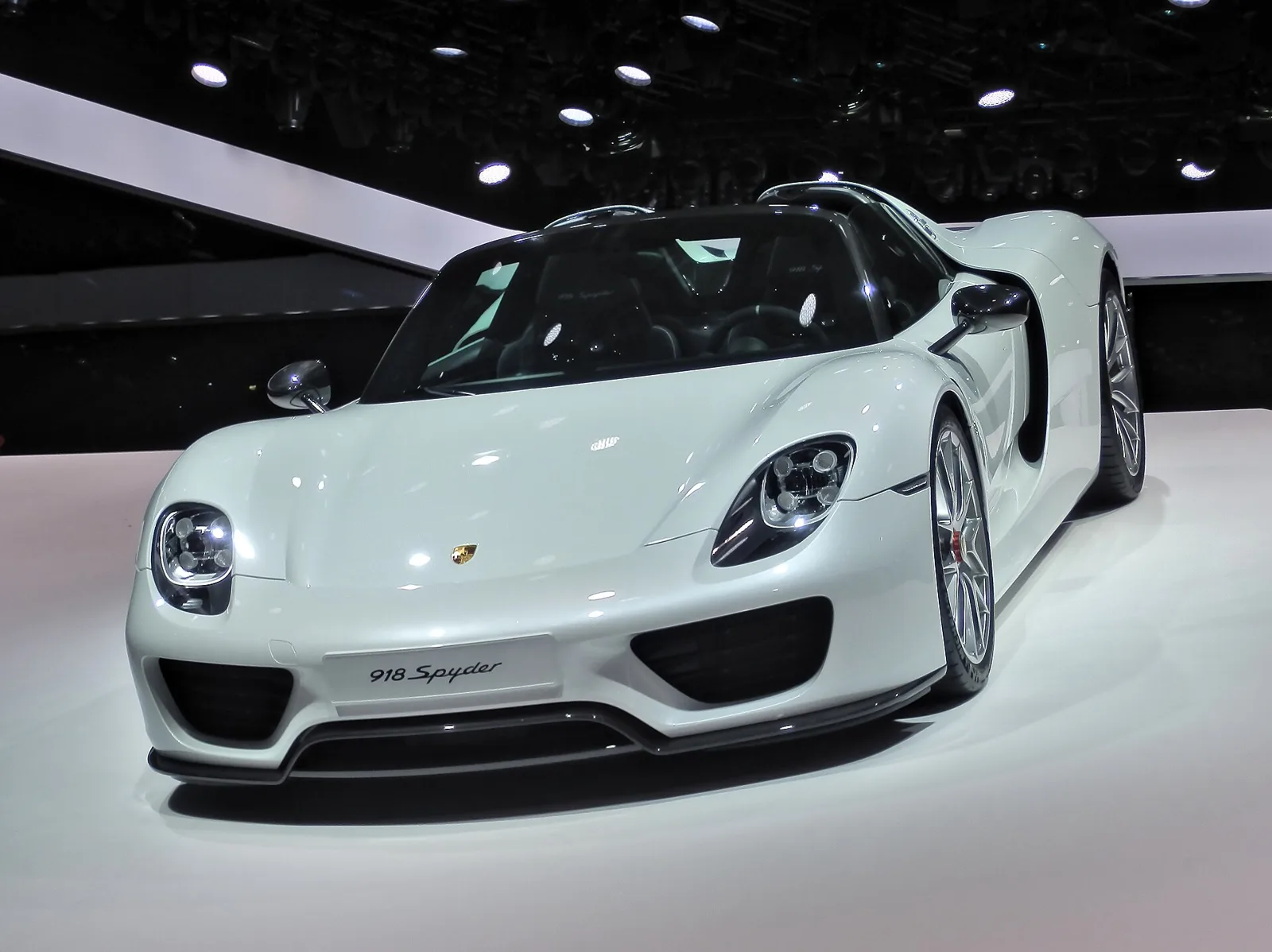
Porsche's electrification began with hybrids. The Cayenne S Hybrid launched in 2010, and the 918 hybrid sports car followed in 2014. A plug-in Panamera S E-Hybrid was released in October 2013 in the US.
The Mission E electric car was renamed Taycan in August 2018 and went on sale in 2020. Porsche's first 350 kW, 800V charging station was installed in July 2017, and it tops up a Mission E to 80% in 15 minutes. The Porsche Boxster E electric prototype dates from 2011, showing the long run of electric work behind the Taycan.
What is in the Porsche range today?
The current range is the 911, Panamera, Macan, Cayenne and Taycan. The Cayman is a coupe otherwise similar to the Boxster, and the Panamera, a high performance luxury saloon, was launched in 2009. The Taycan went on sale in 2020 as the brand's electric flagship in the range.
US base prices as of March 2025 were $127,700 for the 911, $100,300 for the Taycan and $79,200 for the Cayenne. The Carrera GT, built from 2004, cost EUR 450,000 ($440,000 in the US) and was the most expensive production Porsche when launched.
Porsche has also experimented with new ways of getting into its cars. The Porsche Passport subscription launched in October 2017 and lets customers access Porsche vehicles through a subscription rather than buying or leasing. The service began in Atlanta before spreading to other US cities.
Where does Porsche build its cars?
Zuffenhausen is the headquarters and main factory, and the plant there grew from 284,000 square metres to 614,000 square metres since 2011. That expansion followed the purchase of several neighbouring sites and reflects the scale of the company's operations.
Boxsters and Caymans were built by Valmet Automotive in Finland from 1997 to 2011. Malaysia production was announced in August 2021 as the first plant outside Europe, and the 718 Boxster and Cayman were scheduled to end production in October 2025.
How many cars does Porsche build each year?
Porsche produced 321,321 vehicles in 2022 and 302,750 in 2024, after building 255,683 cars in 2017. In 2015 the company sold 218,983 cars, and 86.78% of those went to international markets rather than Germany.
The mix of models shifts from year to year. In 2017 the output included 33,820 911s and 98,763 Macans, while in 2022 it included 98,113 Cayennes and 91,117 Macans. The Cayenne and Macan together make up a large part of the factory's volume.
What happened to Porsche's profits in 2025?
Sales fell 10% from 310,718 in 2024 to 279,449 in 2025. Operating profit fell roughly 98% to 90 million euros, which left an operating margin of 0.3%, down from 14.5% in 2024.
The company still made a profit in 2025, but the decline was driven by a 3.9 billion euros write-down on electric vehicle investment. The company said its 2026 profit margin forecast was 5% to 7%, after reviewing its plans.
The margin fell far further than volume did, which points to the write-down and the cost of the electric programme rather than to sales alone. Output had already eased from 321,321 vehicles in 2022 to 302,750 in 2024, and the heavy investment squeezed the result further.
How has the leadership changed?
Michael Leiters became chief executive on 1 January 2026, taking over from Oliver Blume, who led the company until 2025. Leiters inherits a company that is reviewing its product mix and cost base after a sharp drop in profit.
Matthias Muller held the top job before Blume, and Wolfgang Porsche has chaired the board since 2007. That mix of family and professional management is a long-standing feature of the company.
Who owns Porsche and how is it controlled?
Porsche AG is a 100% subsidiary of Volkswagen AG, and it is the business responsible for the production of Porsche cars. Porsche SE was created in June 2007 by renaming the old company, and it acts as the holding company for the family's stake.
As of the end of 2015, Porsche SE held 52.2% control of Volkswagen AG, which in turn controls brands such as Audi, Lamborghini and Bentley. An agreement in August 2009 planned to merge the two groups' car operations in 2011.
What was Porsche's initial public offering worth?
The offering sold 113,875 thousand shares at 82.5 euros each, at the upper limit of the price range. That valued the company at 75 billion euros.
The listing put a clear market value on the brand.
Why is the Le Mans record so important to Porsche?
Porsche holds a record 19 outright wins at the 24 Hours of Le Mans, and it is the world's largest race car manufacturer. That position reflects a long involvement in endurance racing and in building cars for other teams to race.
In 2006 Porsche built 195 race cars for various international motorsport events. In 2007 it expected to build 275 dedicated race cars, which shows how much of the company's engineering was tied to competition work.
Racing models followed a sequence of 904, 906 and 908 numbers, and the 908 and 917 were among its most important endurance cars. The 550 Spyder was also an early success in motor racing, and the 911 later carried that racing reputation into the road car market.
How has Porsche been recognised for quality and reputation?
A Luxury Institute survey named Porsche the most prestigious automobile brand. The company won the J.D. Power Initial Quality Study in 2006, 2009, 2010 and 2014, and TUV named the 911 Germany's most reliable car.
A 2011 study found 97.4 percent of recent Porsches still on the road. In 2014 the Cayman and Boxster made the Consumer Reports list of the most reliable vehicles on the road.
The company's wartime history is less comfortable. Biographer Fabian Muller says forced labour worked at Porsche factories during the war, and workers wore a letter P that stood for Poland.
Porsche at a glance
The table gathers the key figures for the company, from its 1931 founding and headquarters to its 2025 results and current leadership. It is a quick reference for the numbers that matter most.
| Specification | Detail |
|---|---|
| Founded | 1931 by Ferdinand Porsche |
| Headquarters | Stuttgart, Germany |
| Parent | Volkswagen AG (via Porsche SE) |
| Current range | 911, Panamera, Macan, Cayenne, Taycan |
| Le Mans outright wins | 19 |
| Race car production | World's largest race car manufacturer |
| Output 2024 | 302,750 vehicles |
| Sales 2025 | 279,449 cars |
| One-millionth 911 | 11 May 2017 |
| Operating margin 2025 | 0.3% (14.5% in 2024) |
| CEO | Michael Leiters (from 1 January 2026) |
| 911 US base price | $127,700 (March 2025) |
Frequently asked questions
What does Porsche SE do?
Porsche SE is the holding company that controls Volkswagen. Porsche SE was set up as the holding company for the family stake, and the car business now sits beneath Volkswagen.
How many Le Mans wins does Porsche have?
The company's outright tally at the 24 Hours of Le Mans stands at 19, a record for the race. It is also the world's largest race car manufacturer.
When did the Taycan go on sale?
The Taycan went on sale in 2020, after being renamed from the Mission E in August 2018.
How much does a 911 cost in the US?
The US base price for the 911 was $127,700 as of March 2025, while the Taycan was $100,300 and the Cayenne $79,200.
Who leads Porsche today?
Michael Leiters became chief executive on 1 January 2026. The company's 2026 profit margin forecast is 5% to 7%.