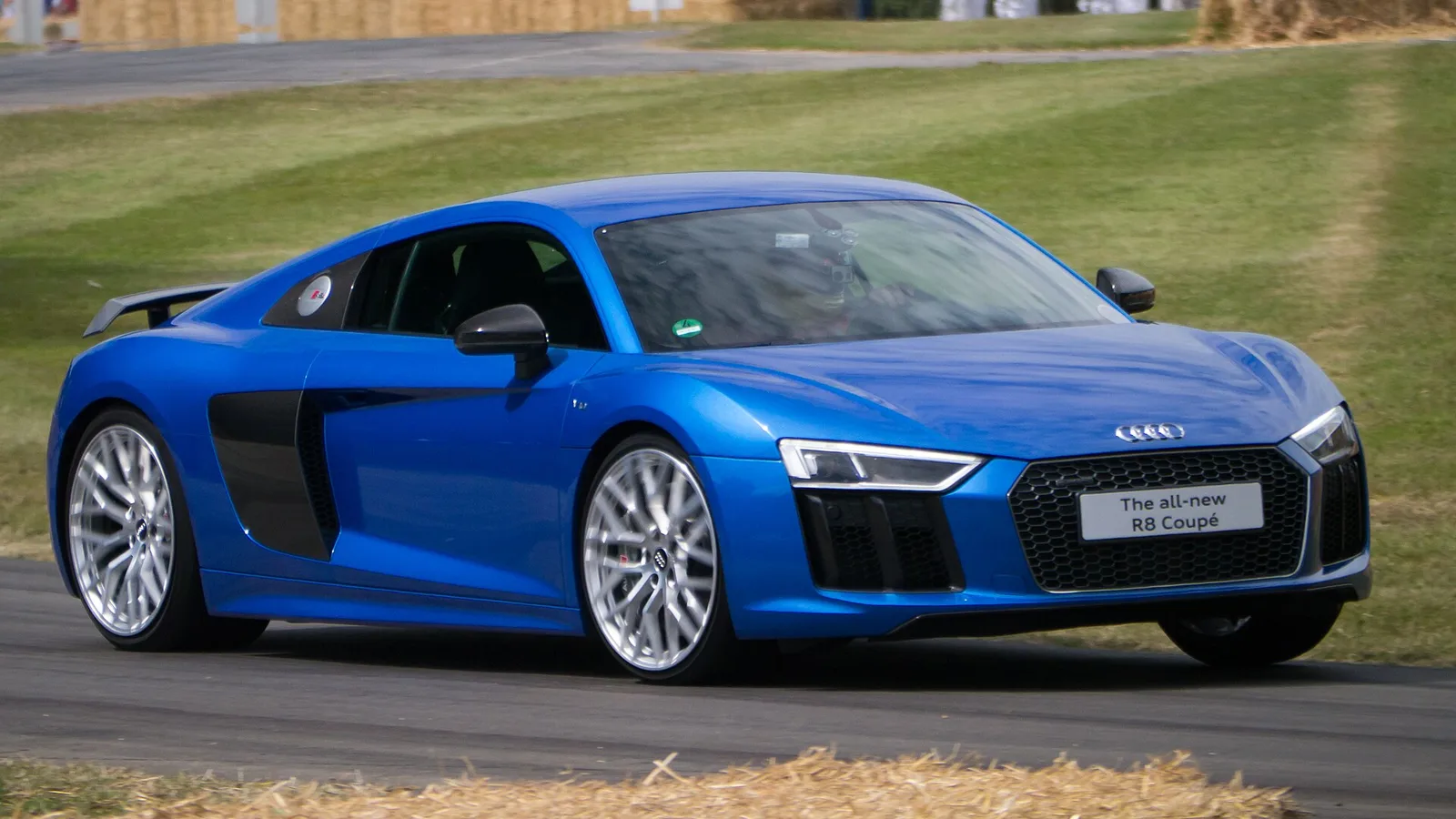
Ingolstadt luxury carmaker with Quattro all-wheel drive, a run of Le Mans wins and a 2026 Formula One debut.
Audi AG is a German maker of luxury cars based in Ingolstadt, Bavaria. The group has belonged to Volkswagen since 2020. Its story runs from pre-war Auto Union roots through the Quattro all-wheel drive system to a Formula One entry in 2026.
Audi is a German luxury carmaker headquartered in Ingolstadt, Bavaria, and a wholly owned part of the Volkswagen Group. The brand is known for its ringed badge, the Quattro all-wheel drive system and a long run of endurance racing success. Its roots reach back to the pre-war car makers that combined into Auto Union in 1932.
Where did Audi begin?
The company traces back to August Horch, an engineer who founded a firm in Cologne in 1899 and later started a second business in Zwickau. The Audi name was adopted when the Zwickau company was entered in the register in 1910.
August Horch (1868-1951) set up A. Horch and Cie. in Cologne, and that business was established on 14 November 1899. After disputes with former partners, he founded a second company in Zwickau on 16 July 1909. The court awarded the Horch name to his former company, which left him unable to trade under his own surname.
The first car to carry the Audi name was the Type A 10/22 hp Sport-Phaeton, built in 1910. Its registration in Zwickau came in the same year, so the marque and its first product arrived together.
In September 1921 the company introduced the Type K, the first German car with left-hand drive. That layout spread quickly and became dominant because it gave drivers a clearer view of oncoming traffic when overtaking.
A German luxury brand whose name came from Latin, whose all-wheel drive made it a rally force, and whose racing record now reaches Formula One.
Why is the company called Audi?
The name is the Latin form of Horch, the surname of the company founder. Horch means hark in German, and audi is the Latin singular imperative of the verb meaning to listen. The emblem's four rings later stood for the four companies that formed Auto Union.
The suggestion came from the son of a business friend, Franz Fikentscher, who was studying Latin at the time and proposed the word during a discussion in Zwickau. The others present accepted the idea at once, and the company was entered in the register under the new name soon afterwards.
Auto Union and the postwar restart
Auto Union was formed in 1932 from Audi, Horch, DKW and Wanderer. Before the war the rings mostly appeared on the group's racing cars, while each member kept its own name and emblem on road cars. The group then leaned towards smaller cars, and the Audi name vanished from new car sales for decades.
After the Second World War the Chemnitz company was struck from the commercial register on 17 August 1948. Executives had picked Ingolstadt in late 1945 as the site for a spare parts operation, and the reformed Auto Union launched there on 3 September 1949.
What happened to the company after the war?
The old Auto Union was wound up and a new company was launched in Ingolstadt in 1949. Daimler-Benz later took control, then sold the business to Volkswagen. Under Volkswagen the Audi name returned in 1965, and the company settled in Ingolstadt.
Daimler-Benz took 87% of Auto Union in 1958 and 100% in 1959. Small two-stroke cars were not its focus, and the Auto Union range was ageing while the economy boomed.
Volkswagen acquired a 50% holding in 1964. Eighteen months later it had bought complete control of the Ingolstadt operation.
The Volkswagen years and the return of the Audi name
The Audi name returned in 1965 after a 25-year gap, and the brand was relaunched under Volkswagen ownership.
The turning point came when engineers under Ludwig Kraus developed the Audi 100 in secret. Heinz Nordhoff approved the car after seeing a prototype, and the Audi 100 launched in 1968 and became a major success.
The Audi 80 of 1972 became the template for Volkswagen's front-wheel-drive range. The Audi 50 of 1974 was the first Golf and Polo concept design.
By 1976 all Audi 100 production had moved to the former NSU plant in Neckarsulm.
The new group was incorporated on 1 January 1969 as Audi NSU Auto Union AG. The name was shortened to Audi AG in 1985, and the headquarters returned to Ingolstadt that same year.
How did the Quattro change Audi?
The Quattro, a turbocharged coupe with permanent all-wheel drive, appeared in 1980 and changed how the brand was seen. Its rally success gave Audi a sporting reputation that its earlier models had lacked, and the car linked the name with advances in automotive technology.
The four-wheel drive system drew on Volkswagen's Iltis military vehicle. The Ur-Quattro was built by hand by a single team, and few were produced, yet the car became a great success in rallying.
The Quattro won the World Rally Championship drivers' titles in 1983 and 1984. Audi left international rallying in 1986 after an accident in Portugal, which killed three people and injured 30 spectators.
Moving upmarket with new models
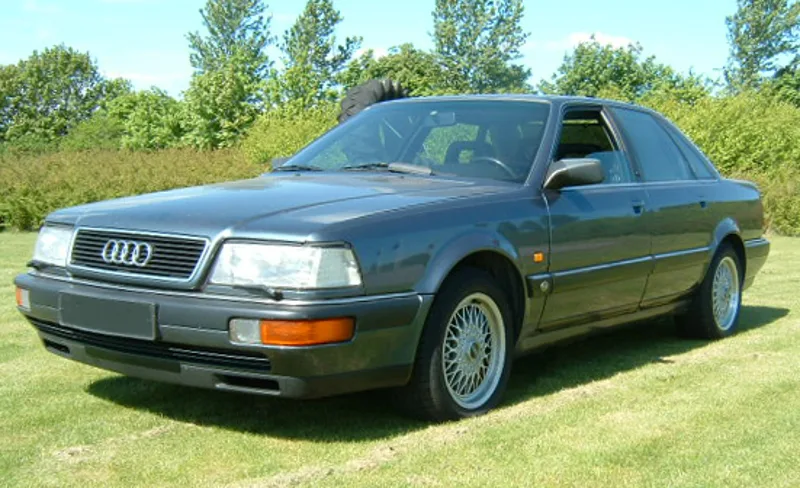
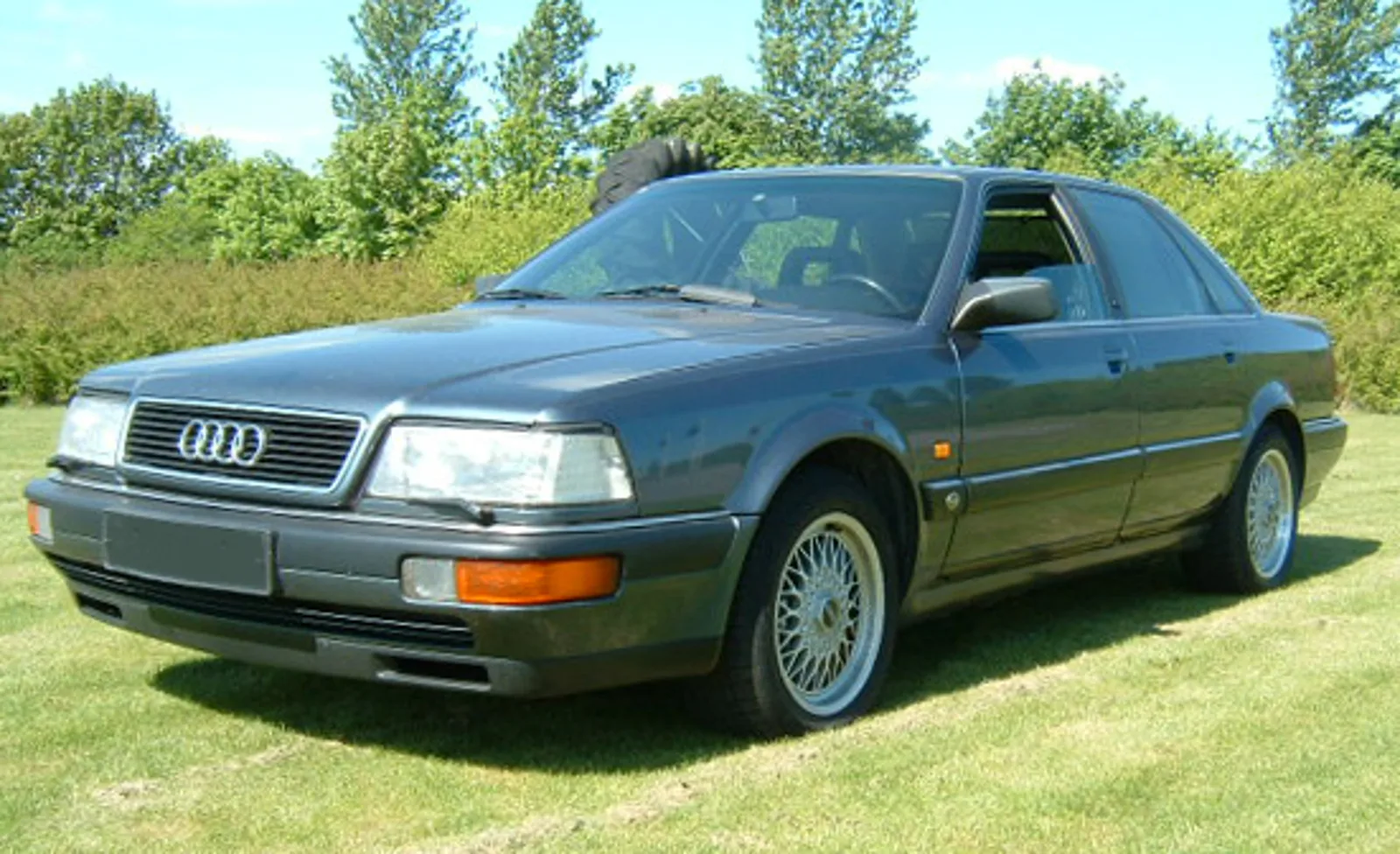
Audi set out to compete with Mercedes-Benz and BMW at the top of the market. The Audi V8, launched in 1990, was the first step in that move upmarket.
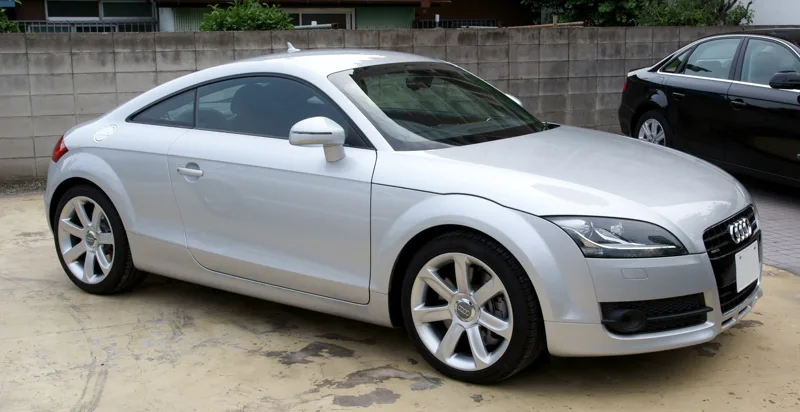
The A4 replaced the Audi 80 in 1995, and the A6 took the place of the 100. The A3 hatchback followed in 1996 on the Volkswagen Golf Mk4 platform, and the TT coupe and roadster debuted in 1998.
The A2 used a first-in-production aluminium space frame. It was built from 1999 to 2005 and designed around a wind tunnel, but critics faulted its high price and it never became a sales success. It still helped establish Audi as a cutting-edge maker.
What was the Audi 5000 controversy?
Reports of sudden unintended acceleration led to a series of recalls of the Audi 5000 between 1982 and 1987. Those incidents were linked to six deaths and 700 accidents, and US sales fell sharply. Later investigators concluded that most cases were caused by driver error.
A 60 Minutes report aired on 23 November 1986 and showed an Audi 5000 apparently suffering a problem as the brake pedal was pressed. Later investigation found that the failure had been engineered for the programme.
Audi first blamed driver error, and NHTSA later agreed that most unintended acceleration cases, including the ones behind that programme, came from pedal confusion. US sales fell from 74,061 in 1985 to 12,283 in 1991 as the damage spread.
Landmark models and the modern range
The A8 of 1994 introduced the Audi Space Frame, an aluminium structure that saves weight. Aluminium is costly to repair, so the work needs specialist bodyshops.
Audi produces 100% galvanised bodies, and in the mass market it was the first to adopt that method. The process has proved very effective against rust.
The A8 W12 became the first production car with LED daytime running lights, and the lights became part of the brand's look. The engine choices show the same thinking: the A8L W12 used the Volkswagen Group W12 instead of a V12, and a revised 6.3-litre W12 gave 500 PS in the 2011 A8.
How successful has Audi been in motorsport?
Audi's motorsport history spans rallying, touring cars and endurance racing. The Quattro won rally titles in 1983 and 1984, and R8, R10 TDI and R18 prototypes later took the Le Mans crown several times. Few manufacturers have matched that spread of success across different disciplines.
Joest Racing won Le Mans three straight times with the R8, a car that later gave way to newer prototypes. The R10 TDI, a twin-turbo diesel prototype, won the race in 2006.
The R18 won the 2011 race by a 13.8 second margin, and in 2012 Audi also won the inaugural World Endurance Championship manufacturers title.
Rally and touring car programmes ran alongside. The S1 rally car produced 441 kW (600 PS; 591 bhp), and it started the S range of performance models. Michele Mouton set a Pikes Peak record of 11:25.39 in 1985, and Walter Rohrl set one of 10:47.85 in 1987.
Audi's touring car efforts came to an end when the FIA banned four-wheel drive cars from the series in 1998. The company then moved its works effort into sportscar racing.
Is Audi in Formula One?
Yes. The company said in August 2022 that it would enter Formula One as an engine manufacturer in 2026, and it made its debut at the 2026 Australian Grand Prix. Its first signed driver was Nico Hulkenberg, who joined on 26 April 2024.
The entry reflected how hybrid power unit technology had been adopted into the sport, which changed the company's view of Formula One's relevance to road cars.
Technology that shaped the brand
Audi's drivetrain choices set it apart from its German rivals. Most models use longitudinal front engines, and only the A1, A3 and TT break that pattern. Post-Volkswagen models use front-wheel or all-wheel drive, not the rear-wheel layout favoured by Mercedes-Benz and BMW.
The dual-clutch gearbox that Volkswagen introduced in 2003 is called S-Tronic at Audi. Newer quattro-badged A3 and TT models use a Haldex clutch for all-wheel drive instead of the earlier layout.
Fuel Stratified Injection, known as FSI, replaced the ageing 1.8-litre engine across much of the range. The inline-five engines were a longer-lasting alternative to six-cylinder units, and a modified rally version delivered well over 400 horsepower.
What was the emissions scandal?
The Volkswagen Group emissions scandal reached Audi in 2015, when the company admitted that at least 2.1 million of its cars were involved. Software in the affected diesel engines altered emissions results, and the affair drew wide media coverage in the months that followed.
In November 2015 the US Environmental Protection Agency implicated 3-liter diesel A6, A7, A8 and Q5 models. Nitrogen oxide emissions reached up to nine times the legal limit in those cars.
Audi's chief executive Rupert Stadler was arrested, and Volkswagen announced it on 18 June 2018.
Who has led Audi?
The current chief executive is Gernot Dollner, who has led Audi since 2023. An earlier chief executive, Rupert Stadler, was arrested in June 2018 while still in charge. The list of past leaders is long and includes figures who guided the brand through its postwar growth.
Leadership changed several times in the years after 2018. A new chief executive took over in 2020, before the current appointment in 2023 brought Gernot Dollner to the head of the company.
Audi at a glance
The table brings together the main figures from the brand's history, from its founding names to its recent racing and sales milestones.
| Specification | Detail |
|---|---|
| Headquarters | Ingolstadt, Bavaria, Germany |
| Parent company | Volkswagen Group, wholly owned since 16 November 2020 |
| Founder | August Horch (1868-1951) |
| Auto Union formed | 1932 |
| Audi name revived | 1965 |
| Quattro | 1980, turbocharged coupe, permanent all-wheel drive |
| S1 rally engine | Inline-five, 441 kW (600 PS; 591 bhp) |
| Revised W12 (2011) | 6.3-litre W12, 500 PS |
| Le Mans 2011 margin | 13.8 seconds |
| Emissions admission | At least 2.1 million cars (2015) |
| Deliveries | 653,000 in 2000; 1,003,000 in 2008 |
| Chief executive | Gernot Dollner (2023 to present) |
Frequently asked questions
Is Audi owned by Volkswagen?
Yes. Audi has been fully owned by the Volkswagen Group since 16 November 2020.
Where is Audi headquartered?
Audi is headquartered in Ingolstadt, Bavaria, Germany, a base the company returned to in 1985.
When did the Quattro first take a championship?
Its rally car secured drivers' championship titles in 1983 and 1984, the peak of its rally run after the 1980 launch.
When did Audi's Formula One debut happen?
Audi's Formula One debut came at the 2026 Australian Grand Prix, after the engine entry was announced in August 2022.
How many cars did the emissions scandal involve at Audi?
The figure Audi acknowledged in 2015 was at least 2.1 million vehicles, tied to diesel engines that used cheating software.
.jpg)