A 1932 merger of German car makers, a Grand Prix team with 25 race wins between 1935 and 1937, and the postwar rebuild that led to Audi.
Auto Union AG was a German car group formed in 1932 from DKW, Horch, Audi and Wanderer. Its racing team built Grand Prix cars from 1934 to 1939, and its cars won 25 races between 1935 and 1937. The company was rebuilt in Ingolstadt after the war and became Audi AG in 1985.
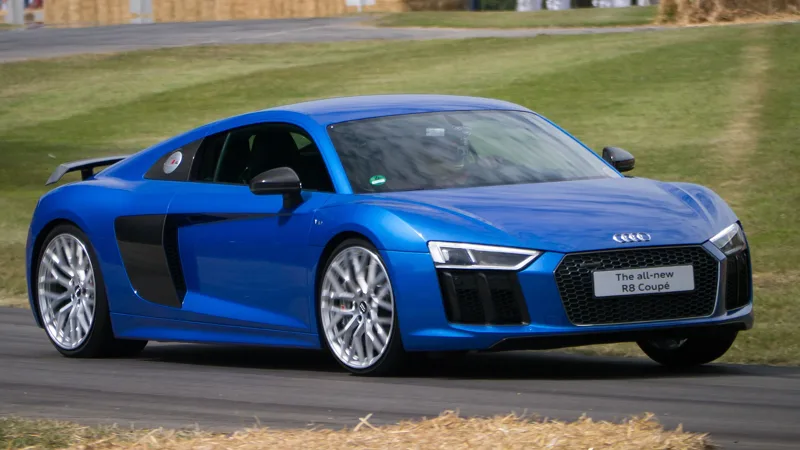
Auto Union was a German group formed in 1932 when several car makers came together under one company. Its racing department built Grand Prix cars that rivalled Mercedes-Benz in the years before the war, and the business rebuilt after 1945 became the Audi company of today. The rings that stood for its brands still appear on the Audi logo.
Where did Auto Union come from?
Auto Union AG was formed in Germany in 1932 by merging several makers, and it was established in 1936 in Chemnitz, Saxony. The brands were DKW, Horch, Audi and the car division of Wanderer. Each brand brought its own history to the group and kept its own name on the cars it sold.
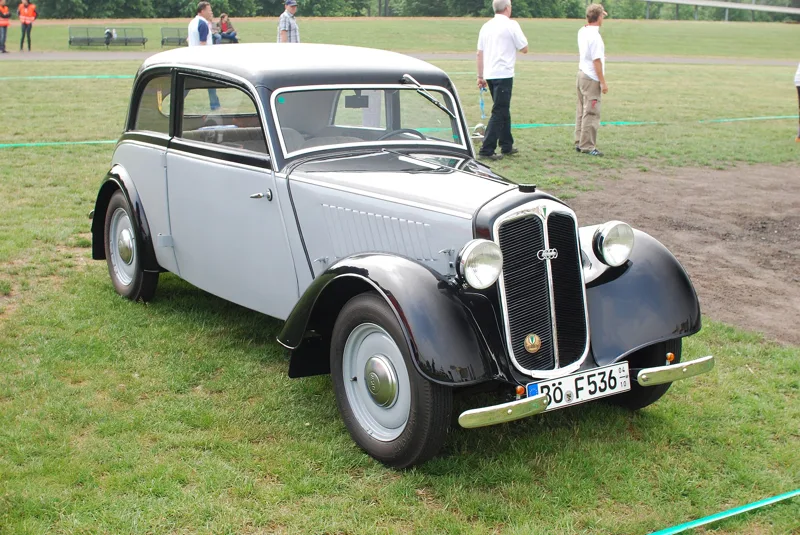
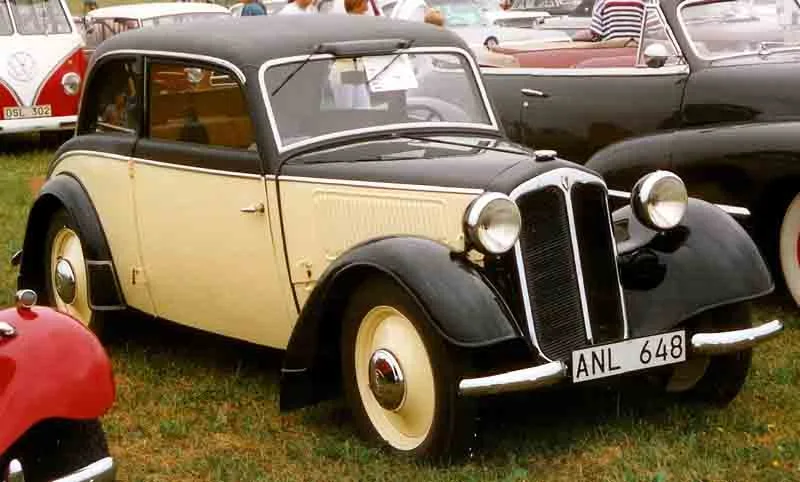
DKW belonged to Zschopauer Motorenwerke, a firm founded in 1916 by the Danish engineer Jorgen Skafte Rasmussen. The business began with a steam-driven car and then branched into motorcycles. From 1931 it built front-drive two-stroke cars at the Audi works in Zwickau.
August Horch founded his company in Zwickau in 1904. He left it in 1909 after a dispute with the company's chief financial officer, and that same year he set up Audi across town. Audi later became a subsidiary of Zschopauer Motorenwerke, in 1928.
The fourth member was the car division of Wanderer, founded in 1911. Its cars moved on from small models to a straight-six built at Siegmar, which is now part of Chemnitz.
Merged makers under one roof, a racing team that won 25 races between 1935 and 1937, and the emblem Audi still carries.
How did the brands come under one roof?
Rasmussen, who ran DKW, took majority control of Audiwerke AG in August 1928. Richard Bruhn joined the Audiwerke board in 1930, after the Saxony Regional Bank, which had funded his expansion, put him there. A harsh programme of pruning and rationalisation followed, and the group settled into a handful of component businesses under one shareholder company.
The brands kept selling cars under their own names, but technical development became more centralised. Some Audi models used engines from Horch or Wanderer, and the rings later became the group's emblem.
Why did Auto Union build Grand Prix cars?
Chairman Klaus von Oertzen wanted a showpiece to introduce the new marque. The state provided the money. At the 1933 Berlin Motor Show, Chancellor Adolf Hitler announced a racing programme with a 500,000 RM annual sum behind it, designed to build up a high-speed German motor industry.
Porsche had worked for von Oertzen before, and he had designed his P-Wagen racer to meet the 750 kg (1,650 lb) limit. Hans Stuck Sr., who had met Hitler before he became Chancellor, joined the approach to the government.
Hitler agreed with Porsche that two companies would serve Germany better than one, so both Mercedes-Benz and Auto Union received an annual stipend of 250,000 RM. Mercedes-Benz was highly annoyed, but its own racing programme had been short of money since 1931, so the state support was welcome.
Auto Union then bought Porsche's Hochleistungsfahrzeugbau GmbH, known as HFB, together with the P-Wagen project, for 75,000 RM. The racing operation moved to the Horch plant at Zwickau, and the rivalry with Mercedes-Benz ran on and off the track until the Second World War.
What made the Type A to D racing cars different?
The Type A to D racing cars were built as Grand Prix cars from 1934 to 1939. They were the only Grand Prix racers to wear the rings logo, and their engine sat behind the driver and drove the rear wheels, which set them apart from their rivals.
The fuel tank was mounted amidships, just behind the driver, who sat well forward. Since the tank was not at either end, the front-rear weight split stayed the same as fuel was used. Modern open-wheel cars put their fuel in the same spot for that reason.
Early on, the frame tubes doubled as water pipes between radiator and engine. That arrangement was dropped after the tubes often sprang small leaks. The shape of the car also resembled the earlier Benz Tropfenwagen, which Rumpler engineers had helped to build.
Handling had a reputation for being difficult, yet nobody doubted the power and acceleration. A driver could induce wheelspin at over 160 km/h (100 mph), which shows how much the engine delivered. The P-Wagen project had been built around that weight limit, so the rules shaped these cars from the start.
How much power did the racing engines make?
The supercharged piston engines produced 370 bhp (276 kW; 375 PS) in 1935 and 520 bhp (388 kW; 527 PS) in 1936. Later development took the output to almost 550 hp (410 kW; 560 PS), and the engines were designed for strong torque at low engine speeds.
| Season | Engine | Output |
|---|---|---|
| 1935 | 5 L (305 cu in) | 370 bhp (276 kW; 375 PS) |
| 1936 | 6 L (366 cu in) | 520 bhp (388 kW; 527 PS) |
| Later development | Supercharged piston engine | Almost 550 hp (410 kW; 560 PS) |
| 1938 | 3 L (183 cu in) formula | New capacity limit |
Engine capacity changed from season to season. The engine was enlarged to 5 L (305 cu in) for 1935, and for 1936 it was raised to 6 L (366 cu in). The 1938 season brought a new 3 L (183 cu in) formula, a sharp cut in permitted capacity.
Rosemeyer later drove one of the cars around the Nuerburgring in a single gear, to show how flexible the engine was.
Who drove the Auto Union racing cars?
The drivers included Hans Stuck Sr., Achille Varzi, Bernd Rosemeyer, Ernst von Delius, Tazio Nuvolari, Rudolf Hasse and Hermann P. Mueller. Between 1935 and 1937 the team's cars won 25 races, and Rosemeyer took the European Championship in 1936. The line-up changed season by season, as drivers came and went.
Stuck won the German, Swiss and Czechoslovak events in 1934, and he was European Mountain Champion that year. He won the Italian Grand Prix in 1935 and took the mountain title again. He was European Mountain Champion once more in 1938.
Achille Varzi joined the team in 1935 and won at Tunis, plus the Coppa Acerbo. In 1936 he took the Tripoli Grand Prix, while Stuck finished second in both the Tripoli and German Grands Prix.
Rosemeyer was the sensation of 1935, when he won the Czech Grand Prix. In 1936 he won the Eifelrennen and the German, Swiss and Italian Grands Prix, and he was crowned European Champion. That title was Auto Union's only win in the drivers' championship.
In 1937 the team won five races, against seven for Mercedes-Benz. Rosemeyer's wins that year came at the Eifel and Donington Grands Prix, along with the Vanderbilt Cup, and Rudolf Hasse won the Belgian Grand Prix.
Tazio Nuvolari took the Italian and Donington events in 1938. In 1939 he won the Yugoslavia Grand Prix at Belgrade, while Hermann P. Mueller claimed the French Grand Prix.
Did the team set speed records as well as winning races?
Yes. Hans Stuck reached 320 km/h (199 mph) in a closed-cockpit streamliner on an Italian autostrada. The two German teams, the Silver Arrows, also set a public-road speed record of 432.7 km/h (268.9 mph), and that mark stood until 2017.
The lessons from the streamlined body were later applied to a land speed record car.
What happened to Bernd Rosemeyer?
Bernd Rosemeyer, the 1936 European Champion, was killed in 1938 during a land speed record attempt on a German autobahn. His death came in a thin year for the team, which had few major wins that season. The death ended a career that had produced some of the team's most famous wins.
His 1937 season had included several race wins, among them the Eifel and Donington Grands Prix. The team had lost one of its leading drivers.
Tazio Nuvolari joined the team in 1938, the year of Rosemeyer's death,.
How did the Second World War change Auto Union?
Auto Union became a major vehicle supplier for the German military as war neared. Civilian output stopped in May 1940, and from then on the firm made only military products. In 1935 it had set up Mitteldeutsche Motorenwerke at Taucha to build Junkers aircraft engines under licence.
The Sd.Kfz. 222 armoured car ran on a chassis from Horch. Its engine was a Horch V8 giving 90 PS (66 kW; 89 hp), and it reached 80 km/h (50 mph) on the road.
The Kfz. 11, a Horch/Wanderer Type 901 with all-wheel drive, carried German military officials. Horch also built the heavy Type 801 transport, and the pair carried the Einheits-PKW der Wehrmacht designation.
From the beginning of 1944 the plants at Zwickau, Taucha and Siegmar were heavily bombed and severely damaged. The US Army occupied Zwickau on 17 April 1945 and withdrew on 30 June, after which the Red Army took over the Saxon plants.
The company also used slave labour at the Leitmeritz concentration camp. A 2014 report commissioned by the company said Auto Union bore moral responsibility for 4,500 deaths there.
What happened to the Saxon plants in East Germany?
The Saxon plants fell into the Soviet zone of occupation, and the factories were dismantled as war reparations. Auto Union AG was deleted from the commercial register on 17 August 1948. The Horch and Audi works at Zwickau became VEB Automobilwerk Zwickau, or AWZ, a People Owned Enterprise.
The Soviet Military Administration ordered the dismantling, and racing cars that had been hidden in a coal mine were shipped to Moscow for reverse engineering. Auto Union's assets were then liquidated without compensation.
The former Audi factory restarted its pre-war models in 1949 under new names, and the site later became home to VEB Sachsenring, which made the Trabant. A lawsuit forced the East Germans to stop using the DKW brand.
After reunification in 1990, Volkswagen acquired a majority position in the former Sachsenring organisation and created Volkswagen Sachsen GmbH. A new factory was built at Mosel, in Zwickau, in 1993, and from 2021 it built MEB platform vehicles, including the Audi Q4 e-tron.
The August Horch Museum opened in 2004 in surviving factory buildings in Zwickau. It traces the early years of Audi, Horch and Auto Union, up to the company's re-establishment in Ingolstadt.
How was Auto Union rebuilt after the war?
Auto Union GmbH, the reformed firm, began operating in Ingolstadt, Bavaria, on 3 September 1949. The company had lost its Saxon base, so it had to start again in Bavaria. It was backed by loans from the Bavarian state government and by Marshall Plan aid. Its first postwar car followed in 1950.
Many employees from the Saxon factories came west to restart production, from Zwickau, Chemnitz and Zschopau. Production began in a converted granary building in Ingolstadt, which had been run only as a spare-parts operation since the war.
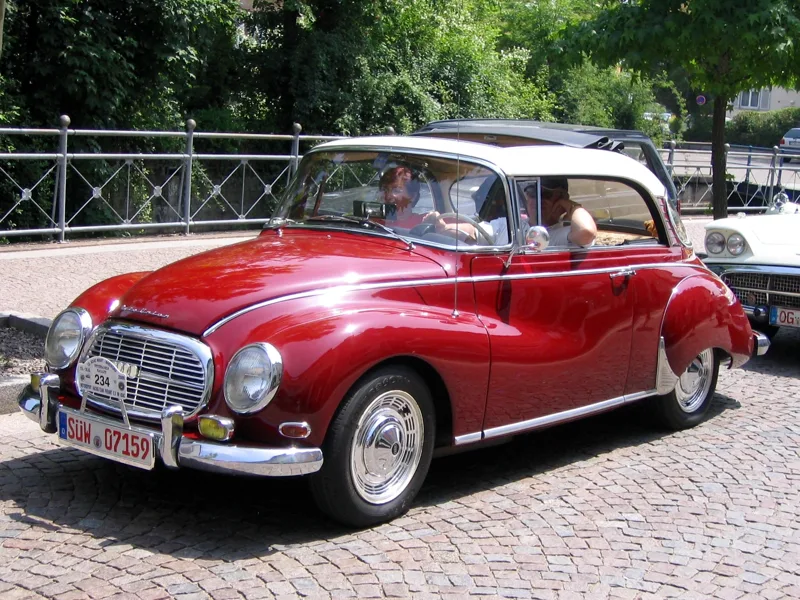
West Germany was still rebuilding its economy, and demand was for cheap transport, so only DKW survived into the postwar years. Audi and Horch were put into dormancy, and Wanderer belonged to its original parent firm. Auto Union carried on DKW's tradition of affordable front-wheel-drive two-stroke vehicles.
Products included a small motorcycle and the Schnellaster delivery van.
What were the first postwar DKW cars?
The first postwar car was the DKW Meisterklasse F 89 P, which went into production in 1950. It came as a sedan, an estate and a convertible built by Karmann, and it was based on earlier pre-war designs for the engine and the coachwork.
A second assembly plant, a former Rheinmetall-Borsig factory at Duesseldorf-Derendorf, was set up in 1950. The DKW 3=6 Sonderklasse was launched at the Frankfurt Motor Show in March 1953. It was very successful in motorsport and was built at Duesseldorf.
The F91 was superseded by the F93 in 1955. The F94 saloon followed in 1956, along with the F94U station wagon in 1957.
From 1956 until 1968, around 46,750 Munga light all-wheel-drive military vehicles were produced by DKW, mostly for the German and other armed forces.
Why did Daimler-Benz take control in 1958?
In April 1958 Daimler-Benz took 87% of Auto Union, after pressure from Friedrich Flick, then the largest single shareholder. It took complete control the following year, and the Auto Union name returned in 1958 with the Auto Union 1000 saloon.
The Auto Union 1000 was a small saloon that enjoyed sporting success. Baur of Stuttgart built the 1000 Sp coupe for Auto Union, which extended the range.
With Daimler-Benz in charge, the firm put heavy investment into Ingolstadt, and car production at Duesseldorf came to an end. Ingolstadt became the centre for Mercedes-Benz commercial vehicles, a role it still plays.
Both DKW and Mercedes-Benz reached North America through a 1956 agreement with Studebaker-Packard, the only US distributor until 1964. Many dealers there trace their origins to those Studebaker-Packard showrooms.
How did Volkswagen create the Audi name?
Volkswagen acquired the Ingolstadt factory and the Auto Union trademark rights in 1964, leaving only the dormant Horch name with Daimler-Benz. Volkswagen abandoned the DKW brand because of its association with two-stroke engines, and in September 1965 it launched a car with a conventional engine simply called Audi.
Daimler had worried that two-stroke engines would lose their appeal, because buyers were turning to refined conventional engines. With help from the West German government, shares were acquired by Volkswagenwerk AG.
A programme that Daimler had started at Auto Union gave Volkswagen the base for a range of front-wheel-drive cars, including the Audi 80 and the Volkswagen Passat.
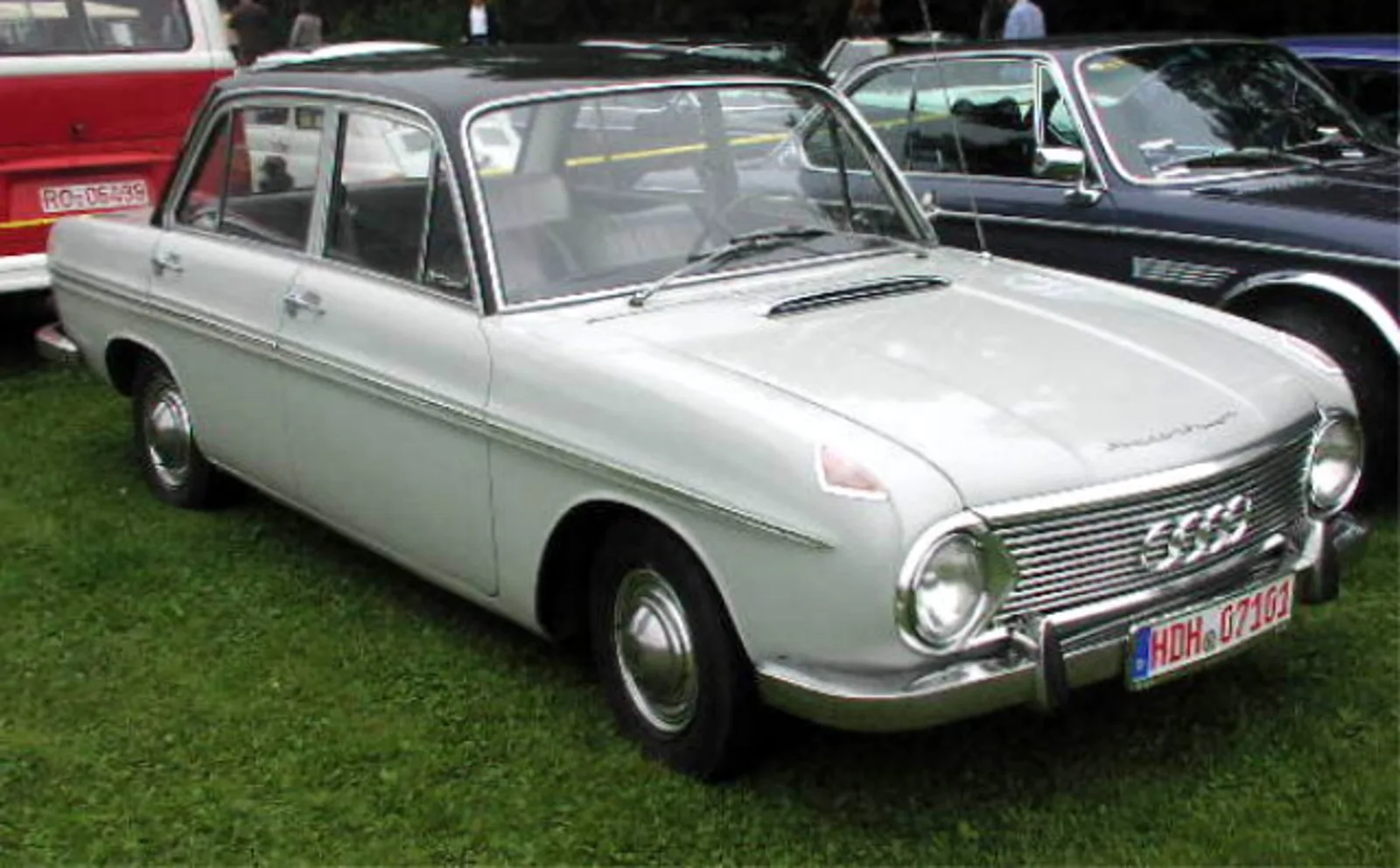
The new car, internally designated F103, was the last DKW, the F102, with a conventional engine and restyled front and rear ends. The name Audi described the model, not the company, which remained officially Auto Union. Later, as further models joined the range, this one was renamed Audi 72.
What did the NSU merger bring?
NSU Motorenwerke AG, based at Neckarsulm near Stuttgart, merged with Auto Union in 1969. NSU had been one of the world's largest motorcycle makers before it moved into small cars, and then focused on rotary engines. Its Ro 80 arrived in 1967 as a space-age car.
The Ro 80 was ahead of its time in aerodynamics, lightness and safety. Teething problems with its rotary engines ended NSU's independence, and the mid-sized car NSU had been developing was taken by Volkswagen for its own range.
NSU's small cars, such as the Prinz with its TT and TTS versions, remain popular as vintage race cars.
When did Auto Union become Audi AG?
The company was renamed Audi AG in 1985, after the merged firm had been known as Audi NSU Auto Union AG. The headquarters returned to Ingolstadt, and the Auto Union and NSU names stopped being used as company names. It was a simple shortening of the name, not a new company.
At the same time Audi set up Auto Union GmbH and NSU GmbH as fully owned subsidiaries. Their role was to hold and defend the historic trademarks and intellectual property of both brands.
Why does the Auto Union name still matter?
The modern Auto Union GmbH, founded in 1985, is a subsidiary owned entirely by Audi AG. It owns the historic Auto Union trademarks and intellectual property, and it manages Audi's heritage operations. That arrangement keeps the historic names protected inside the group, while Audi carries on building cars under its own name.
The rings represented Audi, DKW, Horch and Wanderer, and they survive as the logo of Audi. Some versions use overlapping rings, and others use interlocking rings. Auto Union was also honoured at the 1999 Monterey Historic Automobile Races.
In May 2009 Porsche took majority control of the Volkswagen Group and put forward a merger. In August 2009 Volkswagen's supervisory board signed an agreement to create an integrated automotive group with Porsche, led by Volkswagen. At first Volkswagen was to hold 42% of Porsche AG by the close of 2009, and press rumours suggested the Auto Union name might return for the new holding company.
The Auto Union story runs from the 1932 merger through a racing team and a postwar rebuild in Ingolstadt to the Audi of today. Its name survives in the trademark company, and its rings remain on the cars.