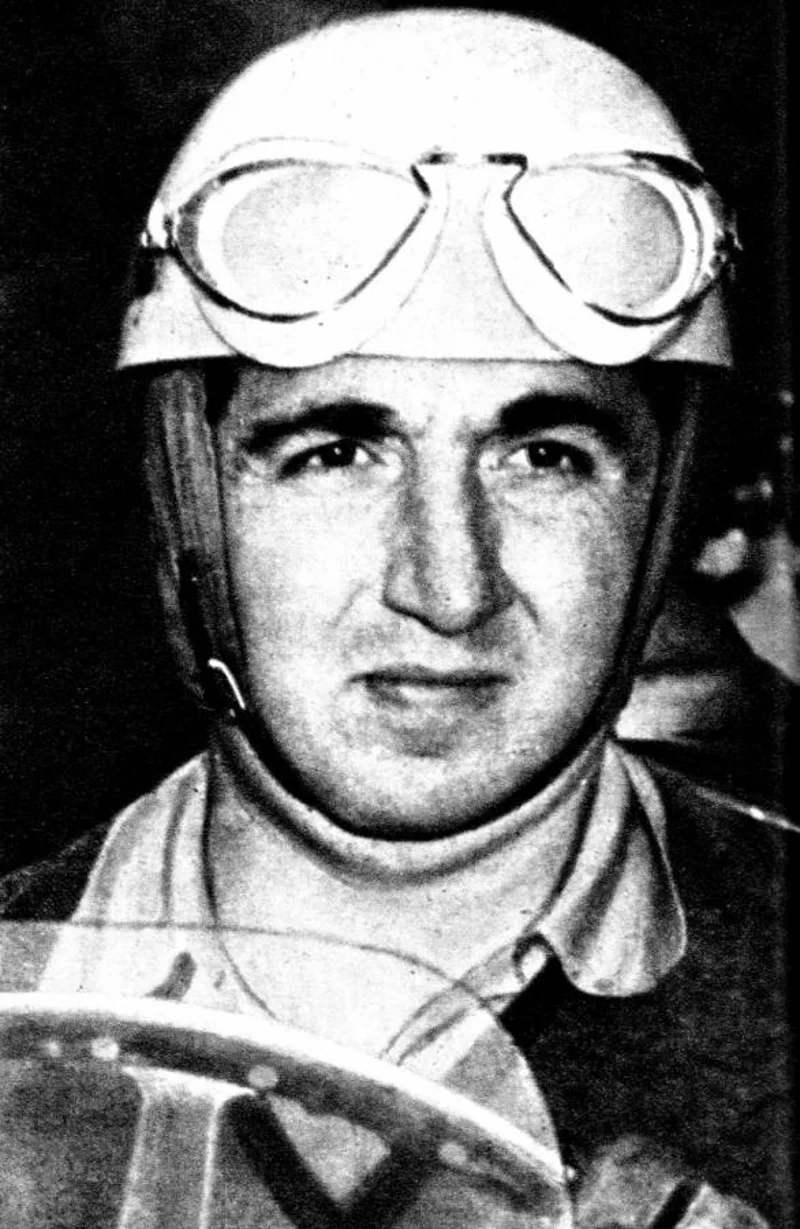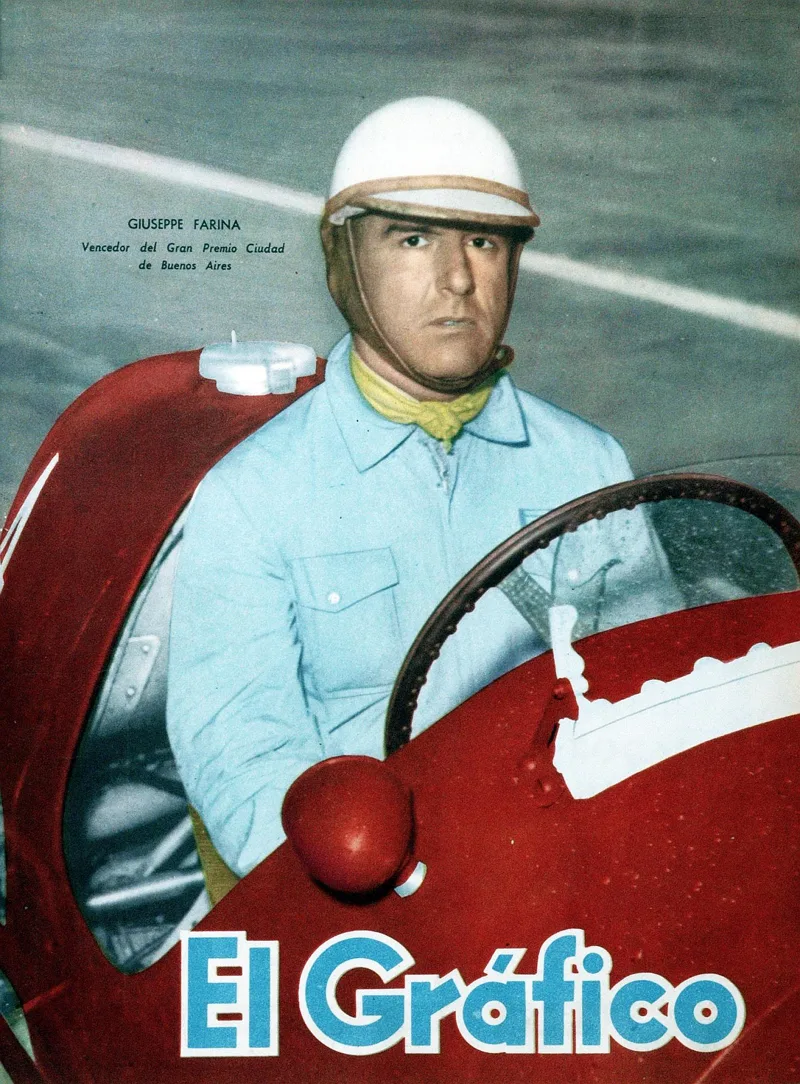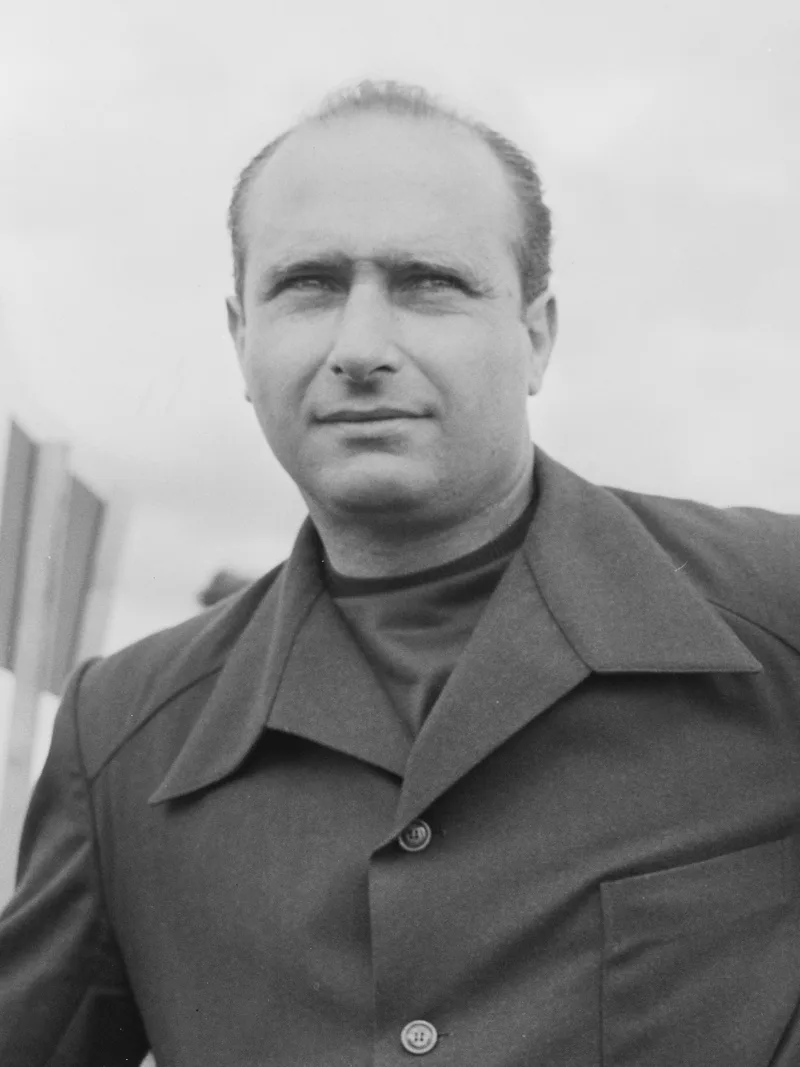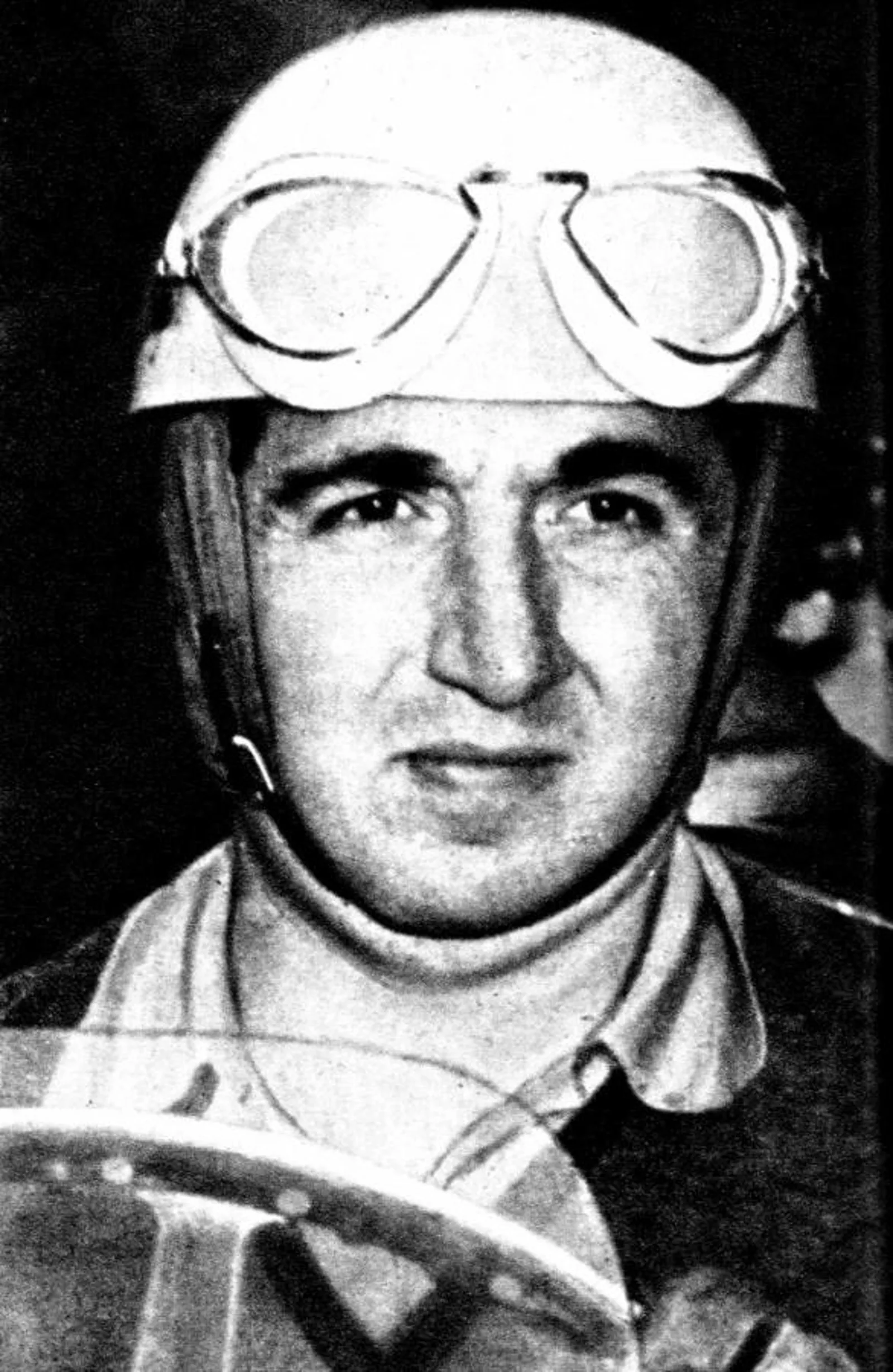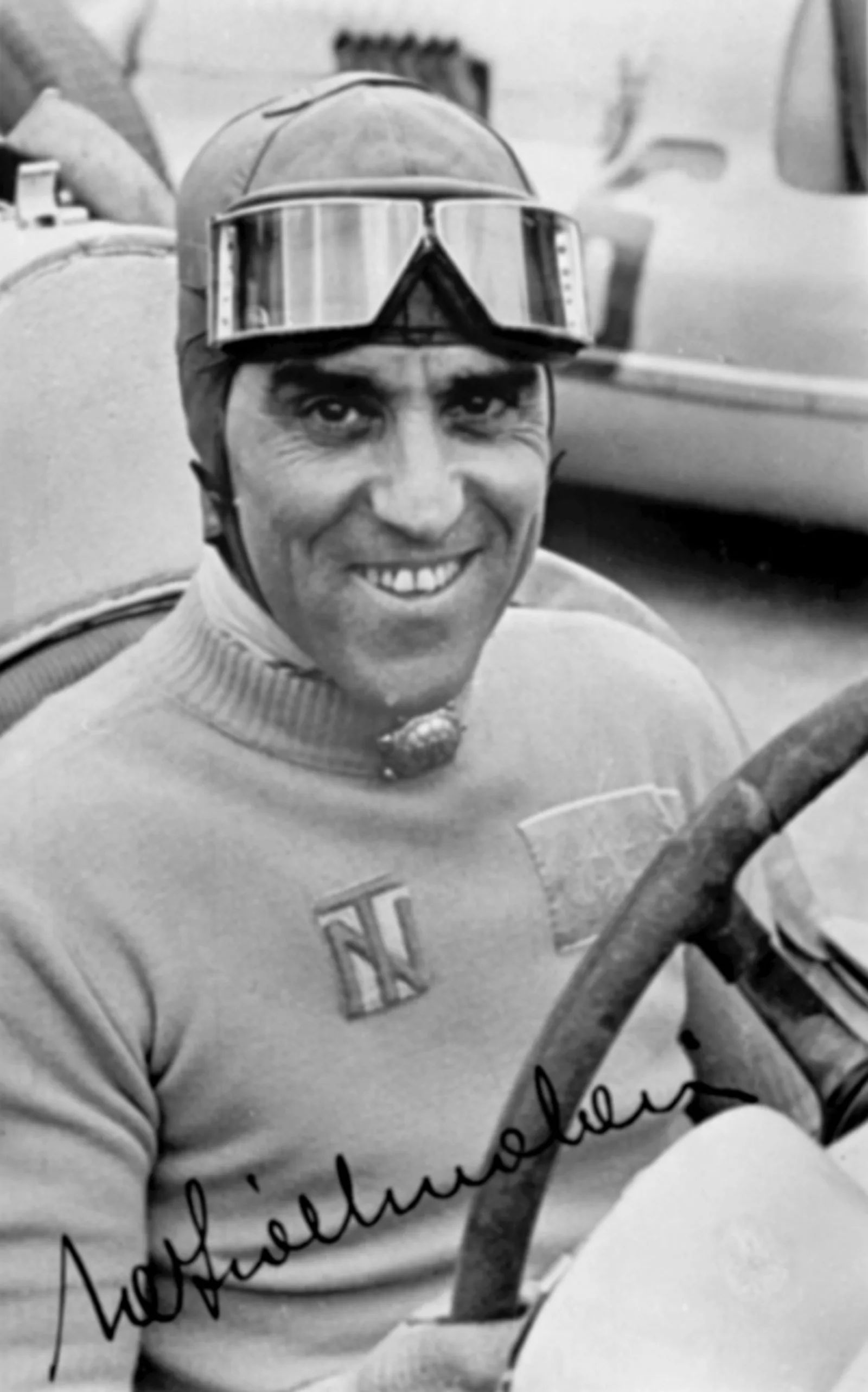
A motorcycle champion who became a Grand Prix star, Nuvolari won 24 Grands Prix and is remembered above all for beating far stronger German cars in 1935 with an outdated Alfa Romeo.
Tazio Nuvolari was an Italian racer, born in 1892, who won motorcycle and car championships before becoming one of the great pre-war Grand Prix drivers. He is best known for beating far stronger German cars at the 1935 German Grand Prix, and he died in 1953.
Tazio Nuvolari spent almost three decades behind the wheel, starting with motorcycles after 1920 and ending with a hillclimb in 1950. Known as the Flying Mantuan, he is credited with 150 victories in all, a total that includes 24 Grand Prix wins, five Coppa Ciano triumphs and two Mille Miglia victories.
How did Nuvolari's racing start?
Born at Castel d'Ario near Mantua on 16 November 1892, Nuvolari grew up around bicycle racing, since his father and an uncle both competed. He took out a motorcycle racing licence in 1915, aged 23, and spent part of the First World War as an ambulance driver with the Italian army.
His first motorcycle race came at Cremona in 1920, when he was 27, and he retired without finishing. He had also tried car events early on, taking a reliability trial at Verona in 1921, but two wheels brought him his first serious titles.
By 1925 he was the European 350cc champion, a crown decided by the European Grand Prix, then the premier motorcycle event of the season. He added four Nations Grand Prix wins between 1925 and 1928, and five victories at the Lario circuit between 1925 and 1929, all of them on a Bianchi.
His victories, 150 in all, came on two wheels and four, but the 1935 German Grand Prix remains the one most often remembered.
What happened when Alfa Romeo tested him in 1925?
Alfa Romeo needed a replacement for Antonio Ascari, who had been killed at the French Grand Prix that July, and tried Nuvolari in one of its Grand Prix cars with a possible Monza start in mind. A seized gearbox caused a crash that badly hurt his back, and the team passed him over.
Less than a week later he was back in action, bandaged and with a cushion strapped to his stomach. Bianchi's mechanics had to push-start his motorcycle because he could barely move, yet he went on to win the wet Nations Grand Prix at Monza six days after the crash.
How did Nuvolari fare in the early 1930s?
In 1930 he took his first RAC Tourist Trophy, a result he repeated in 1933. That same year he co-drove with Battista Guidotti to victory in the Mille Miglia, in an Alfa Romeo 6C 1750 GS with Zagato coachwork, and the pair became the first to complete that race at better than 100 km/h (62 mph) on average.
The most talked-about moment came after dark. Chasing his own teammate Achille Varzi, he ran with his headlights switched off, so that Varzi's mirrors would not show him, reaching up to 150 km/h (93 mph) in the dark. He only switched the lights on to pass near the finish at Brescia.
He stopped riding motorcycles at the close of 1930 and gave his full attention to cars. In 1931 he shared a car with Giuseppe Campari to win the Italian Grand Prix, a race that counted for no championship points, and he took the Coppa Ciano at Livorno and the Targa Florio on the long 146 km (92-mile) course.
1932 gave him the strongest machinery of his career in the Alfa Romeo P3. From three European Championship races he took two wins and a runner-up finish, and at the end of the year he was four points clear of Baconin Borzacchini. He also took Monaco and a second Targa Florio that season.
On 28 April 1932 the poet and writer Gabriele D'Annunzio presented him with a golden tortoise badge. From then on he carried it as a lucky mascot, and it became as closely associated with him as his yellow jumper with his initials.
Why did Nuvolari move between teams in 1933?
When Alfa Romeo pulled out of official Grand Prix racing in 1933, its cars carried on under Enzo Ferrari's privateer squad. That year a story spread that Nuvolari had agreed a fix at Tripoli with Varzi and Borzacchini, so they could profit from a state lottery that drew 30 tickets, one for each starter, and paid 7.5 million lire.
The records point the other way. They show the three had agreed to share any prize money if one of them won, and the fix allegation is generally traced to Alfred Neubauer, the Mercedes-Benz team manager, who was known for embellishing a story.
Alfa Romeo paired Nuvolari with Raymond Sommer for Le Mans that year. Sommer wanted most of the driving because he knew the circuit better, but Nuvolari argued that a leading Grand Prix driver would not be troubled by it, and they agreed to split the stints equally. A leaking fuel tank forced repeated pit stops, where the leak was plugged with chewing gum that kept coming loose.
Nuvolari kept going to the flag, setting the lap record nine times, and took the flag about 400 yards (370 m) clear. A month later he took the Belgian Grand Prix, in a factory Maserati, after changing teams just a week earlier.
1934 was less kind. He crashed in heavy rain at Alessandria, where his Maserati skidded into a tree after being baulked by another car, and he broke a leg. Once out of plaster he returned to the AVUS, where his left leg could not work the clutch, so the car was adapted for his right foot, and he finished fifth.
Mussolini's backing helped bring Nuvolari back into the Ferrari fold for 1935, and that season produced the race that made him a legend.
What made the 1935 German Grand Prix so remarkable?
At the Nurburgring that July the field was dominated by Mercedes-Benz and Auto Union. Nuvolari's Alfa Romeo P3, a supercharged 3167cc car producing 265 hp, looked outclassed on paper, since the Mercedes W25s displaced 3990cc and made 375 hp, while the Auto Union Bs were 4950cc and also 375 hp.
Nuvolari beat five Mercedes drivers and four Auto Union drivers, in front of a crowd of 300,000. Officials from Nazi Germany were enraged. The result is often described as the greatest win in motor racing history, and it was the only time from 1935 to 1939 that a car from outside Germany won a European Championship race.
| Measure | Detail |
|---|---|
| Born | 16 November 1892, Castel d'Ario near Mantua |
| Major race victories | 72 major races, 150 in all |
| Grands Prix | 24 wins |
| Mille Miglia | Two wins |
| Targa Florio | Two wins |
| RAC Tourist Trophy | Two wins |
| Le Mans | One win, 1933, with Raymond Sommer |
| European Championship | 1932, with Alfa Romeo |
| Final competition | Palermo-Montepellegrino hillclimb, 10 April 1950, fifth overall |
How did the 1936 and 1937 seasons go?
A heavy practice crash at Tripoli in 1936 was thought to have broken some of his vertebrae, but he raced the next day with a limp and finished eighth. Later that year he travelled to America for the Vanderbilt Cup, started eighth, and took the lead on lap two of the 75-lap race, holding it to the finish.
1937 was more frustrating. Alfa Romeo's new 12C-37 proved slow and unreliable at the Coppa Acerbo, so he handed his car to Giuseppe Farina mid-race. He then drove an Auto Union as a one-off at the Swiss Grand Prix, and once Alfa Romeo withdrew after the Italian Grand Prix, its chief designer Vittorio Jano was let go.
Why did Nuvolari join Auto Union?
A split fuel tank at the 1938 Pau Grand Prix was the last straw. Nuvolari walked out of Alfa Romeo, criticising its workmanship, and announced that he was retiring from Grand Prix racing at over 40 years old.
Auto Union came back to him after its team leader Bernd Rosemeyer was killed in a record attempt in January 1938. The team needed experienced drivers for its radical mid-engined cars, and Nuvolari, rested after his break, agreed to drive. That year he won the Italian Grand Prix at Monza and the Donington Grand Prix in England.
In 1939 he won the Belgrade Grand Prix on 3 September, the last race held before the war began.
What did Nuvolari race after the war?
When racing resumed Nuvolari was 54 and in poor health. In 1946 he entered thirteen races, won the Albi Grand Prix in a Maserati 4CL and finished fourth at the Grand Prix of Nations. At one race in Milan he steered with one hand, holding a bloodstained handkerchief to his mouth with the other.
Across 1947 and 1948 he entered eleven races, won twice and retired from five. Enzo Ferrari talked him into the 1948 Mille Miglia, where he led early and held a lead of 27 minutes before retiring at Reggio Emilia. His final competitive outing came in Palermo in April 1950, when he took a class win in a Cisitalia-Abarth 204 and finished fifth overall.
How did Nuvolari's life end?
A stroke in 1952 left him partly paralysed. A second stroke killed him in bed the following year, in 1953, and he never formally announced his retirement from racing.
Between 25,000 and 55,000 people attended his funeral, which meant at least half of Mantua. The procession stretched for a mile, and his coffin rested on a car chassis that Fangio, Ascari and Villoresi pushed through the crowd.
He lies in the family tomb at the Cimitero Degli Angeli, on the road between Mantua and Cremona. The inscription over the door promises that he will be quicker still on heaven's roads.
What is Nuvolari's legacy?
He is remembered beside Caracciola and Rosemeyer as one of the finest drivers of the pre-war era. He was an early exponent of four-wheel drift cornering, a skill later used by Stirling Moss, and Enzo Ferrari even suggested he may have invented it.
Memorials keep his name alive. The Museum Tazio Nuvolari is housed in his homestead in Mantua, a bronze statue in Castel d'Ario carries the inscription Champion Driver of All Time, and Mantua has a square named for him. Cisitalia, EAM and Audi each named a car after him, and Maserati offers a colour called Grigio-Nuvolari. For the 2026 Monaco Grand Prix Audi ran a yellow livery in his honour.