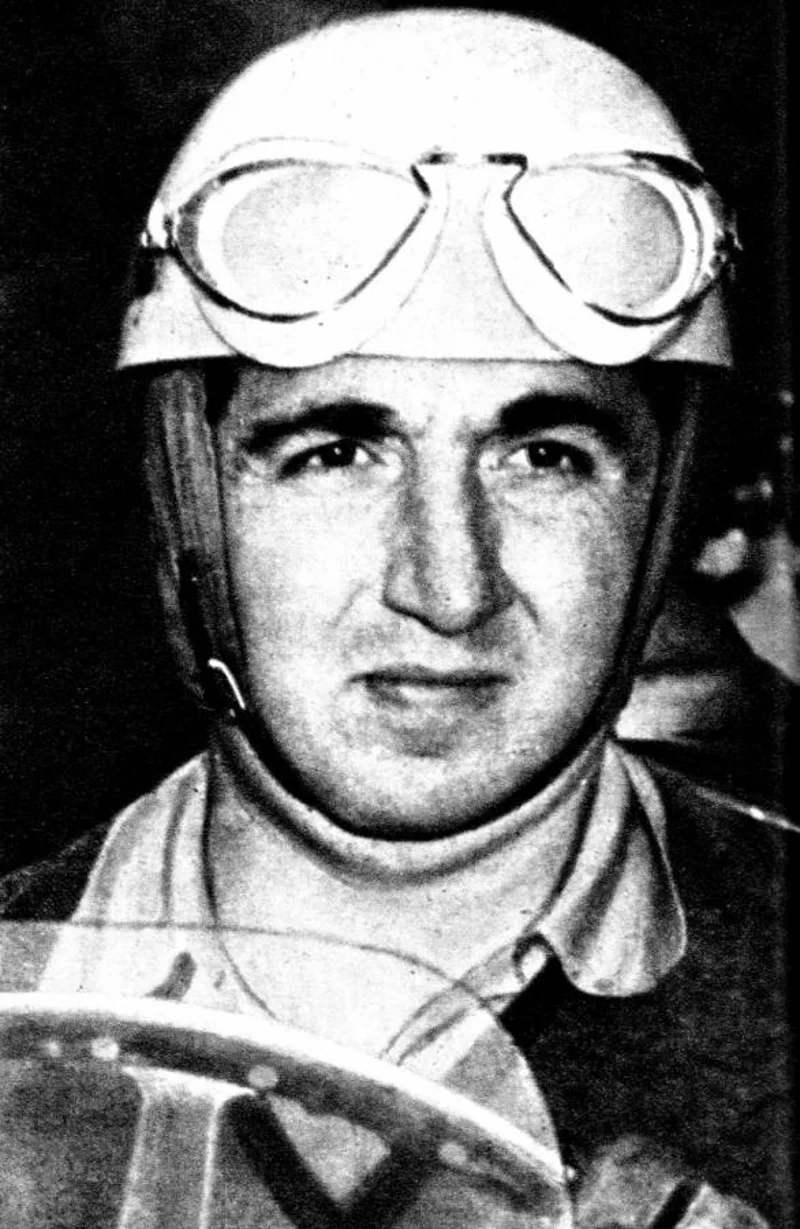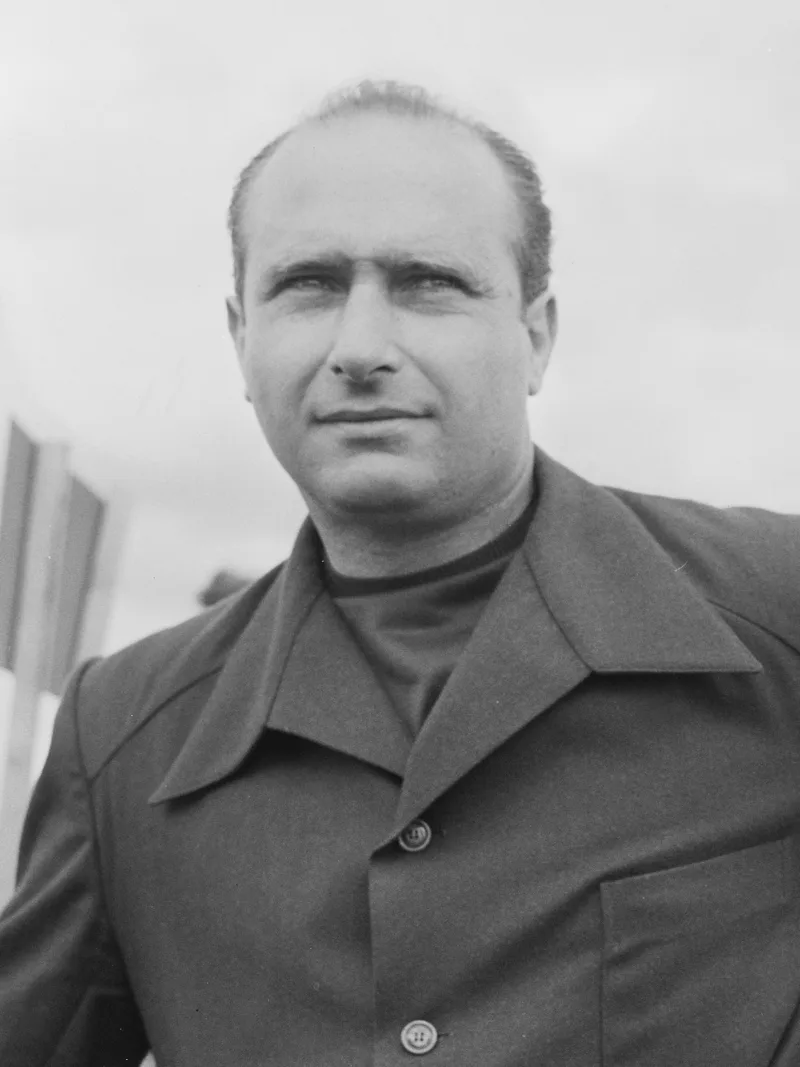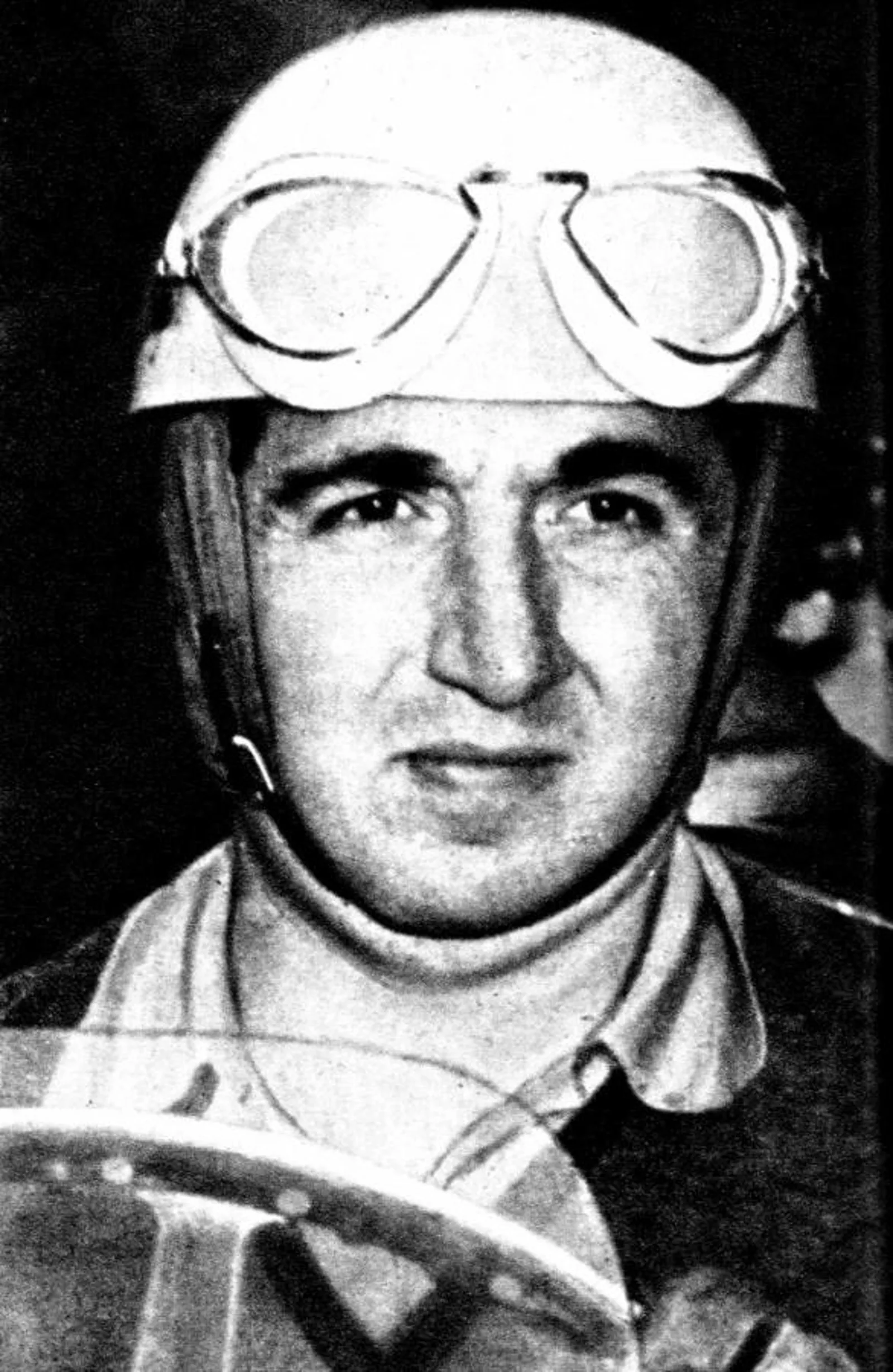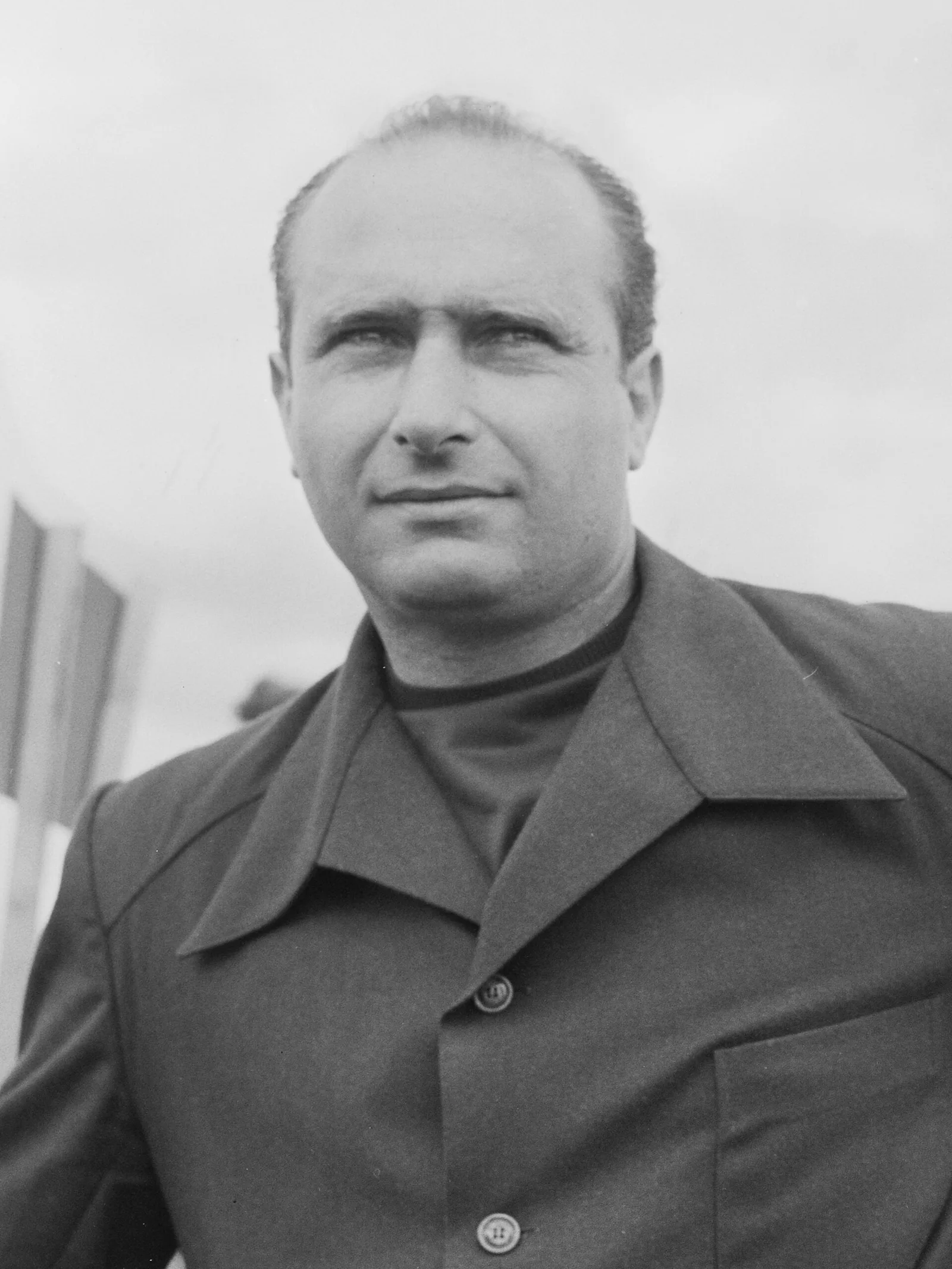
Argentina's El Maestro won five world titles with four teams, survived a Cuban kidnapping and lost his co-driver in the 1948 South American Grand Prix.
Argentina's Fangio, born in 1911 and nicknamed El Maestro, competed in Formula One between 1950 and 1958, winning five world championships with four teams. He won 24 of 52 Grands Prix he entered, a winning rate the sport still records as its highest.
Juan Manuel Fangio was an Argentine racing driver who competed in Formula One from 1950 to 1958 and won five World Drivers' Championship titles. His nicknames were El Chueco and El Maestro, and at the time of his retirement he held records for wins, pole positions and fastest laps.
His career covered almost every kind of racing of his day, from Argentine road races of thousands of kilometres to sports car endurance events, the Mille Miglia and Formula One. He was the oldest driver in many of his Grand Prix races, and he changed teams whenever a better car was on offer.
Who was Juan Manuel Fangio?
Fangio was born in Balcarce, Argentina, on 24 June 1911, the fourth of six children. His grandfather had emigrated from Italy to Buenos Aires in 1887, and the family later farmed near Balcarce, a small town in southern Buenos Aires Province.
He left school at 13 to work as an assistant mechanic at a workshop in the town, and at 16 he began riding along as a mechanic on his employer's customers' cars. His driving ability was noticed during his military service at the Campo de Mayo cadet school, where he became the official driver of his commanding officer.
Five world titles, four teams and a Nurburgring drive that many still call the greatest in Formula One.
How did Fangio start racing in Argentina?
Once his service was over, he set up a garage of his own and entered local events. He started racing in Argentina in 1936 in a 1929 Ford Model A he had rebuilt himself, and he later drove Chevrolet cars to become Argentine National Champion in 1940 and 1941.
His first Turismo Carretera race came in 1938, as co-driver of Luis Finocchietti, and he drove most of the way to a fifth place. The 1940 Gran Premio del Norte was one of the great endurance challenges of the era. It covered almost 10,000 km (6,250 mi) and took 15 days, running from Buenos Aires up through the Andes and Bolivia to Lima in Peru and then back to Buenos Aires.
The conditions were brutal. Drivers crossed hot deserts, humid jungles and high mountain passes at altitudes of up to 14,000 feet (4,300 m), where the thin air cost the engines a lot of power. Fangio hit a rock early on, broke a driveshaft, bent an axle and punctured a radiator on the way. He won, and it was his first big victory.
In 1941 he beat Oscar Galvez in the Grand Prix Getulio Vargas in Brazil, a six-day, 3,731 km (2,318 mi) public road race that started and finished in Rio de Janeiro. He won the Argentine touring car title for a second time that year.
What happened at the 1948 South American Grand Prix?
The 1948 South American Grand Prix was a point-to-point race from Buenos Aires to Caracas in Venezuela, covering 9,580 km (5,950 mi) over 20 days through six countries. Fangio, with his co-driver Daniel Urrutia, was pushing hard to make up time lost in Argentina when the race turned to tragedy.
On day ten, on the stage from Lima to Tumbes in northern Peru, Fangio was driving at night through thick fog that rolled in off the Pacific. He approached a left-hand bend near Huanchaco at about 140 km/h (87 mph), lost control and tumbled down an embankment. Urrutia was thrown out through the windscreen and died of his injuries, while Fangio survived with neck injuries.
Oscar Galvez stopped to help and found the badly injured Urrutia, and another competitor, Luciano Marcilla, took Fangio and Urrutia to hospital. Domingo Marimon won the race, a race that cost the lives of three spectators and three drivers, Urrutia among them. Fangio believed he would never race again, but he recovered, and his results in Argentina had attracted the attention of the Argentine Automobile Club and the government of Juan Peron, which sent him to Europe with a Maserati in December 1948.
How did Fangio win his first world titles?
His first Grand Prix came in 1948 at Reims, where a Simca Gordini started from 11th and retired. In 1949 he returned with a Maserati 4CLT/48 sponsored by the Automobile Club of Argentina and dominated a race at Sanremo, winning both heats and taking the aggregate by almost a minute over Prince Bira. He won four of the six Grands Prix he entered that year.
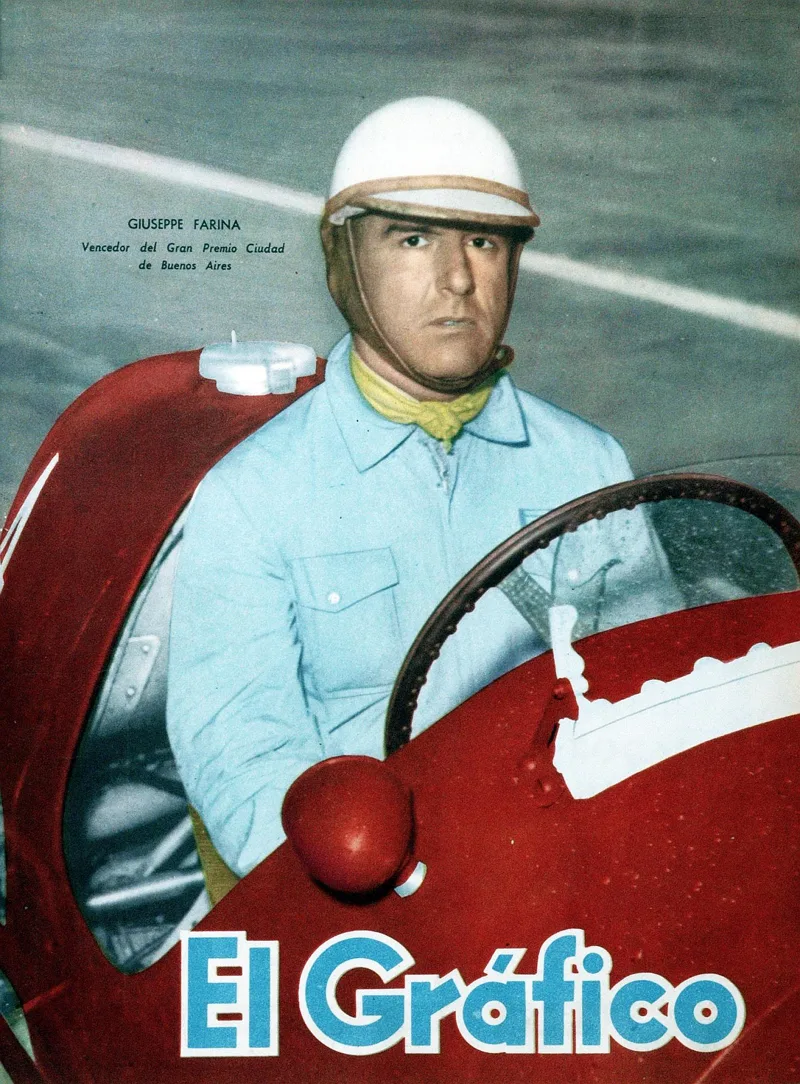
For the first World Championship of Drivers in 1950 he joined Alfa Romeo alongside Nino Farina and Luigi Fagioli. He won at Monaco, Spa and Reims-Gueux, but Farina's wins came in the races Fangio failed to finish, and Farina took the title. Fangio's most notable win that year was at Monaco, where he avoided a multi-car pile-up and won easily.
In 1951 Fangio won three championship races for Alfa in the Swiss, French and Spanish Grands Prix. He clinched it at the last round in Spain, six points clear of Alberto Ascari at the Pedralbes street circuit. It was his first title, and it came from a car that had been dominant in the post-war years.
The 1952 season was a difficult one. Alfa Romeo withdrew from the championship because it had no car for the new Formula Two regulations, and Fangio drove a BRM V16 in non-championship races instead. At Monza he crashed in a non-championship race after a long night drive, broke his neck and spent the rest of the year recovering in Argentina. Farina visited him in hospital and gave him the winner's laurel wreath from the race he had won.
Why was 1954 with Mercedes-Benz significant?
In 1953 Fangio returned to Maserati and won at Monza with a car that had a bad vibration. The mechanics fixed it after he offered them 10% of his winnings, and he set fastest lap in a race won by 1.4 seconds from Farina. He finished second in the championship that year, and he also finished third first time out in the Targa Florio.
In 1954 he raced for Maserati until Mercedes-Benz entered competition mid-season. Mercedes' first race was the French Grand Prix at Reims, where Fangio won in the streamlined W196 Monoposto, a car that was difficult to drive but ahead of its time. He went on to win at the Nurburgring, at Bremgarten and at Monza, and by the end of the year he had won eight of twelve races and his second title.
The 1955 Argentine Grand Prix was one of the hardest races of his life. It was run in Buenos Aires in a heat wave of around 40 C (104 F), and the track surface was over 57 C (135 F). Few drivers finished, and Fangio's right leg rubbed against the hot chassis of the W196. Even after severe burns he kept going, and it took him three months to recover.
| Title | Team | Note |
|---|---|---|
| 1951 | Alfa Romeo | Six points ahead of Ascari at Pedralbes |
| 1954 | Mercedes-Benz | Raced Maserati until Mercedes arrived mid-season |
| 1955 | Mercedes-Benz | Title secured after Britain and Italy races |
| 1956 | Ferrari | Shared points after Peter Collins handed over his car |
| 1957 | Maserati | Won the German Grand Prix at the Nurburgring |
Fangio also raced in the 1955 Mille Miglia, this time in a Mercedes-Benz 300 SLR without a navigator. A broken fuel injection pipe left the car running on seven cylinders near Florence, and he finished second behind Stirling Moss.
The season was overshadowed by the 1955 Le Mans disaster, in which 83 spectators were killed. Mercedes withdrew from racing after that year, and Fangio never raced at Le Mans again. Mercedes won the 1955 title by two points over Ferrari, after Fangio finished second to Moss and Peter Collins in the Targa Florio.
How did his Ferrari and Maserati years end?
In 1956 Fangio moved to Ferrari to win a fourth title. He started the year by winning the 12-hour sports car race at Sebring with Eugenio Castellotti, and he took over his teammate's car in three Grands Prix when mechanical problems struck. He also asked for a dedicated mechanic, which Ferrari granted, and the car's performance improved noticeably.
He won the British and German Grands Prix at Silverstone and the Nurburgring that year. At the season-ending Italian Grand Prix, Peter Collins, who could have won the title himself, handed his car to Fangio. They shared the six points for second place, which was enough to secure the title.
In 1957 he returned to Maserati and its 250F. He started with wins in Argentina, Monaco and France, and he won the Sebring sports car race with Jean Behra in a Maserati 450S. The German Grand Prix at the Nurburgring that year is often regarded as one of the greatest drives in the sport's history. He started from pole, dropped to third and had to make a disastrous pit stop from a 30-second lead.
He then set a record-breaking lap on lap 20, a full eleven seconds faster than the best the Ferraris could manage, and got past Collins and Mike Hawthorn again on the penultimate lap to win by just over three seconds. That win gave him his fifth title, and it was his final Grand Prix victory.
Why were Fangio's titles so hard to beat?
His five championships stood for 46 years until Michael Schumacher won a sixth title in 2003. In his career Fangio won 24 Grands Prix from 52 entries, a winning rate of 46.15%, which remains the highest in the sport's history. He also took 29 pole positions from the same 52 starts, a rate of 55.77%.
He retired after the 1958 French Grand Prix. Race leader Mike Hawthorn had lapped him, but braked just before the finish line so that Fangio could complete the full 50 laps. Fangio was famous for winning at the slowest speed he could manage in order to preserve the car, because the cars of the 1940s and 1950s were unreliable and almost any part could break.
Among Argentine drivers, he alone won either the world championship or the home Grand Prix.
Did Fangio race outside Formula One?
Yes. He won the 1953 Carrera Panamericana in Mexico, a five-day rally on public roads, running from the Guatemalan frontier to Ciudad Juarez on the US border. He set a new race time of 18.5 hours, about nine hours quicker than the winner of the first event in 1950, although he did not win a single stage.
He won the 12 Hours of Sebring in 1956 with Ferrari and again in 1957 with Maserati. In 1955 he took second at the Targa Florio, and he was runner-up in the Mille Miglia on two occasions. In 1953 he was leading the Mille Miglia when steering arm failure allowed Giannino Marzotto to beat him by 12 minutes.
What happened in Cuba in 1958?
President Fulgencio Batista created the non-championship Cuban Grand Prix in Havana in 1957, and Fangio won that event. He had also set the fastest times in practice for the 1958 race when, on 23 February 1958, two gunmen linked to Fidel Castro's 26th of July Movement took him from the Hotel Lincoln in Havana.
Batista ordered the race to go ahead while police hunted the kidnappers, and roadblocks and guards were placed at airports and around the competing drivers. Fangio was held in three houses. He was allowed to hear the race on the radio and later saw television reports of a crash after it finished. He was released after 29 hours and handed to the Argentine embassy.
The captors' aim was to force the race to be cancelled and embarrass Batista's government. The Cuban Revolution took power in January 1959, and the 1959 Cuban Grand Prix was cancelled. The episode was dramatised in a 1999 Argentine film, Operacion Fangio.
What did Fangio do after retiring?
After his retirement he became honorary president of the Automobile Sports Commission of the Argentine Republic, and he took part in exhibition races and tributes to motorsport figures. He became honorary president of the club for former Grand Prix drivers in 1962, and he flagged the Argentine Grand Prix from 1972 to 1981.
He was president of Mercedes-Benz Argentina from 1974, and he later became honorary president in 1987. In 1978 he was the special guest of the 50th anniversary Australian Grand Prix at Sandown Raceway. He drove a Mercedes-Benz W196 in a three-lap exhibition against other cars, including the Brabham of Jack Brabham, and pushed Brabham all the way to the flag, even though his car was more than ten years older.
In 1980 the Konex Foundation gave him its Diamond Konex Award as the best Argentine sportsman of the decade. He was inducted into the International Motorsports Hall of Fame in 1990.
He met the young Ayrton Senna at the opening of the Grand Prix Strecke at the Nurburgring in 1984. The two became close, and Senna often travelled to Argentina to ask Fangio for advice on running faster around circuits. At the 1990 Australian Grand Prix in Adelaide, Formula One staged a photo-op of several champions, and Senna raised Fangio's arm in the way a referee signals a boxing winner.
How was Fangio's health in later years?
Fangio's health deteriorated in the last decades of his life. He suffered a serious heart attack in December 1970, and another in 1981 after exhibiting a Mercedes-Benz 300 SLR in Dubai. A five-bypass operation followed, carried out by the cardiologist Rene Favaloro.
He was diagnosed with chronic kidney failure in the late 1980s, and he needed dialysis three times a week in his final years. He died in Buenos Aires on 17 July 1995, aged 84.
What is Fangio's legacy?
Fangio's Argentine home town has honoured him for decades. The Juan Manuel Fangio Technological-Cultural Center and Automobile Museum opened in Balcarce on 22 November 1986, housed in a building from 1906 that the local community helped restore. Fangio donated his trophies and a wide range of cars to the municipality in 1983, and the museum was described as the most important motorsports museum in South America.
Six statues of him, sculpted by the Catalan artist Joaquim Ros Sabate, stand at race venues around the world, including Monza and the Nurburgring. Argentina's largest oil company launched a Fangio XXI fuel brand, and the Zonda Fangio supercar was released a decade after his death.
Modern analysis continues to rank him highly. The Economist ranked him the best driver of all time in a 2020 ranking that considered the relative importance of car quality to driver skill. In Australian slang, to fang it, meaning to move quickly, takes its name from an abbreviation of his surname.