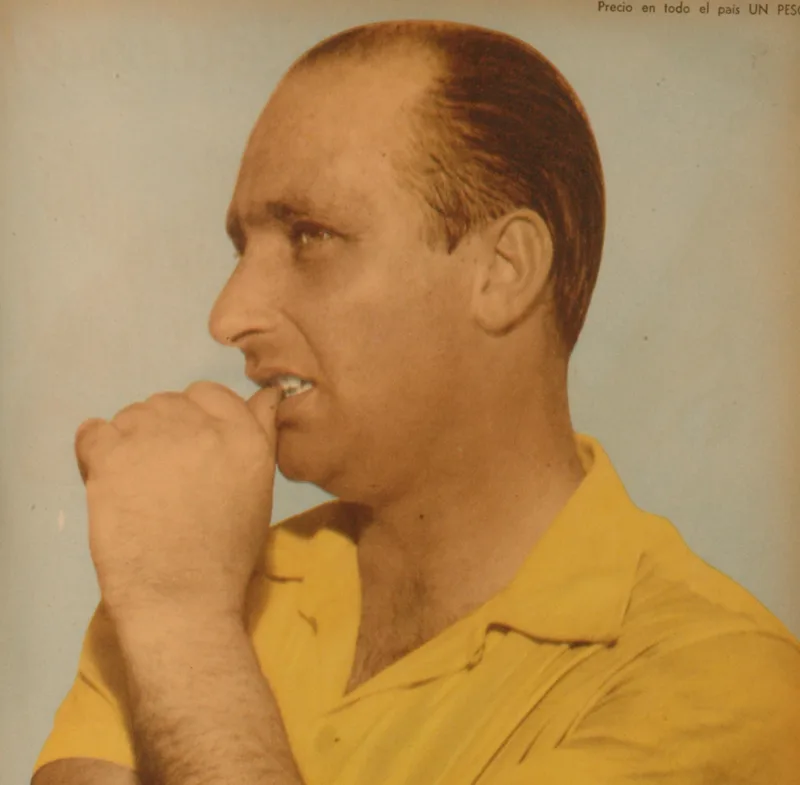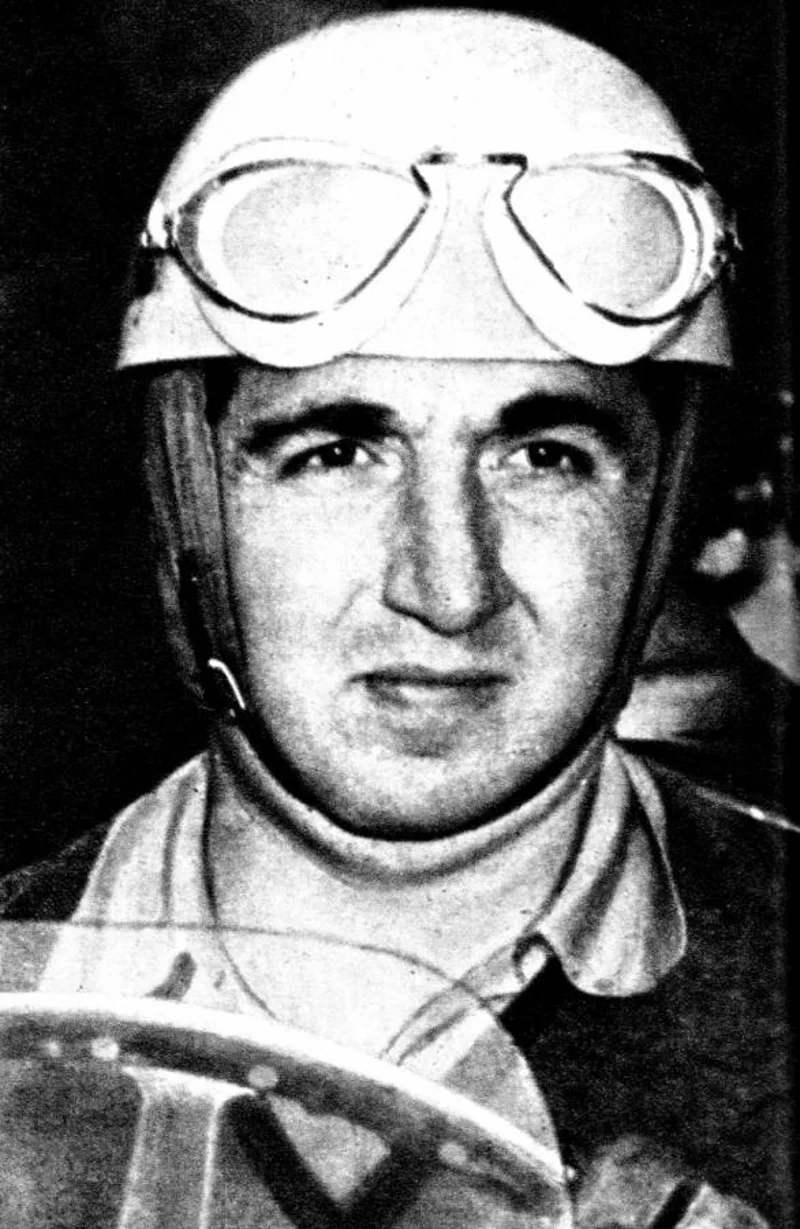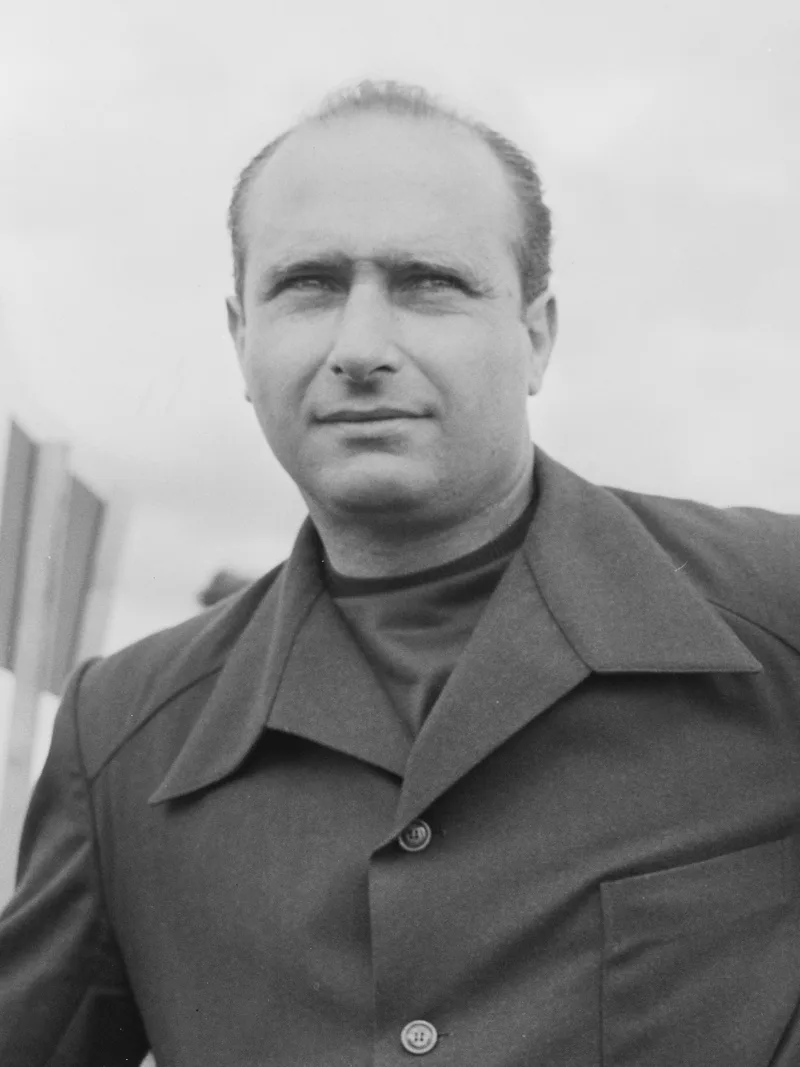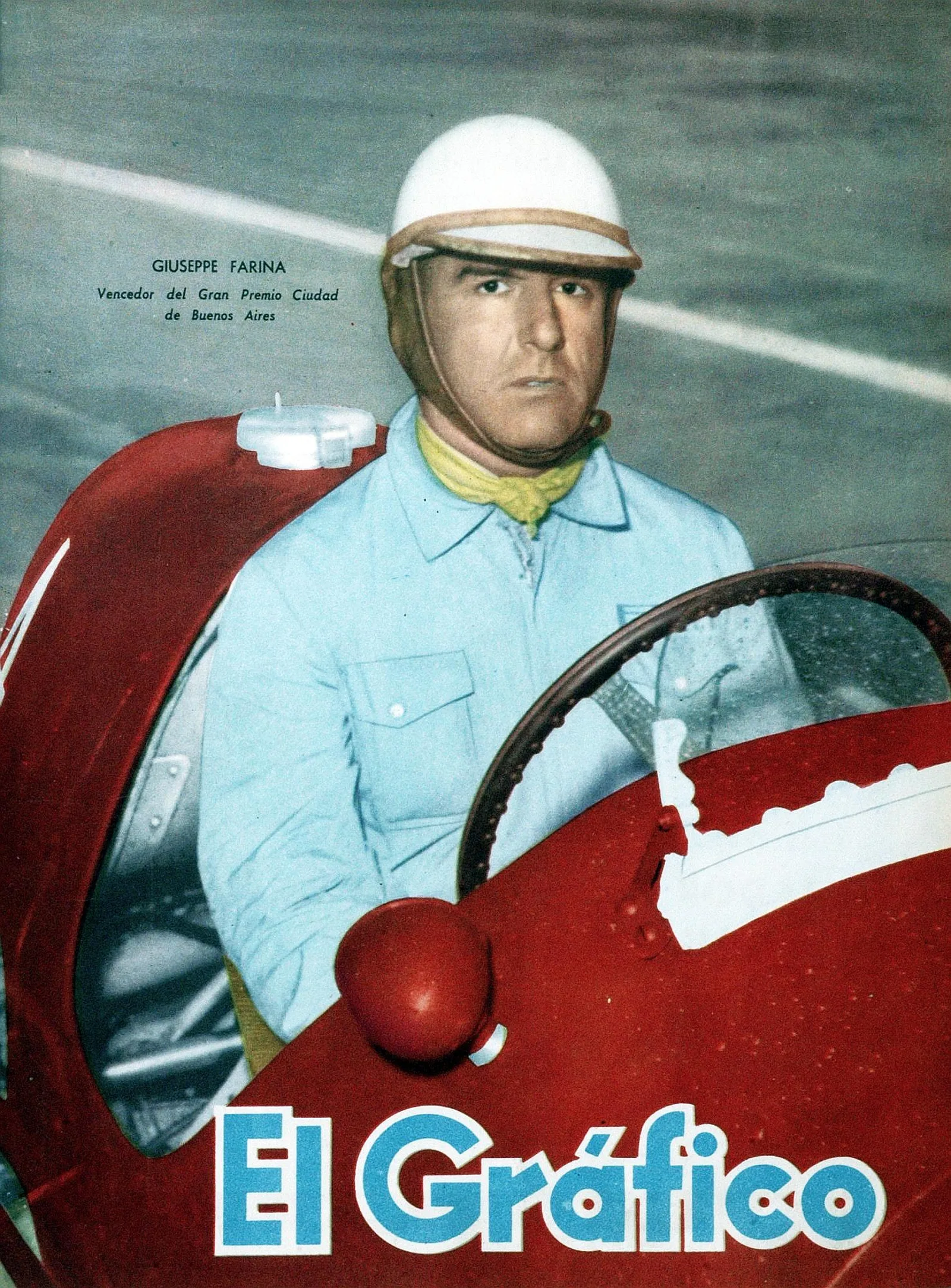
From hillclimbs and Ferrari recruitment in the 1930s to the 1950 title with Alfa Romeo, the career of Italy's first Formula One world champion.
Giuseppe Farina was an Italian driver who competed in Formula One from 1950 to 1956 and won the inaugural World Drivers' Championship with Alfa Romeo in 1950. He took five Grand Prix wins, five poles and 20 podiums, and he was known as Nino.
Emilio Giuseppe Farina, known as Nino, was the first Formula One World Drivers' Champion, taking the title in the inaugural 1950 season. He raced from the early 1930s in Alfa Romeo, Ferrari and Maserati machinery, and across seven seasons he won five Grands Prix. His career also ran through hillclimbs, endurance races and a sequence of serious accidents.
Who was Giuseppe Farina?
Farina was born in Turin on 30 October 1906 and died on 30 June 1966 in a road accident in the French Alps. His Formula One career ran from 1950 to 1956, and the first season of the title saw him win it with Alfa Romeo.
He was the son of Giovanni Carlo Farina, who founded the Stabilimenti Farina coachbuilder. His early racing was on a two-cylinder Temperino that he began driving at the age of nine.
Before he committed to racing, Farina cut short a career as a cavalry officer in the Italian army. He was also a strong skier, footballer and athlete.
Formula One's first world champion clinched the 1950 title at Monza, with his Alfa Romeo rivals retiring around him.
How did Farina begin racing?
Farina started on a two-cylinder Temperino at nine and moved into hillclimbing in 1925. While still at university he bought a second-hand Alfa Romeo and ran it at the Aosta-Gran San Bernardo Hillclimb. Trying to beat his father, he crashed and broke a shoulder, a pattern that recurred through his career. His father finished fourth.
He returned to the sport in 1933 and 1934, racing Maseratis and Alfa Romeos for Gino Rovere and Scuderia Subalpina. A friendship with Tazio Nuvolari helped guide his early career. In 1935 he raced for the factory Maserati team, and his promise impressed Enzo Ferrari, who recruited him for Scuderia Ferrari, the team that ran the works-supported Alfa Romeos.
In an Alfa Romeo 8C he finished second in the Mille Miglia after driving through the night without lights. He also raced in the United States for Alfa Romeo in the Vanderbilt Cups of 1936 and 1937.
When did Farina win his first Grand Prix?
Farina took his maiden Grand Prix win at the 1937 Grand Prix of Naples. He went on to win three consecutive Italian Championships, from 1937 to 1939, the last two with Alfa Corse. Those titles came in the years before the war.
In 1939 he drove the new Alfa Romeo 158 Voiturette to victories at the Grand Prix d'Anvers, the Coppa Ciano and the Prix de Berne. He later won the Tripoli Grand Prix, his last victory before the war, and finished second in the Mille Miglia for the third time.
Which accidents shaped his early career?
Farina was involved in two fatal accidents before the war. In the 1936 Grand Prix de Deauville he tried to pass Marcel Lehoux for second, and his Alfa Romeo 8C collided with Lehoux's ERA. The ERA overturned and caught fire, and Lehoux died of a fractured skull in hospital, while Farina escaped with minor injuries.
Two seasons later, at the 1938 Gran Premio di Tripoli, Laszlo Hartmann's Maserati 4CM cut in front of Farina at a corner. The two cars touched and rolled over. Farina came out with no serious injuries, whereas Hartmann died the next day.
How did Farina rebuild after the war?
After the war Farina returned to Alfa Corse, winning the 1946 Grand Prix des Nations in an Alfa Romeo 158. He then left the team after a dispute over team leadership, and he sat out the 1947 season. He came back in 1948 with a privately entered Maserati and a works Ferrari.
In 1948 he flew to Argentina and won the Gran Premio Internacional del General San Martin in his Maserati 8CL. On his return to Europe he took the Grand Prix des Nations and the Monaco Grand Prix. He then won the Circuito di Garda in the 125, Ferrari's first Grand Prix car, and added the Copa Accion San Lorenzo in February 1949.
The rest of 1949 was spent in Maseratis for Scuderia Milano and Scuderia Ambrosiana, and in his own 4CLT/48. He won the Lausanne Grand Prix before Alfa Corse re-signed him.
How did Farina win the 1950 World Championship?
Farina won the first round of the inaugural 1950 season at Silverstone, where he finished ahead of teammates Luigi Fagioli and Reg Parnell in an Alfa Romeo 1-2-3. The race drew 150,000 spectators, and the victory made him the first of only three drivers to win on World Drivers' Championship debut.
The other two were Johnnie Parsons, who won the AAA-sanctioned 1950 Indianapolis 500 seventeen days later, and Giancarlo Baghetti, who won the 1961 French Grand Prix. Farina's own season was uneven. At Monaco a first-lap pile-up ended his race, and Juan Manuel Fangio went on to win. He finished second in the Swiss Grand Prix, ahead of his teammate Fagioli, and after Spa he still led the championship on points, ahead of Fagioli and Fangio.
The title was settled at Monza. Farina trailed his teammate by two points, but Ascari's Ferrari retired with engine problems, Fangio's gearbox failed and Piero Taruffi's car dropped a valve. First place, and with it the championship, went to Farina.
What happened between 1951 and 1953?
Farina stayed at Alfa Romeo for 1951 but was beaten by Fangio, who took the title for the Milanese marque. Farina finished fourth in the championship, and his only world championship win that year came at the Belgian Grand Prix at Spa-Francorchamps.
He returned to Ferrari in 1952, when Grand Prix racing switched to Formula 2 specification, and he had to settle for second place behind team leader Ascari. He won the non-championship Gran Premio di Napoli and the Monza Grand Prix that year. He also drove Tony Vandervell's Thinwall Special, a modified Ferrari 375 F1, to second place in the Woodcote Cup at Goodwood. Ascari's dominance was a bitter blow to Farina's self-image.
The 1953 season opened with a tragedy. At the Argentine Grand Prix, which President Juan Peron had allowed free access to, a boy ran onto the circuit just as Farina was committed to a fast corner. Farina swerved into the spectators standing at the corner exit, killing seven and injuring many others.
His best result that year came at the German Grand Prix, his final Formula One victory. Ascari's car lost a wheel early on, which left Farina to chase the works Maserati of Fangio and Mike Hawthorn. He finished third in the World Championship, behind Ascari and Fangio.
What were Farina's sports car wins in 1953?
The World Sportscar Championship was introduced in 1953, and Farina won twice as part of the Scuderia Ferrari squad. The first came in the 24 Heures de Spa-Francorchamps, where he and Hawthorn finished 18 laps clear, an advantage of close to 90 minutes.
The second was the 1953 1000 km of Nurburgring, this time with Ascari, by a margin of just over 15 minutes. He also won the 12 Hours of Casablanca that year, and he took the Daily Express Trophy race at Silverstone in the Thinwall Special.
Why did injuries disrupt Farina's 1954 season?
Farina was 47 when Ascari left Ferrari, which made him the team leader. Early 1954 results included wins in the 1000 km Buenos Aires sports car race, co-driven by the young Umberto Maglioli, and the Syracuse Grand Prix. He then crashed heavily while leading the Mille Miglia in his Ferrari 375 Plus.
Seven weeks later, with his right arm still in plaster, he raced the Belgian Grand Prix. He was running at the front almost from the start, duelling with Fangio's Maserati, until the ignition gave out on his Ferrari. Later that season a serious injury in the Supercortemaggiore sports car race at Monza kept him in hospital for 20 days.
How did Farina's final Formula One season unfold?
Farina was back with Ferrari for 1955, starting in Argentina while taking morphine injections to ease the pain. The heat took its toll, and he pitted with exhaustion, handing his Ferrari 625 to the spare driver, Maglioli. After Gonzalez pitted, Farina took over his car. Later Gonzalez crashed, rejoined and handed the car back to Farina, who finished second.
Third place at that race went to the original car, which Maglioli and Maurice Trintignant had driven. After a third place in Belgium, Farina retired mid-season, troubled by pain and by Ascari's death. He came back for the Italian Grand Prix, but in practice at Monza his Scuderia Ferrari-entered Lancia D50 suffered a tyre failure at 170 mph on the new banking. The car spun, Farina stepped out unhurt, and Ferrari withdrew it from the event.
What happened at Indianapolis?
The Indianapolis 500 was part of the World Championship from 1950 to 1960. Farina tried to qualify for the 1956 race with the Bardahl-Ferrari, a Kurtis Kraft chassis with a six-cylinder Ferrari engine and sponsorship from the Seattle-based Bardahl lubricants company. He failed to get up to speed in the first two qualifying sessions, and rain cancelled a qualifying day. On the final day he was among the drivers unable to make an attempt, and at 49 he did not make the grid.
For 1957 he elected to race a conventional Offenhauser-powered car. He had difficulty with its handling, and his teammate Keith Andrews took it out for a test run. Andrews crashed on the front straight and died, and Farina withdrew from the event.
Farina's Indianapolis attempts came while the American race still counted toward the world title. Drivers who took part could score world points alongside their AAA and USAC points, so the attempts formed part of his world record even though he did not qualify in 1956.
| Measure | Career figure |
|---|---|
| Formula One seasons | 1950 to 1956 |
| World Drivers' Champion | 1950, with Alfa Romeo |
| Grand Prix wins | 5 |
| Pole positions and fastest laps | 5 each |
| Podiums | 20 |
| Non-championship Formula One wins | 11 |
| Italian Championships | 3, from 1937 to 1939 |
| Sports car wins in 1953 | 3, including Spa and the Nurburgring 1000 km |
How did Giuseppe Farina die?
Farina retired from Formula One and became involved in Alfa Romeo and Jaguar distributorships, and he later assisted at the Pininfarina factory. On 30 June 1966 he was on his way to the French Grand Prix when he lost control of his Lotus Cortina in the Savoy Alps, near Aiguebelle.
The car hit a telegraph pole, and he was killed instantly. He had been travelling to watch the race and to work on filming as adviser and driving double for the French actor Yves Montand, cast as a former world champion in the film Grand Prix.
What is Farina's legacy?
Farina is remembered as the first Formula One World Drivers' Champion, a title he won with Alfa Romeo in 1950 before moving to Ferrari. His career combined early hillclimbing and Mille Miglia success with a long run of Grand Prix and sports car wins. Those years also included serious accidents, two fatal crashes before the war and a fatal spectator accident in Argentina.
His final Formula One victory came at the German Grand Prix in 1953, a result that sat alongside the rivalry with Fangio and Ascari that defined his later years. He finished on the Grand Prix podium 20 times and won 11 non-championship Formula One races, so his record goes well beyond the single title.