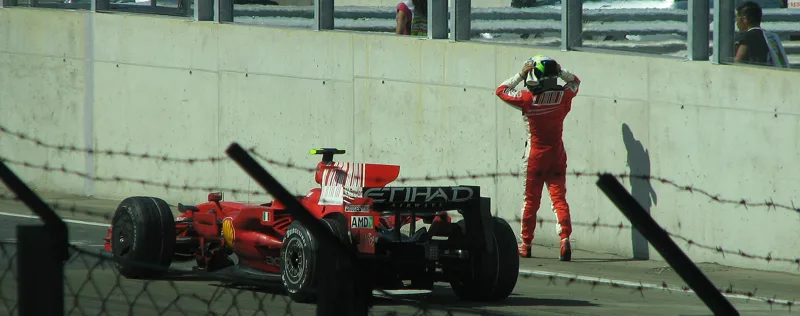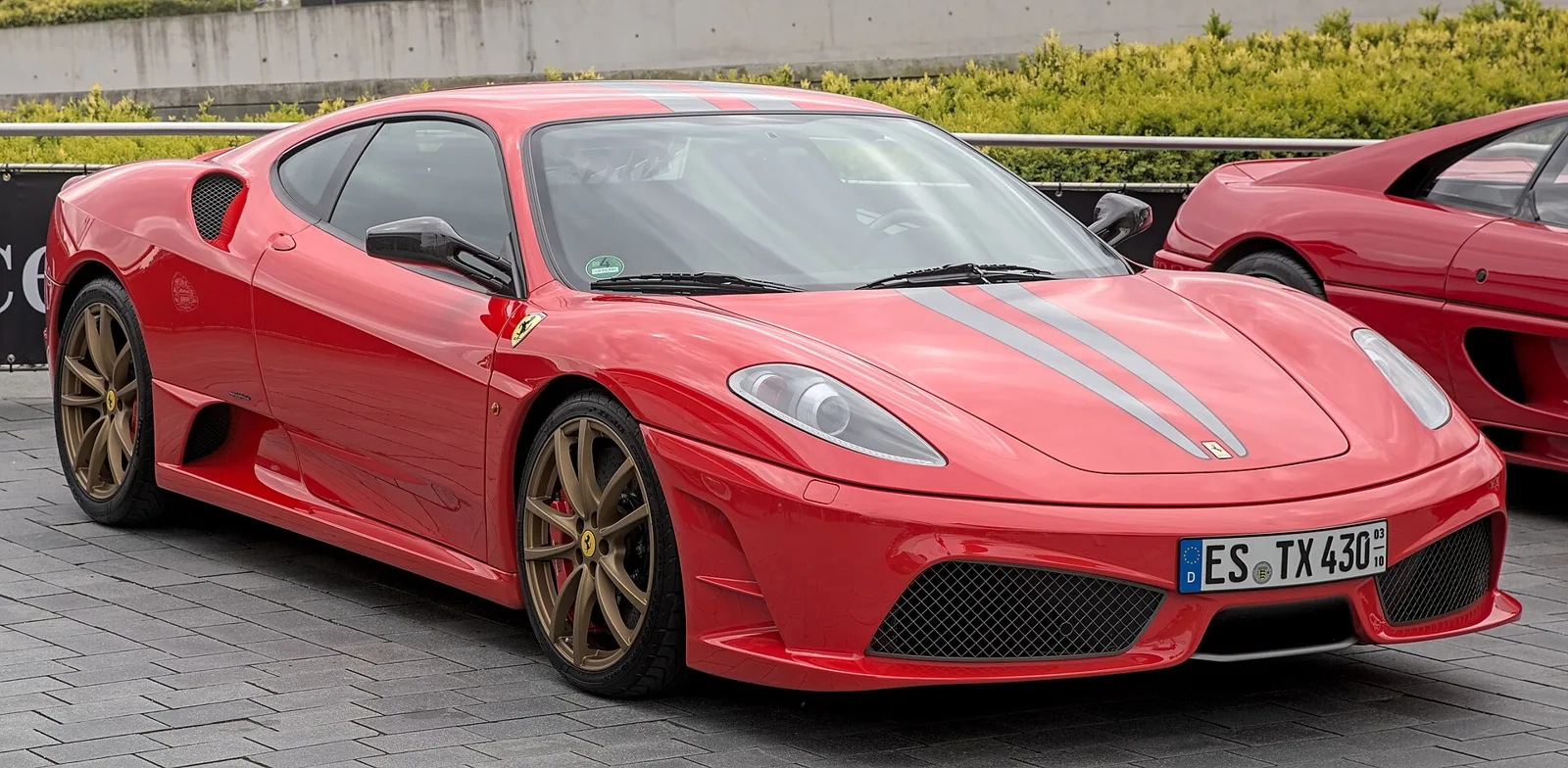
From an Alfa Romeo customer team founded in 1929 to the oldest Formula One entry on the grid, Ferrari's racing side has won titles, endurance races and a few bitter arguments.
Scuderia Ferrari is the racing division of Ferrari and the oldest surviving Formula One team, founded by Enzo Ferrari in 1929 to race Alfa Romeo cars. It has won 16 Constructors' Championships and 15 Drivers' Championships, and it has competed in every World Championship since 1950.
Scuderia Ferrari is the racing division of the Italian luxury maker Ferrari and the team that competes in Formula One. Known as the Prancing Horse after its logo, it is the oldest surviving and most successful Formula One team, having entered every World Championship since 1950. It has 16 Constructors' Championships and 15 Drivers' Championships, the most of any team.
Who founded Scuderia Ferrari, and why?
Enzo Ferrari founded the team in 1929 to race cars made by Alfa Romeo, and the idea came on the night of 16 November at a dinner in Bologna. He won financial backing from the textile heirs Augusto and Alfredo Caniato and the amateur racer Mario Tadini. At its peak the team included over forty drivers, most of them in Alfa Romeo 8C cars, and Ferrari kept racing with modest results until his first son, Dino, was born in 1932.
The prancing horse first appeared at the 1932 Spa 24 Hours in Belgium, where a two-car team of Alfa Romeo 8C 2300 Spiders finished first and second. The emblem was borrowed from Francesco Baracca, the Italian First World War ace whose fighter plane carried it. His parents, who knew Ferrari, suggested he use the symbol as the team's logo, telling him it would bring good luck. The word scuderia means a stable reserved for racing horses, which fits the name.
A stable of racing horses that became the oldest Formula One team, still wearing the red of Italy's racing tradition.
How did Ferrari and Alfa Romeo split?
In 1933 Alfa Romeo withdrew its own team from racing, and Scuderia Ferrari became its acting racing team, running the up-to-date Monoposto Tipo B cars the factory released to it. Enzo Ferrari and Luigi Bazzi built the Bimotore for Alfa Romeo in 1935, and it became the first machine to show a Ferrari badge mounted on the radiator cowl. From the Viale Trento e Trieste headquarters in Modena, Ferrari managed established drivers such as Tazio Nuvolari, Giuseppe Campari, Achille Varzi and Louis Chiron, along with promising newcomers.
Alfa Romeo bought the team's shares in 1937 and took over the official racing from 1 January 1938, when Alfa Corse began work at the factory in Portello, Milan. Ferrari disagreed with the policy change and was dismissed in 1939. He left that October and founded Auto Avio Costruzioni Ferrari, which also made machine tools. His agreement with Alfa barred him from using the Ferrari name on cars for four years.
What were the first true Ferrari cars?
Ferrari started work on his own racing car in the winter of 1939 to 1940. The Tipo 815 had eight cylinders and 1.5 L of displacement, and it was designed by Alberto Massimino. Alberto Ascari and the Marchese Lotario Rangoni Machiavelli di Modena drove the 815s in the 1940 Mille Miglia, and they were the first cars to carry the Ferrari name in their own right. The war ended racing before the 815s could compete again.
Ferrari moved his headquarters to Maranello in 1943, and the works were bombed in November 1944 and February 1945. After the war he built the 12-cylinder, 1.5 L Tipo 125, which made its debut at the 1948 Italian Grand Prix with Raymond Sommer. Giuseppe Farina gave it a first win at the minor Circuito di Garda. That modest start set the pattern for a team that would race and build its own cars from then on. The road car business then became Ferrari S.p.A., while the racing department traded as SEFAC. Ferrari also raced in Formula Two in several seasons, from the 166 F2 of 1948 to the Dino 166 F2 that ran until 1969.
Which drivers won titles for Ferrari?
The team has won 15 Drivers' Championships, shared among nine drivers. Schumacher, Lauda, Fangio and Hill are among the names on that list, and Raikkonen's 2007 title is the most recent for the team. Ferrari is also the only team to have competed in every season since 1950, and the 2020 Tuscan Grand Prix marked its 1000th Grand Prix.
Michael Schumacher is its most successful driver. He joined in 1996, retired the first time in 2006 and won five consecutive drivers' titles between 2000 and 2004, along with 72 Grands Prix for the team. The team also won consecutive constructors' titles between 1999 and 2004, which marked the most successful period in its history.
How did team orders divide Ferrari?
Team orders have caused rows at several points in the team's history. At the 1982 San Marino Grand Prix, Gilles Villeneuve was leading and slowed on a pre-race agreement, expecting Didier Pironi to hold station. Pironi passed him instead, and Villeneuve felt betrayed. The feud is often linked to his fatal accident in qualifying at the 1982 Belgian Grand Prix.
At the 2002 Austrian Grand Prix Rubens Barrichello, who had started from pole and led the first 70 laps, was told to let Michael Schumacher through. Formula One banned team orders from the 2003 season after this and other incidents. At the 2010 German Grand Prix Fernando Alonso passed Felipe Massa for the lead after a Ferrari message that Alonso was faster. The stewards fined the team $100,000, and the ban on team orders was lifted for 2011. Ferrari's leverage with the sport's governing body was a recurring theme. In 1987 the team considered leaving Formula One for the American IndyCar series, and Enzo Ferrari dropped that plan once the FIA agreed to keep V12 engines allowed. In 2009 it emerged that Ferrari held an FIA-sanctioned veto on the technical regulations.
Why are Ferrari cars red?
The team keeps to red in the tradition of rosso corsa, Italy's national racing colour. The one major exception came in 1964, when Enzo Ferrari let the NART team enter the last two races, the United States and Mexican Grands Prix, in American colours of white with blue Cunningham stripes. That protest against Italian racing authorities did not stop John Surtees winning the 1964 title, and the Mexican Grand Prix was the last Ferrari in Formula One to run in anything but red. Private entries were different. Between 1950 and 1966 privateer teams ran Ferrari cars in world championship events, and they won five podium finishes between them, including Giancarlo Baghetti's win at the 1961 French Grand Prix. Those cars kept their own national colours. Olivier Gendebien ran a Belgian yellow car at the 1961 Belgian Grand Prix, and the last privateer entry came at the 1966 Italian Grand Prix.
How has sponsorship shaped the team?
The team resisted commercial sponsorship for years. The Fiat logo first appeared on its cars in 1977, since Fiat had owned Ferrari since 1969, and until the 1980s the only other logos were technical partners such as Magneti Marelli, Brembo and Agip. Philip Morris, through Marlboro, took over as title sponsor for 1997, and the team was named Scuderia Ferrari Marlboro until 2011.
That deal drew heavy criticism. Ferrari extended the tobacco sponsorship in 2005 at a time when tobacco advertising had become illegal in the European Union. F1 Racing magazine estimated that Ferrari received $1 billion from the agreement between 2005 and 2011. The Marlboro name was dropped from the team name in July 2011, and in 2018 the Mission Winnow logos appeared, which commentators said mimicked the cigarette packet design. Santander became a sponsor in 2010 under a five-year deal that was later extended, and the partnership was renewed in December 2021. AMD returned as a sponsor in 2018, and in April 2024 HP became the title partner, renaming the team Scuderia Ferrari HP.
How did sports car racing shape Ferrari?
From the late 1940s to the early 1970s Ferrari was a force in sports car racing, winning the World Sportscar Championship twelve times. Its cars took the Mille Miglia eight times and the Targa Florio seven times, and Le Mans nine times in the same period. The 166 MM barchetta of 1949 won several major races in a single season, and its design was copied abroad.
In the early 1960s Ferrari won six overall Le Mans races in a row, but the Ford vs Ferrari battle reshaped the sport. Ford built the GT40 to beat Ferrari in endurance racing, and in 1966 the 7-litre GT40 beat Ferrari at Le Mans. Ferrari won the championship in 1967 but lost at Le Mans that year. A rule change barred prototypes from 1968, and at the end of 1973 Enzo Ferrari stopped sports car development to concentrate on Formula One. That choice paid off, and Ferrari contended for the Formula One title from 1974.
The factory returned to GT racing in 2006 through Ferrari Competizioni GT, with partners such as AF Corse. The Ferrari 499P returned to the top class of endurance racing in 2023 and scored its first Le Mans win since 1965 that year. The 2024 race brought consecutive victories for the first time since 1965, and the 2025 race gave Ferrari its twelfth 24 Hours of Le Mans win. In 2024 the car that had won in 2023, No. 51, finished third behind the No. 50 car. The 2025 winner was the No. 83 499P driven by Phil Hanson, Robert Kubica and Yifei Ye. In 2023 a Ferrari 296 GT3 run by Frikadelli Racing also won the 24 Hours of Nurburgring.
Who ran Ferrari's team over the years?
The team has been led by a long line of team principals and sporting directors. Their tenures cover the eras in which the team won its most famous titles, and the table below lists the main ones. Jean Todt ran the team from 1993 to 2007, a period that covered the Schumacher titles, and Stefano Domenicali followed him from 2008 to 2014.
| Team principal or sporting director | Years |
|---|---|
| Federico Giberti | 1950-1951 |
| Romolo Tavoni | 1958-1961 |
| Luca di Montezemolo | 1974-1975 |
| Marco Piccinini | 1978-1988 |
| Jean Todt | 1993-2007 |
| Stefano Domenicali | 2008-2014 |
| Maurizio Arrivabene | 2015-2018 |
| Mattia Binotto | 2019-2022 |
| Fred Vasseur | Since 2023 |