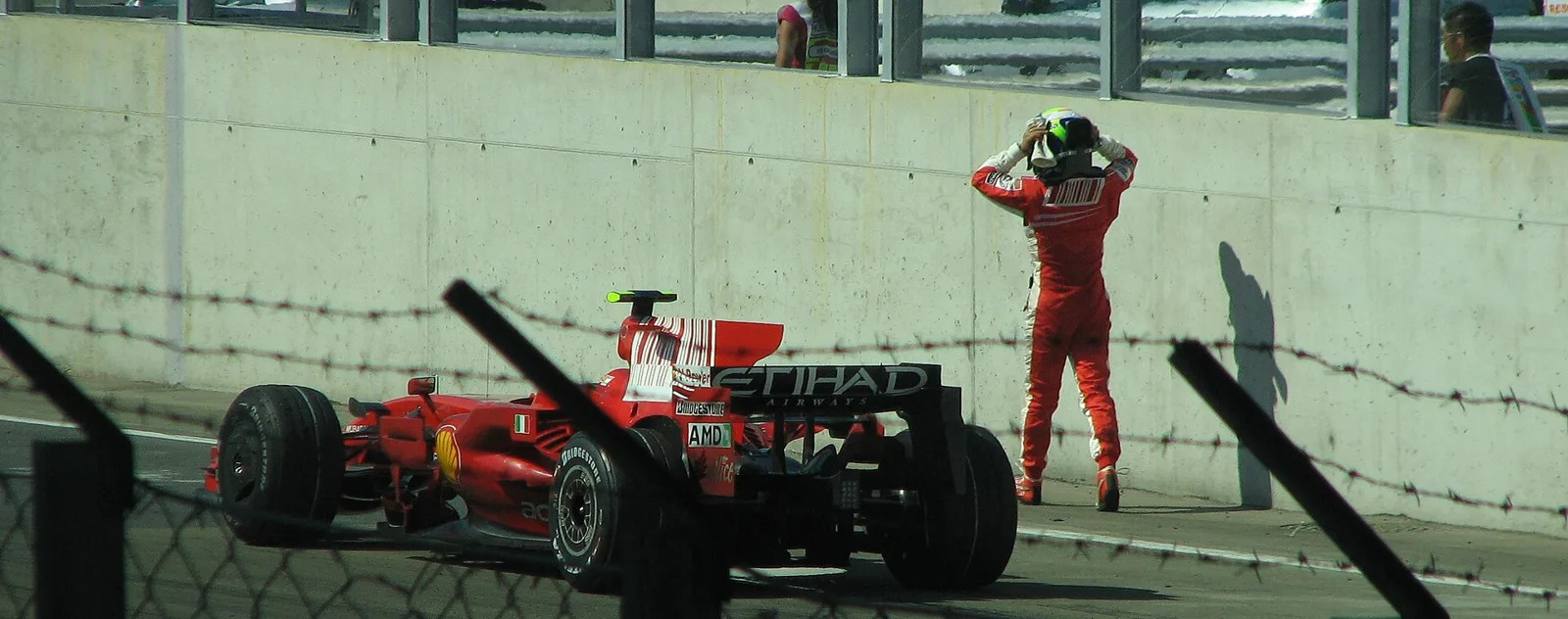
Heikki Kovalainen took his first Formula One victory when Felipe Massa's engine failed three laps from the end, after a Hamilton-Massa duel had dominated Budapest.
Heikki Kovalainen took the 2008 Hungarian race for McLaren, starting second, after Felipe Massa's engine let go with three laps left. Glock and Raikkonen completed the podium for Toyota and Ferrari, and Kovalainen's win was his first in Formula One.
The 2008 Hungarian Grand Prix was run at the Hungaroring on 3 August 2008, the eleventh race of a season that would be settled by a single point. Heikki Kovalainen won for McLaren from second on the grid, and it was his first Formula One victory. The race was supposed to belong to the two title rivals, but a mechanical failure decided it in the final laps.
Who won the 2008 Hungarian Grand Prix?
Heikki Kovalainen won the 70-lap race for McLaren from second on the grid, after Felipe Massa's engine failed with three laps remaining. Timo Glock finished second for Toyota, which was his first podium, and Kimi Raikkonen took third for Ferrari despite a difficult afternoon in a car that was stuck behind slower cars.
The win made Kovalainen the 100th driver to win a World Championship race, and it was the only Formula One victory of his career. He was quick to credit luck for it. After the race he said he felt sorry for Massa and Lewis Hamilton, who had driven superbly, and that he found it hard to believe when he saw Massa's Ferrari on fire.
Glock was pleased with second place, having trained specifically on his race starts. He said he had concentrated on avoiding mistakes in the closing laps as Raikkonen closed, instead of simply holding the gap. Raikkonen, by contrast, described his race as frustrating because of the time he spent stuck behind slower cars.
A race that belonged to the title rivals until one failed engine handed a first win to a driver who had not expected it.
What was the title picture before Budapest?
Ferrari led the Constructors' Championship with 105 points, 16 ahead of BMW Sauber and three in front of McLaren. Toyota, Red Bull and Renault were battling for fourth, separated by two points or less and more than 60 points adrift of McLaren. The top of the table was tight, and every point mattered.
In the Drivers' Championship Lewis Hamilton led with 58 points, ahead of his Ferrari rivals Felipe Massa on 54 and Kimi Raikkonen on 51. Robert Kubica had 48 and Nick Heidfeld 41, while Heikki Kovalainen had 28 points in the second McLaren. With that spread, a single race could easily change who led the title.
The Hungarian race was also the stage for wider changes in the sport. In the week before the event, the teams met at Ferrari's headquarters in Maranello and formed a new body, the Formula One Teams Association, which was led by Luca di Montezemolo. McLaren's Ron Dennis said the association would encourage co-operation between teams and act as a counterweight to the governing body and the commercial company that ran the sport.
What changed on the cars in Hungary?
Several teams brought changes for the race. Ferrari reworked the cooling and bodywork of its F2008 after brakes wore quickly and engines ran hot in Germany. McLaren and Force India brought revised aerodynamic packages to add downforce, and Force India also arrived with a new gearbox design.
Ferrari, Honda and Toyota all debuted raised engine covers, which were nicknamed shark fins because of the way they stretched towards the rear wing. Honda introduced a new rear suspension package as well.
Bridgestone supplied two specifications of grooved dry tyre. The Soft was the prime and the Super Soft was the option, with a white stripe in one of the grooves identifying the Super Soft. Teams could use only seven sets of dry rubber per driver across the weekend, and the race rules required both compounds.
How did practice look at the Hungaroring?
Three sessions were held: two on Friday, from 10:00 to 11:30 and from 14:00 to 15:30 local time, and one on Saturday morning from 11:00 to 12:00. The first session was dry, and Massa set the fastest time with a lap of 1:20.981, almost four-tenths of a second ahead of Raikkonen.
Vettel's Toro Rosso was affected by a hydraulics problem that limited him to four timed laps in the first session, and he was the slowest of the day. The problem returned in the second session, when Hamilton set the quickest lap of the day at 1:20.554. Raikkonen and Massa were separated by just one-thousandth of a second, and Renault admitted its cars had been running with slightly lower fuel loads.
On Saturday Hamilton was fastest again at 1:20.228, immediately ahead of Massa, Glock, Kovalainen and Piquet. Heidfeld was happier with his set-up and took sixth. Kubica suffered a mechanical problem that restricted him to 18th, while Vettel had a trouble-free session and finished eighth, one behind Bourdais.
How did qualifying shape the grid?
Qualifying took place in hot conditions, with the ambient temperature between 30 and 31 C (86 and 88 F) and the track between 38 and 41 C (100 and 106 F). Those in the final session could not refuel before the race and carried more fuel than before.
Hamilton took pole with a lap of 1:20.899 and said he had never been more comfortable in the car. He believed he could have gone faster, having made a slight mistake at turn five. Kovalainen completed the front row 0.241 seconds slower, but he was fuelled for two extra laps in the race,.
Massa set the fastest time of the session at 1:19.068 in the second part, but he had been blocked by other cars and could not heat his tyres fully. He dropped to third in the final part. Raikkonen made a mistake on his final flying lap that left him sixth, behind Kubica and Glock. Glock recorded the best qualifying result of his career so far.
Alonso qualified seventh, and Piquet was tenth on a heavy fuel load. The McLaren drivers had used one fewer set of Soft tyres than their Ferrari counterparts in qualifying, which suggested they might have a tyre advantage in the race. Vettel was the fastest driver not to reach the final session, qualifying 11th.
How did the first corner decide the duel?
The race began with Massa making a good start on his only remaining new set of Soft tyres. He moved ahead of Kovalainen and drew alongside Hamilton into the first corner. Hamilton held the inside line, but Massa braked later and passed him around the outside. From that moment the race became a duel between the two title contenders.
Barrichello was the standout starter, climbing from 17th to 13th in one lap. Vettel, by contrast, lost four places on that opening lap. After one lap Massa led Hamilton and Kovalainen, then Glock, Kubica, Alonso and Raikkonen, followed by Webber, Trulli and Piquet.
Massa and Hamilton quickly pulled clear of Kovalainen. On lap three Button passed his teammate Barrichello for 13th, yet both Hondas were held up behind Heidfeld, who was running more fuel. Massa began to open a small lead over Hamilton, and the high track temperature suited the Ferrari, which was easier on its tyres than the McLaren.
How did the middle of the race play out?
On lap 18 Massa was 3.5 seconds clear of Hamilton, and Hamilton was almost 8 seconds up on Kovalainen. Massa, Kubica and Webber made their first stops on lap 18, and Hamilton pitted the following lap. McLaren fuelled him to run three laps longer than Massa in the second stint, which was a deliberate strategy.
Kovalainen led the race for two laps before his stop on lap 21 handed the lead back to Massa. Piquet was the last of the leading runners to stop, on lap 25. Vettel pitted unscheduled on lap 20 and quit two laps later with an overheating engine,.
Massa's lead grew to five seconds by the end of lap 40. Hamilton's front-left tyre then deflated on lap 41, and the slow lap back to the pits dropped him to tenth. Massa had a 23-second lead over Kovalainen, and he eased off and reduced the stress on his engine. He made his final stop on lap 44, and Kovalainen took the lead until his own stop four laps later.
The pit stops produced several incidents. Barrichello and Bourdais suffered flash fires, and Rosberg's fuel hose jammed and cost him time. Raikkonen ran off the road before his stop but still moved ahead of Alonso, and Hamilton climbed back to sixth behind Alonso after his own stop.
Why did Massa's engine failure decide the race?
At the conclusion of lap 59 the scheduled stops had finished, and Massa led from Kovalainen, Glock, Raikkonen and Alonso. Raikkonen posted the quickest lap of the race, 1:21.195, on lap 61, Hamilton caught Alonso, but his super-soft tyres began to overheat, and he could only close the gap to 1.5 seconds.
Sutil's race ended on lap 62 with a puncture caused by a brake failure. Late on, Kovalainen cut the gap to Massa to 15 seconds, although the Ferrari driver still looked in command. Then, as Massa started lap 68, his engine failed without warning and he retired with three laps left.
Kovalainen inherited the lead and held it to the flag. His winning time was 1 hour, 37 minutes and 27.067 seconds, averaging 117.309 mph (188.791 km/h). Glock took second for Toyota, and Raikkonen was third despite a rear suspension failure during the final few laps.
Alonso and Piquet finished either side of Hamilton, who took fifth, and Symonds described the result as the team's best of the year so far. Trulli finished seventh, while Kubica was deeply unhappy with a car that had been uncompetitive at a race close to his Polish home. Heidfeld finished tenth between the two Red Bulls, and Barrichello finished 16th, two laps down, after the delay at his first stop.
What did the result mean for the title?
The race left Hamilton five points ahead of Raikkonen in the Drivers' Championship, with Massa a further three points back. Kubica finished eighth, 13 points behind Hamilton. In the Constructors' Championship McLaren passed BMW Sauber for second place, 11 points behind Ferrari.
Massa's engine failure was a serious blow. The cause was a connecting rod that failed because of an impurity in the material, and an identical fault later caused Raikkonen to retire at the European Grand Prix. Bridgestone's motorsport director had earlier suggested that Hamilton's puncture was probably caused by debris, which was more likely because his tyre had been flat-spotted earlier.
The media focused on Massa. Ferrari's Stefano Domenicali called it the best race of his career, and Mark Hughes rated it as very probably the finest race of Massa's career to that point. Simon Arron called it one of the finest afternoons of his Formula One career, and noted that the first-corner pass was a defining moment in Massa's title campaign.
Hamilton later warned that the first-corner move would not happen again. The championship was eventually settled in Hamilton's favour by one point, and the Hungarian race is now seen as one of Massa's clearest missed chances in the title fight.
| Position | Driver | Team | Note |
|---|---|---|---|
| 1st | Heikki Kovalainen | McLaren | First win; inherited the lead on lap 68 |
| 2nd | Timo Glock | Toyota | First podium |
| 3rd | Kimi Raikkonen | Ferrari | Fastest lap of the race at 1:21.195 |
| 5th | Lewis Hamilton | McLaren | Punctured tyre and a late stop; five points clear in the title race |