Felipe Massa was promoted to victory at Spa when a 25-second penalty dropped Lewis Hamilton to third, a decision that sparked a long argument over chicanes and stewards.
Felipe Massa was promoted to the Belgian win for Ferrari on 7 September 2008, once the stewards had penalised Lewis Hamilton. Nick Heidfeld moved up to second. The 25-second penalty was for cutting a chicane while passing Kimi Raikkonen. The result changed the title race.
The 2008 Belgian Grand Prix was held at the Circuit de Spa-Francorchamps on 7 September 2008, the 13th race of the season. Felipe Massa was declared the winner for Ferrari after Lewis Hamilton, who had crossed the line first, was given a 25-second penalty for cutting a chicane. Nick Heidfeld was promoted to second, and the decision caused a long argument about how the rules should work.
Who won the 2008 Belgian Grand Prix?
Massa won the 44-lap race after Hamilton was demoted to third. Hamilton had started from pole alongside his title rival, and Massa finished second on the road behind him. Heidfeld, who finished third on the road, was then promoted to second. Massa's victory narrowed the gap in the Drivers' Championship from six points to two.
Kimi Raikkonen led most of the race for Ferrari until rain fell on lap 41. Hamilton then made the penalised pass, which was the move that led to the penalty. Raikkonen crashed on the following lap as the rain became heavier, and Massa was left to inherit the result on the road.
Massa's win was a remarkable turnaround for a driver who had been in the title hunt all season. He had been second in the standings before the race, and the penalty meant he moved from the second step of the podium to the top of it on paper. The result was not easily forgotten.
A race won on the track by Hamilton and handed to Massa by a 25-second penalty applied after the flag.
Why did the penalty matter so much?
Hamilton was given the 25-second penalty because the stewards ruled that he had cut a chicane and gained an advantage over Raikkonen. Such infringements usually bring a drive-through, but the time penalty was added to his total after the flag. That dropped Hamilton to third and promoted Massa and Heidfeld to first and second.
McLaren appealed to the FIA International Court of Appeal, arguing that the penalty was wrong. The case was declared inadmissible, because the court ruled that 25-second penalties could not be challenged. The penalty prompted discussion across the global press, most strongly in the United Kingdom and Italy, and several former drivers questioned the decision.
The penalty was therefore a key moment in both the race and the championship. Hamilton's six-point lead was cut to two by the result, and the stewards' interpretation meant the title race was reshaped on the basis of a single decision.
How did Monza testing prepare the teams?
Ferrari concentrated on its aerodynamic set-up during tests on Monza's long straights, which followed the European Grand Prix of 24 August. Massa set the quickest times on the first day, ahead of McLaren's Heikki Kovalainen, and Nick Heidfeld was quickest on the second day for BMW Sauber.
Massa spun off into the gravel at the Ascari chicane, which brought a brief halt to testing. Kubica lost control of his car and drove off the track, which limited BMW's running while minor repairs were made to the underside of his car. Hamilton was fastest on the third and final day.
How did the race start?
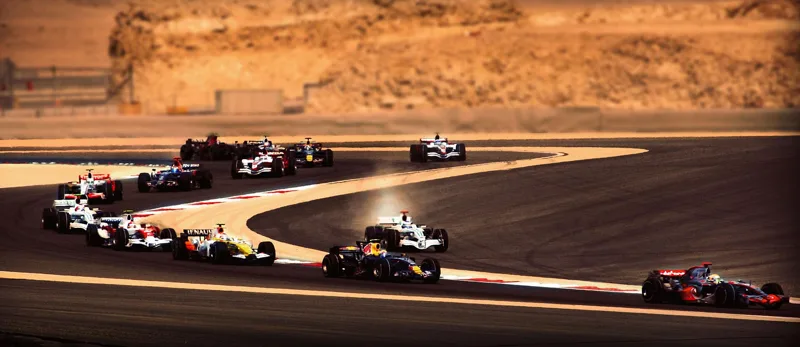
Hamilton started from pole alongside Massa, with Heikki Kovalainen third next to Raikkonen. Several cars were slow away on the slippery track. Kovalainen and Heidfeld collided at the start, and Vettel locked his brakes and ran wide, losing two places.
Nelson Piquet was the only driver to start on the harder dry tyres, as the track was still drying from the morning rain. He gained five places, as did Trulli, who was then hit from behind at the first corner by Bourdais. Trulli's Toyota suffered diffuser and gearbox damage and spun later in the lap. Fisichella hit Nakajima on lap one and pitted for a new front wing and tyres after punctures.
Hamilton led from Raikkonen, who passed his teammate Massa on the Kemmel straight. On lap two Hamilton spun at La Source and lost the lead to Raikkonen on the next straight. Glock lost several places in the first few laps because his tyres lacked grip.
On lap ten Kovalainen tried to pass Webber at the Bus Stop chicane and hit him on the side, causing Webber to spin. The drive-through, served on lap 14, dropped him to 15th. By the ten-lap mark Raikkonen had a three-second lead over Hamilton.
How did the pit stops and the rain shape the race?
Hamilton pitted first, on lap 11, followed by Raikkonen a lap later. Massa and Alonso came in on lap 13, and Heidfeld a lap later. Kubica and Bourdais stopped on lap 15, and Raikkonen kept his lead over Hamilton after the first round of stops.
Piquet's race ended on lap 13 when he spun into a wall. The Renault driver put it down to damp patches on the track. Rubens Barrichello retired on lap 17 with a gearbox problem, suffering from a failing sixth gear and an engine that was over-revving.
The leading cars kept the same order until the second round of stops, when Raikkonen and Hamilton both pitted on lap 25, followed by Alonso on lap 27, Massa on lap 28 and Heidfeld on lap 31. Bourdais and Kubica stopped on laps 32 and 33. Hamilton then began to close on Raikkonen, because the tyres suited his McLaren better in the last stint.
Heavy rain began to fall on lap 41. Hamilton closed to under a second of Raikkonen and was six seconds ahead of Massa. He tried to pass Raikkonen at the Bus Stop chicane, was forced off, and had to cut across the chicane to avoid a collision. He then led out of the chicane, but allowed Raikkonen to re-pass him halfway down the straight.
What did the result do to the title race?
The result changed the top of the Drivers' Championship at a crucial point. Hamilton had entered the race with 70 points, and Massa with 64, but the promotion of Massa narrowed the gap from six points to two. Raikkonen, who had crashed out, remained in the hunt on 57 points.
Robert Kubica sat third on 55 points before the race, and the outcome left him in the same position relative to the leaders. The results also kept the Constructors' fight close, because Ferrari's 121 points were only 8 ahead of McLaren's 113 at the start of the weekend. Heidfeld's second place also gave BMW Sauber a useful result, and with two points between the leaders the title fight went into the remaining races wide open. The outcome also kept Massa's title hopes firmly alive.
What happened at the chicane?
Hamilton passed Raikkonen again at La Source under braking. Raikkonen tried to double back and regain the position, but the line was defended, and Raikkonen touched his front wing on Hamilton's rear tyre. The rain came down harder, and Rosberg spun at Fagnes, rejoining in front of the two leaders and forcing Hamilton onto the grass.
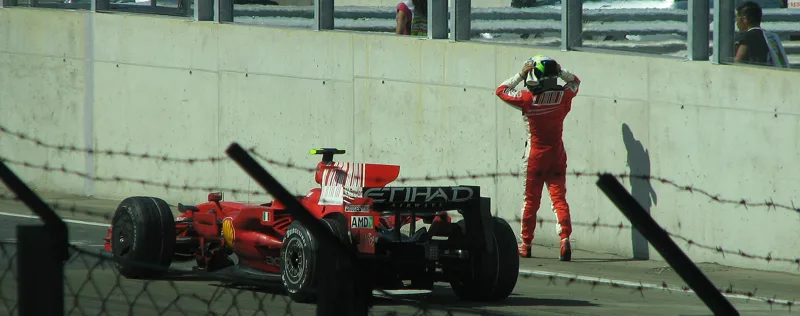
At the next corner Raikkonen spun and gave the lead back to Hamilton. Raikkonen then lost control of his Ferrari through Blanchimont and collided with the barrier, which ended his race. Hamilton finished first, crossing the line carefully in very wet conditions, with Massa and Heidfeld behind him.
Heidfeld had risen from ninth during the final laps because the intermediate tyres he had fitted gave him superior grip. Alonso and Glock also benefited from intermediates, with Alonso finishing fourth and Glock eighth after passing Webber on the final corner. Bourdais and Vettel had been third and fourth with one lap to go, but dry tyres dropped them to seventh and fifth.
Why was Glock penalised after the race?
Glock was handed a 25-second penalty for overtaking Webber under yellow flags on the final lap. The penalty pushed him from eighth to ninth. Glock had finished eighth on the road, having passed Webber on the final corner, which is the move that cost him.
Hamilton appeared on the podium in the winner's position and defended his actions at the press conference. He said Raikkonen had pushed him to the point where he would have either had to go onto the kerb or take the escape route. He chose the escape route, understood he had to let Raikkonen past, and then managed to get back to the inside.
Two hours after the race the stewards announced that Hamilton had contravened the regulations by cutting a chicane and gaining an advantage. The usual punishment for that was a drive-through, but the race had already finished, so 25 seconds were added to his time instead. Massa was promoted to winner, and Hamilton was dropped to third.
How did the appeal unfold?
On 9 September McLaren lodged an official complaint with the FIA. At the appeal hearing on 22 September, McLaren said that race director Charlie Whiting had twice advised that Hamilton had correctly returned the position. Its telemetry suggested that Hamilton had crossed the line after Raikkonen while travelling more slowly.
McLaren's lawyer argued that the case was valid because the penalty took the form of time added on. McLaren used the 2007 Japanese Grand Prix case involving Vitantonio Liuzzi as a precedent. The Court said the analogy was invalid, since in Liuzzi's case the admissibility of the appeal had not been contested. On 23 September the Court ruled that the appeal was inadmissible.
How did drivers and the press react?
Some drivers focused on the fact that Hamilton had gained an advantage rather than on the penalty itself, which was 25 seconds. Sebastien Bourdais said the penalty was rough, but that it was up to the driver to give the position back, which Hamilton had done.
Former world champion Niki Lauda called the decision a wrong one and called for permanent race stewards rather than the temporary system in place. Jackie Stewart said Formula One attracted huge investment but was overseen by people who were not doing it full-time, which led to inconsistent decisions.
The penalty drew mixed reactions in the world press. The Daily Mirror criticised the stewards' decision as something that turned fans away. The Finnish newspaper Helsingin Sanomat noted that Hamilton had given the position back, and it put Raikkonen's disappointment down to his crash. La Gazzetta dello Sport in Italy said the decision was justified and that Hamilton should have waited another turn before attacking.
The incident and the hearing led the FIA to clarify its rules. Drivers must now wait one further corner after cutting a chicane before attempting another overtake. Mark Webber, a director of the Grand Prix Drivers' Association, said the clarification made the issue much clearer and that drivers would now know they had to give an advantage back.
| Position | Driver | Team | Note |
|---|---|---|---|
| 1st | Felipe Massa | Ferrari | Promoted after Hamilton's penalty |
| 2nd | Nick Heidfeld | BMW Sauber | Promoted from third on the road |
| 3rd | Lewis Hamilton | McLaren | Finished first; 25-second penalty |
| 4th | Fernando Alonso | Renault | Benefited from intermediate tyres |
| Retired | Kimi Raikkonen | Ferrari | Crashed at Blanchimont |