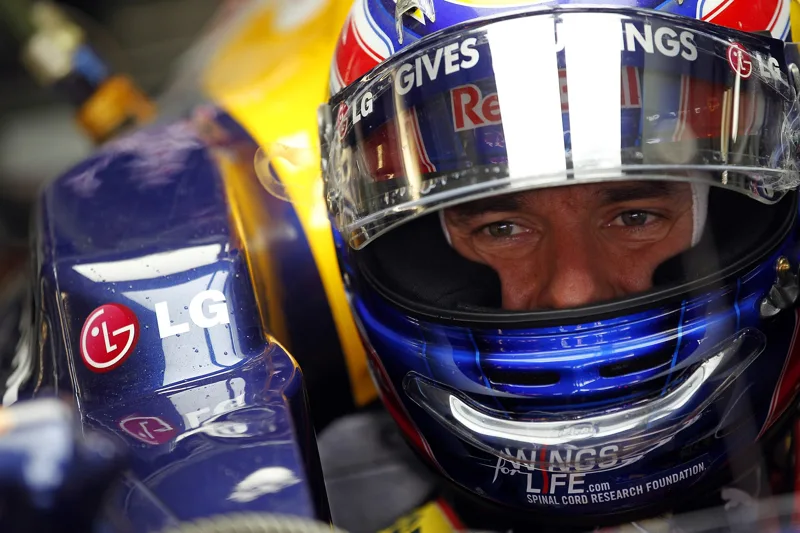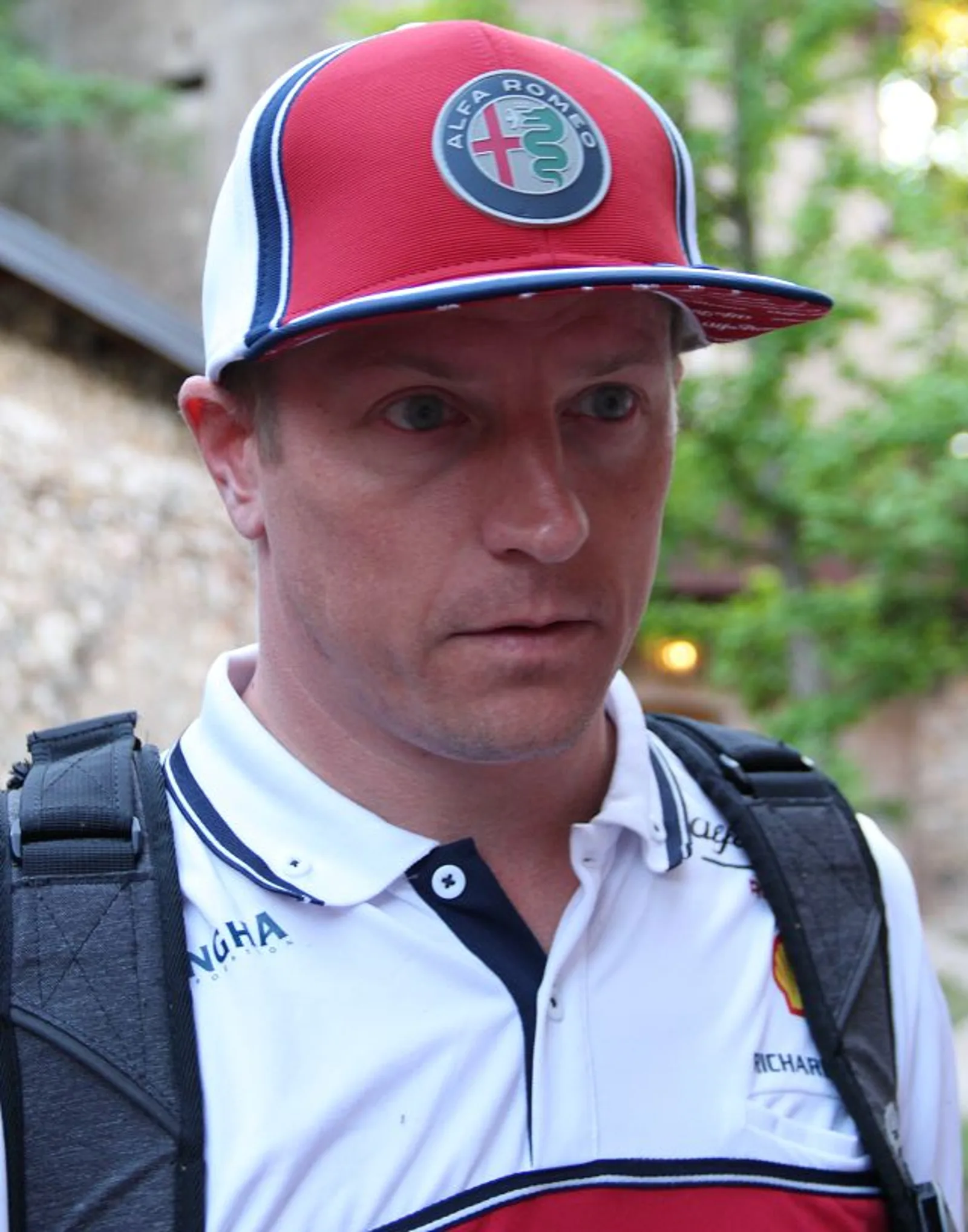
From Monaco karting to a 2007 Ferrari title decided by a single point, Raikkonen raced in Formula One from 2001 to 2021 and then tried rallies, NASCAR and motocross.
Kimi Raikkonen was a Finnish driver who raced in Formula One from 2001 to 2021, winning 21 Grands Prix and the 2007 world title with Ferrari by a single point. He also competed in the World Rally Championship and made NASCAR starts.
Kimi-Matias Raikkonen is a Finnish racing and rally driver who competed in Formula One from 2001 to 2021. Nicknamed the Iceman, he won 21 Grands Prix over 19 seasons and took the world drivers' title with Ferrari in 2007, beating his rivals by a single point.
His career took him from McLaren to Ferrari, back to Lotus and then to Alfa Romeo, and along the way he tried rallying, NASCAR and motocross. He was known for his cool temperament and his blunt style, and his racing was as much about fast, clean driving as it was about the headlines.
Who is Kimi Raikkonen?
Raikkonen was born on 17 October 1979 in Espoo, Finland, and he began karting at the age of ten. He won several national titles before moving into junior single-seaters in 1999, and by the age of 20 he had won the British Formula Renault winter series.
He dominated the 2000 British Formula Renault Championship with Manor, winning seven of ten events. Across the two Formula Renault series he won 13 of 23 races, a win rate of 57%, and that form earned him a Formula One test with Sauber.
Twenty-one Grand Prix wins and a 2007 title by a single point, from karting in Espoo to a final victory 113 races later.
How did Raikkonen rise through karting and junior series?
His karting days were marked by determination. In Monaco at the age of 15, his steering wheel broke during the race, and he kept going by waving the wheel in the air on the home straight to tell his mechanic. On his next Monaco visit he was thrown to the wrong side of the safety fence in a collision, but he lifted his kart back onto the track and finished third.
In 1998 he won the Nordic Championship at Varna in Norway. In 1999 he took second in one round of the European Formula Super A series with the Dutch PDB Racing Team, and he also entered the Formula Ford Euro Cup. He then won the first four races of the 1999 British Formula Renault winter series.
Peter Sauber gave him a test in September 2000 at the Mugello Circuit. On only the second day, Raikkonen was half a second quicker than the regular driver, Pedro Diniz. Sauber signed him for the 2001 season, although some critics questioned whether such an inexperienced driver should hold a Super Licence.
What happened in his first Formula One years?
Raikkonen scored a championship point on his debut at the 2001 Australian Grand Prix, and Sauber finished fourth in the constructors' standings that year. He completed the season with nine points and then moved to McLaren for 2002, taking the seat vacated by double champion Mika Hakkinen.
He finished third in his first McLaren race at the 2002 Australian Grand Prix, and he came close to a first win in France before going off with oil on the track. He ended the season sixth with 24 points and four podiums. In 2003 he won his first race at the Malaysian Grand Prix, and he finished the year as runner-up to Michael Schumacher by two points.
The 2004 season was harder. Reliability problems with the MP4-19 meant he managed just a single point in the first seven races, and he ended the year seventh with 45 points. He still took McLaren's only win of the season at the Belgian Grand Prix, where he qualified 10th and led from lap 11.
In 2005 he was the main challenger to Fernando Alonso. He won seven races, including Monaco, Hungary, Turkey, Belgium and Japan, and at Suzuka he came from 17th on the grid to pass Giancarlo Fisichella on the final lap. He finished runner-up to Alonso and was named Driver of the Year by F1 Racing and Autosport.
| Season | Team | Highlight | Result |
|---|---|---|---|
| 2003 | McLaren | First Grand Prix win at the Malaysian Grand Prix | Runner-up to Michael Schumacher |
| 2005 | McLaren | Seven race wins, including Japan from 17th on the grid | Runner-up to Fernando Alonso |
| 2007 | Ferrari | Six wins, the most of any driver | World champion by one point |
| 2009 | Ferrari | Belgian Grand Prix, his first race win in 25 races | Left Formula One at the end of the year |
| 2012 | Lotus | Abu Dhabi win, the first Lotus win since 1987 Detroit | Third in the championship |
| 2018 | Ferrari | United States Grand Prix win at 39, after 113 races | Third in the championship |
How did Raikkonen win the 2007 title?
After the 2006 Italian Grand Prix, Ferrari announced that Raikkonen had signed a three-year deal. He moved to the Scuderia as the teammate of Felipe Massa, and he started 2007 in style by taking pole and winning the Australian Grand Prix. The last driver before him to win a debut Grand Prix for Ferrari had been Nigel Mansell, in 1989.
He had a difficult spell after an electrical problem in Spain, but he then won in France and was second in Hungary and Turkey before taking the win at the Chinese Grand Prix in heavy rain. That result was also Ferrari's 200th win as a manufacturer.
The title came down to the final race at Interlagos. Massa had taken pole, and Raikkonen worked his way past him. Hamilton fell down the order, and Raikkonen crossed the line to take the crown by a single point from Hamilton and Alonso. He had the most victories of the season, six to four for each McLaren driver.
Stewards briefly looked into fuel concerns on the cars of Nico Rosberg, Robert Kubica and Nick Heidfeld, which could have changed the outcome. The stewards imposed no penalty, and McLaren's appeal was rejected by the FIA Court of Appeal on 16 November 2007. Raikkonen's 2007 title remains the most recent world drivers' championship for a Ferrari driver.
What did his second Ferrari spell bring?
Raikkonen did not win again for Ferrari until 2008, when he took wins in Malaysia and Spain and finished third in the championship. The 2008 season also brought a French Grand Prix pole that was Ferrari's 200th pole, and a Belgian Grand Prix in which he led but collided with a backmarker and retired.
He left Ferrari for Lotus at the end of 2009, when Alonso arrived to replace him. He had won the Belgian Grand Prix that year, his first race win in 25 races, and the victory earned him the nickname The King of Spa after several wins at that circuit.
He returned to Ferrari in 2014 to partner Alonso, but Alonso left for Vettel in 2015. Raikkonen had a hard 2014, finishing 12th in the championship with no podium, but he returned to the front in 2015 with a second place in Bahrain. He then took third places at Ferrari's Monaco-era races and finished fourth in the championship.
The 2017 season brought his first pole since 129 races, at the Monaco Grand Prix, where he became the sport's oldest polesitter since 1997. The season ended with third place in the standings, after a run of podiums in Mexico, Brazil and the United States.
Why did he return to Lotus and rally?
Between Ferrari spells, Raikkonen tried rallying. He made his World Rally Championship debut at the 2009 Rally Finland and then joined the Citroen Junior Team for 2010 with co-driver Kaj Lindstrom. He scored his first WRC points at the Jordan Rally and won the Rallye Vosgien that year, which was his first rally win. He finished 10th overall in both 2010 and 2011.
He returned to Formula One with Lotus for 2012 and 2013, and that comeback produced the team's first win since 1987. The 2012 Abu Dhabi Grand Prix was his victory, and he finished third in the championship that year. He also scored second places in Bahrain and Hungary.
In 2013 he won the Australian Grand Prix from seventh on the grid, using a two-stop strategy, and he extended a run of consecutive points finishes to 25 races. Problems with the team followed. He had not been paid by Lotus for much of the season, and he left the team at the end of 2013, citing the salary dispute as the reason.
What were his final years with Alfa Romeo like?
Raikkonen moved to Sauber, which was renamed Alfa Romeo Racing for 2019, and he finished 2019 with 43 points and 12th place. He scored 31 points before the summer break, and at the Brazilian Grand Prix he finished fourth, the team's best result since 2013.
The Alfa Romeo car was one of the slowest in 2020, and he finished 16th in the championship with four points. He scored points at the Tuscan and Emilia Romagna Grands Prix, and his 323rd Formula One start at the Eifel Grand Prix broke Rubens Barrichello's record for most race starts in the sport's history.
He announced in 2021 that he would retire at the end of the season. He tested positive for COVID-19 during the Dutch weekend and missed two races, and he finished 16th with 10 points. His final race in Abu Dhabi ended on lap 25 with a wheel nut problem.
What records did Raikkonen set?
Raikkonen holds several records for a Finnish driver and a few in the wider sport. He finished with 21 Grand Prix wins and 46 fastest laps, the third most in history, along with 103 podiums, the seventh most, and 349 race starts, the third most.
His 2018 United States Grand Prix win came 113 races after his previous victory, which set a record for the longest gap between wins. It also made him F1's oldest race winner since Nigel Mansell in 1994. He is the only driver to win in the V10, V8 and V6 turbo hybrid eras.
In 2018 he set a record fastest lap at the Italian Grand Prix, averaging 263.588 km/h (163.786 mph) over a lap of 1:19.119, breaking Juan Pablo Montoya's 14-year-old record. He matched Michael Schumacher's 2004 record of ten fastest laps in a single season during 2008.
Did Raikkonen race beyond Formula One?
Yes. He made his first rally appearance at the Arctic Lapland Rally in 2009, and he drove a Citroen DS3 WRC as a privateer under his own ICE 1 Racing banner in 2011. His best rally result was a victory at the Rallye Vosgien in France in 2010.
He also made NASCAR starts. In 2011 he competed in the Truck Series at Charlotte, finishing 15th. He made his Cup Series debut in 2022 at Watkins Glen, qualifying 27th, and returned in 2023 at the Circuit of the Americas, where he finished 29th after a chaotic race.
Raikkonen has also been team principal of the Kawasaki Racing Team in the Motocross World Championship since 2022. In 2007 he competed in a snowmobile race in Finland under the name James Hunt, winning the Enduro Sprint race by more than 20 seconds.