Two world championships with McLaren, 20 Grands Prix won, a near-fatal crash in Adelaide and a later career in touring cars, rallies and television.
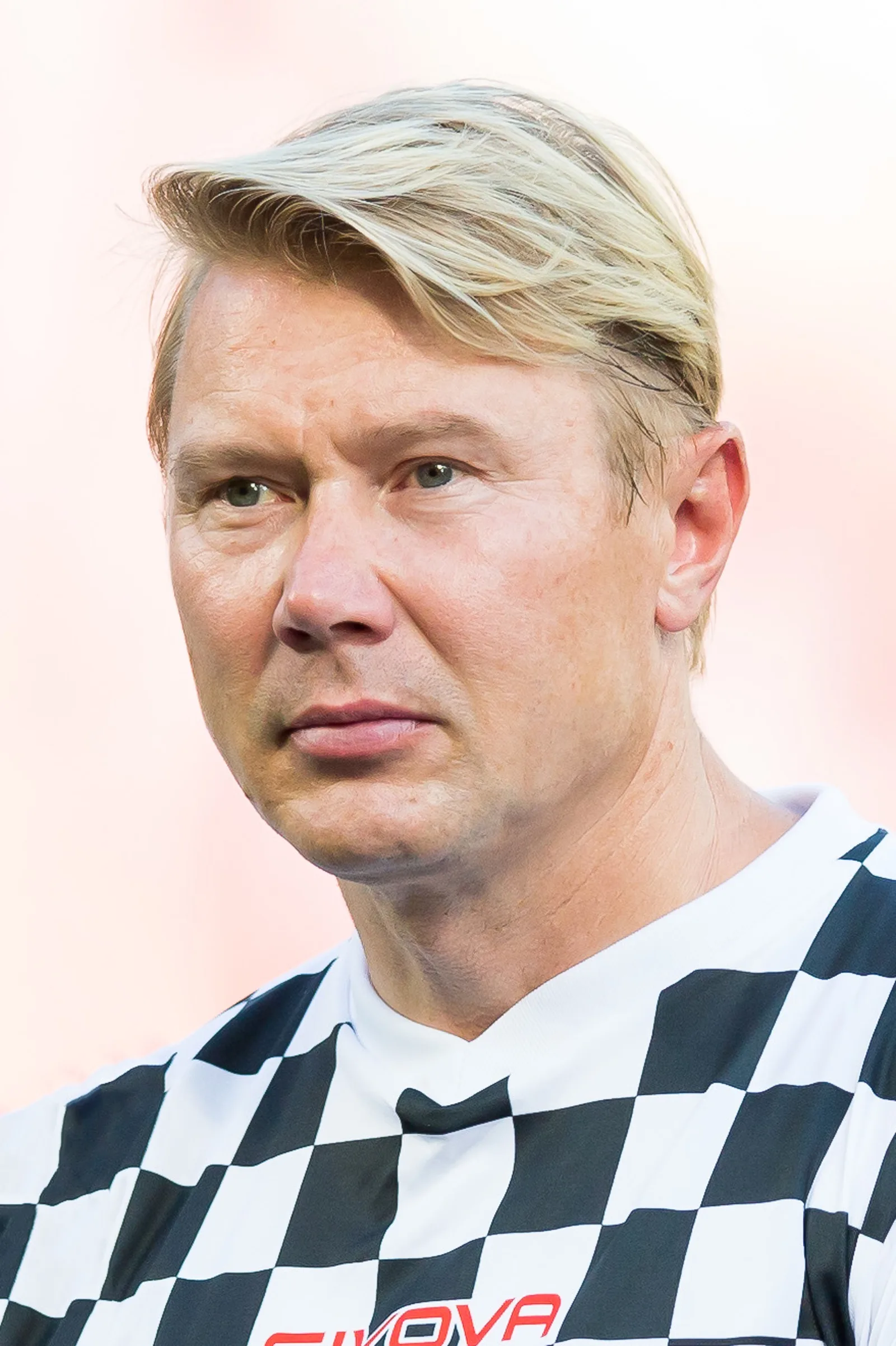
Mika Hakkinen was a Finnish racing driver who competed in Formula One from 1991 to 2001. He won the World Drivers' Championship in 1998 and 1999 with McLaren and took 20 Grands Prix victories. He later raced in the DTM and sports cars before returning to McLaren as an ambassador.
Finland's Mika Hakkinen spent eleven seasons in Formula One and became known as the Flying Finn. He won the world championship twice with McLaren, in 1998 and 1999, and took 20 Grands Prix across his career. His story also includes a near-fatal crash at Adelaide in 1995 and a continued involvement in motorsport after he stepped away from the cockpit.
Who was Mika Hakkinen?
Mika Pauli Hakkinen was born on 28 September 1968 in Finland and raised in Vantaa. He raced in Formula One from 1991 to 2001, won 20 Grands Prix and took two World Drivers' Championships with McLaren. Nicknamed the Flying Finn, he became one of the best-known drivers of the 1990s.
His father, Harri, worked as a shortwave radio operator and part-time taxi driver, while his mother, Aila, was a secretary. As a boy Hakkinen played ice hockey and football, but a go-kart soon became the focus of his time.
Two world titles, 20 Grands Prix and a comeback from a near-fatal crash in Adelaide.
How did Hakkinen start in karting?
Hakkinen started karting at five, when his parents rented a go-kart for him to use near home. His father then bought him a kart, and he won his first karting race in 1975. He collected the Keimola Club Championship in 1978 and 1979, then won the 85cc class of the Finnish Karting Championship in 1981.
His early results built steadily. The following year he was runner-up in the 85cc class of the Formula Mini series, and in 1983 he won the 100cc Formula Nordic title at his first attempt. He repeated that success in 1984, 1985 and 1986, and to fund his racing he repaired bicycles with a friend.
How did Hakkinen move into single-seaters?
In 1987 Hakkinen bought a 1986 Reynard Formula Ford 1600 from fellow Finn JJ Lehto and won the Finnish, Swedish and Nordic Formula Ford championships at his first attempt. He took nine race wins across those series. The following year he won the Opel-Lotus EDFA Euroseries with 126 points and four victories.
The 1988 season was busy. He also entered the GM Vauxhall-Lotus Challenge with the Dragon team, where he won three races and finished runner-up to Allan McNish. The Euroseries title put him ahead of Henrik Larsen, his closest rival in the standings.
In 1989 he moved up to the British Formula 3 Championship with Dragon, driving a Reynard 893 chassis, and finished seventh with 18 points. He was then invited to race as a guest in the Cellnet Formula Three SuperPrix for West Surrey Racing, where he took pole position and the victory.
How did the Marlboro academy launch his career?
In 1990 Hakkinen applied to the Marlboro World Championship Team, a fully sponsored driver academy, and secured its backing after a strong test. He then switched to West Surrey Racing and won the British Formula 3 Championship with nine victories and 121 points, ahead of fellow Finn Salo.
His mentor was Keke Rosberg, the 1982 World Drivers' Champion, who had taken him under his wing. Later that year Hakkinen took pole position for the Macau Grand Prix and won the first heat. He retired from the second heat after a collision with Michael Schumacher, a future Formula One rival.
What was Hakkinen's first Formula One season like?
Hakkinen made his debut for Lotus at the 1991 United States Grand Prix, where he qualified 13th. A fifth-place finish at San Marino brought his first points, and he finished 16th in the championship with two points. He failed to finish four of the nine races he entered in the rest of the year.
Why did a contract dispute shape his move to McLaren?
Hakkinen was under contract to Lotus when he agreed to join Williams for 1993, but Williams had not entered that season. After Ligier and McLaren were also approached, the dispute went to the Formula One Contract Recognition Board, which ruled for McLaren after two days of deliberation.
Lotus's team principal Peter Collins was reported to be ready to veto the Williams entry if they signed him. The McLaren contract was drafted at Courchevel Airport, and McLaren confirmed that Hakkinen would stay with the team on a three-year deal from 1994 onwards.
How did Hakkinen's McLaren career begin?
Hakkinen joined McLaren in 1993 as a test driver and took a race seat after the Italian Grand Prix, when Michael Andretti left. He claimed his first podium with third at the Japanese Grand Prix and finished 15th in the championship with four points.
Before that, he had won both Porsche Supercup races held as support events at Monaco, starting from pole both times.
During 1993 he also tested a Lamborghini V12 engine in a modified McLaren MP4/8, known as the MP4/8B, alongside Ayrton Senna. Hakkinen was reportedly around 1.4 seconds quicker at Silverstone with the V12 than he had been in the team's car with its Ford V8.
What did 1994 bring at McLaren?
In 1994 Hakkinen partnered the experienced Martin Brundle and endured a troubled start with engine and gearbox problems. He reached his first podium of the season at the San Marino Grand Prix and later took a run of third-place finishes, including three in consecutive races after the Belgian Grand Prix. He finished fourth in the championship with 26 points.
The season also brought discipline problems. A collision with Rubens Barrichello at the British Grand Prix earned him a one-race ban, suspended for three races. A later clash with David Coulthard at the German Grand Prix meant the ban took effect, and he missed the Hungarian Grand Prix as a result.
What happened at the 1995 Australian Grand Prix?
During Friday qualifying at Adelaide in 1995, a tyre failure sent Hakkinen's McLaren airborne and into the barrier at Brewery corner, at an estimated 120 mph. He suffered a skull fracture, internal bleeding and a blocked airway. Trackside medics saved his life, and he later made a remarkable recovery.
The session was suspended while the medical team worked on him. Volunteer doctor Jerome Cockings performed an emergency tracheotomy on the track to deliver oxygen, and Sid Watkins, president of the FIA Institute for Motor Sport Safety, arrived in the medical car. Between them the doctors restarted Hakkinen's heart twice before he was taken by ambulance to the Royal Adelaide Hospital, about half a kilometre from the circuit.
He stayed in hospital for roughly two months under the care of the trauma, neurosurgical and intensive care units. As a gesture of thanks he donated a substantial sum towards a helipad for the hospital, and he returned to Australia for the official opening in March 1997. He finished the 1995 championship seventh with 17 points, having earlier taken second places at the Italian and Japanese Grands Prix.
How close did Hakkinen come to winning in 1996?
In 1996 Hakkinen partnered David Coulthard and finished fifth in the championship with 31 points. He took third at the British Grand Prix, then consecutive third places in Belgium and Italy. The season ended with a third at the Japanese Grand Prix, which showed he was close to a first victory.
When did Hakkinen win his first Grand Prix?
Hakkinen won his first Formula One race at the 1997 European Grand Prix, the season-closing round. Earlier in the year he had come close several times, most painfully at the British Grand Prix, where his engine failed while he was holding off Jacques Villeneuve. He finished the season sixth in the championship with 27 points.
Mid-season reliability problems cost him dearly. He was disqualified from third place at the Belgian Grand Prix after his car was found to be running an illegal type of fuel. A collision with Eddie Irvine in Canada and another with Jean Alesi at Monaco added to the frustration, although he took third at the German Grand Prix as the season moved on.
How did Hakkinen win the 1998 title?
Hakkinen won the 1998 World Drivers' Championship with McLaren, finishing on 100 points ahead of Michael Schumacher. He clinched the title by winning the last two races, in Luxembourg and Japan, after a season-long battle with Schumacher's Ferrari. The season opened with a controversy in Australia that handed him an early win.
At the Australian Grand Prix, Coulthard let Hakkinen past to win the race. Coulthard later disclosed that the team had agreed beforehand that whoever led into the opening corner would be allowed to win. Hakkinen then took victory in Brazil and won in the rounds that followed, before a gearbox failure in Canada cost him points.
The title fight stayed tight through the middle of the year. Hakkinen finished third in France and second in Britain, and he retired at Belgium after a collision with Schumacher. A fourth place in Italy, despite brake problems, kept his points total healthy until the final rounds, when wins in Luxembourg and Japan secured the title.
The year brought wider recognition. Hakkinen received the Autosport International Racing Driver Award for 1998 and was named Finnish Sports Personality of the Year by journalists.
How did Hakkinen defend the title in 1999?
Hakkinen retained the title in 1999 with 76 points, two ahead of Eddie Irvine. He won in Brazil, Spain, Canada, Hungary and Japan, and the final race in Japan was enough to secure the championship. Pre-season testing had been troubled, but Hakkinen said he had gained confidence and experience and felt less pressure.
Reliability still cost him races. A throttle problem ended his opening race in Australia, a barrier collision while leading at San Marino put him out, and a wheel failure forced him to retire at Britain. At the German Grand Prix a tyre exploded at high speed and sent his car into a 360-degree spin, but he recovered to keep his points.
His results were consistent across much of the calendar. He finished second in France and Belgium and third in Malaysia, while a spin while leading ended his race in Italy. The season earned him a second consecutive Autosport International Racing Driver Award, for 1999.
Outside the car, the recognition continued. Hakkinen was seventh in the Reuters Sports Personality of the Year poll with 46 of a possible 260 points. In the Finnish Sports Personality of the Year awards he finished second behind the skier Mika Myllyla.
Why did Hakkinen finish second in 2000?
Hakkinen finished 2000 as runner-up to Michael Schumacher. After a poor start, he won in Spain, Austria, Hungary and Belgium and took the championship lead from Schumacher at the Hungarian Grand Prix. He conceded the title in Japan, where he finished second.
The opening races were difficult. Both McLaren cars retired with engine failure in Australia, and Hakkinen's oil pressure failed in Brazil. He then took second at the European Grand Prix, where he traded the lead with Schumacher throughout the race, and added sixth at Monaco, fourth in Canada and second in France.
The Austrian victory came with a penalty. The team lost its constructors' points after a seal on the electronic control unit in his car was found to be missing. In Belgium he made a simultaneous pass on Schumacher and Ricardo Zonta on the Kemmel straight.
Why did Hakkinen leave Formula One?
Hakkinen stepped back after 2001 and retired in July 2002. He cited more time with his family, and later said fear after crashes in practice at the Australian Grand Prix in 1995 and 2001, along with a loss of desire to win, had been factors. Kimi Raikkonen took his seat for 2002.
The 2001 season had its highs and lows. He retired in Australia after a suspension failure, was classified ninth in Spain after a clutch failure on the final lap, and was unable to start the French Grand Prix because of a gearbox problem. He won the British Grand Prix and finished his career with victory at the United States Grand Prix, despite starting from a grid penalty.
What were Hakkinen's Formula One results by season?
Hakkinen's championship finishes show a steady rise from midfield to the title. He was 16th in his debut year, reached fourth in 1994, and then won back-to-back championships in 1998 and 1999 with the highest totals of his career. He ended his Formula One years with fifth place in 2001, when he scored 37 points.
| Season | Team | Championship position | Points |
|---|---|---|---|
| 1991 | Lotus | 16th | 2 |
| 1993 | McLaren | 15th | 4 |
| 1994 | McLaren | 4th | 26 |
| 1995 | McLaren | 7th | 17 |
| 1996 | McLaren | 5th | 31 |
| 1997 | McLaren | 6th | 27 |
| 1998 | McLaren | 1st | 100 |
| 1999 | McLaren | 1st | 76 |
| 2000 | McLaren | 2nd | Not recorded |
| 2001 | McLaren | 5th | 37 |
How many races did Hakkinen win?
Hakkinen won 20 Formula One races across eleven seasons from 1991 to 2001. He also took 26 pole positions, 25 fastest laps and 51 podiums. His final win came at the 2001 United States Grand Prix, which closed a career built on consistency at the front.
What was Hakkinen's driving style?
Hakkinen was regarded as an oversteering driver who went well on slippery surfaces and in cars that were loose at the rear. He was also known for braking with his left foot, a habit he picked up in karting, and for being a late-season performer who grew stronger as the year went on.
His approach to car development became a famous story at McLaren. During early testing of the MP4/13, he kept reporting understeer. Adrian Newey, the designer, adjusted the car to remove the understeer, but it became slower. Closer study of the data showed the car was unstable at the rear on corner entry, and Hakkinen had been compensating in the way he described the handling.
He was once criticised as a poor car developer, although that may have been exaggerated by his early struggles with English. Those who worked with him described a taciturn character who took long pauses before giving short answers. Michael Schumacher later said Hakkinen was the driver he most enjoyed racing against.
What did Hakkinen do in touring cars and rallies?
From 2005 to 2007 Hakkinen raced in the Deutsche Tourenwagen Masters for HWA. He won at Spa-Francorchamps after only three DTM starts, and he finished fifth in 2005, sixth in 2006 and seventh in 2007. He also competed in the Arctic Rally and the Finnish Rally Championship with Mitsubishi and Toyota cars.
In 2005 he secured eighth in his first race at the Hockenheimring and a podium at the EuroSpeedway Lausitz, then took pole and the win at Spa. A second place at Istanbul Park helped him to 30 points for the season. In 2006 he finished with 25 points and three third places at Lausitz, the Norisring and the Bugatti Circuit.
The 2007 season produced his final DTM victories. He won at Lausitz, where only half points were awarded after errors by race officials, and then won again at Mugello from 15th on the grid. A collision with Martin Tomczyk at the Circuit de Catalunya brought a 20,000 euro fine, a ten-place grid penalty for the next round and disqualification from the race. He finished the year seventh with 22 points.
His rally results were more modest. He finished 30th on his Arctic Rally debut after a tyre change delay of four minutes, seventh in 2004 with a Toyota Corolla, and 36th in 2006 with a Mitsubishi Lancer Evolution VII.
What did Hakkinen do after retiring from racing?
Hakkinen announced his retirement from competitive motorsport in November 2007. He moved into driver management with Didier Coton's firm Aces Associate Group, and in March 2017 McLaren named him a partner ambassador. Since late 2021 he has worked as a Formula One analyst for Viaplay, and from 2022 he has been part of a permanent on-site team.
He still raced for pleasure. In 2011 he drove a Mercedes-Benz SLS AMG for Team AMG China in the 6 Hours of Zhuhai, which retired after two hours. In 2013 he won the first GT Asia race at Zhuhai after starting sixth, and he finished fourth in the second race after a 15-second handicap. In 2019 he drove a McLaren 720S GT3 at the Suzuka 10 Hours, and in 2022 he represented Finland at the Race of Champions with Emma Kimilainen.
What is Hakkinen's legacy?
Hakkinen is remembered for two world titles, 20 Grands Prix and a return from a crash that could have ended his life. He has often been voted among the greatest Formula One drivers since he retired. Michael Schumacher counted racing against him among the most satisfying experiences of his own career.
His role outside the car also reached wide audiences. He became Global Responsible Drinking Ambassador for Diageo's Johnnie Walker brand from September 2006, campaigning for responsible drinking and leading the Join the Pact campaign against drink driving. He became an official brand ambassador for Nokian Tyres in 2016.