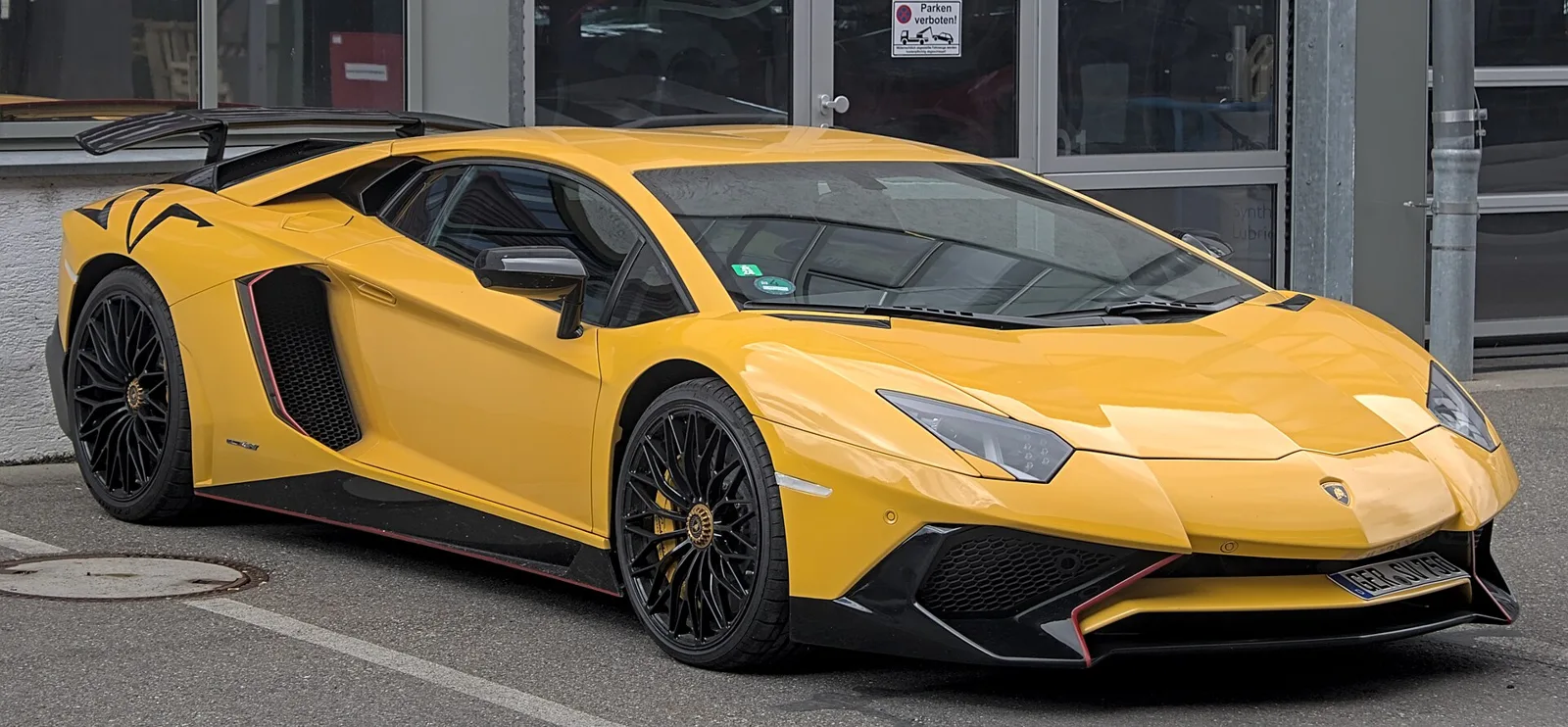
A tractor maker's challenge to Ferrari, a 1978 bankruptcy, Volkswagen Group ownership and a V12 hybrid range.
Lamborghini is an Italian luxury sports car and SUV maker founded in 1963 by Ferruccio Lamborghini to rival Ferrari. Its current range is the Revuelto, Temerario and Urus, all built under Volkswagen Group ownership through Audi. The company is headquartered in Sant'Agata Bolognese.
Automobili Lamborghini is an Italian maker of luxury sports cars and SUVs, headquartered in Sant'Agata Bolognese and owned by the Volkswagen Group through Audi. Ferruccio Lamborghini founded the company in 1963 to rival Ferrari, and its V8, V10 and V12 models have followed that performance brief ever since. The marque matters because its bull emblem and rear mid-engine layout became lasting parts of its identity.
Who founded Lamborghini and why?
Ferruccio Lamborghini, a manufacturer who already made tractors, boilers and air conditioners, founded the car company on 7 May 1963. He wanted a refined grand touring car that could rival established marques such as Ferrari, and he assembled a team of engineers to build it.
Giotto Bizzarrini designed the original engine, while Gian Paolo Dallara and Paolo Stanzani developed the chassis. The company was set up in a purpose-built headquarters and main plant in Sant'Agata Bolognese, Italy, which is still the centre of its operations. A grand touring car is a long-distance road car built for fast, comfortable travel rather than pure track work, and that was the brief Ferruccio set his team.
The first design was the 350GTV prototype, a one-off whose futuristic styling kept it from becoming a production car. The project then went to the Milanese coachbuilder Touring, which gave the 350 GT a sober design. Coachbuilders such as Touring produced the bodies that sat on a manufacturer's chassis and engine, so the 350 GT combined Lamborghini's mechanical work with a body shaped by a specialist firm.
Lamborghini Trattori was founded in 1948 and has been a separate business from the car company since 1973. Its tractors are a reminder that the founder's manufacturing roots predated the sports car by some years. The two businesses now operate independently, and the name links them only through their shared history.
Founded to rival Ferrari, Lamborghini built its name on mid-engined performance, a bull emblem and a range that now runs from V12 hybrids to SUVs.
How did the company grow, then struggle?
The company grew rapidly during its first ten years, but sales fell after the 1973 worldwide downturn and the oil crisis. Ferruccio sold a majority stake to Georges-Henri Rossetti in 1972 and fully retired from the business in 1974. Those changes at the top shaped the decade that followed, when the company's finances were under strain.
Trouble deepened after that. The company went bankrupt in 1978, and the Mimran brothers took it into receivership from 1980. Receivership means an appointed administrator runs the business on behalf of its creditors while a buyer or a recovery plan is found, so the early 1980s were a period of uncertainty for the staff, dealers and owners of Lamborghini cars.
Ownership changed several more times before the Volkswagen Group bought Lamborghini in 1998 and placed it under the control of its Audi division. The modern range described below was developed under that ownership.
The late 2000s brought the Great Recession, and sales dropped nearly 50%. New products and model lines were introduced to the brand's portfolio, and the company's productivity rose as the range grew.
Which models shaped the brand?
The 1966 Miura is the model that put Lamborghini on the map, with a rear mid-engine, rear-wheel drive layout. The Miura grew out of the P400 prototype, a road car with racing potential. The name recalls Don Eduardo Miura, the renowned breeder of fighting bulls.
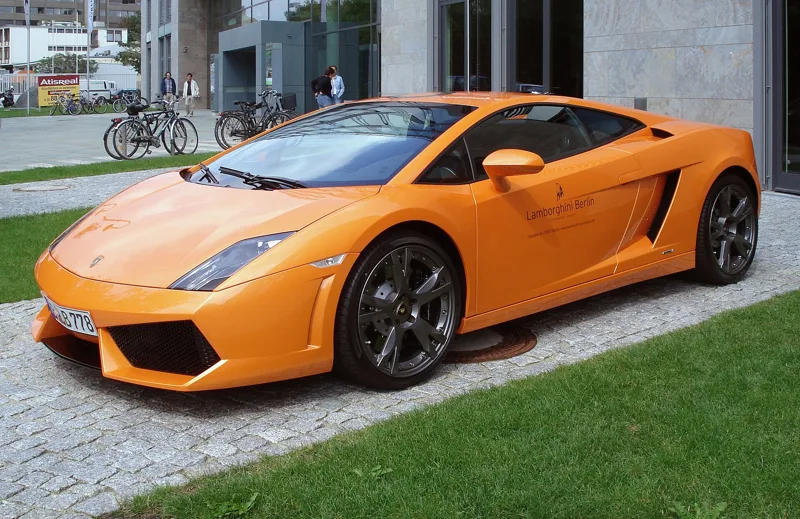
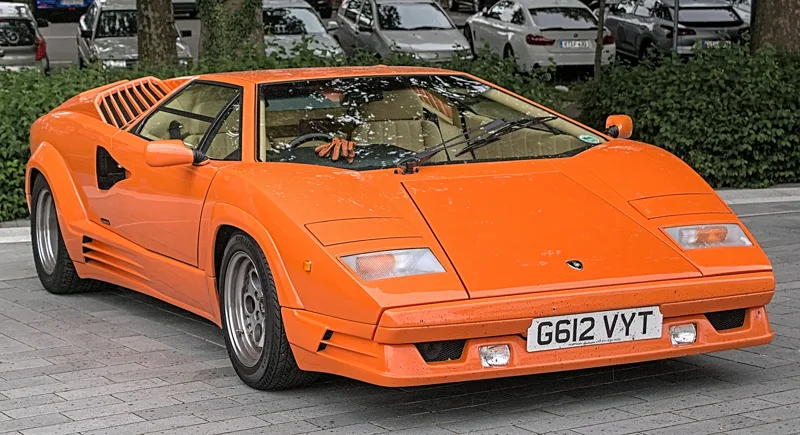
The Countach broke the bull-name tradition in 1974, taking its name from a Piedmontese expletive instead. Before the Gallardo arrived in 2003, the company built approximately 400 vehicles per year. Set against the 1,711 vehicles produced in 2011, that figure shows how much the output grew.
The Gallardo carried the sports car line forward after its 2003 launch, and by 2011 the company was producing 1,711 vehicles a year.
Who owns Lamborghini today?
Automobili Lamborghini S.p.A. is owned through the Volkswagen Group's Audi division, and its headquarters and main production site remain in Sant'Agata Bolognese. As of 2011 it was a wholly owned subsidiary of Audi AG, after the group bought the company in 1998.
Five principal subsidiaries sat under the company in 2011, including Ducati Motor Holding, the motorcycle maker, Italdesign Giugiaro and MML. Italdesign Giugiaro is a design and prototyping firm that works across the wider group, while MML builds marine engine blocks, which go into powerboats.
Stephan Winkelmann was appointed CEO on 13 November 2020, after Stefano Domenicali's term from 2016 to 2020. Winkelmann had previously held the post from 2005 to 2016, so the 2020 appointment returned him to a role he had filled before. The company's chief executives therefore form a line that runs from Ferruccio Lamborghini himself through to the present day.
In 2021 the chief executive said all models would be hybrid by 2024. That statement set a clear direction for the range.
What does the current range include?
Lamborghini's car range consists of three model lines as of 2026: the Revuelto, the Temerario and the Urus. Each takes a different route to performance, from a naturally aspirated V12 with electric assistance to a twin-turbo V8 SUV. The line-up runs from a flagship V12 to a sports car and an SUV.
The Revuelto was produced from mid-2023 and delivered in late 2023 as a 2024 model. It pairs a naturally aspirated V12 with three magnetic motors, for a combined output of 1,001 hp (1,015 PS), and it succeeds the Aventador. A naturally aspirated engine takes in air at normal atmospheric pressure, without a turbocharger, so the motors add their power on top of the combustion engine rather than boosting it.
The Temerario is a mid-engine plug-in hybrid, unveiled on 16 August 2024, and it succeeds the Huracan. A plug-in hybrid can be charged from mains electricity as well as by its engine.
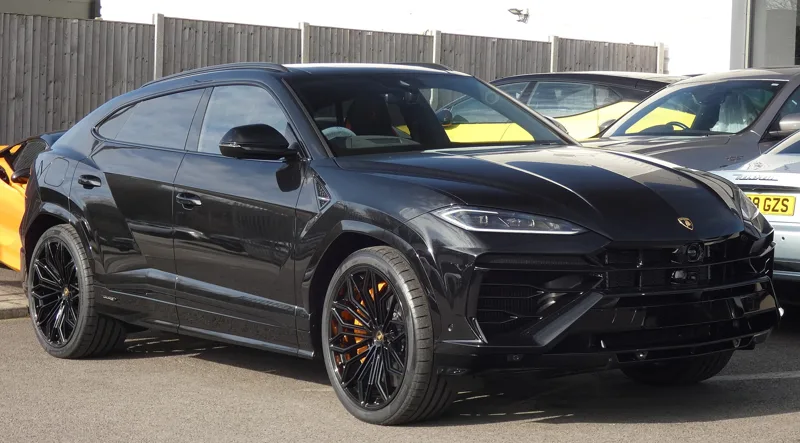
The Urus uses a twin-turbo V8 mounted at the front with all-wheel drive. It was unveiled at the 2012 Beijing Motor Show as the first Lamborghini SUV since the LM002. The company intended the Urus to double its sales volume by 2019.
The production site grew from 80,000 square metres to 160,000 square metres. That expansion gave the factory room for the larger range that followed.
Did Lamborghini race its own cars?
Ferruccio judged factory racing too expensive and draining, so Lamborghini did not run a works team in its early years. That stance set the company apart from Ferrari, whose road car business was closely tied to its racing programme. The racing that followed came through the Squadra Corse division and through customer cars.
The P400 prototype was built as a road car with racing potential, and Ferruccio allowed the project for marketing reasons, insisting that the car would never race. The closest the company came to a true race car under its supervision were a few heavily modified prototypes, among them a Jota based on the Miura SV and a Bob Wallace Special based on the Jarama S.
Lamborghini in Formula One
Lamborghini was an engine supplier in Formula One from 1989 to 1993. It saw itself as a supplier rather than a backer.Larrousse ran its engines in 1989 and 1990 and again in 1992 and 1993, while Lotus and Ligier also used them, in 1990 and 1991.
The best result came when Aguri Suzuki finished third for Larrousse at the 1990 Japanese Grand Prix. A third place in a Formula One race is a podium finish, and it is the most notable result the company's engines achieved in the series. Its engine supply ended after the 1993 season.
Sports car racing and GT programmes
In the mid-seventies Lamborghini agreed to build 400 cars for BMW so the car could meet Group 4 homologation rules. Homologation means a manufacturer must produce a set number of road-legal cars before a racing class will accept its design. BMW took development in-house after Lamborghini's prototypes ran late, and Baur built the car, which BMW called the M1. The first M1 was delivered in October 1978.
The Countach QVX was built for the 1986 Group C season, and only one was made. Group C was a sports prototype class for endurance racing. The car raced once, at the 1986 Southern Suns 500 km at Kyalami, and the programme went no further after that single outing.
The Diablo Supertrophy ran from 1996 to 1999, using the Diablo SVR in the first year and the Diablo 6.0 GTR for the rest. The series was a single-model championship, which meant every entrant raced the same type of car.
For 2004 the Murcielago R-GT was developed for the FIA GT Championship, the Super GT Championship and the American Le Mans Series. An All-Inkl.com Murcielago R-GT won the Zhuhai FIA GT opener, which is the opening round of the championship. A customer-run car winning the first round of a major series is a strong start for any racing model.
Super Trofeo and GT3 racing today
Squadra Corse, the Lamborghini Motorsport Division, builds GT3 and Super Trofeo cars for the company's racing programmes. It also builds special cars to customer request. GT3 is a category for customer-owned grand touring cars that meet a common set of regulations.
The Super Trofeo runs as three series across America, Asia and Europe. Each series has six rounds, and each round features two 50-minute races. The Super Trofeo car is a racing version of the Huracan, which is one of the models that Squadra Corse builds for the series.
Drivers compete in four categories: Pro, Pro-Am, Am and Lamborghini Cup. The structure lets drivers of different experience levels race on the same programme.
The Lamborghini GT3 series uses Huracan GT3 Evo 2 cars, and over 60 private race teams take part. The series is open to any Huracan GT3 customer.
Why does the bull feature so strongly?
The bull is central to the brand because Ferruccio Lamborghini was impressed by the fighting bulls he saw in Spain. In 1962 he visited the Seville ranch of Don Eduardo Miura, a renowned breeder, and decided to adopt a raging bull as the emblem of the car company he was about to open.
The Islero was named for the bull that killed the bullfighter Manolete in 1947, and the Diablo and the Murcielago took their names from bulls of 1869 and 1879. Bullfighting is a key part of Lamborghini's identity, and the naming pattern shows how far that theme was carried into the product range. The Countach was an exception to that pattern.
What concept cars did Lamborghini show?
Lamborghini has shown concepts since the 350GTV prototype of 1963, a one-off with futuristic styling. Bertone's Marzal (1967), Bravo (1974) and Athon (1980) followed in the years after. Later examples were the Estoque four-door sedan of 2008, shown at the Paris Motor Show, and the Sesto Elemento of 2010, which came from the same show.
The retro Miura concept of 2006 was shown, but Stephan Winkelmann denied that it would be produced. A concept is a showcase vehicle that tests a design direction, and it does not always reach the showroom, so the denial was a clear statement of intent.
The Sesto Elemento was almost entirely carbon fibre and weighed 999 kg (2,202 lb). It could reach 0-100 km/h (0-62 mph) in 2.5 seconds, and its top speed was over 290 km/h (180 mph). Lamborghini presented it as a move toward agile, track-focused cars.
The Aventador J, shown at the 2012 Geneva Motor Show, was a roofless, windowless version of the Aventador. It used a 700 hp engine and a seven-speed transmission, the same drivetrain as the Aventador on which it was based.
The Asterion LPI910-4 of 2014 was Lamborghini's first hybrid. Its Huracan-derived 5.2-litre V10 supplied 607 hp (453 kW; 615 PS), and the combined output reached 907 hp (676 kW; 920 PS). The Asterion's name refers to the half-man, half-bull Minotaur of Greek legend.
The Egoista was built to mark 50 years of Lamborghini, and only one was made. Being a one-off, it sits outside the range rather than within it.
Which other products carry the name?
The Lamborghini name is used well beyond road cars. MML, one of the company's principal subsidiaries, supplies a marine V12 of approximately 8,171 cc (8.2 L) producing 940 hp (700 kW). Lamborghini Trattori dates from 1948, and it has operated apart from the car company since 1973.
A limited run of motorcycles also carried the name, with 24 examples of a 1,000 cc (61.0 cu in) sports machine built by Boxer Bikes. In 1968 a Riva Aquarama speedboat was fitted with two 350 GT V12 engines, which tied the car range to the water.
The brand is also moving into branded residences. Tierra Viva By Lamborghini is planned for the Costa del Sol, with completion expected in June 2027. Branded residences are homes sold under a brand name, and they extend the Lamborghini identity into property.
Bologna has two museums centred on the brand. The Museo Lamborghini is a two-storey museum attached to the headquarters, showing cars, engines and photographs. The Museo Ferruccio Lamborghini is a 9,000 square-foot museum that holds prototypes, sketches and family photographs from Ferruccio's early life.
What are the key Lamborghini figures?
The table below collects the figures that define the marque, from its founding and production to its performance and racing record. Model-specific figures name the model in the row, so the Revuelto and the Sesto Elemento are not confused. Figures are given in metric first, with imperial in brackets.
| Figure | Detail |
|---|---|
| Founded | 7 May 1963, Sant'Agata Bolognese |
| Founder | Ferruccio Lamborghini (1916-1993) |
| Owner | Audi AG, within the Volkswagen Group (as of 2011) |
| Sales in 2011 | 1,711 vehicles |
| Output before the Gallardo | approximately 400 vehicles per year |
| Revuelto output | 1,001 hp (1,015 PS) combined |
| Sesto Elemento weight | 999 kg (2,202 lb) |
| Sesto Elemento 0-100 km/h (0-62 mph) | 2.5 seconds |
| Formula One engine supply | 1989 to 1993 |
| Super Trofeo | three series, six rounds per series |
| Production site | 160,000 square metres (up from 80,000) |
Frequently asked questions
Is Lamborghini owned by Audi?
Lamborghini sits within the Volkswagen Group. Its direct parent in 2011 was Audi AG, and five principal subsidiaries, Ducati Motor Holding among them, operated under the company.
How much power does the Revuelto make?
The Revuelto produces a combined 1,001 hp (1,015 PS). Its naturally aspirated V12 works alongside three magnetic motors, and the car is the successor to the Aventador.
When did Lamborghini build its first hybrid?
The first Lamborghini hybrid was the Asterion LPI910-4 concept, which appeared at the 2014 Paris Motor Show. Three electric motors, one on the transaxle and two on the front axle, worked with a Huracan-derived V10.
What is the Sesto Elemento?
The Sesto Elemento was a concept shown at the 2010 Paris Motor Show, built with carbon fibre to keep its weight down.
.jpg)