How a compact, Audi-funded V10 supercar became the most-produced Lamborghini in history, and why it still matters.
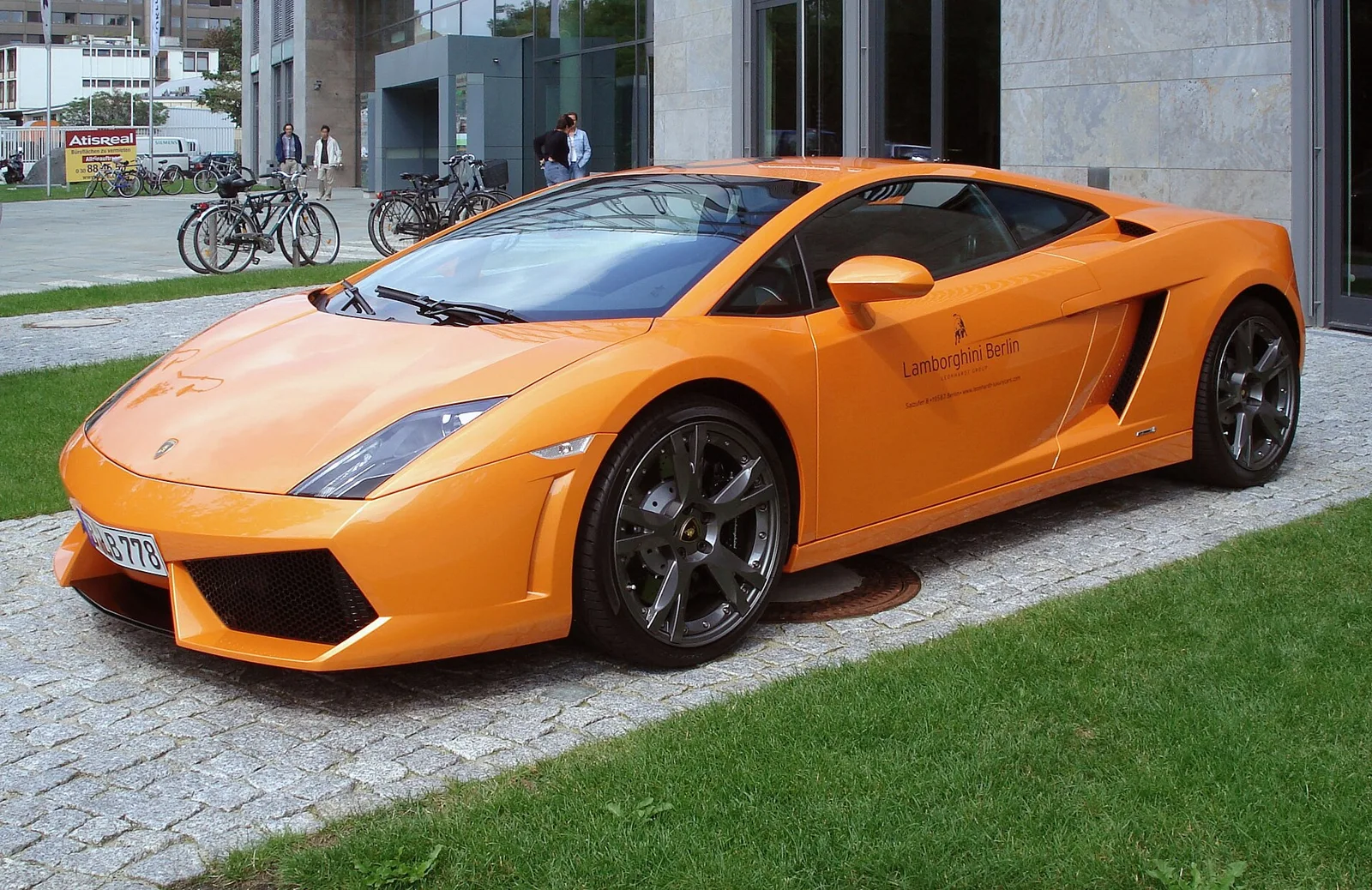
The Lamborghini Gallardo was a V10 sports car built from 2003 to 2013, with 14,022 examples made. It arrived as the firm's first entry-level model in fifteen years, became its best-selling car at the time, and bowed out in favour of the Huracan in 2014.
An entry-level Lamborghini built from 2003 to 2013, the Gallardo was a V10 sports car that became the firm's best-selling model at the time with 14,022 units. It was replaced by the Huracan in 2014.
Two things made the Gallardo possible. The first was the 1995 Italdesign Giugiaro Cala concept, shown at the Geneva show that year as a prospective replacement for the long-dead Jalpa. The second was Volkswagen Group's 1998 takeover of Lamborghini, which gave Sant'Agata the money, the engineering discipline and the patience to turn that show car into a production reality. The Cala's shape survived largely intact; the engine beneath it did not. Where Giugiaro's concept had proposed a V10 in an era when Lamborghini still built V12 flagships and nothing else, the production Gallardo made the V10 its defining feature.
The name came from Francisco Gallardo, an 18th-century Spanish breeder of fighting bulls, and it means something close to 'gallant'. It was the second Lamborghini launched under Audi's ownership, and the first genuinely new entry point in the range since the Jalpa went out of production in the late 1980s.
What is the Lamborghini Gallardo?
The Gallardo is a two-door, mid-engined V10 supercar sold as a coupe and a Spyder convertible between 2003 and 2013. It sat below the V12 Murcielago and later the Aventador, and it was the car that finally made Lamborghini a volume manufacturer.
That positioning mattered enormously. For decades Lamborghini had been a maker of spectacular, temperamental twelve-cylinder cars built in tiny numbers, financially fragile and dependent on the loyalty of a small band of wealthy enthusiasts. The Gallardo changed the arithmetic: a smaller, more usable, more repeatable product that could be sold in meaningful quantities without diluting the drama. It was never cheap, but it was attainable in a way a Murcielago was not, and the order books proved it.
The Gallardo was never the most romantic car in the range, but it was the one that kept the lights on, and it earned its place in the company's history on merit rather than nostalgia.
How the Cala concept became the Gallardo
The production model was styled by Luc Donckerwolke, who based his work on the 1995 Cala concept from Italdesign Giugiaro. That concept, shown at the Geneva Motor Show in 1995, had been created as a replacement for the Jalpa.
Lamborghini's 1998 takeover by the Volkswagen Group left the new owners with a useful template in the Cala, thanks to the way that concept was proportioned and surfaced. The production car retained the show car's wedge shape, brief overhangs and forward-set cabin, yet also adopted the engineering layout the company's own engineers had favoured all along: a small-capacity V10 with a high redline, placed in the middle of the car. Few concepts reach the road with their personality so little altered.
What engine did the Lamborghini Gallardo use?
The original Gallardo used an even-firing 4,961 cc 90-degree V10 producing 500 PS (368 kW; 493 hp) at 7500 rpm and 510 Nm (376 lb-ft) at 4500 rpm. A 2005 update lifted output by 20 PS to 520 PS (382 kW; 513 hp).
That engine was the heart of the car's appeal. It was not a bored-out V12 or a borrowed unit from elsewhere in the group; it was a bespoke ten-cylinder with a hard, metallic edge that no turbocharged rival could imitate. Power went to all four wheels through either a six-speed manual or the six-speed E-gear automated manual. Both gearboxes were built by Graziano Trasmissioni. E-gear used an electro-hydraulically actuated single clutch, shifted by steering-wheel paddles or left to its own automatic mode.
In 2005 Lamborghini also changed the exhaust, revised the suspension and fitted a new steering rack, while lowering the gear ratios, especially from first to fifth. The intent was to answer criticism from the press and from owners who found the early car slightly inert and the E-gear clunky at low speed.
What is the Lamborghini Gallardo like to drive?
It is compact, brutally quick and surprisingly usable, with a screaming V10 behind your shoulders and a chassis that rewards commitment. The all-wheel-drive cars put their power down with almost unseemly ease.
The Gallardo's dimensions are central to its character. It is noticeably smaller than a Murcielago, which makes it feel agile on a tight road and far less intimidating in traffic. The trade-off is a cabin that is snug even by supercar standards, and visibility over the shoulder that asks you to trust the mirrors. But the steering is quick, the gearchange in manual cars is mechanical and satisfying, and the V10's climb to its redline is the reason people buy the car in the first place.
Valentino Balboni, Lamborghini's long-serving test driver, was not a fan of E-gear, believing it took control away from the driver. He was equally sceptical about all-wheel drive, and his position divided opinion inside the company. His eventual reward was a rear-drive Gallardo named after him.
Gallardo specifications by variant
| Variant | Engine | Power | 0-100 km/h | Top speed |
|---|---|---|---|---|
| Gallardo Coupe (2003-2008) | 4,961 cc V10 | 500 PS (368 kW; 493 hp) | ||
| Gallardo Coupe (2005 update) | 4,961 cc V10 | 520 PS (382 kW; 513 hp) | ||
| Gallardo Spyder (2006) | 4,961 cc V10 | 520 PS (382 kW; 513 hp) | ||
| Gallardo Superleggera (2007) | 4,961 cc V10 | 530 PS (390 kW; 523 hp) | ||
| LP 560-4 (2008-2013) | 5.2 L V10 | 560 PS | 3.7 s | 325 km/h (202 mph) |
| LP 560-4 Spyder (2008) | 5.2 L V10 | 560 PS | 3.8 s | 324 km/h (201 mph) |
| LP 570-4 Superleggera (2010-2013) | 5.2 L V10 | 570 PS | 3.2 s | 329 km/h (204 mph) |
| LP 570-4 Spyder Performante (2011) | 5.2 L V10 | 570 PS | 3.9 s | 325 km/h (202 mph) |
| LP 550-2 Coupe (2011-2013) | 5.2 L V10 | 550 PS | ||
| LP 550-2 Spyder (2011-2013) | 5.2 L V10 | 550 PS |
The LP 560-4 reached 200 km/h in 11.8 seconds. Car and Driver timed the same car from 0 to 60 mph in 3.2 seconds. The Spyder version needed 13.1 seconds to hit 200 km/h. The LP 570-4 Spyder Performante did it in 12.0 seconds.
How fast is the Lamborghini Gallardo Superleggera?
The LP 570-4 Superleggera hits 100 km/h in 3.2 seconds and tops out at 329 km/h (204 mph), making it the quickest and fastest road-going Gallardo of the line.
Power alone was not the whole story. Weight saving played its part too: the 2007 Superleggera, which introduced the badge, undercut the regular car by 100 kg (220 lb), helped by carbon fibre body parts including the rear diffuser, undertray, mirror housings, door panels, central tunnel and engine cover. Further savings came from the sports seats, also in carbon fibre, and from titanium fasteners at the wheels. Output rose to 530 PS (390 kW; 523 hp) through a reworked intake, exhaust and ECU. Only 618 examples of this first Superleggera were built. When the later LP 570-4 Superleggera appeared, its 1,340 kg made it the lightest model in Lamborghini's road car line-up.
What special editions did the Gallardo spawn?
There were many versions, from appearance-only trims to hard-edged track cars. Among the standouts were the rear-wheel-drive LP 550-2 variants, such as the Valentino Balboni edition, plus the extreme Squadra Corse.
The LP 550-2 Coupe of 2011 to 2013 was the lowest-priced Gallardo, and the LP 550-2 Spyder the cheapest convertible. Both dropped all-wheel drive in favour of rear-wheel drive, which sharpened the car's responses and gave it a more traditional supercar balance. The LP 550-2 AD applied Lamborghini's Ad Personam customisation programme, while the LP 550-2 Bicolore was a two-tone styling exercise.
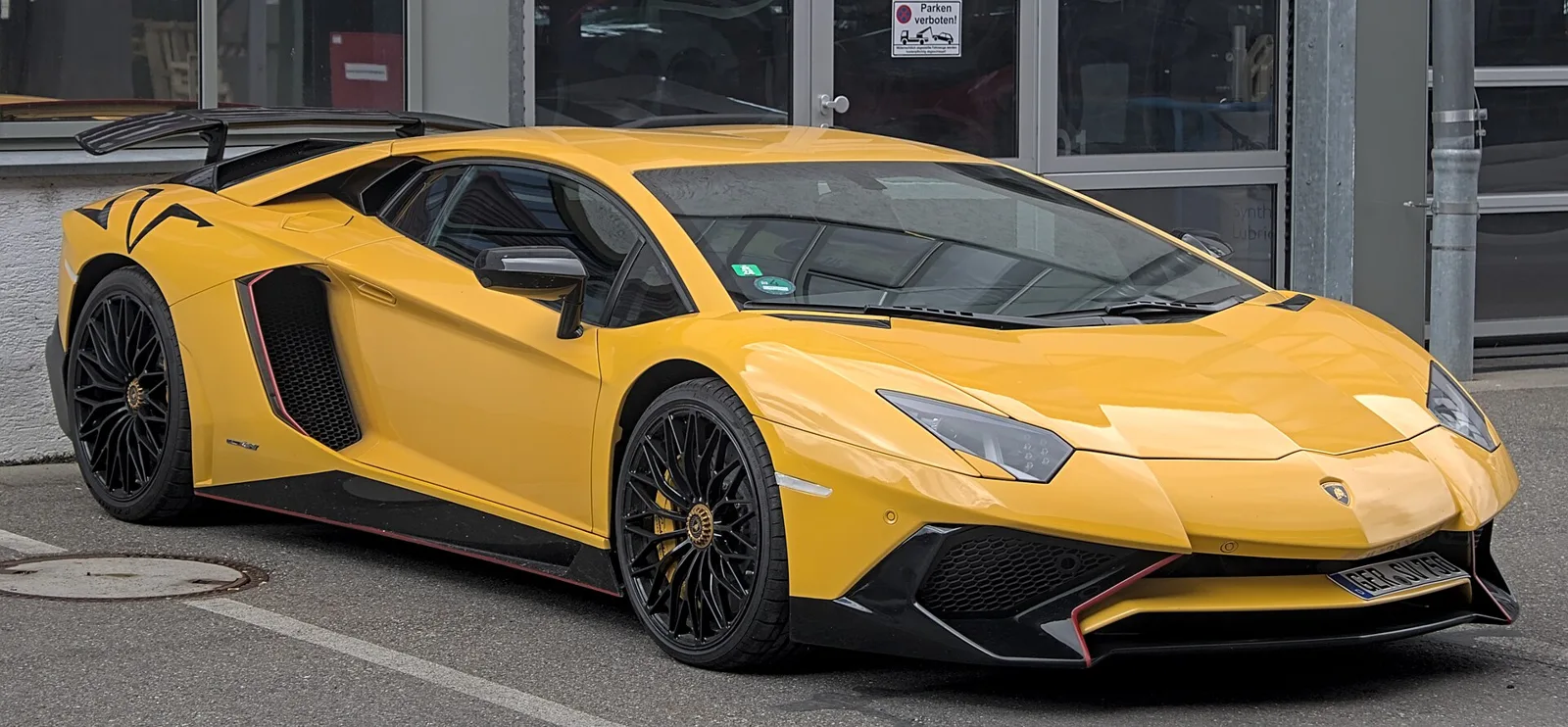
From November 2012 the Edizione Tecnica could be bought at dealerships, in LP 560-4 and LP 570-4 guise. Its nose was restyled with triangular and trapezoidal shapes, while bigger intakes sat in front of the front wheels. New 19-inch 'Apollo polished' alloys were fitted, and the tail was reworked to give a broader surface. A Style Package, available as an option, applied high-gloss black paint to the underside of the front spoiler, the grilles and the rear trim. Taking the Superleggera and Spyder Performante as its base, the LP 570-4 Edizione Tecnica gained a fixed rear wing, a contrast-colour roof arch and contrast-colour front intakes, plus carbon-ceramic brakes.
Just 50 examples of this road car were built, making it the most exclusive variant, with 15 of them destined for the USA and 3 for Canada. Based on the LP 570-4 Super Trofeo 2013 racer, it was made road-legal and fitted with unique front and rear bumpers, a rear wing, a carbon composite engine cover that could be released and removed quickly, tricolore decals along its flanks, a matte black rear wing set against body-colour accents, and 19-inch forged wheels finished in high-gloss black. The first deliveries arrived in September 2013.
How many Lamborghini Gallardos were built?
Between 2003 and 2013, Lamborghini produced 14,022 Gallardos, a figure that made the model the firm's biggest seller during that period. Production ended on 25 November 2013, when the last example rolled off the line.
That figure is the Gallardo's real legacy. Before it, Lamborghini was a boutique manufacturer; after it, the company had a production system, a global dealer network and a customer base large enough to sustain the V12 halo cars. The Gallardo was also the car that made Lamborghini a genuine rival to Ferrari in the junior supercar class, rather than a specialist alternative.
There were hiccups. Around 1,500 Gallardo Coupe and Spyder models built between May 2003 and April 2008 were recalled over a power steering fluid leak that carried a fire risk. And the first US-market LP 560-4 was sold at the 16th Annual Race to Erase MS auction for $198,000, to Kymberly Gold and Victor Newman.
Did the Lamborghini Gallardo go racing?
Indeed, and on more than one occasion. The 2012 Race of Champions featured a Gallardo Super Trofeo, while the Lamborghini Blancpain Super Trofeo series counted the 2013 LP 570-4 Super Trofeo among its entrants.
Los Arcos in Navarra hosted the 2012 Lamborghini Blancpain Super Trofeo European series finale, where the 2013 Super Trofeo made its debut. Its road-legal equivalent was the Squadra Corse. Hanss Lin (#38), driving for Gama Racing Team, took second place in the Macau round of the 2013 Lamborghini Super Trofeo Asia series. Only 3 units of a distinct Macau GP edition were produced.
What awards did the Gallardo win?
Top Gear named it Dream Car of the Year in 2006, and in 2009 the programme gave its Car of the Year award to the LP 550-2 Balboni.
The Balboni award was telling. By then the Gallardo had matured from a slightly awkward junior Lamborghini into a car that enthusiasts actively wanted, and the rear-drive, driver-focused variant was the purest expression of that. It was also a neat closing of the circle: the test driver who had spent decades shaping how Lamborghinis felt was finally honoured in the model that had done more for the company than any other.
Why the Gallardo still matters
It is the car that turned Lamborghini from a maker of spectacular but fragile V12 machines into a sustainable business. Without the Gallardo's 14,022 sales, there is no Huracan, no Urus, and probably no independent Lamborghini at all.
It also proved that a smaller, cheaper Lamborghini did not have to be a lesser one. The V10 was charismatic, the chassis was sharp and the design has aged better than most of its contemporaries. The Gallardo was never the most romantic car in the range, but it was the one that kept the lights on, and it earned its place in the company's history on merit rather than nostalgia.