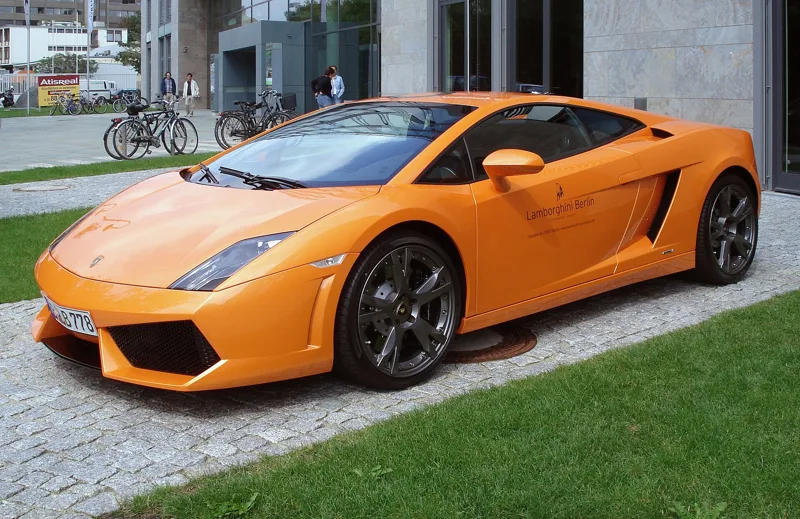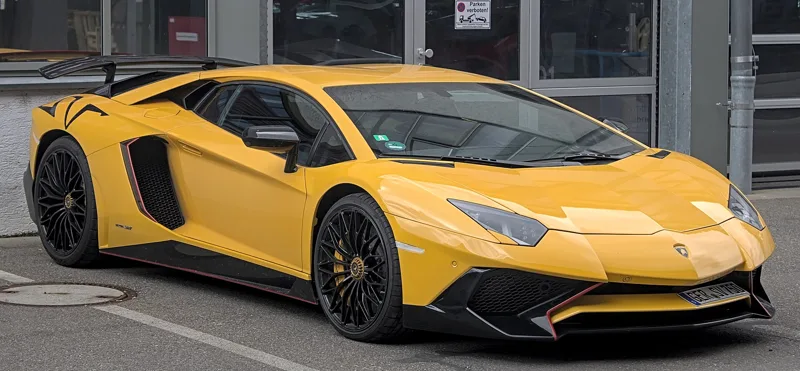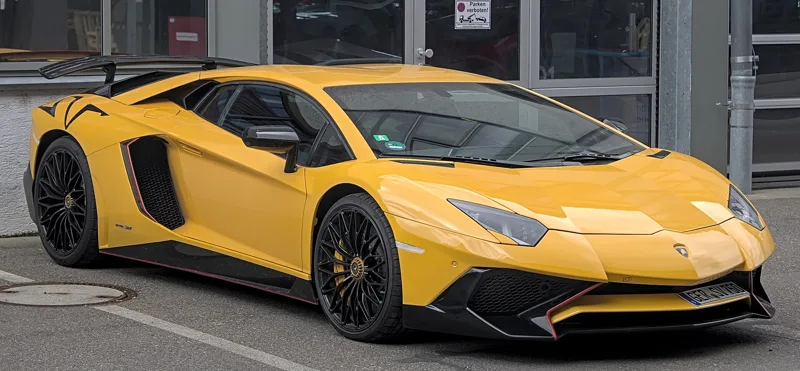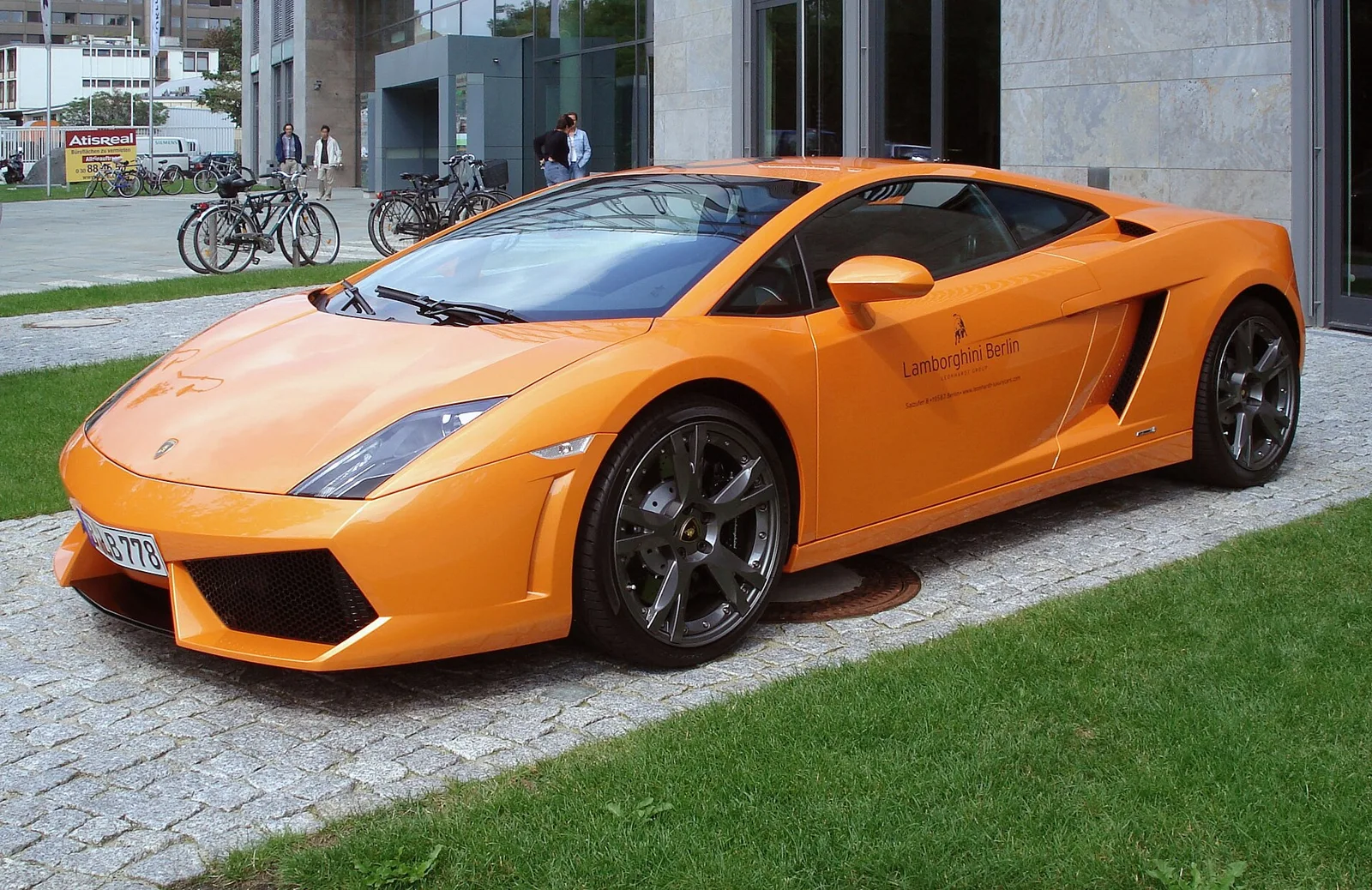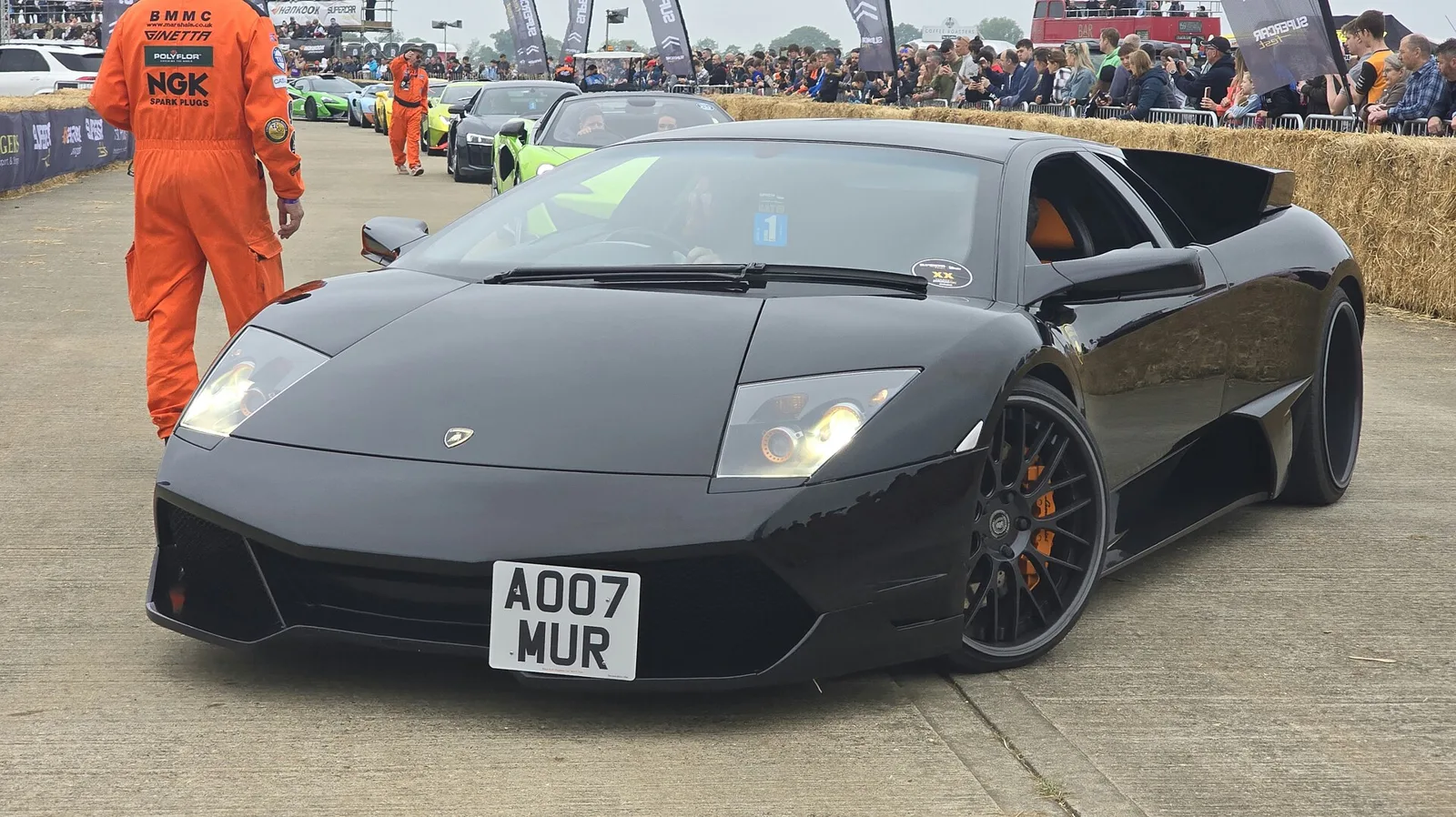
Designed by Luc Donckerwolke, the Murcielago replaced the Diablo in 2001 and carried Lamborghini's V12 flagship through its first years under Audi ownership.
The Lamborghini Murcielago was a V12 sports car built from 2001 to 2010. It succeeded the Diablo as Lamborghini's flagship and was the first new model under Audi ownership, and 4,099 cars were produced before the Aventador took over.
Few supercars carried as much of a brand's identity as the Murcielago. Its wedge styling, scissor doors and bat-inspired name made it the defining Lamborghini of its era, and it kept the company's V12 flagship role intact through a period of major change.
Where did the Murcielago come from?
The Murcielago succeeded the Diablo as Lamborghini's flagship V12 and was introduced as a coupe in 2001. It was designed by the Peruvian-born Belgian Luc Donckerwolke, who led the company's design studio from 1998 to 2005.
The car was the first new design from the company in more than a decade. It was also the first new model under Audi ownership, with the parent group sitting within the wider Volkswagen Group structure.
North American customers received the car for the 2002 model year, and the design team drew on a wide range of influences for its look. The shape was meant to read as a clear break from the Diablo's rounder lines.
The name comes from a fighting bull that survived an 1879 fight in Cordoba. Murcielago is the Spanish word for bat, and the company's habit of naming cars after fighting bulls continued with the Aventador.
A bat-named V12 with scissor doors, a Barchetta spirit and a racing life that outlasted the road car.
What did the design look like?
The Murcielago had an angular body and a low profile, with its roof just under 4 feet (1.2 m) above the ground. Scissor doors, a Lamborghini hallmark since the Countach, opened upward to give access to the cabin.
Carbon fibre covered most of the body, with a steel roof and aluminium scissor doors. Active elements, including the rear wing and the air intakes set into the shoulders, deployed electromechanically and only at high speeds.
The interior was more comfortable and ergonomic than the predecessor's. The major controls were grouped with a clean look, and the gearshift knob was integrated into the central tunnel.
Luc Donckerwolke drew on the B-2 stealth bomber, the Wally 118 yacht and architect Santiago Calatrava's buildings in Valencia when he shaped the roadster's rear pillars and engine cover.
How did the original engine perform?
The 6,192 cc naturally aspirated V12 produced 580 PS (572 hp; 427 kW) at 7,500 rpm and 650 Nm (479 lb ft) of torque at 5,400 rpm. It took the coupe from rest to 100 km/h in 3.8 seconds and reached a top speed of 333 km/h (207 mph).
The transmission was a six-speed manual. The rear differential was integrated with the engine, and a viscous coupling centre differential sent power forward to the front wheels.
Power was split 70 percent to the rear and 30 percent to the front. Each corner used an independent double-wishbone suspension, which gave the car a strong basis for its handling.
Lamborghini's V12 traced its roots back to the company's beginnings in the 1960s, which gave the Murcielago a direct link to the brand's earlier flagships.
What were the Roadster and the early variants?
The concept for the open-top version was shown at the 2003 Detroit Motor Show as the Murcielago Barchetta. The production Roadster arrived in 2004, with a manually attached fabric roof. A label on the windshield header advised drivers to stay below 100 mph (160 km/h) with the roof fitted.
The Roadster weighed 29 kg (65 lb) more than the coupe because of the loss of the roof and the added chassis reinforcement. Its 0-97 km/h time of 3.8 seconds was a little slower than the coupe's, though the top speed was unchanged.
The roof stowed in a leather bag supplied with the car, which lived in the front compartment when the car was not in use. That kept the open-top car practical for everyday driving.
How did the LP 640 and SuperVeloce change the car?
The LP 640 of 2006 raised displacement to 6.5 litres and power to 640 PS (471 kW; 631 hp) at 8,000 rpm. The LP 670-4 SuperVeloce followed in 2009 with 670 PS (493 kW; 661 hp), and its weight was cut by 100 kg (220 lb).
The LP 640 also brought revised front and rear fascias, asymmetrical side air intakes and a single exhaust outlet built into the rear diffuser. It gained the e-Gear automated manual with launch control, which made the car quicker to use.
The SuperVeloce's engine cover used three hexagonal plexiglass plates on a carbon fibre frame, and its air intakes were enlarged for better brake cooling. The front spoiler was extended for extra downforce.
The SuperVeloce reached a power-to-weight ratio of 429 hp per long ton. Car and Driver estimated 0-60 mph in 3.0 seconds, while Road and Track measured 3.1 seconds with a quarter-mile time of 10.9 seconds.
How was the SuperVeloce tuned for speed?
Lamborghini's R&D chief at the time, Maurizio Reggiani, tuned the SuperVeloce's steering for high-speed sensitivity. Its weight came down by 100 kg (220 lb) through extensive use of carbon fibre inside and out, which sharpened the car's response at speed.
The air intakes were made larger for better brake cooling, and the front spoiler was extended farther for improved downforce. The exhaust was replaced with a lighter system, and the interior was trimmed in Alcantara as a further weight saving.
The engine was a 6,496 cc V12 with revised valve timing and an upgraded intake system. It produced its peak power at 8,000 rpm and its peak torque at 6,500 rpm, which suited a car built for fast driving on track.
The SuperVeloce was built as a track-oriented variant rather than a simple styling update, and that focus shows in its weight, aero and steering choices.
What were the special editions?
Special editions included the 40th Anniversary cars of 2003, the Versace LP 640 and the LP 650-4 Roadster of 2009. Each one had distinctive colours, trim or power that set it apart from the standard car.
The 40th Anniversary run of fifty cars introduced a limited blue body colour called Verde Artemis, carbon fibre exterior detailing and a numbered plaque inside the rear window. The interior also featured unique leather trim.
The LP 650-4 Roadster was built in 50 units and produced 650 PS (478 kW; 641 hp). It was offered only in Grigio Telesto grey with Arancio orange highlights, and the colour scheme continued inside the car.
The Versace edition had 20 cars built, of which eight were offered for sale. Stylists from the Versace fashion house worked with Lamborghini's Ad Personam programme on the interior, which included matching luggage and a watch.
The LP 670-4 SuperVeloce China Limited Edition was built in 10 units, with a middle stripe and a top speed of 345 km/h (214 mph).
How did the Murcielago perform in racing?
The Murcielago R-GT was developed with Reiter Engineering and Audi Sport, and it was unveiled at the 2003 Frankfurt Motor Show. Around seven were sold, and a R-GT took a win at the Zhuhai 2 Hours in March 2007.
The R-GT was rear-wheel drive only. It kept the standard V12 but used air restrictors to meet FIA, ACO and JAF rules, and gearing changed from track to track, which altered both acceleration and top speed.
In April 2009 an R-GT run by IPB Spartak Racing won the GT1 class at the 1000 km de Catalunya, beating a Corvette C6.R and a Saleen S7R on the way to a clear win.
The RG-1 won the GT300 class at the Suzuka 500 km in March 2006. The LP 670 R-SV, an evolution of the R-GT, later competed in the FIA GT1 World Championship under Reiter's run of entries.
Why does the Murcielago still appear in popular culture?
The Murcielago appeared in Batman Begins in 2005, where the Roadster served as Bruce Wayne's transport. The LP 640 then appeared in The Dark Knight, where the bat meaning of the name linked neatly to the character.
Lamborghini lent three LP 640s to the production of The Dark Knight, and one of them was destroyed during a chase scene. The loan gave the film a set of cars that looked as menacing on screen as they did on the road.
The car also appeared on the cover of Need for Speed: Hot Pursuit 2. The Kanye West song Mercy referenced it by name, although the video itself shows a Gallardo.
Its appearances in films and games kept the car in the public eye long after production ended in 2010, and the bat name made it an easy symbol for fans of the Dark Knight.
Which concept cars came from the Murcielago?
The Lamborghini Miura concept of 2006 was built on a Murcielago chassis and commemorated the 40th anniversary of the 1966 Miura. The concept used the Murcielago's platform to show what a retro design might look like on a modern chassis. Stefan Winkelmann, the chief executive, rejected any idea that the concept would lead to a return of the Miura.
The Reventon of 2007 was inspired by stealth fighter design, with cues from the F-22 Raptor. Only 21 coupes and 15 roadsters were built, and one coupe was kept for the company museum.
The Reventon used the LP 640's mechanical underpinnings and engine, so its exterior and interior were the main differences from the production car.
What are the Lamborghini Murcielago specifications?
The table lists the core figures for the original coupe and the main later variants. Metric values come first, with imperial figures in brackets, and each row names the version where a figure applies to one model only.
| Specification | Detail |
|---|---|
| Production | 2001 to 2010, 4,099 cars |
| Original engine | 6,192 cc V12, 580 PS (572 hp; 427 kW) at 7,500 rpm |
| Original torque | 650 Nm (479 lb ft) at 5,400 rpm |
| Original 0-100 km/h | 3.8 seconds |
| Original top speed | 333 km/h (207 mph) |
| Transmission | Six-speed manual; e-Gear automated manual on the LP 640 |
| Power split | 70 percent rear, 30 percent front |
| LP 640 | 6.5 litres, 640 PS (471 kW; 631 hp) at 8,000 rpm |
| SuperVeloce | 670 PS (493 kW; 661 hp) at 8,000 rpm; 660 Nm (487 lb ft) at 6,500 rpm |
| SuperVeloce power-to-weight | 429 hp per long ton |
| LP 650-4 Roadster | 650 PS (478 kW; 641 hp); 0-100 km/h in 3.4 seconds |
| Roadster weight penalty | 29 kg (65 lb) over the coupe |
Frequently asked questions
What was the Murcielago's fuel economy?
The LP 640 manual variant was rated at 8 miles per US gallon in the city and 13 on the highway. By EPA figures it was the least efficient car of 2008 on both city and highway routes.
How rare was the right-hand drive LP 640 Roadster?
Around five right-hand drive LP 640 Roadsters with manual transmissions were said to exist worldwide, which makes them among the rarest derivatives of the model.
How many SuperVeloce cars were planned?
The original plan allowed for 350 cars, but the factory needed space for the Aventador line. An online registry had tracked 268 units by 2025.
Was there a Murcielago with a Versace interior?
Yes. The LP 640 Versace was shown at the 2006 Paris Motor Show, with interiors designed alongside the Versace fashion house and Lamborghini's Ad Personam programme.