From a 1930s state project to the world's largest automaker, Volkswagen's story spans the Beetle, the Golf, and a global empire.
Volkswagen was founded in 1937 to build a affordable people's car, and grew into Europe's largest automaker and the flagship of a group spanning Audi, Porsche, Skoda and more. Its Beetle became the most-produced single car model, later succeeded by the Golf.
The German Labour Front set up Volkswagen in 1937 with the aim of producing a cheap vehicle for typical households. Across a span of over eighty years, the company expanded to become the biggest carmaker in Europe and the leading marque of a worldwide group. The Beetle went on to be the highest-volume single model ever made, while the Golf subsequently came to embody the contemporary compact hatchback.
Origins: The People's Car Project
In the early 1930s, cars were luxury goods in Germany. Only one in fifty Germans owned one. Several manufacturers attempted independent people's car projects, including Mercedes with the 170H, BMW with the 3/15, Adler with the AutoBahn, Steyr with the 55, and Hanomag with the 1.3 L. None achieved the scale or the political backing that Volkswagen would.
Literally translated, the brand's two components break down as Volk for people and Wagen for wagon or car. It originated within the Kraft durch Freude (Strength Through Joy) scheme, and the Volks prefix also appeared on contemporary goods like the Volksempfaenger radio. Adolf Hitler brought in Ferdinand Porsche, who had set up his own engineering office in 1931, to work on the Beetle. Credit for the underlying design concept goes to Bela Barenyi, whose mid-1920s work covered a simple small-car arrangement.
It was Erwin Komenda who gave the prototype its body, the form we all know today as the Beetle: rounded, air-cooled and with the engine at the back, its lines honed in a wind tunnel, a technique taken from German aircraft engineering. The goal for performance was small yet precise: 100 km/h carrying two grown-ups and three youngsters. On price, the aim was 990 Reichsmark, roughly 4,688 euros in 2021 money, while a typical week's earnings came to about 32 Reichsmark (around 152 euros in 2021). Savers joined a scheme paying in five marks a week, and some 336,000 people took part.
The Beetle surpassed the Ford Model T as the most-produced single make of car and became a symbol of West German regeneration.
War, Survival and the British Revival
From 1939 to 1945, the factory at Wolfsburg produced military vehicles rather than family cars. The Type 82 Kuebelwagen was the most common wartime model, and the amphibious Type 166 Schwimmwagen became the most-produced amphibious car in history. This period carries a dark legacy: slave labour was used, and in 1998 the company admitted to using 15,000 slaves. Historians have estimated that around 80 per cent of the wartime workforce was slave labour. A lawsuit by survivors led to a voluntary restitution fund.
In April 1945 the factory was captured by the US Army and handed to the British. It was a British Army officer, Ivan Hirst, who is credited with reviving the operation and setting it on the path to civilian car production. Without that intervention, the Beetle might never have reached the road in meaningful numbers.
How did the Beetle become a global phenomenon?
The Beetle, officially the Type 1, became a global phenomenon through its simple, robust engineering and its role as a symbol of West German regeneration after the war. It surpassed the Ford Model T as the most-produced single make of car.
Although no official badge ever carried the name, the model came to be called the Beetle, or simply the Bug, by nearly everyone. A rear-mounted air-cooled flat-four and a curvy silhouette gave it a look that could not be confused with anything else. On America's West Coast the car found a strong following, since weak cabin heat mattered less there, and many were converted into beach buggies and dune buggies. With the arrival of unleaded fuel and emissions rules in the US, the air-cooled powerplant fell out of favour, and VW reshaped its line-up to suit.
Capacity grew across the years: an aluminium alloy block and heads came with the 1,200 cc unit of 1961, then 1,300 cc followed in 1966, 1,500 cc in 1967 and 1,600 cc in 1970. In 1971 the Super Beetle (Type 131) appeared, bringing MacPherson strut front suspension. Although a convertible Type 1 had been given to Hitler on 20 April 1944, the open car later became a regular feature of the postwar range.
What other models shaped the early range?
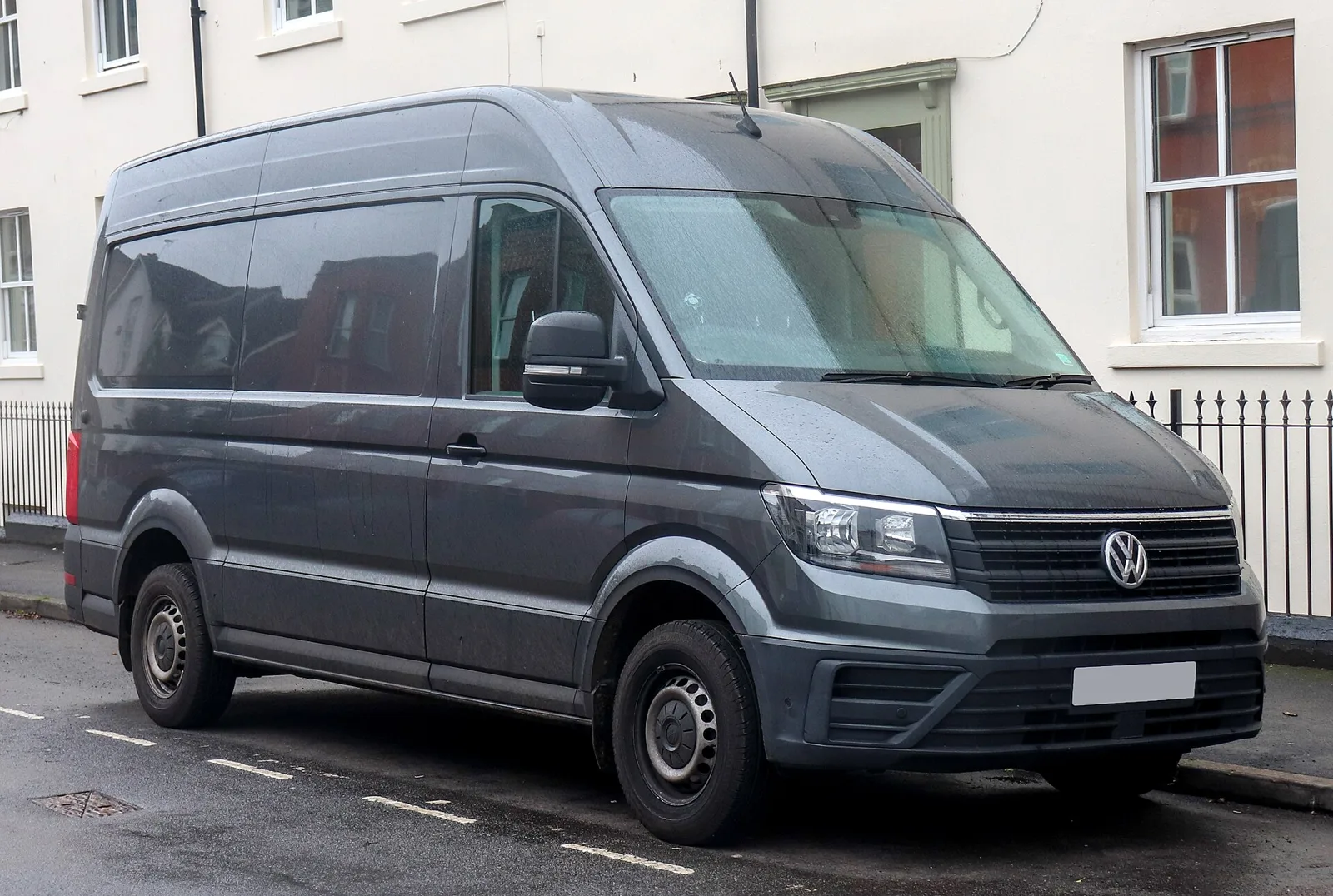
Beyond the Beetle, Volkswagen built the Type 2 commercial vehicle in van, pick-up and camper forms, the Karmann Ghia sports car, and the Type 3 family of Karmann Ghia, Notchback, Fastback and Variant models. The Type 4 arrived as the 411 and 412.
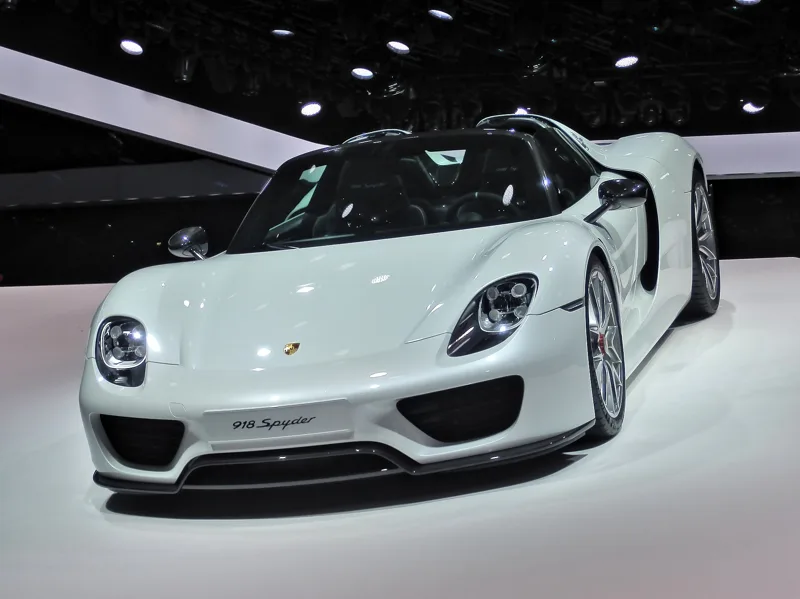
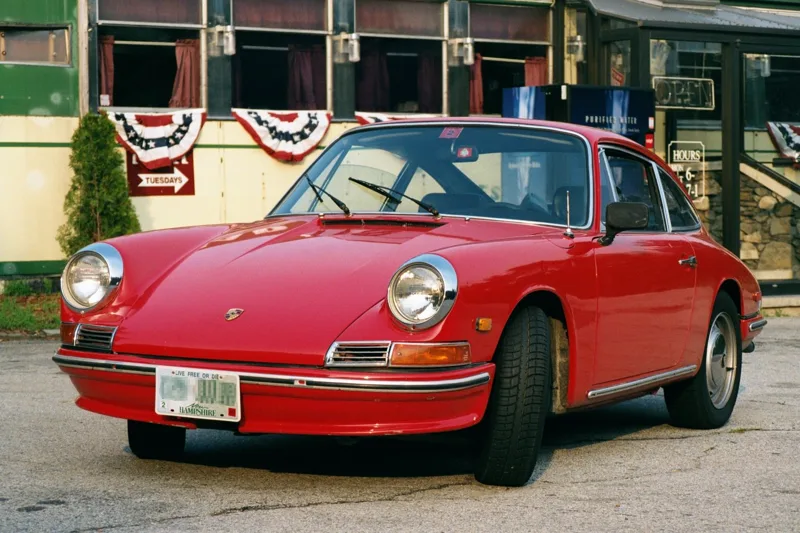
Volkswagen also collaborated with Porsche on the VW-Porsche 914 and 914-6 in 1969. The standard 914 used a VW engine, while the 914-6 used a Porsche six-cylinder. This was not the first link: the 1938 Porsche 64 used many Beetle components, and the 1948 Porsche 356 used a VW engine, gearbox and suspension. A later collaboration produced the 1976 Porsche 912-E for the US market and the Porsche 924, which used Audi components and was built at Neckarsulm. The 924 had originally been designated for Audi. Most Porsche 944s were also built at Neckarsulm, with fewer VW components.
What was Volkswagen's role in motorsport?
Volkswagen's motorsport story is broad, from Beetle victories in the Baja 1000 Mexican races between 1967 and 1971 to rallying, Dakar and one-make series. Formula Vee, started in 1963 in the US, used readily available Beetle parts and spread worldwide.
Formula Super Vee followed in 1971, launched by Volkswagen of America with more power, and ran for 11 years until 1982. It became famous for housing new talent and produced Formula 1 drivers including Lauda, Mass, Piquet, Rindt and Rosberg. Volkswagen also scored several victories and a championship in Formula Three.
Rallying began in 1981 with the first-generation Golf, based in Hanover, and the Austrian distributor Porsche Salzburg rallied Beetle 1500, 1302S and 1303S models between 1967 and 1974. The Dakar effort started in 1980 with the Audi-developed Iltis. A 2003 Dakar entry used a two-wheel-drive buggy named Tarek, followed by an updated Race-Touareg in 2005 with slightly more power and a revised Race-Touareg in 2006.
One-make series have been a fixture: the ADAC Lupo Cup was founded in 1998 and renamed the Polo Cup in 2003, the Scirocco R-Cup name was used from 2010 to 2014, and the Jetta TDI Cup started in 2008 as an SCCA-sanctioned series with 25 drivers aged 16 to 26 across 10 events at 8 North American road courses. Prize money totalled $50,000 over the series, with $100,000 to the champion. On the Formula 1 question, in July 2011 motorsport boss Wolfgang Duerheimer told Auto, Motor und Sport that VW could enter in 2018, but it did not. In August 2022, Volkswagen Audi Group confirmed an F1 entry for 2026, initially partnered with Sauber and later taking full control under the Audi name.
How did Volkswagen expand around the world?
The Volkswagen group operates manufacturing sites across Germany, Mexico, the United States, Slovakia, China, India, Russia, Malaysia, Brazil, Argentina, Portugal, Spain, Poland, the Czech Republic, Bosnia, Kenya and South Africa. More than 7,700 dealerships and upwards of 74,000 staff belong to the company. In its home region its market share has consistently exceeded 20 per cent, and in both 2016 and 2017 it ranked as the top automaker worldwide by sales.
The company's first significant move beyond its home country was into Brazil. A factory at Sao Bernardo do Campo, situated close to Sao Paulo, began operating in 1956, making it the earliest production site outside Germany; it came about after assembled vehicle imports were prohibited in 1950. Assembly of the Kombi began at that location in 1957, turning out 370 units with 50 per cent of parts sourced locally. Across more than sixty years, Brazilian plants turned out 81 million vehicles, and Volkswagen accounted for 23 million of those. Volkswagen's share of the Brazilian car market stood at roughly 15 per cent by 2018.
Several models were created specifically for Brazil: the Fox, Gol, Nivus, Saveiro, Virtus and Voyage, which were sold across Latin America, alongside earlier machines including the Brasilia, SP1 and SP2, the 1500, Variant and Variant II, the Karmann Ghia TC, the Parati and the Suran. From its 1980 introduction, the Gol held the top sales position in its home market for 27 years in a row, a run that ended in 2013.
Ethanol technology in Brazil was pushed forward as well. The Brazilian government introduced the Pro-Alcool programme in 1975, and ethanol engines needed altered compression ratios, injection, materials resistant to corrosion, colder spark plugs and a petrol system for cold starts. Six years later, roughly three quarters of passenger cars in Brazil ran on ethanol engines. However, 1987 brought a sharp fall in pure ethanol sales, caused by the oil glut of the 1980s and costly sugar, and an ethanol shortage in mid-1989 stranded thousands of vehicles, which drove consumers away. March 2003 saw the arrival of the VW Gol 1.6 Total Flex, released for the brand's 50th anniversary as Brazil's first full flexible-fuel vehicle, able to run on any mix from E20 to E25 petrol or as much as 100 per cent hydrous ethanol (E100).
How important was Brazil to Volkswagen?
Volkswagen's first significant production hub beyond Germany was established in Brazil, where it served as a testing environment for vehicles, fuels and technical development. Production at the Sao Bernardo do Campo facility began in 1956, while the Gol held the title of the nation's top-selling model for 27 straight years, a run that ended in 2013.
Volkswagen had four passenger car factories in Brazil, and the country's output fed exports across Latin America. The flexible-fuel Gol of 2003 showed how a local market could shape global technology.
What is Volkswagen's position in China?
China has been Volkswagen's largest single market, with the brand leading there until 2022. In 2019, 3.16 million VW-branded vehicles were delivered in China, and the Lavida was the best-seller with 491,000 units.
Volkswagen shaped its line-up around what Chinese buyers wanted, with saloons taking priority. Chinese sales of saloons reached 1.6 million during 2019. The compact saloons built solely for China comprised the Sagitar, Lamando, Bora, Santana and Lavida, along with their derivatives, whereas the mid-size class was handled by the Passat and Magotan. On the SUV side, China-only offerings consisted of the Tharu, Tayron, Tayron X, Tiguan X, plus redesigned versions of the T-Cross and T-Roc, while the Phideon and Viloran represented the premium tier.
Even so, the rivalry has changed shape. Between 2019 and 2024, the marque's slice of the Chinese market dropped from 19 per cent to 14.5 per cent. Volkswagen put $700 million into XPeng in July 2023, taking a 4.99 per cent holding, and the pair intend to create two mid-size EVs carrying the VW badge for China in 2026.
How did the SUV boom change Volkswagen?
The SUV boom reshaped Volkswagen's line-up from the 2000s onward. The first crossover SUV was the 2002 Touareg, a full-size luxury model, followed by the 2007 Tiguan in the mainstream C-segment.
From the mid-2010s, Volkswagen pursued an SUV offensive, aiming to have an SUV in every justifiable class. Between 2017 and 2020, the SUV line-up grew from two to eight models across B, C and D segments, including coupe SUV derivatives with a rear sloping roof that proved popular in China. By 2019, every fourth VW delivered was an SUV, with the Tiguan the top contributor. The target was more than 30 SUV models worldwide by 2025, accounting for 50 per cent of global sales, and SUVs were expected to lead the ID. family electric range. The Sharan mid-size MPV was phased out in 2020 as SUVs expanded.
Worldwide sales in 2022 put the Tiguan at the top, with the Polo, Virtus, Nivus and Taigo B-segment line-up in second and the Passat/Magotan in third. In Europe, the Golf led the hatchback class, with the Polo behind it.
Where does Volkswagen stand today?
Headquartered in Wolfsburg, Lower Saxony, Volkswagen is the lead marque of Volkswagen Group and ranks among the globe's biggest car manufacturers. Deliveries reached a record 10.8 million vehicles in 2018, following an earlier record of 6.29 million in 2010, when its share of the global market stood at 11.4 per cent.
Audi, SEAT, Porsche, Lamborghini, Bentley, Bugatti, Skoda, Scania and MAN all form part of the group's brand line-up. Its market capitalisation came to roughly US$58.9 billion in 2025. Volkswagen's value briefly topped every other company worldwide in October 2008, while January 2020 saw Tesla move ahead of it into second place among automakers by value.
Money was also channelled into self-driving research, with $2.6 billion committed to Argo AI during 2019. Argo shut down in 2022 once Ford could not obtain backing from Amazon, after which Ford and VW took the surviving technology and continued its development internally. The 2. Bundesliga side VfL Wolfsburg is owned by Volkswagen, while the AutoMuseum Volkswagen, located in Wolfsburg, has focused on the firm's past since 1985.
What are the key specifications and production figures?
| Model / Era | Key specification |
|---|---|
| 1961 Type 1 | 1,200 cc air-cooled flat-four OHV, aluminium alloy block and heads |
| 1966 Type 1 | 1,300 cc engine |
| 1967 Type 1 | 1,500 cc engine |
| 1970 Type 1 | 1,600 cc engine |
| Super Beetle (Type 131) | MacPherson strut front suspension, from 1971 |
| VW-Porsche 914 / 914-6 | 1969; standard 914 used VW engine, 914-6 used Porsche six-cylinder |
| Porsche 924 | 1976; Audi components, built at Neckarsulm |
| Porsche Cayenne | 2002; shared chassis with VW Touareg and Audi Q7 |
| 2010 sales | 6.29 million vehicles, 11.4% global market share |
| 2018 deliveries | 10.8 million vehicles |
| 2023 design registrations | 312 industrial design registrations published under Hague System |
| Market capitalisation | approx US$58.9 billion as of 2025 |
What is Volkswagen's legacy?
At the heart of Volkswagen's story sits the Beetle, a vehicle that became widely recognised by a nickname it never formally bore. It overtook the Ford Model T to hold the record for the highest output of any individual car model, and it came to represent West Germany's post-war revival. Across 81 years the brand expanded into a worldwide player, with the Golf later taking up that role. Its past has attracted criticism too, spanning the use of forced labour during the war, the 1998 restitution fund, and engineering partnerships with Porsche that yielded some of the most familiar sports cars of the late 20th century. The term Volkswagen dermatitis even entered use because of the IPPD allergen present in certain cars. Nowadays the marque confronts a changed environment: electric vehicles, rivals from China, and the task of holding on to its standing among the biggest carmakers in the world.