A water-cooled, front-engined Porsche that began as a Volkswagen project, grew a turbocharged Turbo and a Carrera GTR race car, and sold more than 150,000 units.
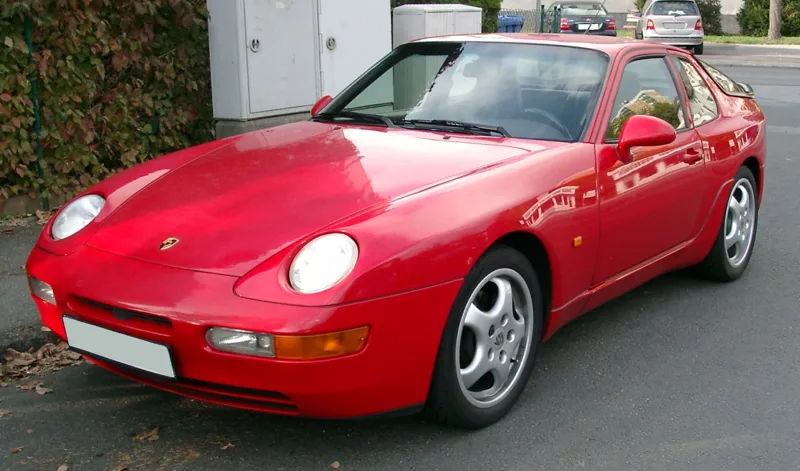
The Porsche 924 was a front-engined, water-cooled coupe built at Neckarsulm from 1976 to 1988. It began as a Volkswagen project and used a VW-sourced four-cylinder engine. Porsche sold just over 150,000 cars, with turbocharged and race versions following.
The Porsche 924 was a two-door, 2+2 coupe built at Neckarsulm from 1976 until 1988. It was the first production road Porsche to use water cooling with a front-engine, rear-wheel-drive layout, and it became the company's entry-level car. Just over 150,000 were sold, which made it one of the marque's strongest sellers of its era.
The 924 is often judged against its more famous siblings, but it carried a surprisingly wide range of ideas. It was born from a Volkswagen partnership, it was tuned into a turbocharged performance car, and it spawned a race car that finished high at Le Mans.
Where did the Porsche 924 come from?
The 924 began as a joint project between Volkswagen and Porsche, a venture run through a shared sales company. For Volkswagen it was meant to be a flagship coupe, and it was dubbed Project 425 during development. For Porsche it was to replace the 914 as the entry-level sports car.
The 1973 oil crisis and a change of directors at Volkswagen made a sports car less attractive to the company. The project was scrapped, and VW moved ahead with a Golf-based coupe called the Scirocco instead. Porsche then bought the design back, a deal that left it with a car it needed to fill the gap.
The car was built at the former NSU factory in Neckarsulm, with Volkswagen acting as subcontractor. Volkswagen staff did the production line work under Porsche supervision, while Porsche kept ownership of the design. The 924 made its debut at a November 1975 press launch in La Grande Motte, France, rather than at a motor show.
A Volkswagen-born Porsche with a water-cooled four that became the company's best-selling entry car on its way to a Le Mans podium.
How was the Porsche 924 engineered?
Porsche chose a rear-wheel-drive layout with a rear-mounted transaxle. That arrangement gave the car 48/52 front to rear weight distribution, a slight rear bias that helped traction and brake balance. The original design was built around an existing Volkswagen-Audi four-cylinder engine.
The engine was Volkswagen's EA831 2.0-litre inline-four, which also appeared in Audi and Volkswagen vans. Porsche fitted its own cylinder head and Bosch K-Jetronic injection, giving 125 PS (92 kW) in European trim. The transmission was a four-speed manual sourced from an Audi front-drive car and placed as a rear transaxle.
Styling was the work of Dutch designer Harm Lagaay, a member of the Porsche styling team. The folding headlights, the sloping bonnet and the grille-less nose gave the car its popular wedge shape. American buyers could order it from the 1977 model year, starting at $9,395.
Gearboxes changed over time. A five-speed dog-leg unit arrived in 1979, and the car moved to a conventional H-pattern in 1980. An Audi three-speed automatic was offered from the 1977.5 model, making the 924 the first Porsche with a fully automatic option.
How much power did the Porsche 924 make?
Output was always the car's weak point. US emission rules held the engine to 95 hp (71 kW) at first, and a catalytic converter with a slightly higher compression ratio raised it to 110 hp (82 kW) in mid-1977. Critics praised the styling, handling and reliability, but they consistently pointed to the power figures.
The 924 Turbo answered that criticism. Porsche introduced it in 1978, using a KKK K-26 turbocharger on the 2.0-litre engine at 10 psi of boost. The result was 170 PS (125 kW) at 5,500 rpm and 245 Nm (181 lb ft) of torque at 3,500 rpm, a substantial step up from the naturally aspirated car.
Porsche made the Turbo's engine with a revised crankcase, connecting rods, crankshaft and aluminium-silicon cylinder head. Dished combustion chambers and specially shaped pistons lowered the compression ratio to 7.5:1, which kept the turbocharged engine clear of pre-ignition.
The 924S of the 1980s brought the performance back. In 1988 it produced 158 PS (116 kW; 156 bhp), a figure that matched the 944 base model and made the S slightly quicker thanks to its lighter weight and more aerodynamic body.
What was the 924 Turbo like to drive?
The Turbo was met with high praise on release. Critics celebrated its performance and handling, and build quality and more purposeful styling drew near-universal approval. Some found the turbocharged four-cylinder coarse, but they forgave it for the economy and the leap in power over the naturally aspirated car.
Porsche added a NACA duct in the bonnet to aid cooling, along with slotted air vents in the badge panel and open ducts for the front brakes. Standard equipment included disc brakes on all four wheels and a racing dog-leg gearbox, along with 15-inch spoke alloys.
Internally Porsche called the Turbo the 931, the same way it used Type 930 for the 911 Carrera Turbo. Both left-hand and right-hand drive cars are still referred to as 931 by enthusiasts today.
Reliability was a problem for the early turbo setup. Owners who did not let the engine idle and the turbo cool before shutdown often suffered seal and component failures, and that lesson is still repeated by specialists today.
What were the Carrera GT and GTS?
The Carrera GT was the road-going homologation car that let Porsche enter the 924 in competition. It was shown as a concept at the Frankfurt show in 1979 and went on sale in 1980. Porsche added an intercooler, raised the compression to 8.5:1, lowered the suspension and made many smaller changes to the Turbo to create it.
Of the 406 examples built, including prototypes, 400 were road cars and 75 of those were right-hand drive for the UK market. The GT's exterior differed from the Turbo, with polyurethane front and rear flared guards, a larger rear spoiler and a flush-fitted windscreen. Recaro seats with red pinstripes completed the look.
The GT's more aggressive styling was later used as motivation for the 944, so the car influenced the marque's next generation of front-engined sports cars as well as its own racing history.
The 1981 Carrera GTS was a limited production model, with 59 built, all left-hand drive. Fifteen of those were race-prepared Clubsport versions. The road GTS produced 245 PS and weighed 1,121 kg (2,471 lb), while the Clubsport was lighter still at 1,060 kg (2,337 lb) and made 270 PS.
What was the 924 Carrera GTR?
The ultimate racing 924 was the Carrera GTR, a highly modified version of the 2.0-litre four that produced 375 hp (280 kW; 380 PS) and weighed 930 kg (2,050 lb). It reached 60 mph (97 km/h) in 4.7 seconds and was capable of 180 mph (290 km/h), which made it a formidable endurance machine.
The GTR also shows how far the 924 could be pushed. Porsche reworked the road engine and a large part of the chassis for competition, and the result could hold its own against purpose-built sports cars on the track.
In 1980 Porsche entered three GTRs at the 24 Hours of Le Mans, and they finished sixth, 12th and 13th overall. Seventeen fully assembled GTRs were built, along with spares for private teams. The company also built a rally version and two other GTRs for sponsor-backed projects.
Porsche Motorsports then developed a new prototype in 1981, the 944GTP Le Mans. It used a 2.5-litre four with four valves per cylinder and a turbocharger, producing 420 hp (313 kW; 426 PS). That car finished seventh overall, and its engine became the predecessor of the 944 family.
How did the Porsche 924 perform in rallying?
The 924 Turbo also saw success in rallying. Between 1977 and 1980, Jurgen Barth and Roland Kussmaul led a project to develop a competition 924 Turbo. The cars were based on prototype 931s, and modifications included a wider track, rally arches and auxiliary light pods.
Its first event was the 1979 Monte Carlo Rally, where Barth and Kussmaul took fourth in the GT4 class even though the car was de-specified to meet homologation rules. The same car and crew then took part in the 1979 Round Australia Trial over 19,000 km, where it won its class with 13 hours and 9 minutes of accumulated penalties across 134 stages.
In 1981 the Turbo made history at the Monte Carlo Rally when it carried a JVC camera in the cabin. The footage was the first in-car record of the event, and it marked the end of the rally car's competitive career before the intercooled Carrera GT took over.
How many Porsche 924s were built?
Just over 150,000 924s were produced during the car's run. It was one of Porsche's best-selling models of its era, despite criticism of its power, and it reached a wide audience in Europe and North America.
Its low build cost made the car profitable and fairly easy for Porsche to finance. That balance of cost and sales appeal helped it become one of the company's best sellers, even though critics kept returning to its performance figures.
The Turbo left production in 1982 everywhere but Italy, which kept buying it until 1984. Italy's tax rules for engines over two litres explain that exception, because the forthcoming 2.5-litre 944 would have fallen into a much higher tax category.
In 1984 Volkswagen decided to stop making the engine blocks for the 2.0-litre 924, which left Porsche without an affordable entry-level car. The answer was the 924S, which used a detuned version of the 944's 2.5-litre four. The 924 was discontinued in 1988, and the 944 became Porsche's entry-level model.
What are the Porsche 924 specifications?
The table covers the principal figures across the family, from the early road car to the racing machines. It makes clear how far the car travelled from its original 95 hp US specification.
| Specification | Detail |
|---|---|
| Production | 1976 to 1988, Neckarsulm |
| Engine | 2.0-litre VW EA831 inline-four |
| European output | 125 PS (92 kW) |
| Turbo output | 170 PS (125 kW) at 5,500 rpm |
| Turbo torque | 245 Nm (181 lb ft) at 3,500 rpm |
| Carrera GTS | 245 PS, 1,121 kg (2,471 lb) |
| Carrera GTR | 375 hp (280 kW; 380 PS), 930 kg (2,050 lb) |
| 924S (1988) | 158 PS (116 kW; 156 bhp) |
| US base price (1977) | $9,395 |
| Sales | Just over 150,000 |
Frequently asked questions
Was the Porsche 924 built by Volkswagen?
It was a joint project at first, but Porsche built and owned the design. Volkswagen staff worked on the production line at Neckarsulm, under the supervision of Porsche production specialists.
What engine did the Porsche 924 use?
The standard car used Volkswagen's EA831 2.0-litre inline-four, fitted with a Porsche-designed cylinder head and Bosch K-Jetronic injection. Later the 924S switched to a 2.5-litre four borrowed from the 944, in a softer state of tune.
Did the Porsche 924 race?
Yes. The Carrera GTR raced at Le Mans in 1980, and a 924 Turbo rally car competed in the Monte Carlo Rally and the Round Australia Trial. A UK one-make championship also ran for the car from 1992.
How much did the Porsche 924 cost?
Its American base price was $9,395 for the 1977 model year. Well-equipped examples cost much more, and the turbo with its optional wheels was roughly twice the price of a standard car.