From knitting machines and bicycles to the Wankel-engined Ro 80, and the Volkswagen takeover that ended the marque.
NSU was a German maker of motorcycles, bicycles and cars, founded in 1873 and based at Neckarsulm. It pioneered Wankel rotary engines in cars with the 1967 Ro 80, and Volkswagen merged it into Audi NSU Auto Union in 1969.
NSU was a German manufacturer that made knitting machines, bicycles, motorcycles and cars before it was absorbed into Audi. Its name is an abbreviation of Neckarsulm, the town where the company spent most of its life. The rotary-engined Ro 80 of 1967 is the model that secured its place in engineering history.
The marque's story has three phases: a bicycle and motorcycle business, a small car maker with a rotary-engine reputation, and a brand that disappeared inside the Volkswagen group. The sections below trace each phase in turn.
Where did NSU begin and what does the name mean?
NSU began in 1873 as a knitting machine maker in Riedlingen, on the Danube, founded by Christian Schmidt. The business moved to Neckarsulm in 1880, and NSU is an abbreviation of that town's name. Bicycles followed in 1886, and the brand name appeared soon after.
The original title translates roughly as a mechanical workshop for making knitting machines. Its founder was a technically minded entrepreneur who built the firm on engineering skill rather than sales alone.
Growth came quickly. In 1886 the company began producing bicycles, starting with a high-wheeled penny-farthing branded Germania. By 1892 bicycle manufacturing had completely replaced knitting machine production, and the NSU name had taken its place on the products.
Bicycle production began in 1900 and continued into the early 1960s, running alongside the motorcycle work for decades.
From knitting machines to the Wankel engine, NSU built a brand that Audi absorbed in 1969.
When did NSU start making motorcycles and cars?
The first NSU motorcycle appeared in 1901, and the first NSU car followed in 1905. During the First World War the company built motorcycles and trucks for the German Army. Motorcycles would become the firm's largest business in later decades.
The first cars were single-cylinder three-wheelers called Sulmobil, produced from 1905. At the same time NSU built the NSU-Pipe 34 PS and 50 PS under licence from the Belgian firm Pipe, and a range of its own three- and four-wheeled models followed.
The car business proved harder than expected. In 1932, under pressure from its bank, Dresdner Bank, NSU sold its Heilbronn car factory to Fiat, which used the plant to assemble Fiat models for the German market. From 1957 the NSU-Fiat cars carried the Neckar brand name.
How did NSU fare during the Second World War?
NSU built the Kettenkrad, a half-tracked motorcycle with the engine of the Opel Olympia, and it also produced the 251 OSL motorcycle during the war. The Sd.Kfz. 2 was designed and built by NSU, and it was patented in June 1939.
The Sd.Kfz. 2 was first used during the 1941 invasion of the Soviet Union, known as Operation Barbarossa. NSU was the principal maker of the Kettenkrad, and after the war it kept the HK101 on sale as a civilian all-terrain vehicle.
Motorcycle output restarted in a plant that had been entirely destroyed, and the company turned first to prewar designs while it rebuilt its manufacturing base.
Who rebuilt NSU after the war?
A new board was appointed in July 1946 under General Director Walter Egon Niegtsch, who had spent 17 years with Opel earlier in his career. Production of bicycles and motorcycles resumed at Neckarsulm, and the first postwar model, the Fox, arrived in 1949.
Prewar designs such as the Quick, OSL and Konsul motorcycles came back first. The NSU Fox was offered in 2-stroke and 4-stroke versions, giving buyers a choice of engine technology.
Albert Roder, the chief engineer, was central to the postwar motorcycle success. Under his direction NSU became the biggest motorcycle producer in the world in 1955.
What made the 1950s NSU motorcycles innovative?
The 1953 NSU Max was a 250 cc motorcycle with an overhead camshaft engine. Its camshaft drive used reciprocating rods, a method first used by Bentley in 1926. The new models also had a monocoque pressed-steel frame and a central rear suspension unit.
Peak output reached 350,000 motorcycles in 1955, which made NSU the world's largest maker. The company held four world speed records, set in 1951, 1953, 1954 and 1955.
In August 1956 Wilhelm Herz became the first rider to pass 200 mph (322 km/h) on a motorcycle. A Bonneville record of 211 mph came from the streamlined Delphin III, which carried a 500cc supercharged twin-cylinder engine with double overhead cams.
What was the NSU Quickly moped?
The NSU Quickly was the most popular moped of its time, produced from 1953 to 1966 in more than 1,000,000 examples. More than 60% of them were exported, so the machine spread far beyond Germany.
Quickly production overlapped with the company's wider motorcycle output, which peaked at 350,000 machines in 1955. The moped gave NSU a mass-market product alongside its sporting machines.
Why did NSU return to cars with the Prinz?
In 1957 NSU re-entered the car market with the Prinz, a small car with a doubled NSU Max engine. The air-cooled 600 cc two-cylinder produced 20 PS (15 kW), and the Prinz gave the company a new foothold in cars.
The Prinz family grew over time. Prinz I, II and III ran from 1957 to 1962, the Sport Prinz from 1959 to 1967, and the Prinz 4 from 1961 to 1972. Motorcycle production continued until 1968, and the last machine built was the Quick 50.
Prinz models were also built under licence in Yugoslavia, Argentina and Egypt. In Uruguay, Nordex built the Prinz 4 along with the P6 and P10 successors.
Which other NSU cars followed the Prinz?
NSU added the Spider in 1964 and the Typ 110 in 1965. The Typ 110, later called the 1200SC, was a family car with a more spacious body, and it was built until 1967.
The Typ 110 offered more room than the small Prinz models. The NSU 1200 followed from 1967 to 1972, while the rear-engined Prinz 4, 1000 and 1200 remained in the range until they were phased out in 1973.
What was the Wankel engine and why did NSU matter?
The Wankel engine is a rotary-piston design, and NSU was the first licensee to build cars with it. NSU invented the principle of the modern Wankel engine with an inner rotor, and in 1964 it offered the world's first Wankel-engined car, the Wankelspider.
NSU built the Sport Prinz to develop the project. It carried a 129 hp (96 kW) 995 cc two-rotor engine, and the Prinz 1000 along with its TT and TT/S derivatives followed in the same year.
A 1964 partnership with Citroen led to the Comotor company, set up in 1967 to build engines for Citroen and other car makers. The tie-up also produced a 1973 Citroen GS Birotor project that came to nothing.
What was the NSU Ro 80 and how did it perform?
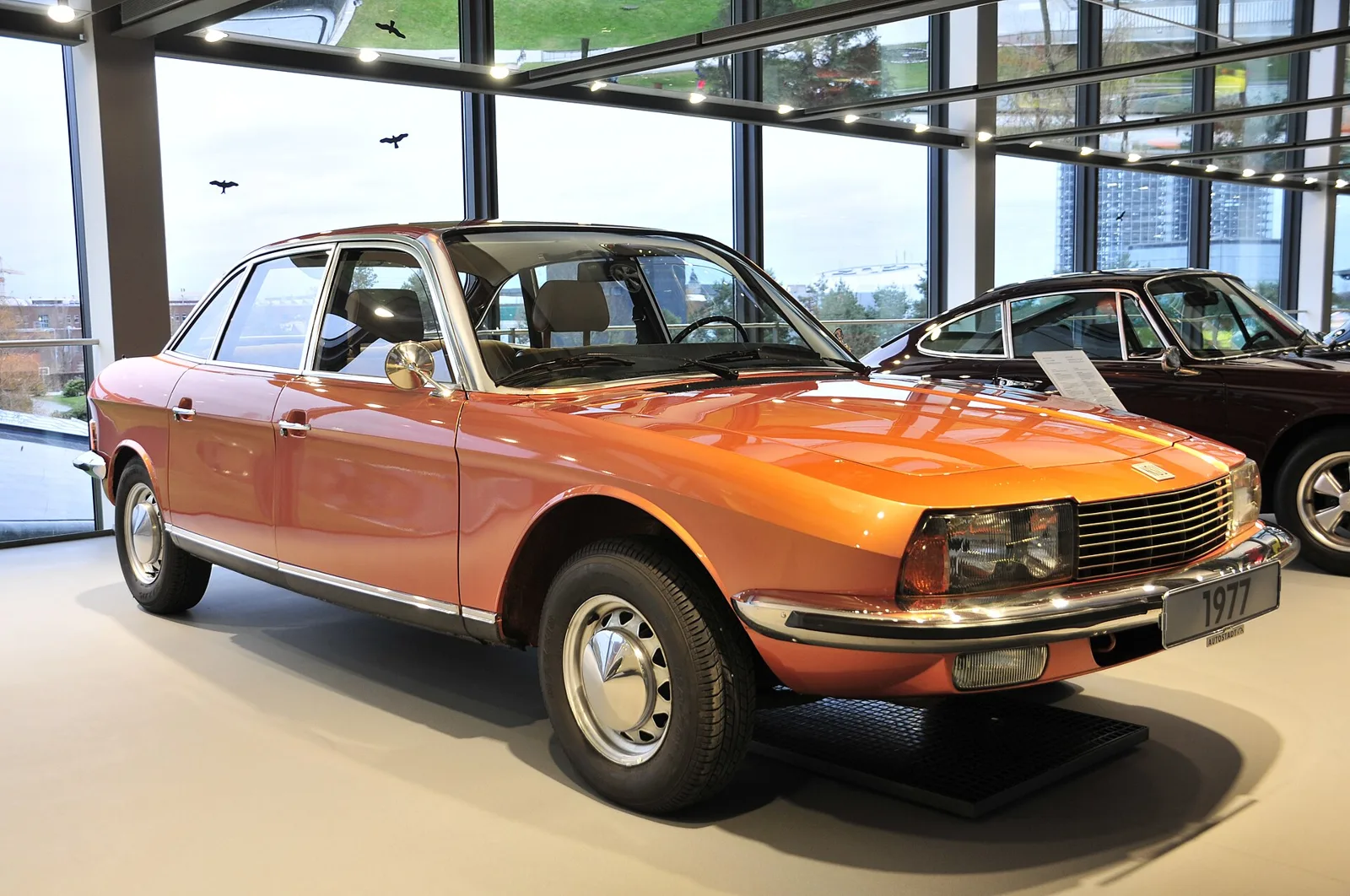
The NSU Ro 80 was a four-door car presented in 1967, with a 115 PS (85 kW) two-rotor engine and front-wheel drive. It weighed 1,200 kg (2,600 lb), had a drag coefficient of 0.36, and used a Fichtel and Sachs Saxomatic three-speed transmission.
The Ro 80 earned design awards, including car of the year 1967, and drivers praised its performance. Sales were disappointing, however, and the transmission drew complaints from owners.
The engine also suffered numerous failures, even at low mileage. Problems with the apex seals of the rotor damaged the brand's reputation, and the rotary engine proved very costly for a company of NSU's size.
Which companies licensed the Wankel engine from NSU?
Virtually all of the world's major manufacturers bought Wankel licences from NSU, the notable exception being BMW. NSU was one of only four automobile companies to produce Wankel cars for sale.
Only Mazda kept developing the technology and built more cars with it. Competitors held back from leading Wankel development, and the royalty income they had expected from licensing never fully arrived. The Ro 80 was the second mass-produced two-rotor Wankel car, after the Mazda Cosmo.
Other licensees included AvtoVaz, which made single and twin rotor Wankel cars in the early 1980s, and Norton, which used Wankel engines in motorcycles.
How did NSU end up inside Audi?
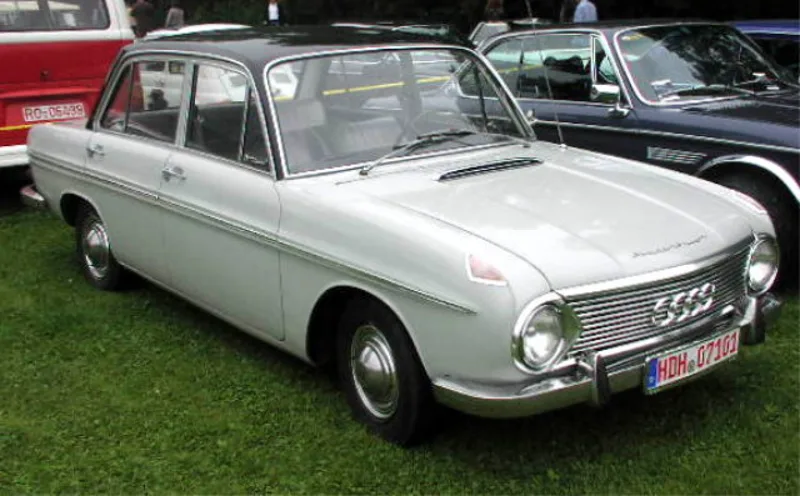
Volkswagenwerk AG took over NSU in 1969 and merged it with Auto Union, the owner of Audi. The combined company was called Audi NSU Auto Union AG, and it marked the effective end of the NSU marque, with future production carrying the Audi badge.
The Ro 80 remained the last NSU-badged car in production after the small rear-engined models were phased out in 1973. Audi never used the NSU name again after April 1977, when the last Ro 80 was sold.
Production of the larger Audi 100 and 200 began at Neckarsulm while the Ro 80 continued. In 1985 the company name was shortened to Audi AG, and management moved to Ingolstadt.
Management of the new combine was first based at the Neckarsulm plant, so the works stayed at the centre of the business for a time.
What became of the Neckarsulm plant?
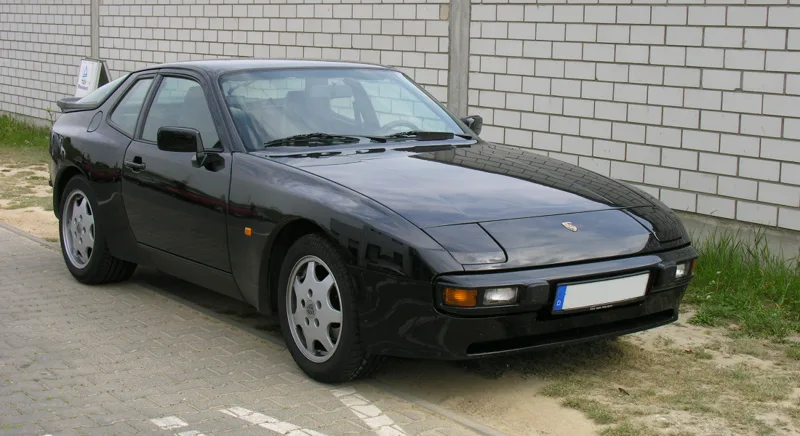
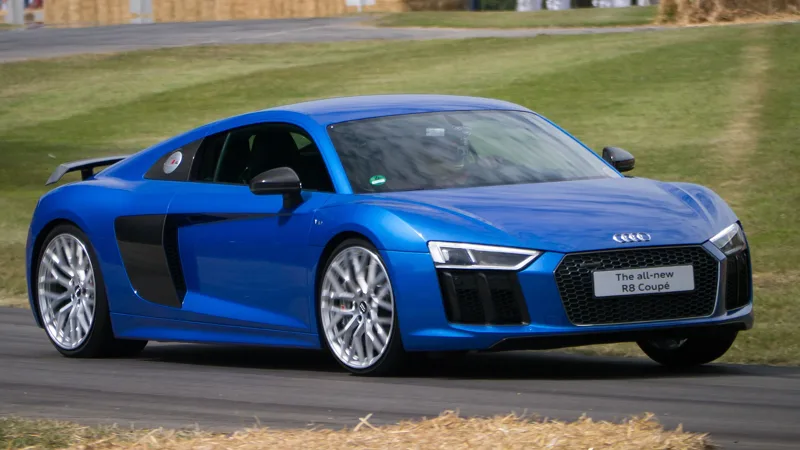
The Neckarsulm plant later assembled the Porsche 924 and 944 as joint ventures between Porsche and Volkswagen. Today it builds Audi's top models, including the A6, A8 and R8, and it houses a centre for aluminium space frame engineering.
Porsche did not have the internal capacity to build the 924 and 944 on its own, so the work was shared through the joint venture arrangement.
The Aluminium- und Leichtbauzentrum is where Audi's aluminium space frame bodies are designed and engineered.
Which riders raced NSU machines?
Several famous riders raced NSU machines. Mike Hailwood finished fourth in the 1958 250cc world championship on an NSU, and John Surtees won a 250cc round on one in 1955. Martin Geiger placed fifth in the inaugural 1907 Isle of Man TT on an NSU.
Surtees remains the only world champion in both motorcycle racing and Formula 1. His appearance on an NSU was a single outing, but it produced a race win.
NSU had several Isle of Man TT successes in the 1950s. Rupert Hollaus rode for the NSU factory racing team until his death in 1954.
What is the legacy of NSU today?
NSU is remembered mainly as the first licensee of Wankel engines for cars and as the creator of the modern inner-rotor principle. Its products are displayed in the Deutsches Zweirad- und NSU-Museum in Neckarsulm.
The Delphin III still exists in the Audi Museum in Stuttgart, the streamlined machine that set the 211 mph record at Bonneville.
NSU also built a vertical-crankshaft engine for lawn mowers in the early 1970s, a far less glamorous product than its sporting machines.
Which NSU car was the last in a conventional layout?
The NSU K70 was the last NSU car in a conventional layout, with a front engine, front-wheel drive and water cooling. It was built from 1970 to 1975 after the Volkswagen takeover, and Volkswagen adopted it as its first water-cooled front-engined car.
The first Volkswagen Golf cars used an engine almost identical to the K70 unit. Later Volkswagen models shared no lineage with NSU, as they descended from Auto Union designs.