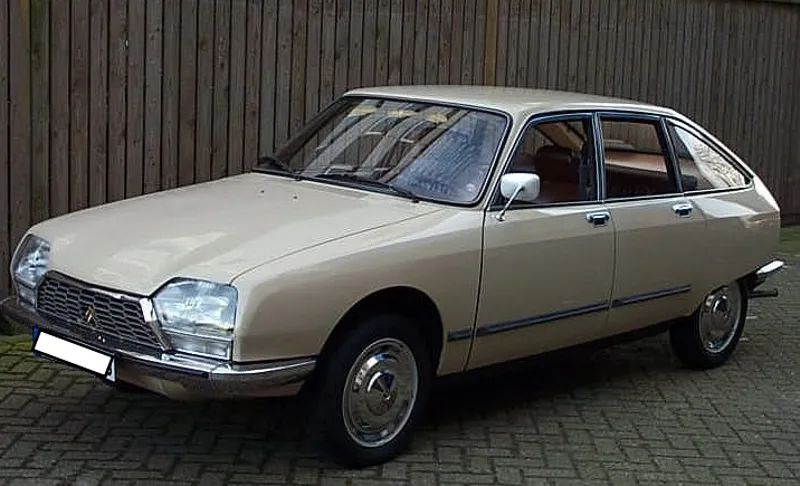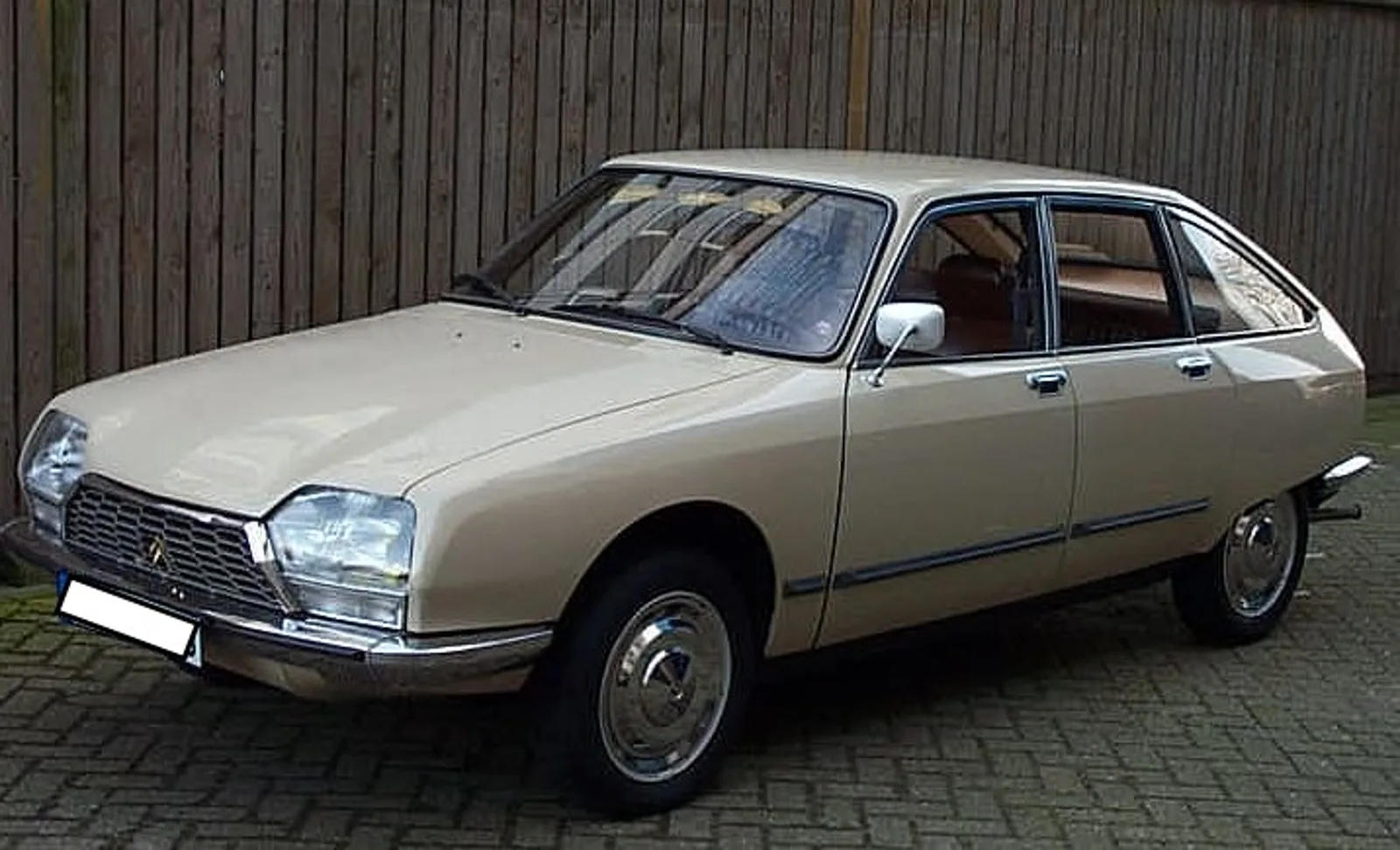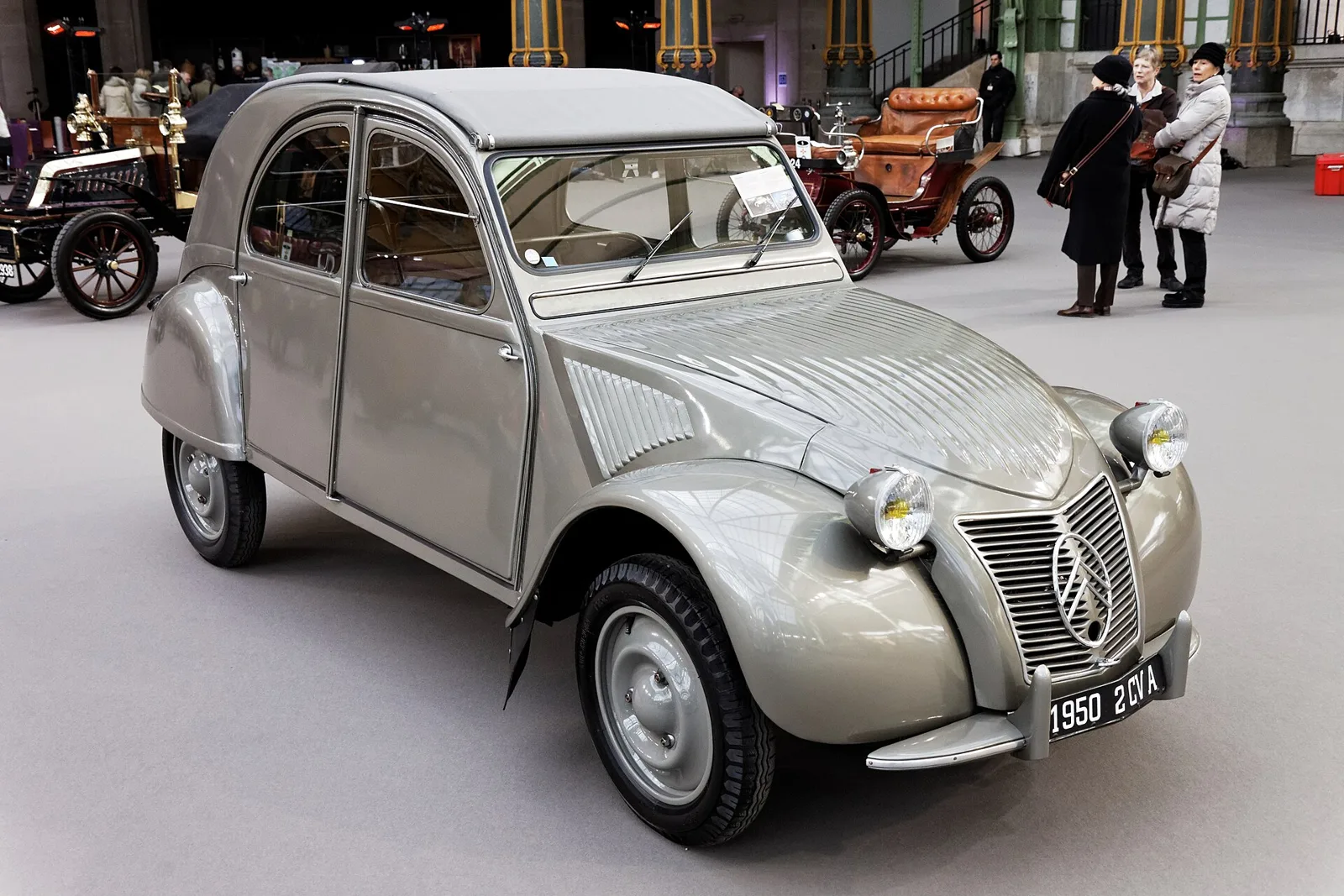
From a 1919 gear workshop to hydropneumatic suspension, rally titles and touring car wins, the French brand built its name on unusual ideas.
Citroen is a French car brand founded on 4 June 1919 by Andre Citroen and owned by Stellantis since 2021. The company became known for engineering that broke with convention, including front-wheel drive, hydropneumatic suspension and the 2CV and DS models that shaped European motoring.
Citroen is a French maker that has built unconventional cars since its founding in 1919. Its reputation rests on the Traction Avant, the 2CV and the DS, plus a suspension system that set its cars apart from rivals.
Who founded Citroen and when?
Automobiles Citroen was founded on 4 June 1919 by Andre Citroen, an engineer who had graduated from the Ecole Polytechnique in 1900. Before building cars, he ran a gear business that began with about ten workers, and he worked with Mors from 1908 until World War I. That background in precision engineering shaped the firm from the start.
The first car arrived quickly. The Type A was announced in March 1919, four months after the war ended, and its first customer took delivery on 7 July 1919. The factory totalled 2,810 vehicles that year, working at 30 cars daily, and produced 12,244 vehicles in 1920.
Andre Citroen wanted something close to what Henry Ford was doing in America: a lighter car of good quality, built in sufficient numbers to be priced enticingly. The Type A was designed to cost less to make than rival products of its time, and that plan helped the company grow quickly once customers began to buy.
A brand that turned unusual engineering into a decades-long identity, from the Traction Avant to the DS.
How did the Traction Avant change the car?
The Traction Avant of 1934 was the first mass-produced car with front-wheel drive and a unitary body, which meant the body itself carried the load instead of a separate chassis. It also used four-wheel independent suspension. Its ratings were 7 CV and 32 hp (24 kW), modest figures for a design that changed how cars were built.
Engineering the Traction Avant was expensive. Development costs and a rebuilt factory pushed the company into bankruptcy in December 1934. Buyers nonetheless accepted the technology, and Citroen kept its focus on advanced design for decades afterwards.
The Traction Avant also stood apart from the way most cars were built. Many designs still followed the Ford Model T school, which bolted a body onto a ladder frame with a solid rear axle. Citroen showed that a unitary body and independent suspension could give better handling as cars grew more capable.
How did Michelin and Peugeot shape Citroen's ownership?
Michelin became the main shareholder after the 1934 collapse, and Pierre Michelin became chairman early in 1935. Pierre-Jules Boulanger, his deputy, took charge of engineering and design, and became president in January 1938. He remained in that post until 1950.
During the German occupation of France, Boulanger refused to deal with Dr. Ferdinand Porsche except through intermediaries. Quiet work continued in the design studios, and engineers kept developing the 2CV, the Type H van and the DS in secret.
The 1973 energy crisis deepened the company's problems, and Peugeot stepped in as the new anchor shareholder. It acquired a 38.2% share in December 1974 and raised its stake to 89.95% on 9 April 1976, creating PSA. Those dates mark the point where Citroen became part of a larger group.
What made the 2CV and DS so influential?
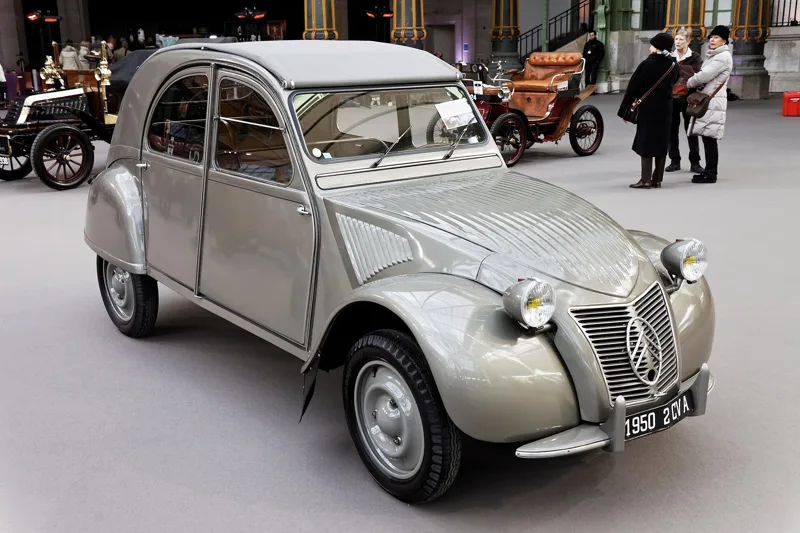
The 2CV was unveiled at the Paris Salon in 1948 with 9 hp (6.6 kW), and its aim was to give rural French families a motorised alternative to the horse. Its soft, interconnected suspension became one of its defining traits. Production ran for decades, and the car became a familiar sight on French roads.
The DS followed in 1955 as the first production car with modern disc brakes. It could cruise at 160 km/h (100 mph) without discomfort for its occupants, and production from 1956 to 1975 totalled almost 1.5 million cars. Hydraulics operated the clutch, so the DS had no clutch pedal.
The ID19 of 1957 offered a simplified version of the system, with manual steering and a lower price. Swivelling headlights appeared on several models in 1967, improving visibility on winding roads.
Contemporary journalists regarded these models as avant-garde, even radical, solutions to automotive design. That reputation helped build an unusual loyalty among owners, of a kind more often seen with niche marques such as Porsche and Ferrari.
How did the hydropneumatic suspension work?
Citroen's hydropneumatic system used a single high-pressure hydraulic circuit to power the suspension, brakes, power steering and gearshift. Self-levelling kept the ride height constant whatever the load, and the soft ride could absorb road irregularities without disturbing the occupants. The system became the basis of over 9 million Citroen cars.
Rolls-Royce adopted the principle for its Silver Shadow in 1965, which shows how far the technology travelled beyond the brand. For drivers, the practical result was a car that rose to working height when the engine started and could be lifted over obstacles or through shallow streams.
Hydropneumatic cars also earned a reputation for ride quality, often compared to a magic carpet. Owners adjusted ride height with a lever beside the driver seat, later replaced by an electronic switch.
What did the Wankel and Maserati ventures involve?
In 1964 Citroen partnered with NSU to develop the Wankel rotary engine through its Comotor subsidiary, hoping to get round France's tax horsepower system with a small but powerful engine. The first Comotor Wankel car produced 106 hp from a 1-litre engine, while the standard GS delivered 55 hp from a 1-litre engine.
The Maserati purchase in 1968 brought a sports car maker into the group. The SM of 1970 used a 2.7 litre Maserati V6 producing 170 hp, and Maserati models including the Bora and Merak used Citroen hydraulics. The 1965 takeover of Panhard had aimed at its mid-sized car expertise, but Panhard ceased manufacturing in 1967.
The gamble on Comotor and Maserati exposed a serious flaw in the plan, particularly for engines with high fuel consumption. The 1973 energy crisis then deepened the financial strain, and the ownership situation became unstable.
Did Citroen sell cars in North America?
No, not since 1974. Citroen withdrew from North America that year because US design regulations ruled out core features of its cars, and the brand has not returned since. Growth elsewhere came through joint ventures and new markets, from China to India, where the company built its presence region by region.
What has Citroen achieved in motorsport?
Citroen Racing, formerly known as Citroen Sport and Citroen Competitions, is the division behind the brand's sporting activity. The team won the Dakar Rally in 1991, 1994, 1995 and 1996, and its ZX Rally Raid car took the Rally Raid Manufacturers Championship five times.
The World Rally Team recorded 97 WRC victories, and the brand took the WRC Manufacturers Title eight times after the team returned in 2001. Sebastien Loeb also won nine Drivers Championships before Citroen withdrew from the World Rally Championship in 2019.
The company once judged that pitting the slow 2CV against faster cars made little sense in a race, yet watching cars run long distances against one another could still be entertaining. Its sponsored long-distance events reflected that thinking and gave the 2CV a place in competition.
Before the modern rally era, Citroen Competitions sponsored three long-distance events:
- 1970: Paris-Kaboul-Paris
- 1972: Paris-Persepolis-Paris
- 1973: Raid Afrique
In touring cars, Citroen announced an entry in 2012 for the TC1 regulations and went on to win the manufacturers title in 2014, 2015 and 2016. Jose Maria Lopez won the 2014 drivers title, and the factory team left the series at the end of 2016. A Formula E entry was announced for the 2025/26 season.
What awards has Citroen won?
The DS placed third in the 1999 Car of the Century competition, behind the Ford Model T and BMC Mini. Citroen has also produced three European Car of the Year winners, and its cars have taken eight Auto Europa awards since 1987.
The DS3 was named 2010 Car of the Year by Top Gear magazine, and in 2013 it took 40% of the European premium subcompact market. The Conservatoire museum, which opened in 2001, displays 300 cars that trace the company's history.
Citroen also produced one winner of the Motor Trend Car of the Year award, which began in 1949 and was once limited to cars designed and built in the United States.
How has the Citroen logo changed over time?
The double chevron grew out of a gear design that Andre Citroen saw in Lodz, Poland, and its two chevrons echo the way two helical gears mesh together. The emblem therefore carries an engineering story as well as a brand mark.
The logo has changed several times. It first appeared as a yellow mark on blue, then as subtler herringbones on white, and at one point it turned white on red to suggest dynamism. A new identity launched on 5 February 2009 for the 90th anniversary, with a 3D metallic double chevron.
Where does Citroen sell cars today?
Citroen sells in many markets. Its China joint venture began selling cars in 1984 and started building them in 1994, and sales there rose 30% in 2014 against 11% overall market growth. The brand also ranked highest in the 2014 JD Power China survey.
The brand has been global everywhere except North America. Standalone DS showrooms operate in China, and dedicated plants there were built specifically to produce DS vehicles.
India returned the brand in 2021 with the C5 Aircross SUV, and Q1 2026 sales there rose 107%, driven by the C3. Citroen has been present in Australia since 1923, yet orders there stopped from 1 November 2024 after slow sales.
What is the DS brand?
DS began as a separate premium line in 2010 with the DS3, which shared the floorpan of the C3. The DS5 followed in 2015 and was based on the C-SportLounge concept, while the rear badge uses a DS logo rather than the double chevron.
Concept cars such as Karin, Activa and Survolt have previewed the brand ideas for decades. The DS line carried that experimental spirit forward, with its own badge and showrooms.
What are the key Citroen figures?
The table gathers the figures that define the brand, from the 1919 founding and the Traction Avant to the 2CV, the DS and later sales. Each row gives the figure for the model or period named in the left-hand column.
| Specification | Detail |
|---|---|
| Founded | 4 June 1919 by Andre Citroen |
| Owner | Stellantis since 2021 |
| First model | Type A, 10 HP, first customer delivery on 7 July 1919 |
| Traction Avant (1934) | 7 CV, 32 hp (24 kW) |
| 2CV at launch (1948) | 9 hp (6.6 kW) |
| 2CV production | 9 million variants, 1948 to 1990 |
| DS production | Almost 1.5 million cars, 1956 to 1975 |
| GS sales | 2.5 million units |
| Output in 1972 | 601,918 cars, up from 526,443 in 1971 |
| Peugeot stake | 89.95% from 9 April 1976 |
| China sales in 2014 | Up 30% against 11% market growth |
| Spanish fine (2015) | Over 14 million euros |
Frequently asked questions
Who owns Citroen now?
Stellantis has owned Citroen since 2021. Xavier Chardon has been chief executive since May 2025, after a run of leaders that included Linda Jackson and Vincent Cobee.
When was the DS produced?
Between 1956 and 1975, almost 1.5 million DS cars were built. It arrived in 1955 and was the first car with modern disc brakes in mass production.
How many 2CVs were built?
Production ran until 1990, and 9 million variants were built in that period. Its initial output was 9 hp (6.6 kW).
Is Citroen still competing in rallying?
The brand left the World Rally Championship in 2019. Its next announced move was a Formula E entry for the 2025/26 season.