From the 1887 Paris partnership of Panhard and Levassor to sleeve-valve engines, aluminium Dynas, racing success and the armoured vehicles that outlived the car business.
Panhard was a French car maker founded in 1887 as Panhard et Levassor, which helped set the front-engine, rear-drive layout. It ended car production in 1967 and now survives through armoured vehicles under the Arquus brand.
Panhard was a French car maker that began as one of the first automobile manufacturers, and it later became known for light tactical and military vehicles. It started life as Panhard et Levassor in 1887, and its Dyna cars of the 1950s and the armoured vehicles of today both trace back to the same Paris works.
Who founded Panhard et Levassor?
The company was established in 1887 by Rene Panhard and Emile Levassor, together with Belgian lawyer Edouard Sarazin. Panhard et Levassor sold its first automobile in 1890, built under a Daimler engine licence obtained through Sarazin, who represented Gottlieb Daimler's interests in France.
When Sarazin died in 1887, Daimler asked his widow, Louise, to carry on her husband's agency, and she finalised the licence. She married Levassor in 1890, and the two men became friends who shared improvements with one another.
The company that gave cars their standard layout later built the armoured vehicles that carry its name today.
What made the early Panhard cars important?
The first vehicles set many modern standards, though each was a one-off design. They used a clutch pedal to work a chain-driven gearbox, and they had a front-mounted radiator. Panhard's early machines also placed the radiator at the front, and the first modern transmission is credited to a 1895 car from the same firm.
In 1891 the company built its first all-Levassor design, the Systeme Panhard, with four wheels, a front-mounted engine driving the rear wheels and a crude sliding-gear transmission. It sold at 3500 francs, and it set the layout that most cars used for the next century.
Panhard et Levassor also shared its Daimler licence that year with the bicycle maker Armand Peugeot, who formed his own car company. Alfred Vacheron fitted a steering wheel to his 4 hp (3 kW) Panhard for the 1894 Paris-Rouen Rally, one of the earliest uses of the principle.
How did Panhard succeed in early motor racing?
Panhards won numerous races from 1895 to 1903. In 1895 the company's 1,205 cc cars finished first and second in the Paris-Bordeaux-Paris race, one of them driven solo by Levassor over 48 hours and 45 minutes.
The 1896 Paris-Marseille-Paris race ended in tragedy when Levassor was fatally injured in a crash while trying to avoid a dog. He died the following year, and Arthur Krebs took over as general manager in 1897, holding the post for almost two decades, until 1916.
Krebs turned Panhard et Levassor into one of the largest and most profitable car manufacturers before the First World War. The company also developed the Panhard rod, a lateral location link that later appeared on many other automobiles.
Why did Panhard adopt sleeve valves?
From 1910 Panhard worked to develop engines without conventional valves, using under licence the sleeve valve technology patented by the American Charles Yale Knight. Until 1924 the catalogue listed plenty of conventional valve engines alongside sleeve-valve power units.
From 1924 to 1940 every Panhard car used a sleeve-valve engine. Engineers made several improvements, including thinner and lighter steel sleeves by 1925 and an anti-friction coating on the outer sleeves, which were less thermally stressed than the inner ones.
In 1925 a 4.8-litre Panhard set a world record for the fastest hour, averaging 185.51 km/h (115.271 mph).
Who rode in Panhard's presidential cars?
Under President Raymond Poincare, who held office from 1913 to 1920, the 18CV and 20CV Panhard et Levassor models were the official presidential cars.
General Joffre used two 35CV Panhard Type X35s, which had massive four-cylinder 7,360 cc engines, for his personal transport. Parisians often saw them carrying military leaders between the front line and the Elysee Palace.
What did Panhard make during the First World War?
During the war Panhard concentrated on war production, including large numbers of military trucks, V12 aero-engines, gun components and large 75 and 105 shells. Like other leading producers, it turned most of its capacity to the military effort.
The military were keen on the sleeve-valve 20CV in particular.
How did Panhard rebuild its car range after 1918?
Panhard resumed passenger car production in March 1919 with the 10HP Type X19, a four-cylinder car with a 2,140 cc engine. Three months later three more four-cylinder models followed, with upgraded electrics and other changes.
At the October 1919 Paris Motor Show Panhard showed four four-cylinder models, from the 2,150 cc 10CV Type X19 up to the 4,850 cc 20CV Type X29. The 12CV Type X31 replaced the 12 HP Type 25 for 1920, and the 16CV Type X28 had a 3,175 cc engine.
What was the Panhard Six and the eight-cylinder Huit?
A surprise at the October 1926 Paris Motor Show was the Panhard 16CV Six, the company's first six-cylinder model since before the war. It had a six-cylinder engine on a 3,540 mm (139.4 in) wheelbase and was priced in bare chassis form at 58,000 francs.
The 1927 range had nine models, seven of them four-cylinder cars, with prices from 31,000 francs to 75,000 francs in bare chassis form. The eight-cylinder 35CV Huit, a 6350 cc car offered since 1921, was priced at 99,000 francs in 1926.
What were the Panhard CS and DS models?
By 1930 Panhard had withdrawn its last two four-cylinder models and the 10CV six-cylinder Type X59. The company concentrated on its S-series cars, named Panhard CS and Panhard DS according to engine size, which had been introduced a year earlier.
Publicity of the time said the S stood for underslung cars, but the copywriters went further and described them as supple, superior, stable, spacious and silent. Most of the cars exhibited had lavish six-cylinder engines of between 2.35 and 3.5 litres. An eight-cylinder 5.1 litre Type X67 with a 3,590 mm (141.3 in) wheelbase was listed, even in bare chassis form, at 85,000 francs.
The last pre-war Panhard was the unusually styled monocoque Dynamic series, introduced in 1936. Panhard also built railbuses, including some for the metre gauge Chemin de fer du Finistere.
Why did the post-war Dyna cars use aluminium?
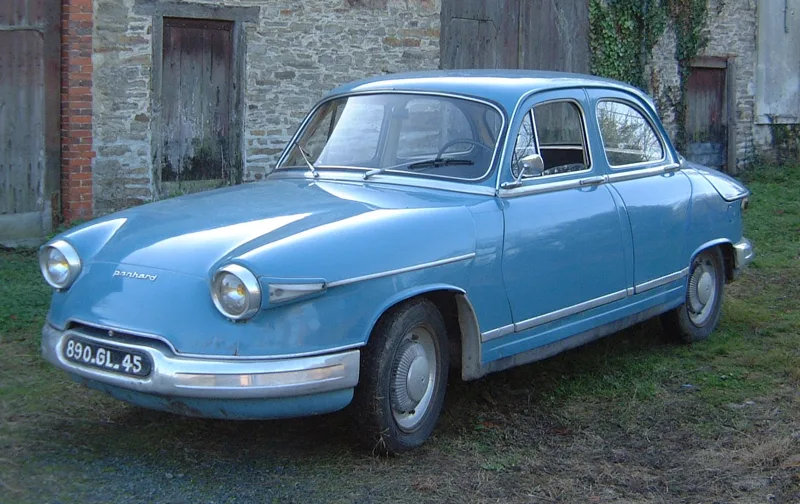
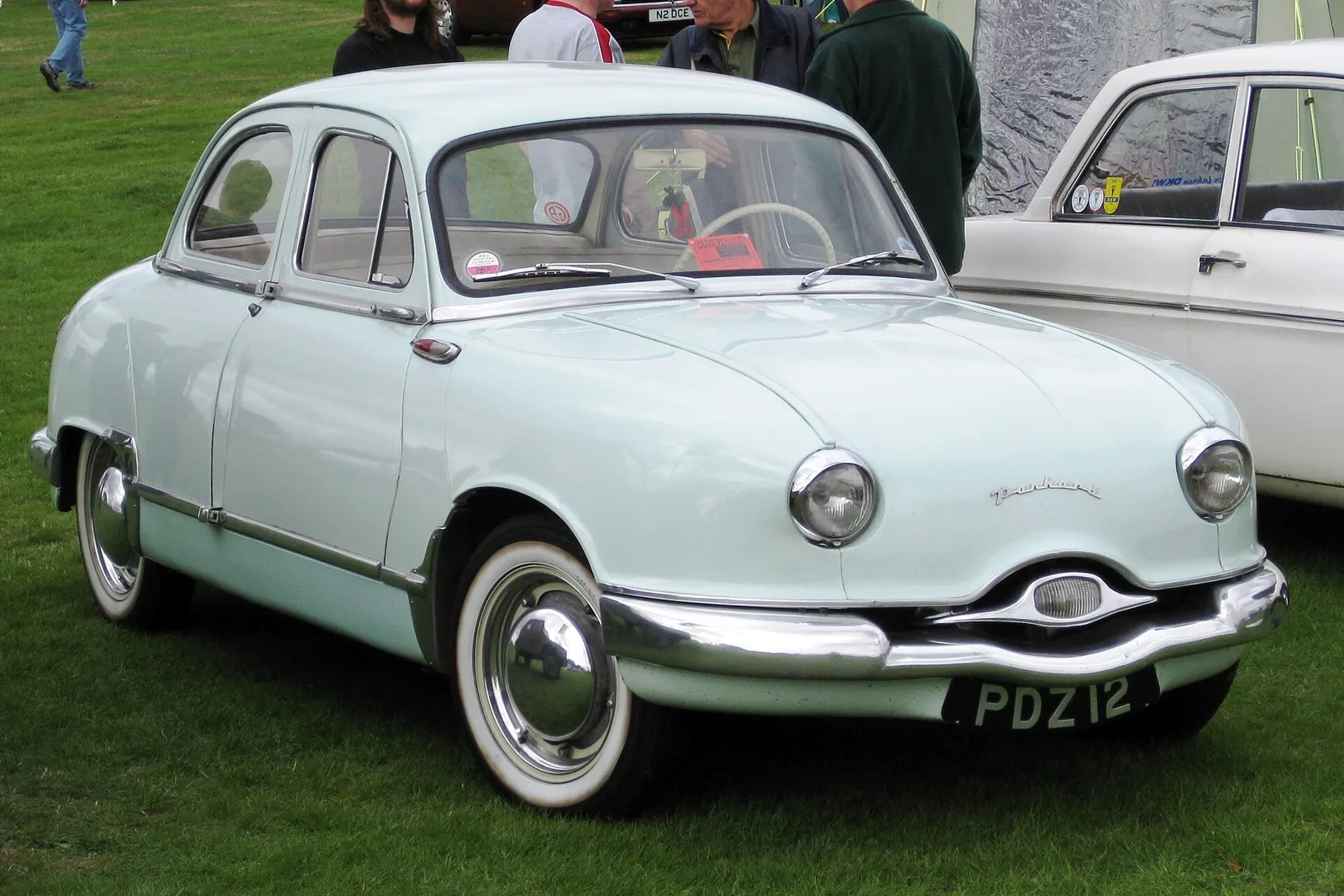
After the war the company dropped Levassor from its name and produced light cars including the Dyna X, Dyna Z, PL 17, 24 CT and 24 BT. Panhard had long valued the weight advantages of aluminium, and steel rationing encouraged it to make bodies from the lighter metal.
The lesson was expensive. Later Dyna Z bodies kept the heavier gauge stampings intended for aluminium, so the stamping dies did not need full replacement.
Jean Panhard, the managing director, had underestimated the cost. The aluminium shells cost more than three times as much as steel, because the calculations had ignored the scrap from each stamping. The aluminium plan pushed the firm close to bankruptcy, so the later Dyna Z and the PL 17 returned to steel.
What did the Dyna Z look like?
The Dyna Z drew on the Panhard Dynavia concept, with smooth, rounded styling and an emphasis on aerodynamics. The air-cooled flat-twin engine of the Dyna also powered the Voiture du Bled off-road vehicle, which Georges Irat built in Morocco in small numbers.
From summer 1963 the 24CT was a stylish 2+2, and the 24BT was a version of the same car with a longer wheelbase and room for four.
How did Panhard compete at Le Mans?
After the war Panhard-based Monopole racing cars received unofficial support from the company, and they took the Index of Performance honours at Le Mans three years running, from 1950 to 1952. In 1953 Panhard became more directly involved with Robert Chancel, but that ended after the 1955 Le Mans disaster.
In the late 1950s and early 1960s the Deutsch Bonnet racers, known as DB Panhard, took up the mantle and dominated the Index of Performance and other small-engine classes.
How did Panhard end its car business?
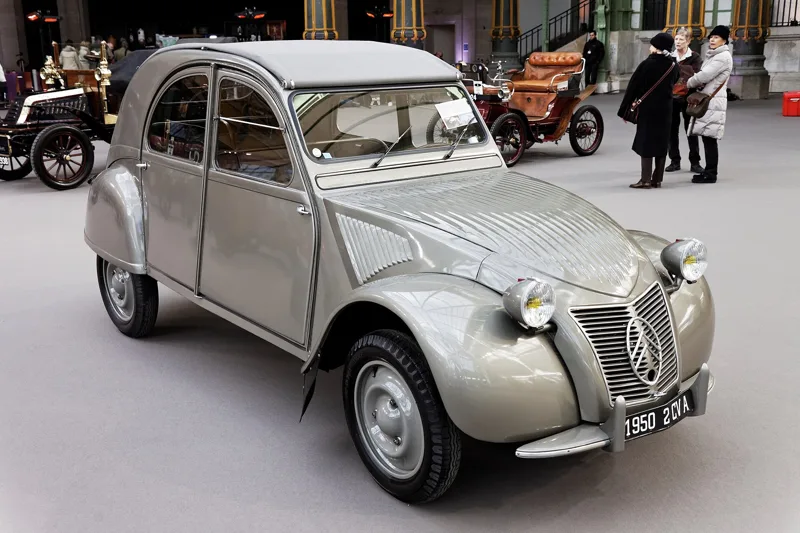
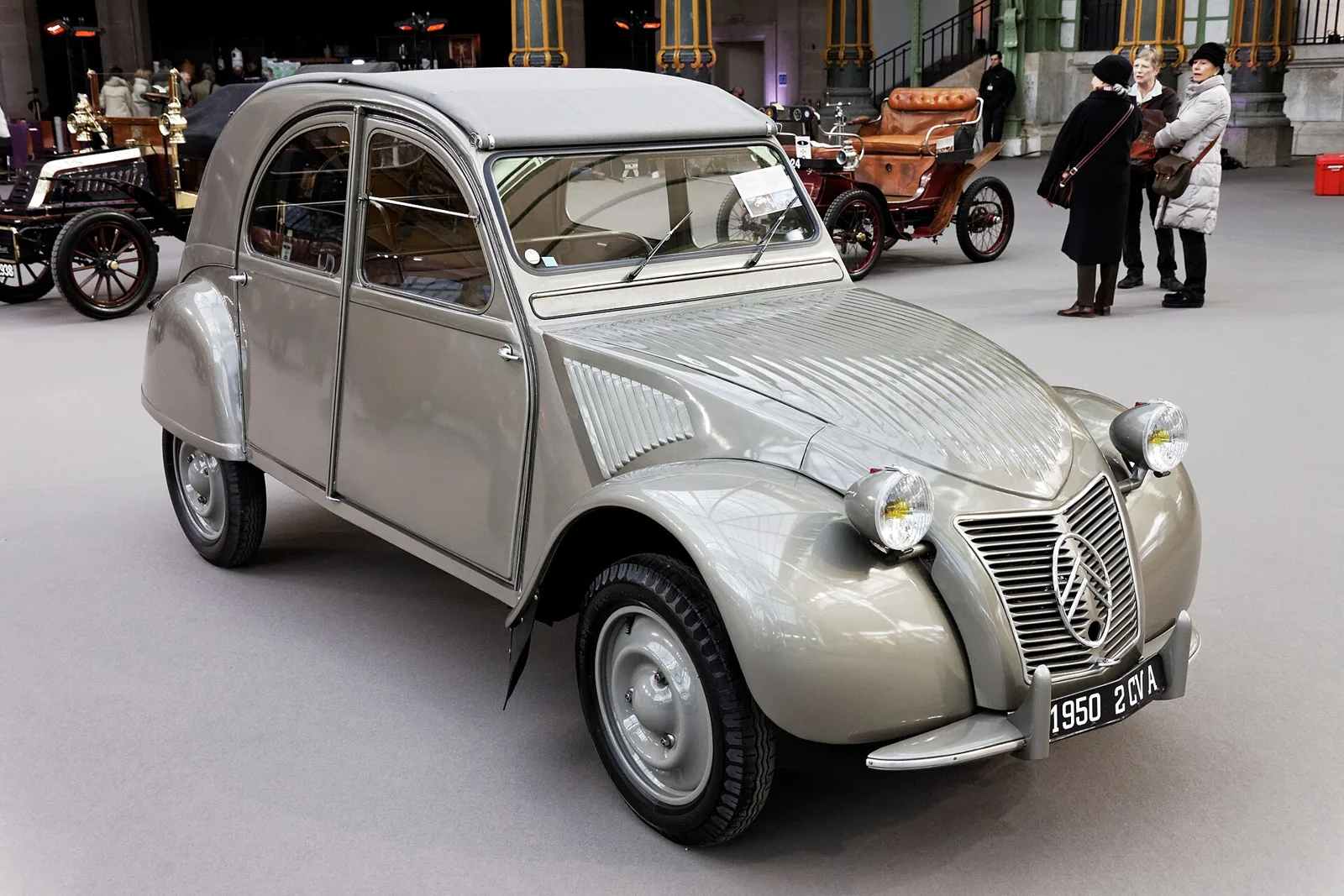
The last Panhard passenger car was built in 1967. The company had assembled 2CV panel trucks for Citroen to use spare capacity during falling sales, and it had sold ownership progressively to Citroen and to its parent Michelin, which had full control by 1965.
In autumn 1967 the civilian branch was absorbed by Citroen and the marque was retired. From 1968 Panhard made only armoured vehicles.
What is Panhard today?
In 2004 Panhard lost a French Army competition to Auverland for the future PVP. Auverland then bought Panhard from PSA Peugeot Citroen in 2005, but the Panhard name was kept, and the PVP carried a Panhard badge.
In October 2012 Renault Trucks Defense, a division of the Volvo Group since 2001, completed the purchase of Panhard for 62.5 million euros. In 2018 Renault Trucks Defense, ACMAT and Panhard merged under the single brand Arquus.
What military vehicles has Panhard built?
Panhard has supplied more than 18,000 military wheeled vehicles to over 50 countries, mostly combat vehicles under 10 tonnes. The range includes the VBL, the PVP and the EBR, along with the ERC 90 Sagaie and the AML family.
The current line-up also includes the Peugeot P4 and the Panhard CRAB, which shows how the name has survived several owners. Among the largest groups are 5,400 armoured wheeled vehicles, 2,300 VBL vehicles in 16 countries, including 1600 with the French Army, and 933 A4 AVL vehicles selected by the French Army. Auverland also produced about 9,500 vehicles under 7 tonnes.
What are the key Panhard figures?
| Item | Detail |
|---|---|
| Founded | 1887 as Panhard et Levassor, Paris |
| First sale | 1890, under a Daimler engine licence |
| Systeme Panhard | 1891, sold at 3500 francs |
| Fastest hour record | 185.51 km/h (115.271 mph), 1925 |
| Sleeve-valve era | All cars, 1924 to 1940 |
| Dyna aluminium shells | More than three times the cost of steel shells |
| Last passenger car | Built in 1967 |
| Military output | More than 18,000 wheeled vehicles to over 50 countries |
| Renault Trucks Defense purchase | 62.5 million euros, 2012 |
| Arquus merger | 2018 |