An entry-level 911 built from 1965 to 1969 with a 1.6-litre flat-four from the 356, plus a one-year 912E revival in 1976.
Porsche's 912 was a four-cylinder 911 built from April 1965 to July 1969 with a 1.6-litre air-cooled flat-four. More than 32,000 cars were produced in coupe, 2+2 and Targa forms, and a one-year 912E with a 2.0-litre engine returned for the 1976 model year.
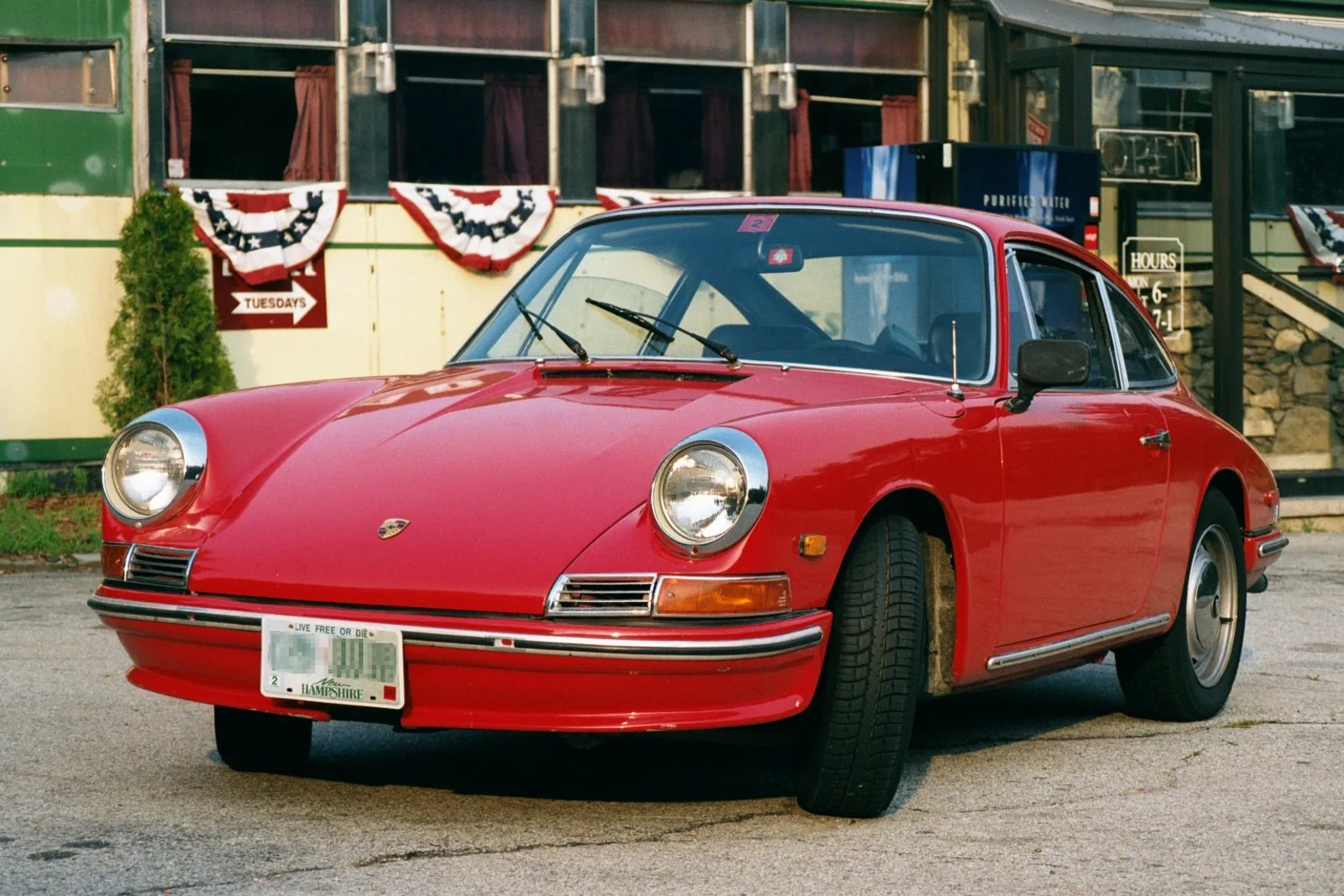
The Porsche 912 was an entry-level version of the 911 that Porsche sold from 1965 to 1969. It used a 1.6-litre air-cooled flat-four taken from the last of the 356s, and it was offered as a coupe, a 2+2 and a Targa. More than 32,000 912s were built during the production run.
Why did Porsche create the 912?
Porsche planned to end the 356 and leave the 911 as its only model, but the 911 cost far more than the car it replaced. Management feared that the price gap would cost sales and narrow the brand's appeal. In 1963 the company decided to add a four-cylinder entry model based on the 911.
Porsche took the internal project number 902 for the new car, although that name was never used publicly. The 911 itself had been known internally as the 901. Before the car reached production, the chassis numbers for research testing had been set aside, and one research vehicle survives as the oldest known 902.
A 911 with four cylinders, built to bring the badge within reach of more buyers and to win rallies.
How was the 912's engine designed?
Dan Schwartz was given responsibility for a new horizontally opposed four-cylinder engine for the project. The design was meant to use components from the new six-cylinder 901 engine, and it promised higher performance than the 356SC unit at lower cost. Another route explored by Claus von Rucker was a 1.8-litre version of the 356 engine with Kugelfischer fuel injection.
Porsche dropped both of those projects on grounds of performance, cost and scheduling. The company instead tailored the 1.6-litre Type 616 engine to suit the 902. The result was a 912 that combined a 911 chassis and bodyshell with the 616/36 pushrod engine.
The overhead-cam Carrera engine of the period was more costly and complex, which pushed Porsche toward the simpler pushrod unit.
The 616/36 was derived from the 616/16 used in the 356SC of 1964 to 1965. Its lower compression ratio and new Solex carburettors cut output by five horsepower, but its peak torque arrived at 3,500 rpm, compared with 4,200 rpm for the older unit. Porsche also removed some features that were standard on the 911 to bring the price closer to the 356.
How much power did the 912 make?
The 912's flat-four produced 102 SAE horsepower at 5,800 rpm. Paired with the car's light body, that output gave it a nimble and balanced feel. The engine's efficiency was a further strength.
On the road it could manage roughly 30 miles per US gallon, or 7.8 L/100 km (36 mpg-imp). The low drag and light weight of the body helped that figure, as did the high-efficiency boxer layout.
The launch price was US$4,700, which is roughly US$48,000 in 2025 money. Pricing mattered as much as performance, because Porsche hoped the cheaper car would bring new buyers into the brand, and early sales suggested it did.
Production and the Targa roof
Porsche began building the 912 coupe on 5 April 1965. It made nearly 30,000 coupes and about 2,500 Targa bodies during a five-year run. Early sales ran ahead of the 911, which had been introduced in 1964, and the 912 substantially outsold it during the first few years.
Those sales carried the company's total output until the 911 had secured its own position, which is why the 912 is remembered as an important early success.
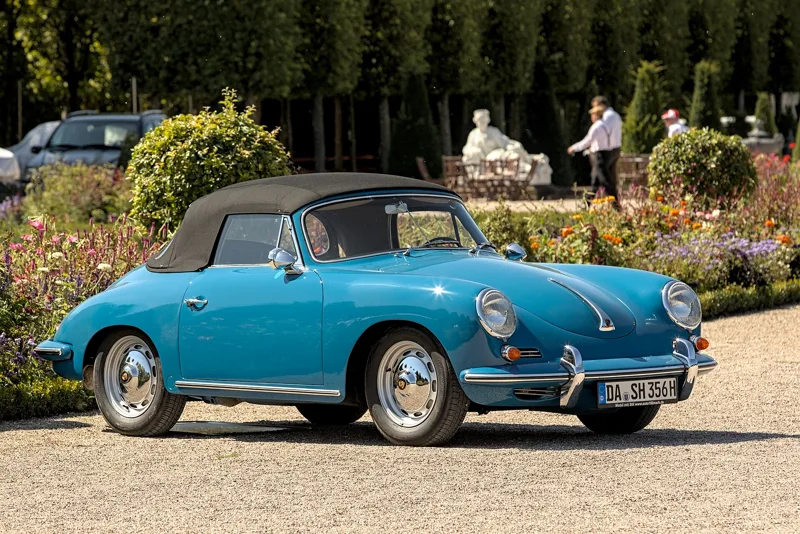
The Targa had a removable roof panel. From December 1966, as a 1967 model, it came with a rear window of heavy transparent plastic that could be opened with a zipper. Porsche called this Version I, and enthusiasts called it the soft-window Targa.
The Targa body gave buyers an open-top option within the 912 range, alongside the coupe and the 2+2 body style.
Porsche described the Targa as its patented open-top variation, and the design let the car carry a removable roof panel. In January 1968 Porsche added a Version II Targa with a fixed glass rear window. That version turned the car into a coupe with a removable roof.
Was the 912 used by police?
Yes. The 912 was built in a special version for the German autobahn police and for the Dutch police. The 100,000th Porsche built was a 912 Targa supplied to police in Baden-Wurttemberg, the company's home state, and it was delivered on 21 December 1966.
Why did buyers take to the 912?
Buyers liked the 912 for its styling, performance, build quality, reliability and price. Those strengths made it attractive to both new customers and existing Porsche owners.
The strong start also gave Porsche the volume it needed while the 911 found its footing, which helped the company's total production grow.
Porsche's Christophorus magazine reported the delivery in its April 1967 edition, calling it a particularly proud anniversary for the company.
Why did production of the 912 stop after 1969?
The 912 ended after the 1969 model year for three reasons. Its production space was needed for the six-cylinder 914-6, the 911 range had returned to a three-level line-up, and tougher US emissions rules made the 912 costly to adapt.
Ferry Porsche summed up the emissions problem by saying that preparing the 912 for the new exhaust rules would have taken trouble, and that with the 914 arriving the company would have had three different engines to keep current. In his view that was too many.
How did the 912E return in 1976?
The 912E was a US-only model for the 1976 model year, filling the entry-level slot left by the 914. It used a 2.0-litre flat-four from the Volkswagen Type 4 family, with Bosch L-Jetronic fuel injection and 90 SAE horsepower at 4,900 rpm.
Production ran from May 1975 to July 1976, and 2,092 coupes were built. The 912E carried an MSRP of US$10,845, which was US$3,000 less than the 911S. It was a one-year model that bridged the gap until the 924 arrived. Porsche used the 924 as the official replacement for the 914, which made the 912E a short-lived bridge.
The 912E shared the 911's chassis, so it handled much like its six-cylinder relative. Its lighter weight behind the rear axle and thinner tyres made it more forgiving and less prone to sudden oversteer. It was also the only 912 with a galvanised chassis, which resisted corrosion.
What options did the 912E offer?
The 912E carried most of the 911's equipment, but several items were extra-cost options. Fuchs alloy wheels in 14-inch sizes were popular, and an electric sunroof, an anti-slip differential and power windows could also be ordered.
Air conditioning was a popular dealer-installed extra. The interior matched the 911, although two of the five gauges were extra-cost items. The car carried a fuel tank of more than 20 gallons, which gave a range of about 600 miles at roughly 30 miles per US gallon.
Porsche treated the 912E as a stopgap, and it stands as the one instance in the company's history that matches the idea of planned obsolescence.
The 924 that followed the 912E was a front-engined four-cylinder, so the company did return to four-cylinder power, though in a very different layout.
How did the 912 handle?
The 912 had a slightly lower rear weight bias than the 911, which helped its handling feel nimble and balanced. Its lighter engine and body made the car easy to place on a corner.
The 912E took that character further, since its 911 chassis came fitted with thinner tyres, which changed how the car behaved near its limits.
Road & Track recorded 0-60 mph in 11.3 seconds and a top speed of 115 mph. The magazine judged that the car had almost all the sporting virtues of the 911S, with simpler and cheaper upkeep. The magazine also noted that the simpler pushrod engine should be cheaper to maintain than the six.
How did the 912 compare with the 911?
The 912 used the 911's chassis and bodyshell, with a lighter four-cylinder engine that gave it less power than the six. For the 1976 model year Porsche built 10,677 911s, of which 4,784 were sold in the United States.
Among the 912 versions the E was the most comfortable, while the 911 remained the performance flagship of the line. The simpler pushrod engine of the 912E promised better fuel economy and lower upkeep than the 911's six-cylinder unit.
How did the 912 perform in motorsport?
In 1967 the Polish driver Sobieslaw Zasada drove a factory-loaned 912 to the European Rally Championship title for Group 1 touring cars. He also won the 1967 Rally of Poland overall, from a starting field of 50 entries.
The Rally of Poland ranks as the third oldest rally in the world, and it is among the oldest motorsport events anywhere.
In 2012 Hayden Burvill and Alastair Caldwell drove a 1968 912 to first in class and seventh overall in the London to Cape Town World Cup Rally. The event covered 14 countries, 14,000 km and 26 driving days,, showing that the car could still compete decades after its launch.
Entries like this one show how long a well-built four-cylinder Porsche could remain in serious competition, far beyond its production years.
What are the Porsche 912 specifications?
The table below lists the core figures for the 912 and the 912E. The 912E rows sit apart from the original car, so the two models do not blend together.
| Specification | Detail |
|---|---|
| Built | April 1965 to July 1969; more than 32,000 cars |
| Engine | 1.6-litre air-cooled flat-four, Type 616/36 |
| Power | 102 SAE hp at 5,800 rpm |
| Economy | 30 mpg US (7.8 L/100 km; 36 mpg-imp) |
| Launch price | US$4,700 |
| Targa production | About 2,500 bodies |
| 912E engine | 2.0-litre flat-four, 90 SAE hp at 4,900 rpm |
| 912E built | 2,092 coupes, May 1975 to July 1976 |
| 912E MSRP | US$10,845 |
Frequently asked questions
What engine did the 912 use?
The 912 used a 1.6-litre air-cooled flat-four with pushrod valves, based on the 616/16 unit from the 356SC. It produced 102 SAE horsepower in production form.
Did the 912 share parts with the 911?
Yes. The 912 combined a 911 chassis and bodyshell with a four-cylinder engine in place of the six, so the two cars handled alike while costing different amounts.
How much did the 912 cost?
The 912 launched at US$4,700, which is roughly US$48,000 in 2025 terms. The 912E cost US$10,845 in 1976, about US$3,000 less than the 911S.
Was the 912E a success?
The 912E had a single model year, and only 2,092 were built. Even so, over half of those cars are still in use, and the model remains one of the more collectible four-cylinder Porsches.
How many Targas were made?
About 2,500 Targa bodies were produced, alongside nearly 30,000 coupes, during the five-year production run from 1965 to 1969.
Was the 912E a useful car in its own right?
Yes, within its single model year. It paired the 911's chassis with a more affordable engine, and collectors still value it. It also marked the return of the 912 after a six-year absence.